

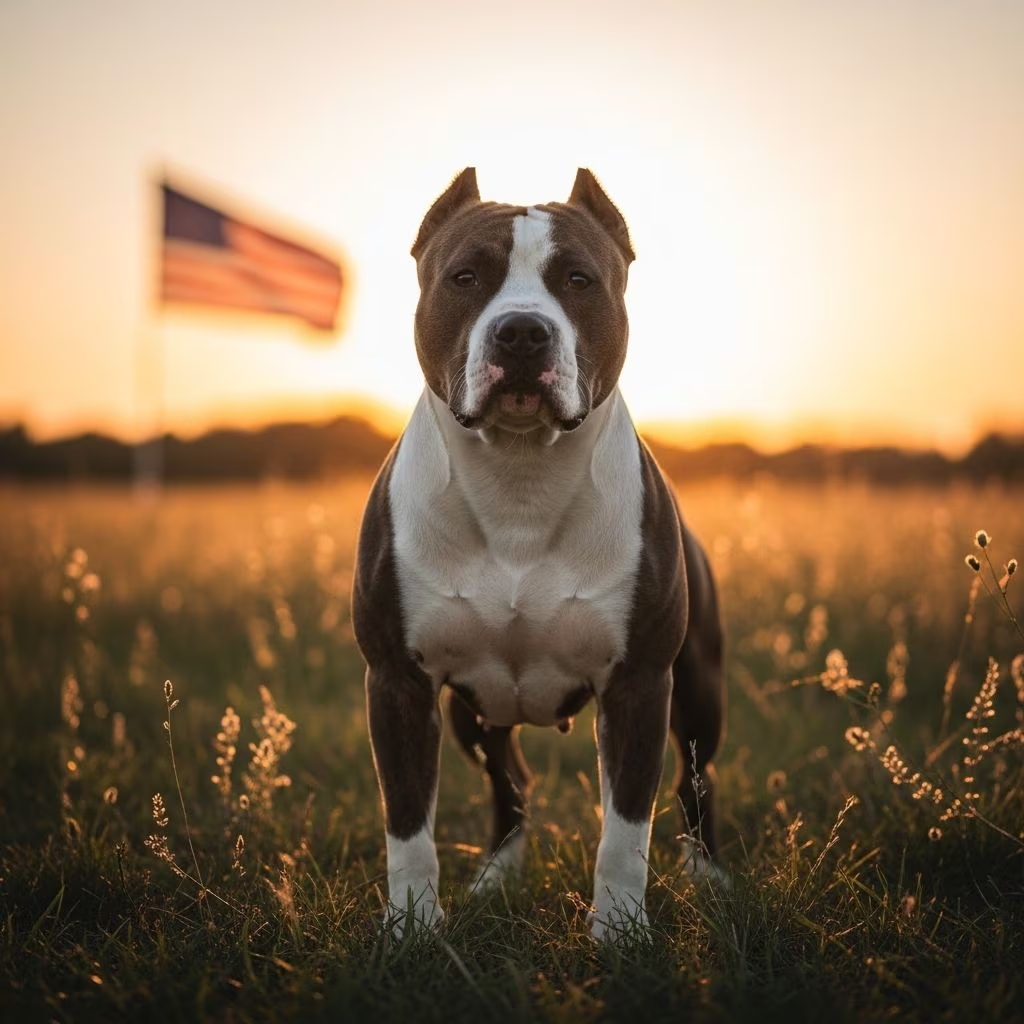
Pit Bulls face varying degrees of restrictions across the United States, with no nationwide ban but numerous local and state-level prohibitions rooted in historical misconceptions and safety concerns. These dogs, often encompassing American Pit Bull Terriers, American Staffordshire Terriers, and similar breeds, have a complex legacy that influences modern policies.
Origins of the Pit Bull Legacy
The story of Pit Bulls begins in 19th-century England, where breeders crossed Old English Bulldogs—bred for bull-baiting—with agile terriers to create faster dogs for emerging blood sports like ratting and dogfighting after bull-baiting was outlawed in 1835. These “bull-and-terrier” crosses were prized for their gameness, speed, and stamina, yet early selective breeding emphasized human bite inhibition, allowing handlers to intervene safely during fights.
Immigrants brought these versatile dogs to America around 1870, where they transitioned into farm work, herding livestock, hunting, and family companionship. Known as the “All-American Dog,” Pit Bulls appeared in early 20th-century ads, posters, and photos with families, symbolizing bravery and loyalty akin to American ideals. The United Kennel Club recognized the American Pit Bull Terrier (APBT) in 1898, while the American Kennel Club (AKC) registered them as Staffordshire Terriers in 1935 to distance the breed from fighting stigma.
This shift marked a divergence: APBTs stayed tied to working roles, while American Staffordshire Terriers entered conformation shows. Despite their history, Pit Bulls’ reputation soured in the late 20th century due to irresponsible breeding for underground fighting, associating them with urban crime rather than their original multifaceted utility.
Defining What Constitutes a ‘Pit Bull’
“Pit Bull” is not a single breed but an umbrella term covering APBTs, American Staffordshire Terriers, Staffordshire Bull Terriers, and mixed breeds with similar traits like muscular builds and blocky heads. Weights range from 25-75 pounds, with appearances varying widely due to early focus on function over form.
This ambiguity complicates legislation, as visual identification by shelters or officials often mislabels dogs, leading to unfair targeting. Official registries like the AKC avoid “Pit Bull” entirely, recognizing only specific terrier breeds. Understanding this helps owners navigate breed-specific rules.
The Evolution of Breed-Specific Legislation
Breed-specific legislation (BSL) emerged in the 1980s amid media-fueled panic over dog bites, targeting Pit Bulls despite data showing attacks involve multiple breeds. BSL includes outright bans, ownership limits, muzzling requirements, and liability insurance mandates. Proponents cite public safety; critics argue it fails to address root causes like poor ownership and lacks scientific backing.
While no federal ban exists, over 900 U.S. cities and counties enforce some form of Pit Bull restriction as of recent tallies. High-profile incidents, often involving abused or untrained dogs, perpetuate stereotypes, ignoring that aggression stems from environment, not genetics alone.
State-by-State Breakdown of Pit Bull Restrictions
Pit Bull laws vary dramatically by state. Below is a table summarizing key regulations:
| State | Pit Bull Status | Key Details |
|---|---|---|
| Colorado | Banned in Denver | City-wide ban since 1989; state preemption efforts failed. |
| Ohio | Statewide Vicious Dog Law | Pit Bulls deemed ‘vicious’; requires registration, microchipping. |
| Florida | Local Bans Common | Miami-Dade bans breeding/sale; DNA testing sometimes required. |
| Texas | Local Ordinances | Cities like Fort Worth restrict; no statewide ban. |
| California | No State Ban | Some cities (e.g., Riverside) enforce limits; others repealed. |
| New York | Local Variations | NYC housing restricts; no breed ban but strict liability. |
This table highlights patchwork enforcement; always verify local codes. States like Pennsylvania and Illinois have overturned BSL, favoring behavior-based assessments.
Cities with Strictest Pit Bull Bans
- Denver, CO: Total ban since 1989; grandfathered dogs must be sterilized and muzzled.
- Miami, FL: Prohibits ownership of Pit Bulls and mixes; euthanasia for violators.
- Cincinnati, OH: Male Pit Bulls limited to two per household; spay/neuter mandatory.
- Aurora, CO: Bans Pit Bulls and related breeds; appeals process rare.
- Ontario, Canada (for comparison): Provincial ban since 2005, influencing U.S. border policies.
These hotspots reflect reactive policymaking post-incidents, often without breed-accurate data.
Legal Challenges and Advocacy Efforts
Courts have struck down some BSL as unconstitutional, citing equal protection violations and vague definitions. Organizations like Best Friends Animal Society and BADRAP push for repeal, emphasizing responsible ownership over breed bans.
Success stories include Aurora, CO’s 2020 repeal after advocacy and low incident rates proved BSL ineffective. Nationally, bills aim for preemption, preventing local bans—a trend gaining traction in states like Arizona.
Temperament, Training, and Responsible Ownership
Pit Bulls score high on human-directed temperament tests, with low aggression toward people when socialized. Their strength requires committed training: positive reinforcement, early socialization, and exercise prevent issues common to powerful breeds.
- Daily 30-60 minute walks or play.
- Obedience classes from puppyhood.
- Secure fencing (6ft minimum).
- Spay/neuter to reduce roaming.
Studies affirm environment trumps breed in bite risks; neglected dogs of any type pose dangers.
Alternatives to BSL: Smarter Safety Measures
Experts advocate “deed, not breed” approaches:
| Approach | Benefits |
|---|---|
| Mandatory Licensing | Tracks ownership; enforces standards. |
| Behavior Evaluations | Assesses individuals, not looks. |
| Education Programs | Teaches bite prevention. |
| Neutering Incentives | Reduces stray populations. |
Communities adopting these see fewer incidents without demonizing breeds.
FAQs on Pit Bull Bans and Ownership
Are Pit Bulls banned nationwide?
No, but local bans affect thousands. Check municipal codes.
What breeds fall under ‘Pit Bull’ labels?
APBT, AmStaff, Staffies, and look-alikes; DNA tests clarify mixes.
Can I move to a ban area with my Pit Bull?
Grandfather clauses vary; often requires compliance like muzzling.
How effective is BSL?
Limited; doesn’t reduce bites overall, per studies.
Tips for adopting a Pit Bull?
Choose rescues with temperament testing; commit to training.
Future Outlook for Pit Bull Rights
Momentum builds against BSL, with more repeals and preemption laws. Public perception shifts via education and success stories of well-raised Pit Bulls. Owners play a key role by modeling responsibility, proving these dogs deserve their place as loyal companions.
References
- Pit bull — Wikipedia. 2023-10-01. https://en.wikipedia.org/wiki/Pit_bull
- Breed History – BADRAP — BADRAP. N/A. https://badrap.org/breed-info/
- The History of Pit Bulls — Love-A-Bull. N/A. https://love-a-bull.org/resources/the-history-of-pit-bulls/
- History of the Pit Bull — Miami Valley Pit Crew. N/A. http://www.miamivalleypitcrew.com/history-of-the-pit-bull.html
- Position Statement on Pit Bulls — ASPCA. 2023-01-15. https://www.aspca.org/about-us/aspca-policy-and-position-statements/position-statement-pit-bulls
- Pit bull | Size, Types, Life Expectancy & Temperament — Britannica. 2024-05-20. https://www.britannica.com/animal/pit-bull
- Pit Bulls: Everything You Need to Know — Best Friends Animal Society. 2024-08-10. https://bestfriends.org/pet-care-resources/pit-bulls-everything-you-need-know



