

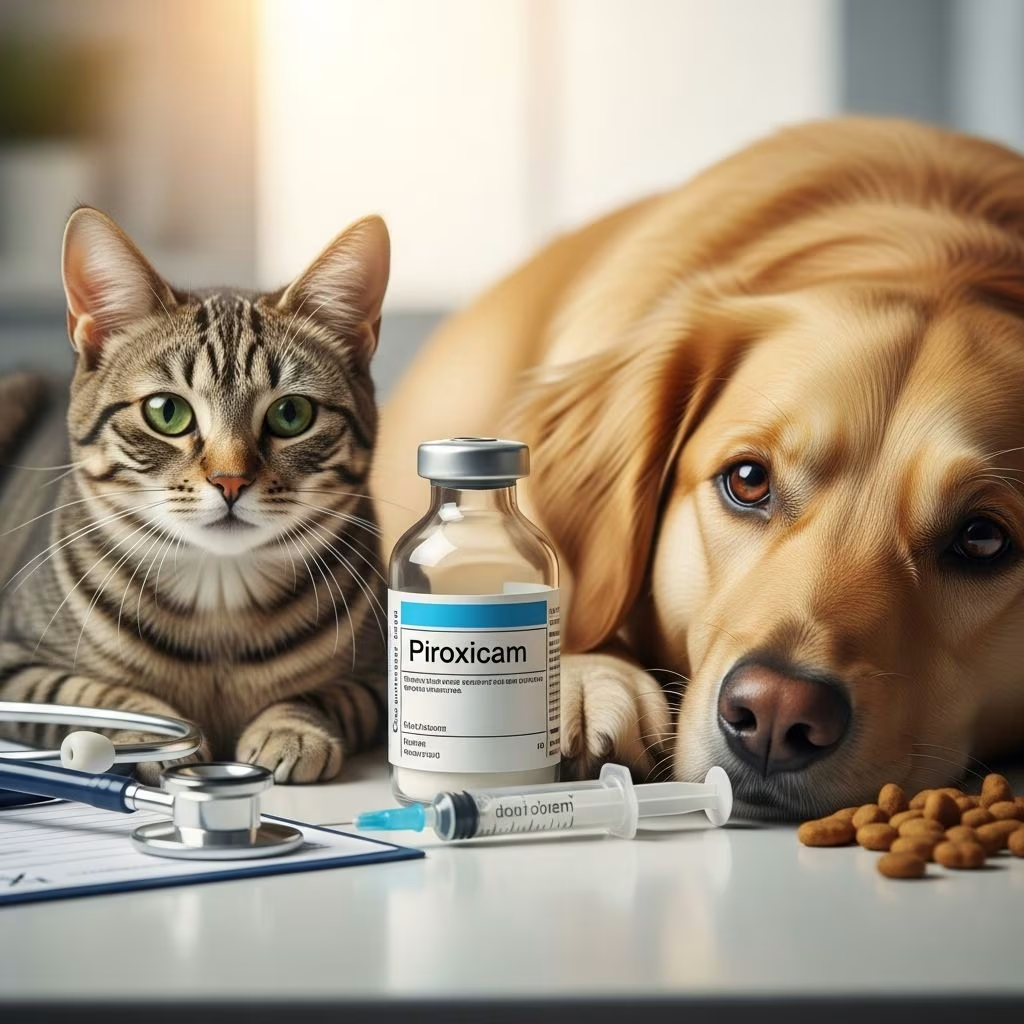
Understanding Piroxicam for Dogs and Cats
Piroxicam is a non-steroidal anti-inflammatory drug (NSAID) that has been used in veterinary medicine since the 1970s, offering multiple therapeutic benefits for companion animals. While originally developed for human use under the brand name Feldene®, veterinarians have discovered its significant value in treating both pain and certain types of cancer in dogs and cats. This medication represents an important tool in the veterinary pharmacist’s arsenal, particularly for managing chronic conditions and malignancies that affect our beloved pets.
Unlike many NSAIDs that are specifically approved for veterinary use, piroxicam is prescribed by veterinarians as an extra-label medication, meaning it is used in a manner different from its FDA approval in humans. This practice is legal and common in veterinary medicine when the benefits justify the off-label use. Pet owners should understand that piroxicam requires a veterinary prescription and should only be administered under professional veterinary guidance.
How Piroxicam Works
Piroxicam functions through a well-understood mechanism that makes it effective for multiple conditions. The drug relieves inflammation and pain by inhibiting the synthesis of chemicals called prostaglandins. Prostaglandins are hormone-like substances in the body that promote inflammation, pain, and fever. By reducing prostaglandin production, piroxicam effectively addresses inflammatory conditions and provides pain relief.
Beyond its anti-inflammatory properties, piroxicam also demonstrates effectiveness against fevers, making it useful in various clinical scenarios. Additionally, while the exact mechanism is not completely understood, piroxicam appears to enhance the body’s ability to destroy cancer cells, which explains its widespread use in veterinary oncology. This dual action—both as an anti-inflammatory agent and as an anti-tumor medication—makes piroxicam particularly valuable in treating conditions like transitional cell carcinoma.
Primary Uses of Piroxicam in Veterinary Medicine
Piroxicam has become most established in treating specific types of cancers in dogs and cats. In veterinary medicine, piroxicam is most often prescribed to treat certain types of cancers, such as colon, prostate, and bladder cancer. However, its most well-documented use is in managing transitional cell carcinoma (TCC) of the bladder.
Cancer Treatment Applications
Transitional Cell Carcinoma (TCC): TCC of the bladder is the most common indication for piroxicam in veterinary practice. Many studies have found that piroxicam use benefits dogs with TCC by lengthening survival times and improving quality of life. In one study of dogs with TCC of the bladder, 35.4% had a measurable response to combined chemotherapy and piroxicam, while 75% showed subjective improvement. The mean survival time for dogs with TCC treated with the combination of piroxicam and mitoxantrone was just under a year.
Oral Squamous Cell Carcinoma: Piroxicam has demonstrated effectiveness in treating oral squamous cell carcinoma in dogs. A prospective case series evaluated 17 dogs with measurable oral squamous cell carcinoma treated with piroxicam at 0.3 mg/kg body weight given orally every 24 hours. This application shows promise for improving outcomes in dogs with this aggressive oral cancer.
Other Cancer Types: Piroxicam is used to treat mammary adenocarcinoma and other malignancies. In veterinary chemotherapy, piroxicam can be used to reduce the necessary dosage of methotrexate, a drug used to treat certain types of lymphoma. Additionally, piroxicam can be combined with opioid analgesics to reduce discomfort in oncology patients while reducing the drowsiness commonly associated with those drugs. The use of piroxicam suppositories for palliative treatment of rectal cancer in dogs is well accepted to improve quality of life.
Non-Cancer Applications
While piroxicam is primarily recognized for cancer treatment, it has other valuable applications. It can be used as an anti-inflammatory and pain medication in cats experiencing various conditions. Piroxicam has also been used to treat chronic rhinitis in dogs and cats, addressing inflammatory conditions of the nasal passages and sinuses. For rhinosinusitis in cats, the dose used is 0.15 mg per pound (0.3 mg/kg) once daily, while in dogs, 0.15 mg per pound (0.3 mg/kg) every 24 hours has been used for idiopathic lymphoplasmacytic rhinitis.
Dosing Information for Dogs and Cats
Proper dosing is critical for both efficacy and safety. Medication should never be administered without first consulting your veterinarian, as individual factors such as the pet’s weight, age, and overall health status influence the appropriate dose.
Standard Dosing Guidelines
For an anti-inflammatory effect, piroxicam is dosed at 0.15 mg per pound (0.3 mg/kg) every 24 to 48 hours. When treating transitional cell carcinoma, piroxicam is dosed at 0.15 mg per pound (0.3 mg/kg) once daily. For cats with transitional cell carcinoma, piroxicam appears to be well-tolerated at a dosage of 0.3 mg/kg by mouth two or three times a week.
Administration Guidelines
Piroxicam is an oral medication that is best given with food to prevent gastrointestinal upset. Piroxicam can be given once a day to every other day as long as your veterinarian prescribes, and no side effects are evident. The medication reaches peak levels in the blood about 3 hours after being taken orally.
Duration of Treatment
The duration of administration depends on the condition being treated, response to the medication, and the development of any adverse effects. Pet owners should be certain to complete the prescription unless specifically directed by their veterinarian. Even if their pet feels better, the entire treatment plan should be completed to prevent relapse.
Missed Doses
If a dose is missed, pet owners should give it when remembered and then wait the amount of time between doses recommended by the veterinarian before giving another dose. They should not double-up or give extra doses, as this can increase the risk of adverse effects. If an overdose is recognized promptly, gastrointestinal emptying with emetics and activated charcoal is warranted, along with GI protectants and fluid diuresis for renal protection.
Precautions and Important Safety Considerations
While generally safe and effective when prescribed by a veterinarian, piroxicam can cause side effects in some animals and requires careful monitoring. Piroxicam has a narrow margin of safety due to gastrointestinal and renal side-effects.
Contraindications
Piroxicam should not be used in animals with known hypersensitivity or allergy to the drug. The medication should be avoided in animals with a history of bleeding, inflammation, or perforation of the stomach or intestinal mucosa (lining). It should also be avoided in animals with high blood pressure. Additionally, piroxicam should not be given if the pet is already taking other drugs belonging to the NSAIDs group or corticosteroids (steroids, such as prednisolone).
Special Populations
Piroxicam should not be used in dehydrated animals, and fluid supplementation can be warranted. Based on studies in humans, it should be used with more caution in dogs with decreased cardiac function. Great care and dose adjustments may be required if the pet is also taking diuretics.
Monitoring Requirements
Animals taking piroxicam for extended periods should be monitored for gastrointestinal bleeding and be followed for renal and liver function. Regular veterinary check-ups and potential blood work are important to ensure the medication is not causing harmful side effects.
Potential Side Effects
Like all other non-steroidal anti-inflammatory drugs (NSAIDs), piroxicam can cause kidney damage, particularly with prolonged use. Gastrointestinal upset is one of the most common side effects associated with NSAID use. Giving the medication with food can help minimize this risk. Symptoms of gastrointestinal distress may include vomiting, diarrhea, loss of appetite, or abdominal pain.
More serious side effects can include gastrointestinal ulceration, bleeding, and renal dysfunction. Pet owners should contact their veterinarian immediately if they notice signs of gastrointestinal bleeding, such as black tarry stools, vomiting blood, or severe lethargy. If an overdose of piroxicam is suspected, contact the veterinarian immediately as an overdose can be very serious.
Comparing Piroxicam in Dogs and Cats
While piroxicam can be used in both species, there are important pharmacological differences to consider. The half-life of piroxicam in the cat is 12 to 13 hours, which is shorter than the 37- to 40-hour half-life in dogs. This difference affects how often the medication needs to be administered and how the body eliminates the drug. Cats may require more frequent dosing intervals than dogs, or alternatively, lower frequency dosing may be appropriate based on the specific condition being treated.
Frequently Asked Questions About Piroxicam
Q: Does piroxicam cure bladder cancer in dogs?
A: No, piroxicam does not cure bladder cancer. However, it can slow progression and increase your dog’s comfort and quality of life when used as part of a comprehensive treatment plan.
Q: Does piroxicam make dogs sleepy?
A: No, piroxicam does not make dogs sleepy. Unlike opioid pain medications, this NSAID does not cause drowsiness as a typical side effect.
Q: Can piroxicam be used for arthritis pain in dogs and cats?
A: Yes, piroxicam can be used as an anti-inflammatory and pain medication. However, other NSAID products are generally preferred for arthritis management, with piroxicam being reserved more commonly for cancer treatment.
Q: What should I do if my pet vomits after taking piroxicam?
A: If vomiting occurs, contact your veterinarian. Giving the medication with food may help reduce gastrointestinal upset. Your veterinarian may recommend GI protectants or adjust the dosing schedule.
Q: How long can my pet safely take piroxicam?
A: The duration depends on your pet’s condition, response to treatment, and development of adverse effects. Regular veterinary monitoring is essential to ensure continued safe use.
Q: Can piroxicam be combined with other cancer medications?
A: Yes, piroxicam is often used in combination with other chemotherapy drugs. Common combinations include piroxicam with mitoxantrone for bladder cancer treatment. Your veterinarian will determine the appropriate combination based on your pet’s specific cancer type and condition.
Available Dosage Forms
Piroxicam is available in various formulations to accommodate different pet sizes and medication preferences. Wedgewood and other veterinary pharmacies provide medication options that help ensure accurate dosing, especially for hard-to-medicate pets:
| Dosage Form | Benefits | Strengths |
|---|---|---|
| Quad Tabs | Quarter-scored tablets for maximum flexibility in oral dosing | 6 mg/tab to 10 mg/tab |
| Tiny Tabs | Compressed oral tablets that are smaller than a Tic-Tac® | 2 mg/tab to 8 mg/tab |
Human formulations of piroxicam include Feldene® (Pfizer), available as 10 mg and 20 mg oral capsules. Currently, no veterinary formulations are approved by the FDA, though piroxicam may be compounded into dosage forms appropriate for small animals by veterinary pharmacies.
Conclusion
Piroxicam represents an important therapeutic option in veterinary medicine, particularly for managing cancer in dogs and cats. While it is not a cure, when used appropriately under veterinary supervision, it can significantly improve quality of life and potentially extend survival times, especially in cases of transitional cell carcinoma and other malignancies. The key to successful piroxicam therapy lies in careful patient selection, appropriate dosing, regular monitoring, and close communication between pet owners and their veterinarians. Pet owners considering piroxicam for their companion animals should discuss both the potential benefits and risks with their veterinarian to make informed decisions about their pet’s care.
References
- Piroxicam (Feldene®) for Dogs and Cats — PetPlace. Accessed November 2025. https://www.petplace.com/article/drug-library/drug-library/library/piroxicam-feldene-for-dogs-and-cats
- Today’s Daily Dose: Piroxicam — DVM360, Timothy M. Fan, DVM, PhD. Accessed November 2025. https://www.dvm360.com/view/todays-daily-dose-piroxicam
- Piroxicam for Dogs and Cats — Wedgewood Pharmacy. Accessed November 2025. https://www.wedgewood.com/medications/piroxicam/
- Evaluation of piroxicam for the treatment of oral squamous cell carcinoma in dogs — Schmidt, B.R., et al. Published 2001. PubMed Central. https://pubmed.ncbi.nlm.nih.gov/11394830/
- Piroxicam For Dogs — Dog Cancer Blog. Accessed November 2025. https://www.dogcancer.com/articles/drugs/piroxicam-for-dogs/



