

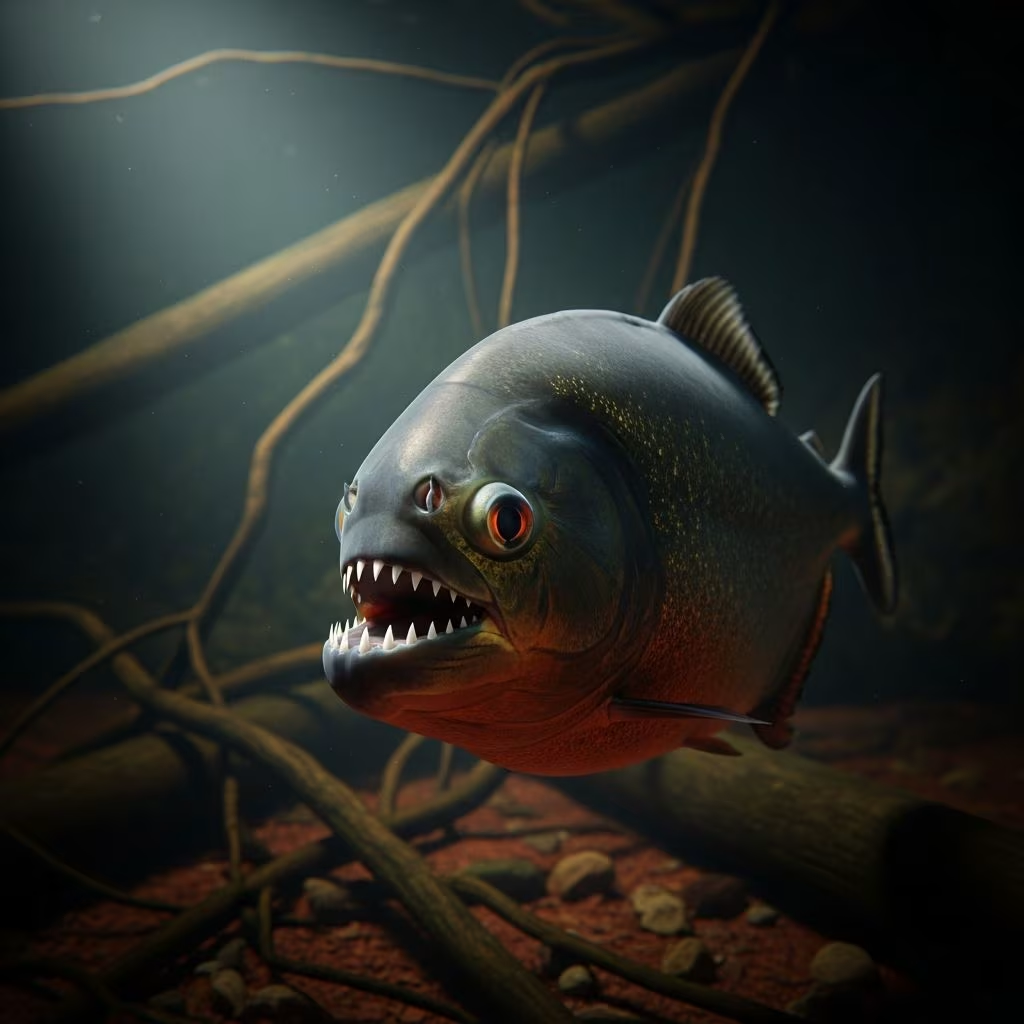
Piranhas have long captured human imagination as ferocious underwater predators, often depicted in popular media as creatures capable of stripping a large animal to bone in minutes. However, the reality of piranha behavior and the actual threat they pose to humans is far more nuanced than sensationalized accounts suggest. Understanding the true nature of these fish requires examining their biology, feeding patterns, and documented interactions with humans.
The Reality Behind the Fearsome Reputation
The piranha’s fearsome image stems largely from their remarkable physical adaptations and occasional feeding behaviors that have been exaggerated through popular culture. These freshwater fish, predominantly found in South American river systems, possess features that genuinely make them formidable predators within their ecological niche—but not necessarily to humans.
Red-bellied piranhas, the most commonly recognized species, are characterized by their silver scales, distinctive red undersides, and triangular teeth arranged in a single row. What truly sets them apart is their bite force. The black piranha produces one of the most powerful bites measured in vertebrates relative to body mass, with bite forces reaching up to 72 pounds. This extraordinary bite strength results from large jaw muscles positioned close to the jaw tip, creating significant mechanical advantage for force production.
Despite these intimidating physical characteristics, piranhas are not the indiscriminate killers they’re portrayed to be in films. Their actual dietary preferences and hunting strategies reveal a far more complex predatory system than simple aggression.
Varied Diet and Feeding Strategies
A critical distinction between piranha myth and reality involves their diet. Rather than being exclusively carnivorous hunters of large animals, piranhas employ diverse feeding strategies and consume a wide variety of food sources.
Red-bellied piranhas are actually omnivores, despite their predatory reputation. Their diet includes:
- Small fish and fish scales
- Fins of other fish species
- Aquatic invertebrates and crustaceans
- Insects and aquatic plants
- Snails and algae
- Carrion and scavenged materials
This dietary flexibility demonstrates that piranhas are opportunistic feeders rather than specialized hunters. Juvenile and sub-adult piranhas often specialize in scale and fin-eating, a feeding behavior that’s more widespread among younger fish. Many piranhas spend considerable time scavenging rather than actively hunting, consuming dead or decomposing organic matter in their environment.
Hunting Behavior and Group Dynamics
One of the most misunderstood aspects of piranha behavior involves their hunting in groups. The popular image of a “feeding frenzy” suggests chaotic, uncontrolled aggression, but scientific observation reveals far more structured group behavior.
Red-bellied piranhas typically hunt in organized groups of 20 to 30 individuals. Rather than random attacks, these groups employ coordinated ambush strategies. During daylight hours, they gather in vegetation and wait for prey to approach, then launch organized attacks when opportunities arise. When not hunting for live prey, they employ other feeding methods including chasing and active scavenging.
Feeding frenzies, while real, are not random occurrences. These intense feeding events occur under specific circumstances—typically triggered by the presence of blood in water or during periods of food scarcity. Research indicates these frenzies are more often the result of provocation or starvation rather than spontaneous aggression. The behavior that appears chaotic to outside observers actually serves an ecological purpose, allowing fish to quickly consume available resources before they’re lost to competitors.
Beyond feeding, piranhas exhibit sophisticated social structures. Groups of juvenile piranhas under five inches form protective shoals that practice natural selection, with the strongest individuals surviving and forming similar-sized groups as they mature. Within established groups, piranhas maintain clear hierarchical structures, with larger, sexually mature individuals occupying central positions within the shoal.
Sensory Capabilities and Environmental Awareness
Piranhas possess exceptional sensory systems that aid in predation but are often cited as evidence of their danger to humans. Their advanced olfactory capabilities are particularly remarkable—they can detect a single drop of blood in vast quantities of water. However, this sensitivity to blood in water is an adaptation for finding injured or dead animals in murky river environments, not an indication they indiscriminately attack anything that bleeds.
Beyond smell, piranhas rely heavily on their lateral line system, a specialized sensory organ running along their body sides that detects vibrations, pressure changes, and water movement. This system allows them to locate prey with precision and sense the movements of other predators. Their communication extends beyond pure sensory detection—they produce drumming sounds through muscle vibrations that echo through their swim bladder, using acoustic signals to coordinate group behavior.
Comparing Threat Levels: Piranhas vs. Other Aquatic Hazards
| Predator | Documented Human Attacks | Actual Danger Level | Primary Threat Type |
|---|---|---|---|
| Piranhas | Rare, typically defensive | Low to humans | Accidental contact, provocation |
| Crocodilians | Numerous documented incidents | High to humans | Active predation |
| Large catfish species | Occasional incidents | Moderate in specific regions | Accidental contact |
| Bull sharks | Well-documented attacks | High to humans | Active predation |
When examined objectively, piranhas present minimal actual danger to humans. Humans are not natural prey for piranhas, and documented attacks are exceptionally rare. In contrast, crocodilians—which share piranha habitats—represent significantly greater threats, as do jaguars and other large mammals that predate on piranhas in their natural environment.
Environmental Factors Influencing Behavior
Piranha aggression levels fluctuate based on environmental conditions and seasonal factors. Red-bellied piranhas demonstrate increased aggression during mating season and when food becomes scarce. Seasonal flooding in rainforest environments dramatically influences piranha behavior and distribution. During wet seasons, piranhas move into flooded forest areas, gaining access to new feeding grounds and breeding sites. These environmental triggers demonstrate that piranha behavior is contextual rather than consistently aggressive.
Water temperature also influences activity levels. Piranhas thrive in warm water between 75 and 85 degrees Fahrenheit. In cooler temperatures, their metabolic activity decreases, reducing hunting intensity and feeding aggression. This seasonal variation is crucial for understanding their actual threat level in different contexts.
Human-Piranha Interactions in Natural Settings
Indigenous populations and modern inhabitants of piranha-rich regions have coexisted with these fish for centuries without experiencing the catastrophic attacks depicted in popular media. While piranhas are considered a nuisance by fishers because they steal bait, consume catches, and may bite when accidentally caught, these incidents are generally minor.
Piranha meat is actually a staple food item for many people in South America, indicating that human consumption of piranhas far exceeds piranha predation on humans. This reversal of the predator-prey dynamic reinforces that piranhas pose minimal genuine danger to human populations inhabiting their native ranges.
Defensive vs. Predatory Aggression
When piranhas do bite humans, the context is typically defensive rather than predatory. Accidentally hooking or netting a piranha often results in a bite—a natural defensive response similar to other fish species. This defensive behavior differs fundamentally from the coordinated predatory attacks these fish employ against natural prey items.
The aggressive displays piranhas use include gill flaring, mouth opening, and threatening postures designed to establish territorial boundaries and establish hierarchical positions within their groups. These displays serve intra-species communication and dominance establishment rather than reflecting unprovoked aggression toward unfamiliar species like humans.
Frequently Asked Questions
Can piranhas kill a human?
Documented cases of piranhas fatally attacking humans are virtually non-existent. While their bite is powerful, piranhas do not target humans as prey. Humans are far too large and capable of defense to represent viable prey items.
How fast can piranhas strip a body?
This popular claim is largely mythological. While feeding frenzies involving multiple piranhas can consume fish quickly, stripping large animals is both slower and less likely than entertainment media suggests. Such events typically require specific conditions like food scarcity and dead or severely injured prey.
Are all piranha species equally dangerous?
No. The red-bellied piranha is among the more aggressive species, but even this species exhibits variable aggression based on environmental conditions, hunger levels, and seasonal factors. Other piranha species demonstrate different behavioral patterns.
What should you do if you encounter piranhas while swimming?
Maintain calm behavior and avoid sudden movements. Piranhas generally avoid humans and only bite when provoked or accidentally caught. Swimming safely in piranha-inhabited areas is routine for millions of people.
Why do piranhas have such a fearsome reputation?
Popular media, sensationalized accounts from early explorers, and the fish’s genuine biological adaptations have combined to create an exaggerated public perception. The gap between actual danger and perceived danger is substantial.
Ecological Role and Conservation Context
Rather than viewing piranhas as indiscriminate killing machines, understanding their ecological role provides perspective on their actual importance. These fish play critical roles in their ecosystems by controlling fish populations, consuming carrion, and serving as food for larger predators. Their presence indicates healthy freshwater environments with balanced predator-prey relationships.
As predators vulnerable to crocodilians, fish-eating birds, jaguars, and human fishing pressure, piranhas exist within complex food webs where they’re neither apex predators nor immune from predation. This ecological positioning reveals them as components of natural systems rather than singular threats.
Conclusion: Balancing Fear and Reality
The piranha represents an excellent case study in how perception diverges from biological reality. While possessing genuine predatory adaptations including powerful bites, coordinated hunting behavior, and sophisticated sensory systems, these fish pose minimal actual danger to humans. Their varied diet, opportunistic feeding strategies, and defensive rather than predatory nature toward humans contradict popular mythologies.
Understanding piranhas accurately requires separating documented facts from entertainment narratives. These remarkable South American fish deserve recognition for their genuine ecological importance and fascinating behavioral complexity, rather than fear based on exaggerated threat assessments. For those inhabiting piranha-rich regions and for anyone encountering these fish, evidence-based understanding of actual behavior patterns proves far more valuable than sensationalized concerns.
References
- Piranha – Our Animals — Henry Vilas Zoo. https://www.henryvilaszoo.gov/animal/piranha/
- Red-bellied piranha — The Dallas World Aquarium. https://dwazoo.com/animal/red-bellied-piranha/
- Piranha: The Ferocious Fish of the Forest Rivers — Puerto Maldonado Tours. https://puertomaldonadotours.com/piranha/
- Pygocentrus nattereri (Redbelly piranha) — Animal Diversity Web. https://animaldiversity.org/accounts/Pygocentrus_nattereri/
- Pecking Order of piranhas in the Aquarium — OPEFE.com. https://opefe.com/peckingorder.html
- Piranha — Wikipedia. https://en.wikipedia.org/wiki/Piranha
- The Feeding Behavior of Piranhas, Explained — A-Z Animals. https://a-z-animals.com/articles/the-feeding-behavior-of-piranhas-explained/



