

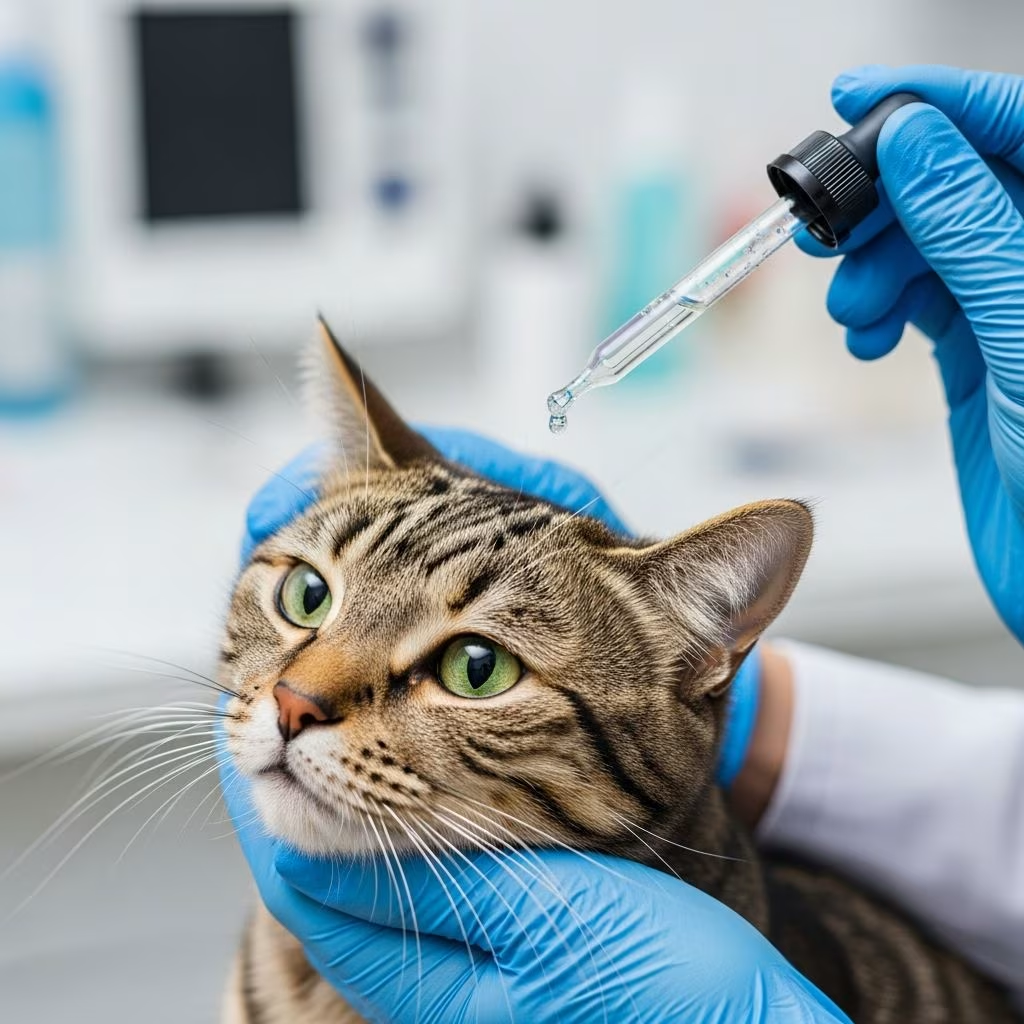
Piperazine serves as a targeted anthelmintic medication primarily used to eliminate roundworms in cats, offering a safe option for both kittens and adults when administered correctly. This guide explores its applications, mechanisms, dosing protocols, and essential safety measures to help cat owners manage parasitic infections effectively.
Understanding Roundworms in Felines
Roundworms, such as Toxocara cati and Toxascaris leonina, represent common intestinal parasites affecting cats worldwide. These nematodes can cause symptoms like diarrhea, vomiting, pot-bellied appearance, and poor coat condition, particularly in young kittens. Kittens often acquire them through their mother’s milk or by ingesting infected soil, prey, or feces, making early intervention crucial.
Untreated infestations lead to malnutrition, intestinal blockages, and in severe cases, migration of larvae to organs like the lungs or eyes, posing zoonotic risks to humans, especially children. Regular deworming forms a cornerstone of preventive veterinary care, with piperazine standing out for its specificity against ascarids.
How Piperazine Targets Parasites
Piperazine functions by disrupting the neuromuscular transmission in roundworms, leading to hyperpolarization of their nerve membranes and subsequent flaccid paralysis. This paralysis, combined with inhibition of the parasite’s energy production via succinate blockade, renders the worms immobile and unable to feed, allowing natural intestinal peristalsis to expel them.
The drug exhibits rapid absorption from the gastrointestinal tract, with detectable levels in urine within 30 minutes and near-complete excretion by 24 hours. This pharmacokinetic profile ensures minimal residue in the cat’s system, contributing to its favorable safety margin.
Safe Age and Indications for Use
Piperazine is approved for cats from as young as 2 weeks of age, targeting intestinal roundworm infections. It proves effective against key species including Toxocara cati, Toxocara canis (in mixed households), and Toxascaris leonina. While primarily for ascarids, some formulations note activity against certain hookworms, though broad-spectrum alternatives may be preferred for mixed infestations.
Veterinarians recommend it for routine worm control in breeding queens, nursing mothers, and multi-cat environments where reinfestation risks are high.
Dosage Protocols by Life Stage
Precise dosing based on body weight is essential to maximize efficacy and minimize risks. The standard rate is 200 mg/kg as a single oral dose. Below is a breakdown tailored to different feline life stages:
| Life Stage | Dosage | Frequency |
|---|---|---|
| Kittens (from 2 weeks) | 200 mg/kg (e.g., 1 tablet per 2.5 kg) | First dose at 2 weeks, repeat every 2 weeks until 3 months, then quarterly |
| Nursing Queens | 200 mg/kg | Start 2 weeks post-birth, every 2 weeks until weaning; sync with kittens |
| Adult Cats (>3 months) | 200 mg/kg | Quarterly, or as advised based on fecal exams |
For liquid forms, common concentrations provide 250 mg piperazine base per 5 mL teaspoon, dosed at ¼ teaspoon per 1.1 kg body weight. Always weigh the cat accurately, especially for those under 1.25 kg, and select kitten-specific products.
Administration Best Practices
Administer piperazine shortly after feeding or mixed with food to enhance tolerance and absorption. Tablets can be given whole or crushed into a small amount of wet food, while liquids offer precision for finicky eaters.
- Measure dose using provided tools (e.g., ¼ tsp syringe).
- Observe for 30 minutes post-dose; withhold remainder if vomiting occurs, retry after 3 hours if no issues.
- Limit single doses to 6 tablets max to avoid overload.
- Wash hands thoroughly after handling.
Treatment schedules typically involve an initial dose, repeat at 14 days, then monthly for prevention in high-risk scenarios.
Potential Side Effects and Monitoring
Piperazine boasts a wide safety margin, with low toxicity reported. Occasional adverse reactions include transient neurological signs like tremors, nausea, vomiting, or urticaria. These are rare and self-resolve, but monitor closely in kittens or epileptics.
Overdose symptoms mimic neurotoxicity, though acute cases are unlikely; no specific antidote exists, so supportive care suffices. Chronic overuse is avoided via single-dose regimens.
Contraindications and Precautions
Avoid in cats under 6 weeks for some products or those weighing less than specified minima. Exercise caution with history of epilepsy, severe renal impairment, or pregnancy—consult a vet first. No known drug interactions, but confirm with professionals.
Do not use in sick or dehydrated cats; diagnostic fecal tests guide appropriate therapy.
Prevention Strategies Beyond Medication
Deworming alone insufficiently controls roundworms; integrate hygiene protocols:
- Litter box daily, dispose waste securely.
- Prevent hunting/prey ingestion.
- Discourage geophagia (dirt eating).
- Quarterly fecal exams for adults, more frequent for breeders.
- Treat all household pets concurrently.
Environmental decontamination via steam cleaning reduces ova viability.
Comparing Piperazine to Other Dewormers
| Dewormer | Target Parasites | Age Minimum | Safety Notes |
|---|---|---|---|
| Piperazine | Roundworms (ascarids) | 2-6 weeks | High margin, ascarid-specific |
| Broad-Spectrum (e.g., pyrantel) | Round/hook/tapeworms | 2-4 weeks | Palatability issues possible |
| Fenbendazole | Multiple including giardia | 6 weeks | 3-day course needed |
Piperazine excels for targeted, affordable roundworm control, ideal for routine kitten protocols.
When to Consult a Veterinarian
Seek professional advice for persistent symptoms, weight loss, bloody stool, or if over-the-counter deworming fails after two doses. Vets perform flotation tests for accurate diagnosis and may recommend prescription options for resistant strains. Pregnant or lactating cats warrant tailored plans.
Frequently Asked Questions (FAQs)
Can piperazine treat hookworms in cats?
It shows activity against some hookworms but is not first-line; combine with broader agents if confirmed.
Is piperazine safe for pregnant cats?
Use only under veterinary guidance due to limited data.
How soon do worms exit after dosing?
Paralyzed worms pass in feces within 24-48 hours via peristalsis.
What if my cat vomits the dose?
Do not redose immediately; wait 3 hours and give remainder if no further vomiting.
Can humans get roundworms from cats?
Yes, Toxocara cati poses zoonotic risk; practice hygiene.
Product Forms and Availability
Available as tablets (e.g., 500 mg citrate), liquid (61% hydrate or 250 mg/5 mL base), or gels/capsules (140 mg per unit). Select vet-approved, species-specific products; over-the-counter options suit mild cases, but prescriptions ensure compliance.
Store at room temperature with 3-year shelf life.
References
- Piperazine Citrate Summary of Product Characteristics — Veterinary Medicines Directorate (VMD), UK Government. 2022-11. https://www.vmd.defra.gov.uk/productinformationdatabase/files/SPC_Documents/SPC_128779.PDF
- PetArmor Worm Away Piperazine De-Wormer Capsules — Product Label. Accessed 2026. https://www.tomthumb.com/shop/product-details.960139257.html
- PRO·SENSE® Roundworm Liquid Dewormer Cat — Product Monograph. 2017-07-19. https://pdf.hres.ca/dpd_pm/00040449.PDF
- Wormeze Liquid Wormer Product Information — Retail Description. Accessed 2026. https://www.walmart.com/ip/Wormeze-Liquid-Wormer-With-Piperazine-For-Cats-Dogs-8-oz/200988607
- Piperazine Hydrate Liquid 61% Specifications — Neospark Veterinary Product. Accessed 2026. https://neospark.com/products/piperazinehydrateliquid61/PRD-61
- WormEze Gel Wormer for Cats and Dogs — DailyMed, NIH. Accessed 2026. https://dailymed.nlm.nih.gov/dailymed/fda/fdaDrugXsl.cfm?setid=5c099b84-9028-4208-ad0b-79de1e0f084c&type=display



