
Pionus Parrots: Care, Personality & Species Guide
Discover the quiet, affectionate Pionus parrot—care guide, personalities, and species profiles.
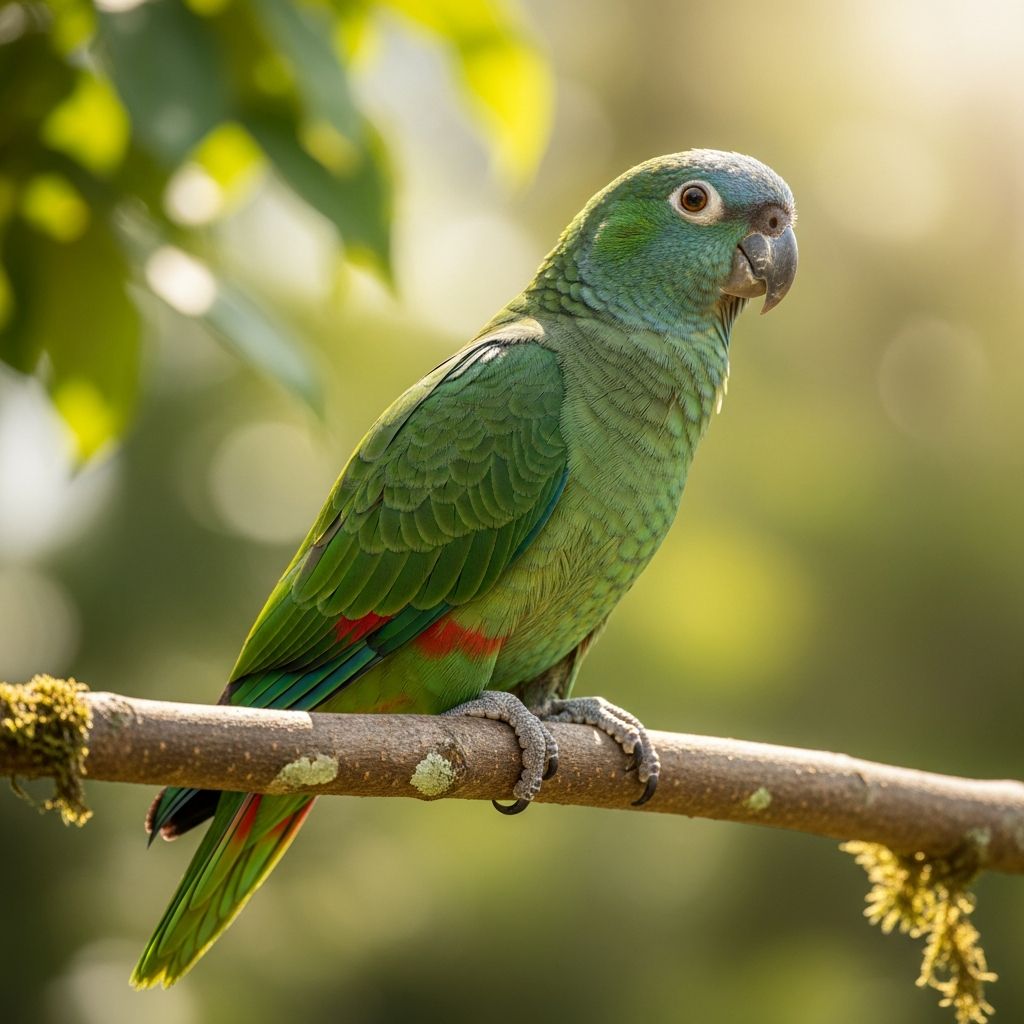
What Is A Pionus Parrot?
Pionus parrots are medium-sized avian companions that have steadily gained popularity among bird enthusiasts seeking an alternative to more commonly kept parrot species. These quiet, intelligent birds originate from South and Central America and represent a unique middle ground in the parrot world. Approximately 10 to 12 inches in length, Pionus parrots share a distinctive body structure characterized by their compact, chunky build—similar in shape to Amazon parrots but considerably smaller in size.
The defining physical characteristic that unites all Pionus species is their red plumage located at the vent area beneath the tail, earning them the historical nickname “red-vented parrots.” Additionally, all members of this genus possess a distinctive bare, fleshy eye-ring that circles the entire eye, varying in color from white to coral depending on the species. Their short, square tail further distinguishes them from other parrot varieties. Most Pionus parrots display an olive green body base with striking accents of blue, white, red, and various green tones.
What makes Pionus parrots particularly appealing to many pet owners is their temperament. Compared to the more commonly kept parrot species like Amazons, conures, and macaws, Pionus parrots are notably quiet. While not completely silent, they vocalize far less frequently than their more boisterous relatives, making them suitable for apartment living and environments where noise considerations matter.
Native Region & Natural Habitat
The eight recognized species of Pionus parrots inhabit a diverse range of ecosystems throughout South and Central America. These birds naturally thrive in forested areas, savannas, and mountainous regions where vegetation provides abundant food sources and shelter. Their geographical distribution spans from Central America through the Amazon Basin and into South American territories, reflecting their adaptation to various environmental conditions.
Understanding their native habitat is crucial for providing appropriate captive care. In the wild, Pionus parrots follow distinct daily routines, typically waking around dawn (approximately 6:00 AM) when they begin foraging for food and water, flying through the canopy, climbing among branches, playing, and hanging upside down in trees. This natural behavior pattern informs the activity level and enrichment needs of captive birds.
Personality & Behavior
Pionus parrots possess a distinctive personality profile that sets them apart from other parrot species. Generally described as quiet, easy-going, and slightly standoffish when compared to more popular parrot varieties, Pionus birds are far more complex than these simple descriptors suggest. Owners consistently report that their Pionus parrots are affectionate, though not overly dependent, and demonstrate attentive, sweet dispositions toward their human companions.
Distinctive Behavioral Traits
Several behaviors are unique to or particularly common in Pionus parrots. The “strut” is a predominantly male behavior where the bird lowers its head so the body becomes parallel to the ground, then marches slowly up and down with tail flared, head and body puffed, and wings held stiffly away from the body. This behavior serves as a territorial warning or displays excitement or nervousness. During the strut, it’s wise to admire from a distance rather than attempt handling.
Another characteristic trait is the “wheeze,” a curious sound Pionus parrots make when excited or stressed. This wheezing can sound quite alarming, resembling an asthmatic steam train, but it is a normal behavioral response rather than an indication of respiratory illness. Understanding this trait prevents unnecessary veterinary concern and misdiagnosis.
Pionus parrots are extremely strong and agile fliers despite their compact build. They employ an unusual flying technique, not fully extending their wings but instead using half-wing strokes that develop powerful chest muscles, giving the breast a rounded appearance—in fact, the name “Pionus” derives from the Latin meaning “fat parrot.” Even clipped-wing birds remain escape risks due to their natural flight capabilities.
Care & Feeding Requirements
Proper nutrition and care are fundamental to maintaining healthy, thriving Pionus parrots in captivity. These birds are typically excellent eaters and respond well to a structured dietary approach combined with environmental enrichment.
Diet & Nutrition
Pionus parrots should receive a formulated main diet consisting of high-quality pellets such as premium daily pellets or nutritionally balanced nuggets. This foundation diet should be supplemented with fresh fruits and vegetables to provide variety, essential nutrients, and psychological enrichment through foraging behaviors. Unlike some parrot species that require extensive food preparation, Pionus parrots generally accept and thrive on a straightforward dietary protocol when offered consistently.
Housing & Environmental Considerations
Due to their territorial nature, Pionus parrots require carefully designed cage setups. External feeders that can be accessed from outside the cage are essential, as these territorial birds do not appreciate intrusions into their space. A spacious cage accommodates their activity level and behavioral needs. Toys should be rotated regularly to maintain mental stimulation and combat boredom in these inquisitive birds. Pionus parrots particularly enjoy soft wood, balsa, and cork for chewing, along with safe plastic textures for exploration. Foot toys, hanging gyms, and rope spirals prove especially popular as these birds love to play and hang upside down.
The Pionus Family: Species Overview
Eight distinct Pionus species exist, each displaying unique coloration and subtle behavioral variations. The five most readily available species in the pet trade are the Maximilian’s, dusky, blue-headed, white-capped, and bronze-winged Pionus.
Blue-headed Pionus (Pionus menstruus)
The blue-headed Pionus stands as the most commonly kept species within the genus, primarily due to its striking visual appearance. Juveniles emerge predominantly green but undergo dramatic color development after a couple of molts. At approximately one year of age, the head and upper chest transform into a deep cobalt blue, while the beak darkens to blackish with distinctive pink patches on either side of the upper mandible. The body and wings display multiple shades of green, while the eye rings appear grey. This species represents the most visually stunning member of the Pionus family and often serves as the gateway species for new Pionus enthusiasts.
Maximilian’s Pionus (Pionus maxamiliani)
Sometimes referred to as the Scaly-headed Parrot, the Maximilian’s Pionus displays dark green head feathers with grey scalloping that creates an attractive scaled appearance. The throat and upper chest showcase mauvy purple coloration, while the body ranges through different green shades. The back and wings vary from dark to light olive brown. The beak typically appears yellow with dark grey coloring toward the base of the upper mandible, and white to light grey eye rings complete the distinctive appearance.
White-capped Pionus (Pionus senilis)
The white-capped species features predominantly green head feathers edged with blue, with a defining white cap covering the forehead and crown that fully develops by approximately one year of age. The body is mostly green while the chest displays olive brown edged with blue. Upper wings show greenish-brown tones, and the beak appears yellowy with eye rings ranging from whitish-pink to orange. This species demonstrates consistent behavioral traits, including increased territoriality and trainability compared to other Pionus varieties.
Bronze-winged Pionus (Pionus chalcopterus)
The bronze-winged Pionus presents a strikingly different aesthetic from other species, with an overall dark violet-blue coloration and pink at the throat area. The defining characteristic is the bronze upper wings contrasting with purple-blue flight feathers. Yellow beak and dull pink eye rings complete the visual profile, creating a more dramatically colored appearance compared to the predominantly green species.
Dusky Pionus (Pionus fuscus)
The dusky Pionus exhibits distinctive black and white markings on a slate-blue head that create a striking hawk-like appearance. The chest displays mauvy pink coloration while the wings appear dark grey-brown. A blackish beak with yellow on the sides, red lores, and grey eye rings characterize this species. The dusky Pionus demonstrates particularly pronounced territorial and aggressive behaviors, though these birds prove highly willing to learn tricks and respond to training.
Coral-billed Pionus (Pionus sordidus)
The coral-billed Pionus showcases an olive green base with a silvery sheen throughout the plumage. A distinctive purple-blue band crosses the upper chest and neck area. At maturity, the beak transforms to a characteristic coral red, while grey eye rings provide contrast. This species represents one of the less commonly encountered Pionus varieties in the pet trade.
Comparing Pionus to Other Parrot Species
Pionus parrots occupy a distinctive niche within the parrot world. While they share the compact, chunky body structure of Amazon parrots, they are considerably smaller and quieter. Compared to African grey parrots, Pionus birds are less talkative but equally quiet and devoted companions. They lack the vivid flash and dramatic coloration of conures while matching similar size ranges. The Pionus represents an excellent choice for those seeking a mid-sized, calm, intelligent parrot without the noise demands of larger species or the aggressive tendencies of some smaller varieties.
Behavioral Species Differences
While generalizations exist regarding species-specific behaviors, expert observations indicate considerable individual variation within species. According to leading Pionus specialists, no consistently appearing species-specific behaviors have been identified in captive Pionus, with possible exceptions including white-capped and dusky varieties. This variability means that individual personality and socialization play crucial roles in determining any specific bird’s behavior, regardless of species.
Frequently Asked Questions
Q: Are Pionus parrots good pets for beginners?
A: Yes, Pionus parrots can make excellent pets for those seeking a quieter, lower-maintenance parrot. Their calm temperament and moderate size make them more manageable than larger species like macaws or African greys. However, they still require significant commitment to proper nutrition, enrichment, and veterinary care.
Q: How long do Pionus parrots live?
A: Pionus parrots have a lifespan of 30 or more years, making them a lifelong commitment that requires planning for their long-term care needs.
Q: Can Pionus parrots live with other birds?
A: Pionus parrots are territorial and generally not compatible with other bird species. Housing them separately from other avian companions is typically recommended to prevent territorial conflicts and aggression.
Q: Why do Pionus parrots wheeze?
A: Wheezing is a normal behavioral response when Pionus parrots become excited or stressed. This distinctive sound should not be confused with respiratory illness and does not require veterinary intervention unless accompanied by other concerning symptoms.
Q: What is the best diet for Pionus parrots?
A: A combination of high-quality pellets or nutritionally balanced nuggets supplemented with fresh fruits and vegetables provides optimal nutrition. Pionus parrots are typically enthusiastic eaters that readily accept this diverse diet.
Q: How much social interaction do Pionus parrots require?
A: While Pionus parrots are affectionate and social birds, they are slightly more independent than some parrot species. Daily interaction, mental stimulation through toys and training, and environmental enrichment support their emotional and psychological wellbeing.
Conclusion
Pionus parrots represent an often-overlooked gem within the avian pet world. Their quiet nature, manageable size, affectionate personalities, and striking diversity of species make them ideal companions for those seeking an intelligent, devoted parrot without the noise and intensity of more commonly kept varieties. Understanding their specific care requirements, behavioral traits, and individual species characteristics enables potential owners to make informed decisions and provide these remarkable birds with the enriching, appropriate care they deserve. Whether choosing a visually stunning blue-headed variety or one of the unique alternative species, Pionus parrots reward their dedicated owners with years of quiet companionship and engaging interaction.
References
- Pionus Parrot – Specialized Care for Avian & Exotic Pets — Buffalo Bird Nerd. 2024. https://www.buffalobirdnerd.com/storage/app/media/PSPPionusParrots.pdf
- Pionus Parrot Personality, Food & Care – Pet Birds by Lafeber Co. — Lafeber Company. 2024. https://lafeber.com/pet-birds/species/pionus-parrots/
- Complete Guide to Pionus Parrot General Behaviour — Exotic Pet Care Channel. 2024. https://www.youtube.com/watch?v=P0i2ejVlApI
- Pionus Parrots As Pets — ThinkParrot. 2024. https://thinkparrot.com/pionus-parrots-as-pets/
Similar Articles








Read full bio of Sneha Tete


