

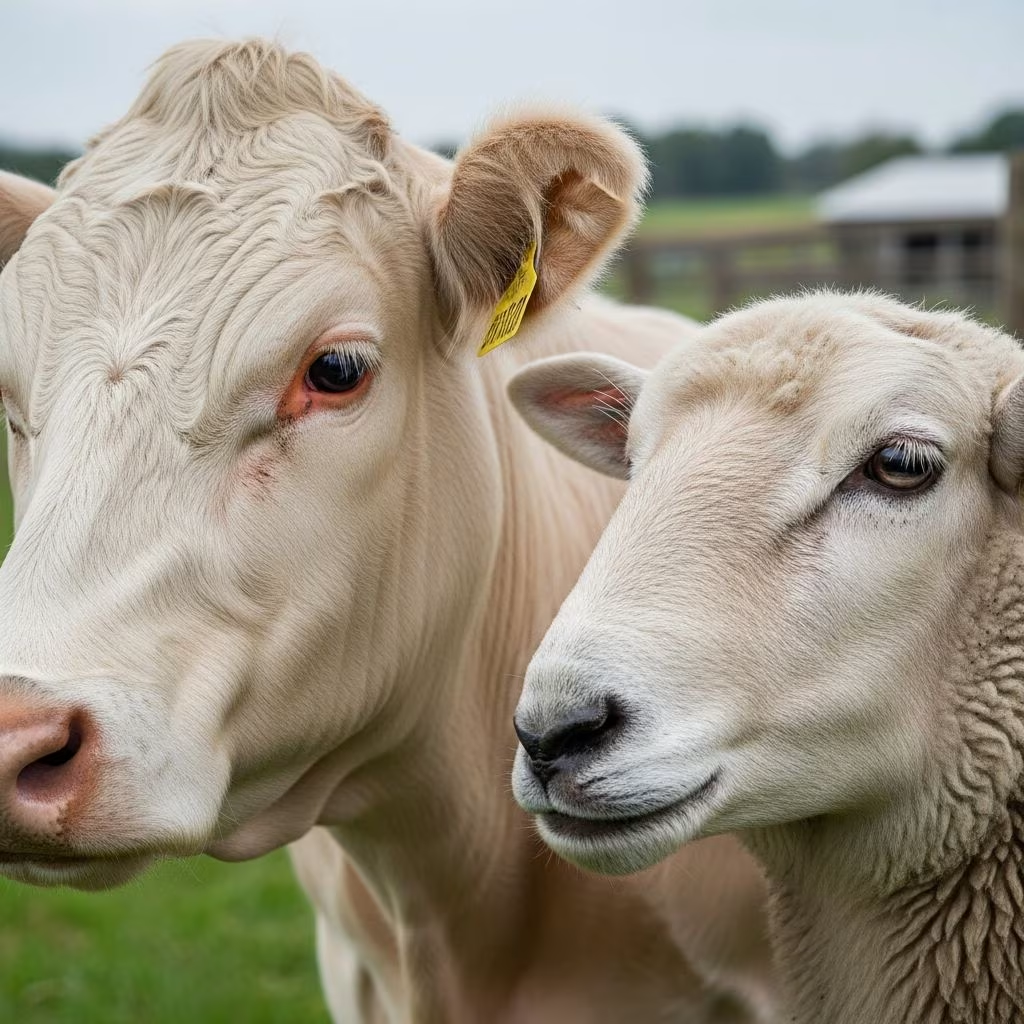
Infectious keratoconjunctivitis, commonly known as pink eye, represents a significant challenge for livestock producers, particularly in cattle and small ruminants like sheep and goats. This bacterial infection targets the cornea and conjunctiva, leading to inflammation, pain, and potential vision impairment if not addressed promptly. Understanding its pathology enables timely intervention, reducing suffering and economic impacts such as weight loss and decreased productivity.
Understanding the Disease Basics
Pink eye thrives in warm, dusty environments, spreading rapidly through direct contact or contaminated materials. The primary culprit in cattle is Moraxella bovis, a gram-negative bacterium that adheres to the eye surface, triggering an immune response. In small ruminants, similar pathogens like Moraxella ovis or Mycoplasma spp. play roles, often compounded by environmental stressors. UV exposure exacerbates damage by activating bacterial toxins, while flies act as vectors, mechanically transferring bacteria between animals.
The disease progresses in stages: initial conjunctival redness gives way to corneal clouding, ulceration, and in severe cases, rupture. Affected animals exhibit discomfort that disrupts feeding, leading to reduced gains—up to 0.5 pounds per day in feedlot cattle. Early detection hinges on vigilance during routine checks, as unilateral cases can spread unnoticed.
Recognizing Clinical Manifestations
Owners should watch for hallmark signs that signal onset. Animals squint excessively due to photophobia, holding eyes partially closed to shield from light. Profuse tearing wets the face, often matting eyelashes with pus or dried discharge, creating visible streaks. The conjunctiva reddens and swells (chemosis), while the cornea develops a bluish haze from edema.
- Early phase: Mild tearing, blinking, and eyelid twitching.
- Moderate phase: Corneal opacity, central ulceration appearing as a white spot, injected sclera.
- Advanced phase: Deep ulcers, iris prolapse, potential blindness if bilateral.
Pain manifests behaviorally: affected livestock isolate, graze less, and bump into objects. In calves, growth falters quickly; in adults, milk yield drops. Differentiate from differentials like IBR (cloudy discharge, respiratory signs) or trauma (asymmetric lesions) via veterinary swab for culture.
Pathogens and Risk Amplifiers
Beyond M. bovis, co-infections with Mycoplasma bovoculi or viruses heighten severity. Sheep cases often involve Chlamydia pecorum or Brucella ovis, linked to flock density. Key amplifiers include:
| Risk Factor | Impact on Cattle | Impact on Sheep/Goats |
|---|---|---|
| Dust and wind | Irritates mucosa, aids bacterial entry | Exacerbates in dry pastures |
| Face flies | Primary vector, peak summer | Less dominant; dust flies common |
| Nutritional gaps | Selenium/vitamin A deficiency weakens immunity | Copper shortage impairs healing |
| Light eyelids | Increased UV vulnerability | Similar, select pigmented breeds |
Breeds like Hereford (unpigmented) suffer higher incidence. Stress from weaning or transport spikes outbreaks.
Immediate Treatment Protocols
Act swiftly—delay beyond 48 hours risks scarring. Isolate cases to curb spread, using gloves and disinfectants. Antibiotics target the bacterium:
- Systemic: Long-acting oxytetracycline (20 mg/kg IM), florfenicol, or tulathromycin. Effective early, sustains levels 7-10 days.
- Subconjunctival: 1-2 mL oxytetracycline with dexamethasone for inflammation. Superior outcomes vs. eyelid injection.
- Topical: Antibiotic ointments (avoid prohibited ones in food animals), sprays like Vetericyn for adjunct pain relief.
For ulcers, protect the globe:
- Third eyelid flap or tarsorrhaphy (suturing lids) under local block.
- Patches or sleeves block UV/flies.
- Severe rupture may necessitate enucleation.
House indoors with feed access; healing spans 7-21 days. Studies confirm treatment halves recovery time but not always weight loss. Consult vets for extra-label use.
Supportive Measures for Recovery
Beyond drugs, manage environment: provide shade, dust control via watering arenas. Nutritional boosts—vitamin A (30,000 IU/head), selenium—aid epithelial repair. Anti-inflammatories like banamine reduce pain, improving intake. Monitor for secondary issues like panophthalmitis.
In sheep, cryosurgery for third eyelid lesions or excision prevents recurrence. Calves under 6 months heal faster due to robust immunity.
Prevention: Building Resilient Herds
Proactive steps slash incidence by 50-70%:
- Fly control: Ear tags (pyrethrin/organophosphate), pour-ons, back-rubbers from May.
- Vaccination: Piliguard/Pinkeye Shield for M. bovis; two doses pre-outbreak, booster annually. Reduces severity, not always incidence.
- Breeding selection: Favor eyelid pigmentation (80% reduction risk).
- Nutrition: Balance minerals; test forages.
- Herd management: Quarantine newcomers, reduce overcrowding.
Vaccines shine in endemics; combine with autogenous for strain-specific protection.
Species-Specific Considerations
Cattle Focus
IBK costs $74/head in losses (treatment + gains). Feedlots see explosive outbreaks; cull chronic cases.
Small Ruminants
Less studied, but outbreaks tie to weaning stress. Moraxella ovis predominates; treat similarly, emphasize fly nets in barns.
Economic and Welfare Impacts
Untreated, 20-30% morbidity yields $100M annual U.S. losses. Welfare demands prompt care—blindness contravenes standards. Track via apps for early alerts.
Common Queries on Livestock Pink Eye
Frequently Asked Questions
Can pink eye resolve without treatment?
Yes, but slowly (4-6 weeks), with scarring and production loss. Antibiotics accelerate to 10 days.
Is vaccination 100% effective?
No; prevents 50-70% cases, best for severity reduction. Revaccinate yearly.
How to handle outbreaks in large herds?
IM antibiotics herd-wide if >5% affected; isolate, fly control priority.
Are eye patches safe for all ages?
Yes, from calves up; monitor for infection. Remove post-healing.
What if treatment fails?
Reculture for resistance; consider Mycoplasma therapy or surgery.
This guide equips producers to combat pink eye effectively, safeguarding animal health and farm viability.
References
- Eye Conditions in Cattle — NADIS. 2023. https://www.nadis.org.uk/disease-a-z/cattle/eye-conditions-in-cattle/
- Infectious Bovine Keratoconjunctivitis — Auburn University College of Veterinary Medicine. 2019-10-01. https://www.vetmed.auburn.edu/wp-content/uploads/2019/10/2_Infectious-Bovine-Keratoconjunctivitis_RUSH.pdf
- Heal Pink Eye in Livestock — Vetericyn. 2023. https://vetericyn.com/blogs/vetericyn/how-to-heal-pink-eye-in-livestock
- Infectious Bovine Keratoconjunctivitis (Cattle Pinkeye) — University of Tennessee Institute of Agriculture. 2020-11. https://utbeef.tennessee.edu/wp-content/uploads/sites/127/2020/11/W472.pdf
- Combating Pink Eye in Cattle — Shepton Veterinary Group. 2023. https://sheptonvets.com/combating-pink-eye-in-cattle-effective-treatment-prevention-management-strategies/
- Pinkeye Management in Cow-Calf Operations — California Department of Food and Agriculture. 2023. https://www.cdfa.ca.gov/AHFSS/AUS/docs/AUS-CowCalf-Pinkeye-Vets.pdf
- Infectious Bovine Keratoconjunctivitis (IBK) — Zoetis US. 2025. https://www.zoetisus.com/conditions/cattle/infectious-bovine-keratoconjunctivitis/



