Pin and Blood Feathers in Birds: A Complete Guide
Understanding pin and blood feathers: what they are, why they matter, and how to care for them.
Understanding Pin and Blood Feathers in Birds
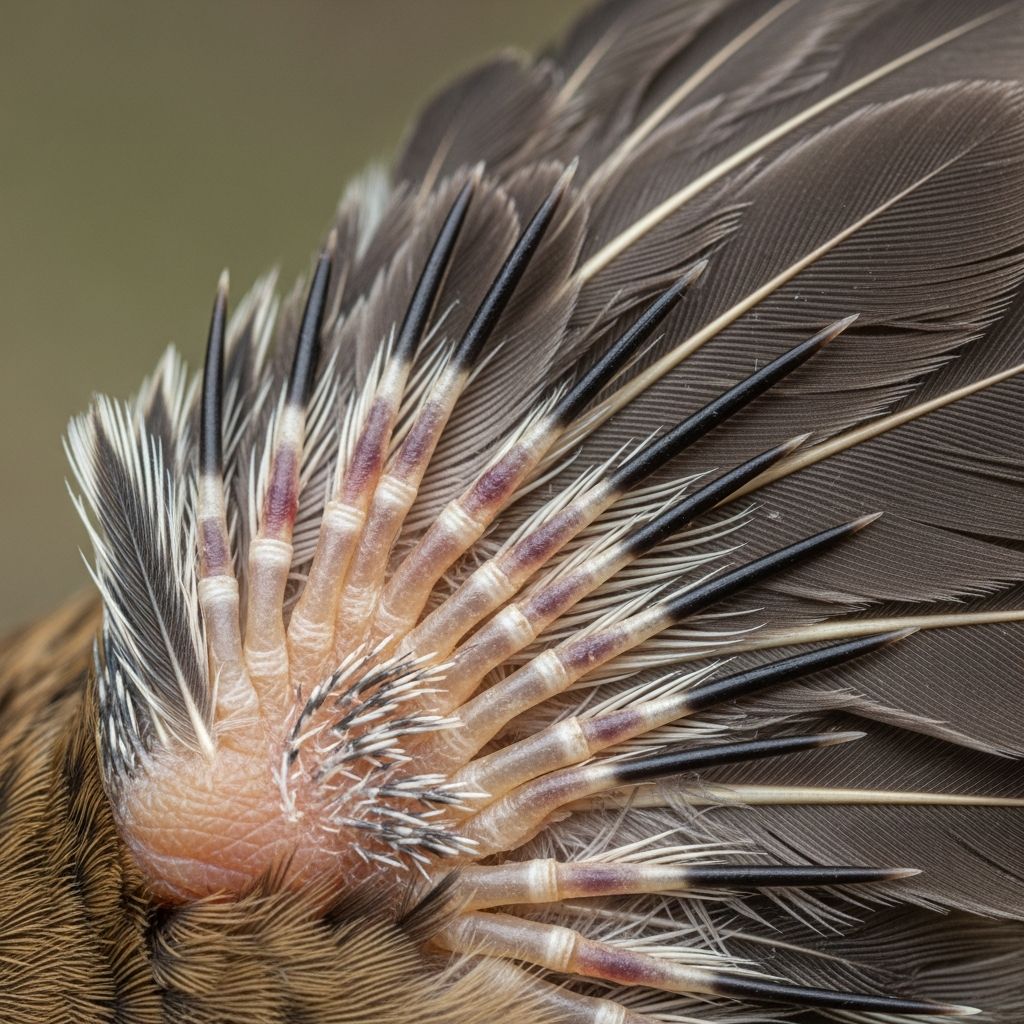
Pet bird owners often encounter terms like “pin feathers” and “blood feathers” during their bird’s molting cycle. These specialized feathers represent an important stage in a bird’s feather development and require specific understanding and care. Pin feathers, also known as blood feathers, are new feathers that are actively growing on a bird’s body. Unlike mature feathers that have lost their blood supply, these developing feathers contain an active blood supply that nourishes them during their growth phase. Understanding what pin feathers are and how they function is essential for any bird owner who wants to maintain their pet’s health and comfort.
What Are Pin Feathers and Blood Feathers?
Pin feathers are the early developmental stage of new feathers in birds. They emerge as tubular structures and represent the beginning of the molting and regrowth cycle that all birds experience. During this stage, the feathers are particularly sensitive because they contain living blood vessels that supply oxygen and nutrients necessary for proper feather development. These feathers typically appear initially as small, pointed structures that resemble pins, which is how they earned their common name.
Blood feathers are essentially the same as pin feathers, with the distinction being that the term “blood feather” emphasizes the active blood supply flowing through the developing feather shaft. The presence of this blood supply is what makes these feathers different from fully matured feathers. Once a feather fully develops and matures, the blood supply recedes, and the feather becomes a normal, mature feather that is no longer considered a blood feather or pin feather.
Location and Appearance
Pin feathers and blood feathers typically appear in specific locations on a bird’s body. The longer, stronger feathers found on the wings, tail, and crest of birds such as cockatoos are particularly common sites for blood feather development. These areas contain the larger, structural feathers that require more development time. In contrast, shorter, rounder feathers known as pin feathers develop in other parts of the bird’s body where smaller, softer plumage is needed.
The Molting Process and Feather Development
Feather molting is a natural biological process that all birds experience. During molting, birds shed old, worn feathers and grow new ones to maintain their plumage in optimal condition. The molting process can be quite stressful for birds, as building lots of new feathers requires significant energy and resources. Some birds may become less active, more subdued, or even stop laying eggs during a heavy molt. Species such as canaries may stop singing or vocalizing while their bodies focus energy on feather production.
During the molting cycle, birds may become more prone to health problems because their immune systems are under stress from the demands of feather production. This makes it especially important for bird owners to provide excellent nutrition, maintain a stress-free environment, and monitor their birds closely during molting periods. The development of blood feathers is a completely normal part of this feather maturation process and should not be cause for alarm under normal circumstances.
Abnormal Molting Patterns
While molting is a natural process, some birds may experience irregular molts or abnormal feather growth. If your bird shows signs of irregular molting patterns or abnormal feather development, it should be examined by an avian veterinarian. Your veterinarian can determine whether treatment, dietary changes, or environmental modifications are necessary to support healthy feather growth and overall well-being.
Complications Associated with Broken Blood Feathers
While blood feathers are a normal part of feather development, complications can arise if they are broken or damaged before they fully mature. When a blood feather breaks prematurely, it can result in serious bleeding because of the active blood supply still flowing through the feather shaft. Understanding these potential complications and knowing how to respond is crucial for any bird owner.
Profuse Bleeding
If a blood feather breaks before it fully matures, it can bleed profusely because of the blood supply within the feather shaft. The amount of bleeding can be alarming to pet owners who are unfamiliar with this condition. Immediate action is crucial to stop the bleeding and prevent further injury to the bird. Well-nourished birds have good clotting abilities and can often recover from minor blood loss at home, but intervention is still necessary to minimize bleeding and stress.
Stress and Feather Development
If a bird experiences stress while a blood feather is growing, it can negatively affect the feather’s development. Stress may lead to stress bars or weaken the feather structure, causing it to grow in a malformed shape or with a weaker structure. This can make the feather more susceptible to breaking and may also contribute to behavioral issues such as feather plucking later in the bird’s life.
Can a Bird Die From a Broken Blood Feather?
One of the most common concerns among bird owners is whether a broken blood feather can be life-threatening. The answer is yes—if a bird breaks a blood feather and the bleeding does not stop, it can be serious and even life-threatening. However, it’s important to understand that with proper first aid and veterinary care, most incidents involving broken blood feathers can be managed successfully.
Birds that lose too much blood can go into shock, which is a dangerous medical emergency. However, healthy, well-nourished birds have remarkable clotting abilities. According to avian veterinary experts, well-nourished birds can often recover from up to 30 percent blood loss. This does not mean you should allow your bird to bleed extensively, but rather that with prompt intervention to stop the bleeding, most birds will survive a broken blood feather incident.
First Aid for Broken Blood Feathers
Knowing how to provide appropriate first aid for a broken blood feather can make the difference between a minor incident and a serious emergency. The following steps outline the recommended approach to managing a bleeding blood feather.
Immediate Steps
If you identify blood coming from a feather shaft, the first priority is to stop the bleeding. Apply styptic powder to the affected area and apply gentle pressure with clean gauze. Styptic powder is a specially formulated substance designed to promote clotting and stop bleeding quickly. If styptic powder is not available, cornstarch can serve as an alternative clotting agent, though it is not as effective.
Keep pressure on the area for several minutes to allow clotting to occur. Monitor the bird closely to ensure the bleeding has stopped. Unless your bird is bleeding heavily and you are unable to stop it after a few minutes, leaving the blood feather in place is much more humane than attempting removal.
When to Contact Your Veterinarian
You should contact your veterinarian immediately after discovering a broken blood feather and providing initial first aid. Your vet will advise you on whether the bird needs to be seen at a clinic so that the broken shaft can be removed by a professional. In many modern veterinary practices, the broken feather shaft may be allowed to heal naturally while keeping the bird comfortable and monitored.
Should You Pull Out a Broken Blood Feather?
Modern avian veterinarians have significantly changed their approach to treating broken blood feathers. In the past, it was common practice to remove the broken feather as the first line of defense. However, contemporary veterinary practice no longer encourages this approach in most cases. Instead, veterinarians now recommend attempting to stop the bleeding while leaving the feather in place whenever possible.
Reasons to Avoid Pulling the Feather
Intense Pain and Trauma: Pulling out a feather is incredibly painful to the bird because the feather shaft is deeply embedded in living skin tissue. Removing the feather causes tissue damage that is comparable to a severe injury. Feathers in primary wing and tail areas are firmly attached to bones and ligaments, intensifying the pain. This extreme pain can induce shock and cause severe emotional trauma to your bird.
Damage to the Feather Follicle: Pulling out a blood feather often damages the feather follicle, which is the tissue that anchors the feather in place. When the follicle is damaged during feather removal, it may prevent normal regrowth of the feather. This can cause new feathers to grow curved, misaligned with surrounding feathers, or with a weaker structure than normal. The resulting discomfort may lead to feather plucking issues over time.
Risk of Hematoma Formation: Removing the shaft of a blood feather can lead to a hematoma—a deep, painful bruise that forms under the skin. Hematomas are difficult to treat, prone to infection, and can exacerbate feather plucking behaviors due to the discomfort they cause. Avoiding feather removal except by a qualified veterinarian minimizes the risk of these serious complications.
Post-Injury Care and Recovery
After a broken blood feather incident, proper care and monitoring are essential for your bird’s recovery and well-being. Taking appropriate steps during the recovery period can help prevent complications and support healing.
Hospital Care and Monitoring
Keep your bird in an intensive care (ICU) hospital cage to support rest and healing. Your bird should be kept warm, be allowed to rest, and its condition should be monitored every hour or two during the critical recovery period. Ask your avian veterinarian about appropriate pain medications that can help your bird remain comfortable during recovery.
Monitor your bird’s weight on a daily basis until it returns to its normal weight and resumes normal eating habits and daily activities. Weight loss during recovery can indicate complications or insufficient nutrition, and your veterinarian should be notified if your bird is not gaining weight as expected.
Nutritional Support
Ensure your bird receives optimal nutrition during the recovery period. Birds deficient in vitamin K may struggle more with clotting, so proper nutrition is important for supporting the body’s natural healing processes. Consult your veterinarian about whether any dietary supplements or changes might benefit your bird’s recovery.
Recognizing Signs of Illness Related to Blood Feathers
Bird owners should be aware of signs that indicate problems with blood feathers or other serious health issues. Abnormal feathers including dull color, unusual texture, abnormal shape, or unusual growth patterns can indicate underlying health problems. Bleeding from blood feathers or pin feathers, when not related to trauma, may indicate a clotting disorder or other medical condition requiring veterinary attention.
Other concerning signs include prolonged molt that extends longer than normal, feather changes such as abnormal coloring, chewed or plucked feathers, or unexplained feather loss or baldness. If you notice any of these signs, contact your avian veterinarian for a thorough examination.
Preventing Blood Feather Injuries
While not all blood feather injuries can be prevented, certain measures can reduce the risk of injury to your bird. Provide a safe environment free from hazards that could cause trauma to your bird. Minimize stressors during molting periods, as stress can weaken feathers and make them more prone to breaking. Ensure your bird receives excellent nutrition to support strong feather development and good clotting ability.
Handle your bird gently, particularly during molting when blood feathers are actively developing. Avoid excessive handling during molting periods when your bird may already be stressed from feather development. These preventive measures can significantly reduce the likelihood of blood feather injuries.
Frequently Asked Questions
Q: How long does it take for a blood feather to fully mature?
A: The time required for a blood feather to fully mature varies depending on the bird species and the specific feather type. Generally, blood feathers develop over several weeks, with larger feathers on the wings and tail taking longer to mature than smaller body feathers. Once fully mature, the blood supply recedes and the feather becomes a normal adult feather.
Q: What should I do if my bird has a bleeding blood feather and I don’t have styptic powder?
A: If styptic powder is not available, cornstarch can be used as an alternative clotting agent, though it is less effective. Apply gentle pressure with clean gauze to the bleeding area and contact your veterinarian immediately for guidance. Your veterinarian may recommend other clotting agents or may want to see your bird for professional treatment.
Q: Can stress cause blood feathers to break?
A: Yes, stress can weaken developing blood feathers and increase the likelihood that they will break. Stress can cause stress bars or other structural weaknesses in feathers, making them more fragile. Providing a calm, stable environment during molting periods is important for supporting healthy feather development.
Q: Should I be concerned if my bird has blood feathers during molting?
A: No, having blood feathers during molting is completely normal and is part of the natural feather development and replacement cycle. However, you should handle your bird gently during this time and monitor blood feathers to ensure they develop properly without breaking or bleeding.
Q: How can I tell if my bird is molting normally?
A: Normal molting involves gradual feather loss and replacement over a period of time, usually occurring during specific seasons. If your bird is experiencing irregular molting patterns, prolonged molt lasting unusually long, or abnormal feather growth patterns, consult your avian veterinarian to ensure your bird is molting normally and is in good health.
References
- Treating Bird Injuries — VetMedX Animal Wellness. 2024. https://vetmedx.co.za/treating-bird-injuries/
- What to Do About A Broken Blood Feather — BirdSupplies.com. 2024. https://birdsupplies.com/blogs/news/157086023-what-to-do-about-a-broken-blood-feather
- Recognizing the Signs of Illness in Pet Birds — VCA Animal Hospitals. 2024. https://vcahospitals.com/know-your-pet/recognizing-the-signs-of-illness-in-pet-birds
- Molting in Birds — VCA Animal Hospitals. 2024. https://vcahospitals.com/know-your-pet/molting-in-birds
- Avian First Aid — Dr. Greg Burkett. 2024. Educational resource on avian emergency care and management.
Similar Articles






Read full bio of Sneha Tete