Pimobendan Essentials for Canine Heart Care
Discover how pimobendan transforms heart disease management in dogs, extending life and easing symptoms for breeds prone to cardiac issues.
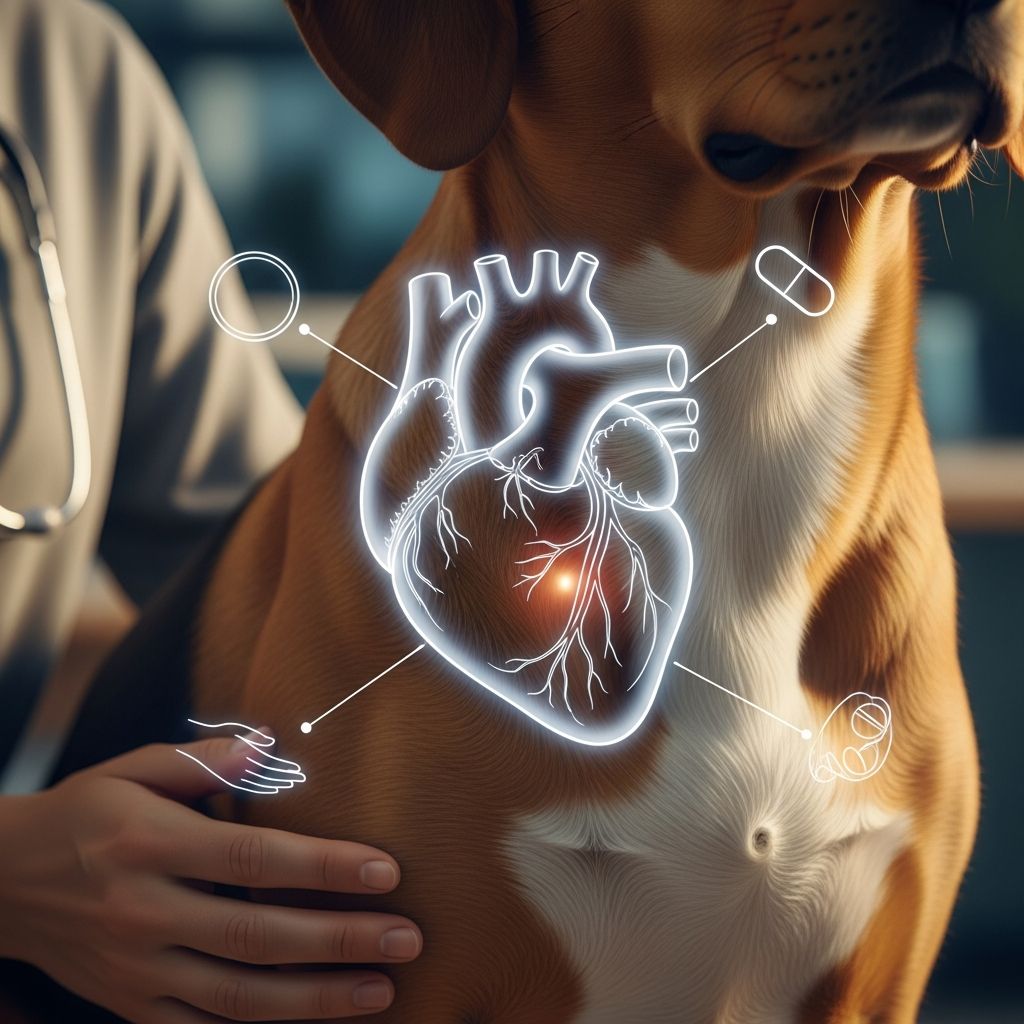
Pimobendan, commonly known by the brand name Vetmedin, stands as a cornerstone therapy for dogs battling serious heart conditions. This medication functions as an inodilator, meaning it boosts heart muscle contractions while also relaxing blood vessels to improve circulation. Approved by the FDA for specific canine cardiac diseases, it helps manage symptoms, delay disease progression, and potentially extend lifespan.
Understanding Heart Conditions Treated by Pimobendan
Two primary heart diseases drive the need for pimobendan in veterinary practice: dilated cardiomyopathy (DCM) and myxomatous mitral valve disease (MMVD), also called degenerative mitral valve disease. DCM involves weakening and enlargement of the heart muscle, impairing its pumping ability. MMVD, prevalent in small breeds, features a leaky mitral valve that disrupts efficient blood flow from the left atrium to the ventricle.
These conditions often lead to congestive heart failure (CHF), where fluid accumulates in the lungs or abdomen, causing breathing difficulties, fatigue, and coughing. While incurable, pimobendan intervenes early or during active CHF to stabilize the heart.
- Dilated Cardiomyopathy (DCM): Primarily affects large breeds like Dobermans and Boxers; heart chambers dilate, reducing contractility.
- Myxomatous Mitral Valve Disease (MMVD): Common in small dogs over age 8, responsible for up to 75% of canine heart issues; valve thickens and prolapses.
Mechanism of Action: How Pimobendan Supports the Heart
Pimobendan operates through dual mechanisms. First, as a positive inotrope, it sensitizes calcium in heart muscle cells, enhancing contraction strength without excessive oxygen demand. Second, its vasodilatory effects widen arteries and veins, reducing the heart’s workload and improving blood flow.
This combination eases pressure on the heart, minimizes fluid buildup, and boosts overall cardiac output. Unlike traditional diuretics or ACE inhibitors, pimobendan addresses both pump efficiency and vascular resistance simultaneously.
Indications and Stages of Use
Veterinarians prescribe pimobendan based on the American College of Veterinary Internal Medicine (ACVIM) staging system for heart disease, from A (at-risk, no structural changes) to D (refractory CHF).
| Stage | Description | Pimobendan Role |
|---|---|---|
| B2 | Asymptomatic with heart enlargement (e.g., via radiographs) | Delays CHF onset; EPIC trial showed prolonged symptom-free time. |
| C | Current or past CHF signs | Manages symptoms, doubles time to cardiac death or euthanasia. |
| D | Refractory CHF despite max therapy | Improves quality of life, stabilizes condition. |
Newer formulations like Vetmedin-CA1 target preclinical MMVD to prevent heart failure progression.
Dosage Guidelines and Administration Tips
The standard dose ranges from 0.25 to 0.3 mg per kg of body weight, divided into two daily administrations approximately 12 hours apart. For a 10 kg dog, this equates to about 2.5-3 mg twice daily.
- Forms Available: Chewable tablets (1.25 mg, 2.5 mg, 5 mg, 10 mg), capsules, flavored oral liquids.
- Timing: Give on an empty stomach for optimal absorption; avoid food interference.
- Adjustments: Vets tailor based on weight, response, and concurrent meds like furosemide.
Regular monitoring via echocardiograms and bloodwork ensures efficacy and safety.
Proven Benefits and Survival Data
Clinical trials underscore pimobendan’s impact. The QUEST study found dogs with MMVD-CHF on pimobendan lived 2.5 times longer than those on benazepril alone. Median survival extended from 93 to 228 days.
In stage B2 MMVD, it delays CHF onset and boosts exercise tolerance. For DCM, it improves cardiac function and reduces pulmonary hypertension. Quality of life enhancements include less coughing, better appetite, and increased activity.
Potential Side Effects and Monitoring
Most dogs tolerate pimobendan well, but side effects occur in about 10-15% of cases. Common issues include:
- Appetite loss or vomiting (often transient).
- Lethargy or diarrhea.
- Rare: Increased heart rate, tremors, or seizures.
Monitor for signs of overdose like restlessness or collapse. Contraindications include hypertrophic cardiomyopathy or severe renal issues. Drug interactions with calcium channel blockers or strong CYP3A4 inhibitors require caution.
Cost Considerations and Accessibility
A month’s supply for a 20 kg dog averages $60-100 for 50 chewables. Generic options may lower costs. Pet insurance often covers cardiac meds; discuss compounding pharmacies for custom doses.
Integrating Pimobendan into a Comprehensive Treatment Plan
Pimobendan shines in multidrug regimens. Pair with:
- ACE inhibitors (e.g., enalapril) for blood pressure control.
- Diuretics (furosemide) for fluid management.
- Spironolactone for aldosterone blockade.
Lifestyle adjustments like low-sodium diets, weight management, and moderate exercise complement therapy. Small breeds with MMVD benefit most, as 85% over 13 years develop it.
Recent Advances and Research Updates
Post-2020 studies affirm pimobendan’s role in pulmonary hypertension-linked CHF, reducing tricuspid regurgitation. Low-dose protocols post-edema show promise for recurrence prevention. Ongoing trials explore earlier intervention in stage B1.
Frequently Asked Questions (FAQs)
What if my dog misses a dose of pimobendan?
Give the missed dose as soon as remembered unless near the next one; skip if close. Never double dose. Consistency maintains steady blood levels.
Can pimobendan cure heart disease?
No, it manages symptoms and slows progression but does not reverse structural damage.
Is pimobendan safe for puppies or pregnant dogs?
Not recommended; safety data limited. Consult a cardiologist.
How long do dogs on pimobendan live?
Varies by stage and disease; CHF dogs may gain months to years. Stage B2 dogs often remain asymptomatic longer.
Should I switch to generic pimobendan?
Discuss with your vet; bioequivalence varies, but generics are often effective and cheaper.
Choosing the Right Veterinary Specialist
Board-certified veterinary cardiologists provide advanced diagnostics like Holter monitoring and advanced imaging. Early detection via annual exams for at-risk breeds maximizes pimobendan’s benefits.
References
- Pimobendan (Vetmedin) for Dogs: Uses, Dosage, Side Effects — GoodRx. 2023. https://www.goodrx.com/pet-health/dog/pimobendan-for-dogs
- Pimobendan for Dogs | Uses, Side Effects & More — Mixlab. 2023. https://mixlab.com/blog/pimobendan-for-dogs
- Pimobendan and Heart Disease — Today’s Veterinary Practice. 2022. https://todaysveterinarypractice.com/pharmacology/pimobendan-and-heart-disease/
- Efficacy of pimobendan on survival and reoccurrence of pulmonary edema — PMC (PubMed Central). 2017-01-18. https://pmc.ncbi.nlm.nih.gov/articles/PMC5289233/
- Pimobendan Updates: When and Why — University of Illinois Veterinary Medicine. 2021-07-07. https://vetmed.illinois.edu/2021/07/07/pimobendan-updates-when-and-why/
- Drug Handout: Pimobendan — CVCA Cardiac Care for Pets. 2023. https://www.cvcavets.com/_files/pdfs/drug-handouts/cvca-drug-pimobendan-half.pdf
- Vetmedin® (Pimobendan) for Dogs — PetMD. 2023. https://www.petmd.com/pet-medication/vetmedin-vetmedin-ca1-for-dogs
Similar Articles








Read full bio of medha deb