

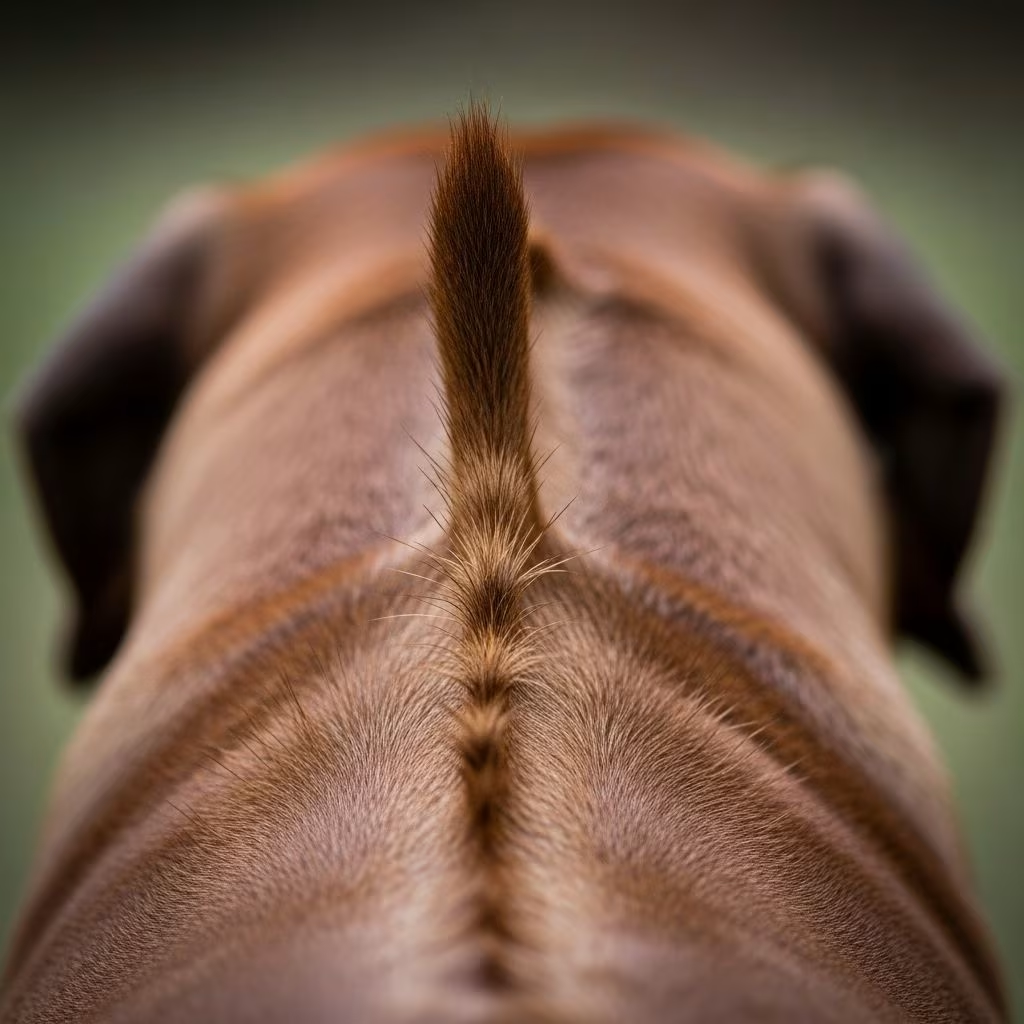
When the hair along your dog’s back suddenly stands up, it can be surprising or even alarming. This visible change, often called raised hackles, is technically known as piloerection, and it offers a valuable window into your dog’s emotional and physical state. Understanding this response helps you better interpret your dog’s body language, support their well-being, and prevent misunderstandings that could lead to conflict.
What Is Piloerection in Dogs?
Piloerection is an involuntary reaction in which the tiny muscles at the base of each hair follicle contract, causing the hair to stand upright. In dogs, this is most noticeable along the neck, shoulders, and spine, an area commonly referred to as the hackles.
This reaction is controlled by the sympathetic nervous system, the same system involved in the “fight-or-flight” response. Because it is automatic, your dog cannot choose to raise or lower their hackles at will; instead, piloerection reflects an internal state of arousal.
- Technical term: Piloerection (from Latin pilus = hair, erectio = raising)
- Common term: Raised hackles
- System involved: Sympathetic (“fight-or-flight”) nervous system
- Type of response: Involuntary and automatic
In humans, the closest equivalent is getting “goosebumps” when you are cold, frightened, or moved by strong emotion.
The Science Behind Raised Hackles
To understand why piloerection happens, it helps to look at physiology and evolution.
| Aspect | What Happens | Why It Matters |
|---|---|---|
| Muscle contraction | Small muscles at hair follicles (arrector pili) contract, lifting the hair shaft. | Makes fur stand up and appear thicker. |
| Nervous system | Sympathetic nervous system fires during arousal, stress, or threat. | Signals that the dog’s body is on alert and mobilizing resources. |
| Evolutionary function | Raised fur makes the animal look larger and more imposing. | May help deter threats or competitors and communicate intent. |
| Thermoregulation (ancestral) | In many mammals, raised hair traps air for insulation. | Helps maintain body temperature in cold conditions, more relevant in wild canids than most pet dogs. |
Behavior experts describe piloerection as a secondary body-language signal, or epiphenomenon—it appears alongside a primary state such as fear, excitement, or stress rather than standing alone. That is why it is essential to look at the whole dog instead of judging raised hackles in isolation.
Why Do Dogs Get Piloerection?
In everyday life, raised hackles in dogs usually indicate some form of arousal. Arousal is a broad term and can be positive, negative, or conflicted. When you see piloerection, your dog is emotionally charged about something.
Common emotional triggers
- Fear or anxiety: A strange person, dog, sound, or environment can cause fear-based arousal and lead to piloerection.
- Defensive or offensive aggression: A dog that feels threatened or is preparing to challenge another dog may show raised hackles.
- Excitement or overarousal: Some dogs raise their hackles when thrilled to see another dog or when playing intensely.
- Startle response: A sudden loud noise or unexpected movement can trigger a brief piloerection as the dog orients to the stimulus.
- Conflicted emotions: A dog that is unsure—interested but nervous—may show patchy or uneven hackle raising, along with other ambiguous signals.
Besides emotion, medical and physiological factors can also cause repeated or unexplained piloerection:
- Pain or discomfort: Back or neck pain has been anecdotally linked with segmental piloerection in some dogs.
- Skin disease or irritation: Inflammation or dermatologic conditions can cause localized hair erection as the skin reacts.
- Hormonal and neurological issues: Hormonal imbalances and certain neurological conditions may include piloerection among other signs.
- Drug effects and toxicosis: Some medications or toxic exposures that affect the central or sympathetic nervous system can trigger piloerection.
If hackles appear frequently without any obvious emotional trigger or social context, a veterinary check is advisable to rule out pain, skin disease, or internal illness.
Does Raised Hackles Always Mean Aggression?
No. A crucial point is that raised hackles do not automatically mean a dog is aggressive. Piloerection simply indicates arousal; it does not specify whether that arousal is joyful, fearful, defensive, or conflicted.
Misreading hackles as “always aggressive” can lead to unfair labeling of dogs, unnecessary punishment, or missed opportunities to help a scared or overwhelmed animal feel safer.
Examples where raised hackles are not aggression
- A friendly, social dog whose fur stands up as they eagerly approach a playmate, accompanied by loose body, wagging tail, and play bows.
- A young dog seeing a novel object (like a garden statue) with hackles raised, weight shifted back, and cautious sniffing—signs of uncertainty and mild fear, not attack intent.
- A dog on leash who is excited and frustrated about wanting to greet another dog; hackles rise along with whining and pulling, but the intent is social rather than hostile.
To understand what piloerection means in a specific moment, you must read it alongside other body-language signals.
How to Read Body Language When Hackles Are Raised
When you see your dog’s hackles up, scan the rest of their body for context clues. This holistic approach is recommended by behavior specialists and welfare organizations.
| Body-Language Pattern | Typical Interpretation | Common Additional Signs |
|---|---|---|
| Hackles up + body leaning forward | Possible offensive or confident stance | Stiff tail, direct stare, closed mouth, weight shifted toward trigger |
| Hackles up + body leaning back or crouched | Fearful or defensive posture | Tail tucked or low, ears back, lip licking, yawning, backing away |
| Hackles up + loose, wiggly body | High excitement or playful arousal | Curved body, bouncy movements, play bows, open mouth |
| Patchy hackles (shoulders and hips) | Ambivalent or conflicted emotions | Rapid shifts between approach and avoidance, quick startle responses |
| Persistent hackles without clear trigger | Possible pain, discomfort, or medical issue | Reluctance to move, flinching, sensitivity to touch, or other physical signs |
Pay attention to the speed and duration of piloerection as well. A thin line of fur that rises briefly and then relaxes may reflect a short-lived alert, while slow-rising, long-lasting hackles can appear with sustained stress or tension.
Different Patterns of Piloerection
Not all dogs raise their hackles in the same way. Observers and behaviorists describe several common patterns of piloerection:
- Neck and shoulder only: Hair rises over the withers (top of shoulders). This may be seen during mild alertness or low to moderate arousal.
- Full back: Hackles stand from neck to tail base, often corresponding to higher arousal, intense fear, or strong excitement.
- Patchy (shoulders and hips, with a flat area in-between): Some behaviorists speculate this pattern may accompany ambivalence—dogs that are both drawn toward and worried about the situation.
- Thin line down the spine: A subtle raised strip can appear when a dog briefly alerts to a sound or movement, then subsides when the dog decides it is safe.
These patterns are not diagnostic on their own; they are clues that must be combined with other information about the dog and the context.
Situations Where You Might See Raised Hackles
Common everyday scenarios that can trigger piloerection include:
- Dog–dog encounters: Meeting unfamiliar dogs, especially on leash or in tight spaces.
- Strangers approaching: Visitors entering the home, delivery people at the door, or people moving unpredictably.
- Novel or startling stimuli: Loud machinery, fireworks, sudden movements, or unusual objects in the environment.
- Resource-related conflict: Tensions over toys, food, or sleeping spots can raise arousal and hackles.
- Play that escalates: Rough-and-tumble play or chase games can shift from fun to overstimulating, with hackles appearing as arousal rises.
Recognizing when arousal is climbing gives you a chance to intervene early—by increasing distance, redirecting focus, or offering a break—before conflict develops.
When to Be Concerned About Piloerection
Not every instance of raised hackles calls for worry, but some patterns warrant attention:
- Frequent hackles in normal, calm situations: If your dog’s fur often stands up indoors when nothing obvious is happening, speak to your veterinarian to rule out pain or internal disease.
- Hackles with escalating aggression signs: Growling, snapping, lunging, or intense staring combined with raised hackles indicates a risk of a bite. Avoid confrontation and seek professional behavior help.
- Sudden new piloerection in an older dog: Any abrupt change in body language or demeanor, including recurrent hackles, may signal emerging health issues.
- Accompanied by other illness symptoms: Vomiting, lethargy, pupil dilation, or agitation with piloerection can appear in certain toxicities or nervous system problems and require prompt veterinary care.
Veterinary behaviorists and general practitioners both emphasize that early assessment—behavioral and medical—often leads to better outcomes than waiting until problems escalate.
How to Respond When Your Dog’s Hackles Go Up
Your goal when you see piloerection is to keep everyone safe and help your dog return to a calmer state.
Step-by-step response
- Pause and observe: Quickly scan your dog’s whole body and the environment. Identify what may be triggering the reaction (another dog, a sound, a person, a specific location).
- Increase distance if needed: If your dog seems tense, fearful, or fixated, calmly move away from the trigger in a curved path rather than a straight retreat.
- Stay calm and neutral: Avoid yelling, jerking the leash, or punishing your dog; this can increase fear and arousal.
- Offer an alternative behavior: Ask for simple cues your dog knows well (like “let’s go,” “look at me,” or “touch”) and reward generously to shift focus.
- Monitor duration: Note how long it takes hackles to subside and your dog to relax; this information is helpful if you later consult a professional.
If piloerection is frequent or intense, a qualified behavior professional (such as a veterinary behaviorist or certified behavior consultant) can help you develop a tailored plan using evidence-based behavior modification and, when appropriate, medical support.
Training and Prevention Strategies
Because raised hackles often reflect stress or uncertainty, long-term strategies focus on prevention and emotional resilience.
- Early and ongoing socialization: Gradual, positive exposure to a variety of people, dogs, sounds, and environments during puppyhood and beyond can reduce fear responses later in life.
- Reward-based training: Using food, play, and praise to reinforce calm, desired behaviors helps dogs feel safer and more confident, lowering the likelihood of intense arousal.
- Safe distances: Learn your dog’s comfortable distance from triggers (like other dogs) and work below that threshold when doing behavior work.
- Predictable routines: Consistent daily patterns—walks, meals, rest—can help anxious dogs feel more secure, limiting chronic stress.
- Environmental management: Using gates, leashes, visual barriers, or white noise to prevent overwhelming encounters at home or in public spaces.
In some cases, especially when fear or aggression is severe, veterinarians may recommend a combination of behavior modification and medication to reduce underlying anxiety and make learning safer and more effective.
Frequently Asked Questions (FAQs)
Q: Why does my dog’s hair stand up only in patches?
Patchy piloerection—such as raised hair over the shoulders and hips but not the mid-back—may appear when a dog has mixed or ambivalent emotions about a situation. It often occurs alongside other signs of uncertainty, like approaching and retreating, stiffening and then relaxing, or alternating interest and avoidance.
Q: Are raised hackles in dogs always a warning sign?
Raised hackles are a sign of arousal, not a guaranteed warning of aggression. Some dogs show piloerection when excited or playful. However, because arousal can tip into defensive or offensive behavior, it is wise to observe carefully and give your dog space if they look tense or uncomfortable.
Q: Should I punish my dog when I see their hackles go up?
Punishing a dog for showing raised hackles can suppress valuable warning signals and increase fear or anxiety. Instead, focus on calmly creating distance from the trigger, rewarding calm behavior, and addressing any underlying fear or medical issues with professional help.
Q: Can health problems cause repeated piloerection?
Yes. Pain, skin disease, hormonal imbalance, neurological conditions, and certain drug reactions or toxicities can all contribute to recurrent or unexplained piloerection. If hackles appear often without a clear emotional cause, consult your veterinarian for a thorough examination.
Q: When should I seek professional help about my dog’s raised hackles?
Reach out to a veterinarian or behavior professional if raised hackles occur frequently, accompany aggressive displays, represent a new change in behavior, or appear along with other signs of illness or distress. Early guidance can prevent problems from becoming more serious.
References
- Piloerection in Dogs: More Than Social — Etologi.dk. 2024-01-15. https://etologi.dk/piloerection-in-dogs-more-than-social/
- All About Piloerection: Not a Dirty Word, We Swear! — Petful. 2017-06-01. https://www.petful.com/behaviors/piloerection/
- Piloerection in Dogs: Scared, or Just Glad to See Me? — Patricia McConnell, Ph.D. 2013-09-25. https://www.patriciamcconnell.com/theotherendoftheleash/piloerection-in-dogs-scared-or-just-glad-to-see-me/
- Understanding Raised Hackles in Dogs: What Piloerection Really Means — Chaco Dog Training. 2020-05-10. https://chacodogtraining.com/understanding-raised-hackles-in-dogs-what-piloerection-really-means/
- ‘Raised Hackles’ or Piloerection – Dog Body Language — Silent Conversations. 2019-03-12. https://www.silentconversations.com/raised-hackles-piloerection-dog-body-language-silent-conversations/
- Dog Hackles: Why Do Dog’s Hairs Stand Up? — Purina. 2022-08-04. https://www.purina.com/articles/dog/behavior/understanding-dogs/dog-hackles
- What Your Dog’s Hackles Are Telling You — Rover.com. 2018-10-15. https://www.rover.com/blog/dog-hackles/



