

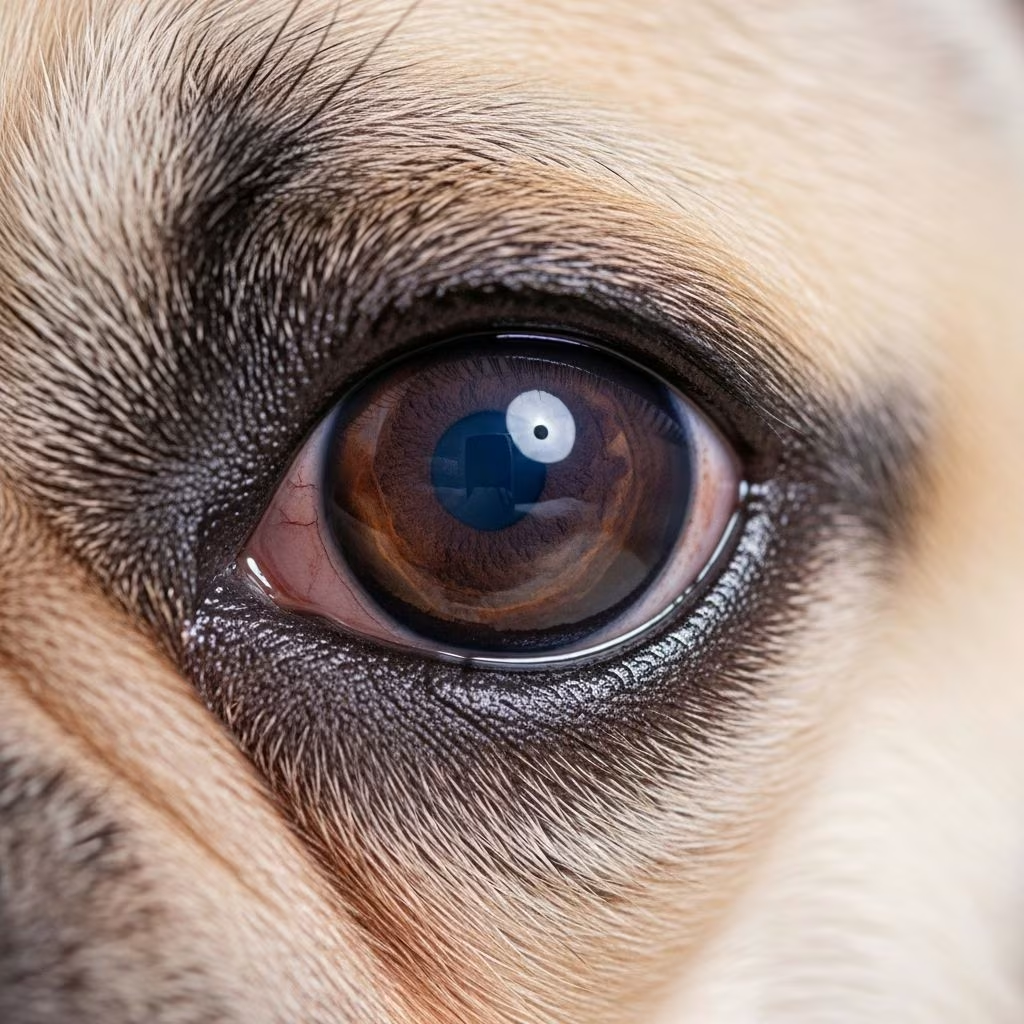
Pigmentary Keratitis in Dogs
Pigmentary keratitis is a progressive eye condition affecting dogs worldwide, characterized by the accumulation of dark pigment on the cornea. This condition can significantly impact a dog’s vision and quality of life if left untreated. Understanding the causes, symptoms, and treatment options is essential for dog owners, particularly those with breeds predisposed to this condition.
What is Pigmentary Keratitis?
Pigmentary keratitis, also known as corneal melanosis, is a chronic corneal condition in which brown or black pigment gradually deposits on the surface of the cornea, the clear front part of the eye. The condition develops as a response to chronic irritation and inflammation of the eye. Unlike some other corneal conditions, pigmentary keratitis itself is not typically painful; however, the underlying causes that lead to its development often are. The pigment accumulation begins at the inside corner of the eye nearest the nose and gradually expands toward the center of the cornea, potentially covering the entire corneal surface in severe cases. When the pigment obscures a significant portion of the cornea, light cannot enter the eye properly, leading to vision impairment or blindness.
Causes of Pigmentary Keratitis
Pigmentary keratitis develops as a secondary response to chronic eye inflammation and irritation. Several underlying conditions can trigger this response:
Eyelid Problems
Entropion occurs when the eyelid rolls inward, causing the eyelashes to scratch against the cornea. This constant irritation leads to inflammation and subsequently pigment deposition. Ectropion is the opposite condition, where the lower eyelid turns outward and exposes the cornea, leaving it vulnerable to dryness and irritation. Trichiasis is a condition where extra eyelashes grow from abnormal locations on the eyelid margin and rub against the eye surface, causing ongoing irritation.
Tear Film Abnormalities
Dry eye, clinically known as keratoconjunctivitis sicca (KCS), is one of the most common causes of pigmentary keratitis. When a dog’s eyes don’t produce sufficient tears, the cornea becomes dry and irritated. Additionally, some dogs may produce adequate tears, but the tears evaporate too quickly from the eye surface, failing to provide adequate protection and lubrication.
Other Contributing Factors
Eyelid tumors, both benign and malignant, can cause chronic corneal irritation. Shallow eye sockets, particularly common in brachycephalic breeds, may lead to incomplete blinking and inadequate tear coverage. Corneal ulcers, once healed, can leave behind pigmentation. In some cases, pigmentary keratitis may be inherited, with no obvious external cause identified.
Symptoms and Clinical Signs
The visible signs of pigmentary keratitis vary depending on the stage of progression and underlying causes:
Visible Eye Changes
The most obvious sign is the appearance of brown or black pigmentation on the cornea. Initially, this may appear as light speckles or faint swirls, but in more advanced cases, it can form dense black patches that obscure vision. The pigmentation typically starts at the inner corner of the eye and gradually spreads across the corneal surface. In addition to pigmentation, the cornea may appear cloudy or hazy, and blood vessels may become visible on the eye surface.
Associated Symptoms
Dogs with pigmentary keratitis may experience:
- Red or inflamed conjunctiva (the white part of the eye)
- Increased discharge from the eye, which may be thick and ropey in appearance
- Excessive tearing or a dry-appearing cornea
- Eye enlargement or swelling
- Squinting or signs of eye discomfort
- Sensitivity to light
- Difficulty seeing, particularly in low-light conditions
Breeds Most at Risk
Pigmentary keratitis is most commonly observed in brachycephalic breeds, dogs with short, flat faces. These breeds have anatomical characteristics that predispose them to ocular problems, particularly severe dry eye. The breeds most frequently affected include:
- Pugs
- Shih Tzus
- Pekingese
- Bulldogs
- French Bulldogs
- Boston Terriers
- Boxers
- Lhasa Apsos
Among these breeds, Pugs, Shih Tzus, and Pekingese are particularly prone to developing blindness from pigmentary keratitis if the condition progresses untreated. The facial conformation of these breeds, combined with genetic predisposition, creates an ideal environment for chronic eye irritation and subsequent pigment accumulation.
Diagnosis
Veterinarians diagnose pigmentary keratitis through a comprehensive ophthalmic examination. The diagnosis is typically straightforward, as the brown or black pigmentation on the cornea is usually visible during a basic eye examination. However, a complete evaluation involves several steps:
Physical Examination
The veterinarian will visually inspect the eye, noting the extent and pattern of pigmentation. They will assess whether the pigmentation is localized or covers a large area of the cornea, and evaluate the overall appearance of the cornea for additional changes such as scarring, blood vessel growth, or fatty deposits.
Additional Diagnostic Tests
A Schirmer tear test (STT) is often performed to measure tear production and diagnose dry eye, which is frequently an underlying cause. A fluorescein stain test may be used to check for corneal ulcers or damage. The veterinarian will also evaluate eyelid position and movement to identify entropion, ectropion, or other lid abnormalities.
Treatment Options
The primary goal of treatment is to address the underlying cause of chronic irritation and halt the progression of pigmentation. Treatment approaches vary depending on the specific cause identified:
Medical Management
For dogs with dry eye, artificial tear solutions and lubricating eye drops are prescribed for frequent application throughout the day. Cyclosporine or tacrolimus ophthalmic preparations may stimulate tear production in some cases. Anti-inflammatory medications, such as topical corticosteroids or nonsteroidal anti-inflammatory drugs, may be prescribed to reduce corneal inflammation.
Surgical Interventions
Medial canthoplasty is a surgical procedure that corrects eyelid position, particularly beneficial in young dogs with severe disease. This surgery helps reduce corneal exposure and irritation. Entropion repair surgery corrects inward-rolling eyelids, while ectropion correction addresses outward-rolling lids. In some cases, surgical removal of extra eyelashes (trichiasis treatment) may be necessary.
Management of Underlying Conditions
If eyelid tumors are identified, surgical removal may be recommended. For dogs with shallow eye sockets, regular eye lubricant application becomes particularly important. Treatment plans are individualized based on the specific underlying cause and the dog’s response to initial therapy.
Prognosis and Vision Preservation
The prognosis for pigmentary keratitis depends on how early the condition is detected and treated. Early intervention to address underlying causes can slow or potentially halt pigment progression, preserving vision. However, pigmentation that has already accumulated on the cornea typically does not resolve completely. In cases where pigmentary keratitis leads to blindness, many dogs adapt well to vision loss, particularly if it occurs gradually, though they require environmental modifications to ensure safety.
Prevention and Management
While not all cases of pigmentary keratitis can be prevented, several measures can reduce risk and slow progression:
- Regular veterinary eye examinations, particularly for at-risk breeds
- Prompt treatment of dry eye with appropriate lubricants and medications
- Early intervention for eyelid problems
- Maintenance of good eye hygiene and protection from environmental irritants
- Consistent use of prescribed eye medications as directed
- Protection from wind, dust, and allergens
Frequently Asked Questions
Q: Is pigmentary keratitis painful?
A: Pigmentary keratitis itself is not painful; however, the underlying conditions causing chronic eye irritation (such as entropion or dry eye) often are. Pain symptoms are typically related to these underlying causes rather than the pigmentation itself.
Q: Can pigmentary keratitis be reversed?
A: Once pigment has accumulated on the cornea, it typically cannot be reversed. However, early treatment of underlying causes can halt pigment progression and prevent further vision loss.
Q: Which dog breeds are most at risk?
A: Brachycephalic breeds with flat faces are most susceptible, particularly Pugs, Shih Tzus, Pekingese, Bulldogs, French Bulldogs, and Boston Terriers. These breeds’ facial anatomy predisposes them to severe dry eye and other ocular complications.
Q: How often should dogs at risk be examined?
A: Dogs at risk for pigmentary keratitis should have regular eye examinations, ideally annually, or more frequently if signs of eye disease are present. Early detection allows for prompt intervention.
Q: Will my dog go blind from pigmentary keratitis?
A: Pigmentary keratitis can lead to vision impairment or blindness if the pigmentation covers the entire cornea and light cannot enter the eye. However, with early treatment and management, many dogs maintain functional vision.
Q: What is the difference between medial canthoplasty and other eyelid surgeries?
A: Medial canthoplasty specifically addresses the inner corner of the eyelid and eye to reduce corneal exposure. Other procedures like entropion repair target different eyelid abnormalities.
References
- Pigmentary Keratitis in Dogs: Causes, Symptoms and Treatment — All About Vision. 2024. https://www.allaboutvision.com/eye-care/pets-animals/pigmentary-keratitis-in-dogs/
- Nonulcerative Keratitis in Veterinary Medicine — Today’s Veterinary Nurse. 2024. https://todaysveterinarynurse.com/ophthalmology/nonulcerative-keratitis-in-veterinary-medicine/
- Pigmentary Keratopathy In Dogs — Ophthalmology For Animals. 2024. https://www.ofora.com/pigmentary-keratitis/
- Non-Ulcerative Keratitis (Corneal Inflammation) in Dogs — PetMD. 2024. https://www.petmd.com/dog/conditions/eyes/non-ulcerative-keratitis-corneal-inflammation-dogs
- Pigmentary Keratitis In Dogs — Kingsdale Animal Hospital. 2024. https://www.kingsdale.com/pigmentary-keratitis-in-dogs



