

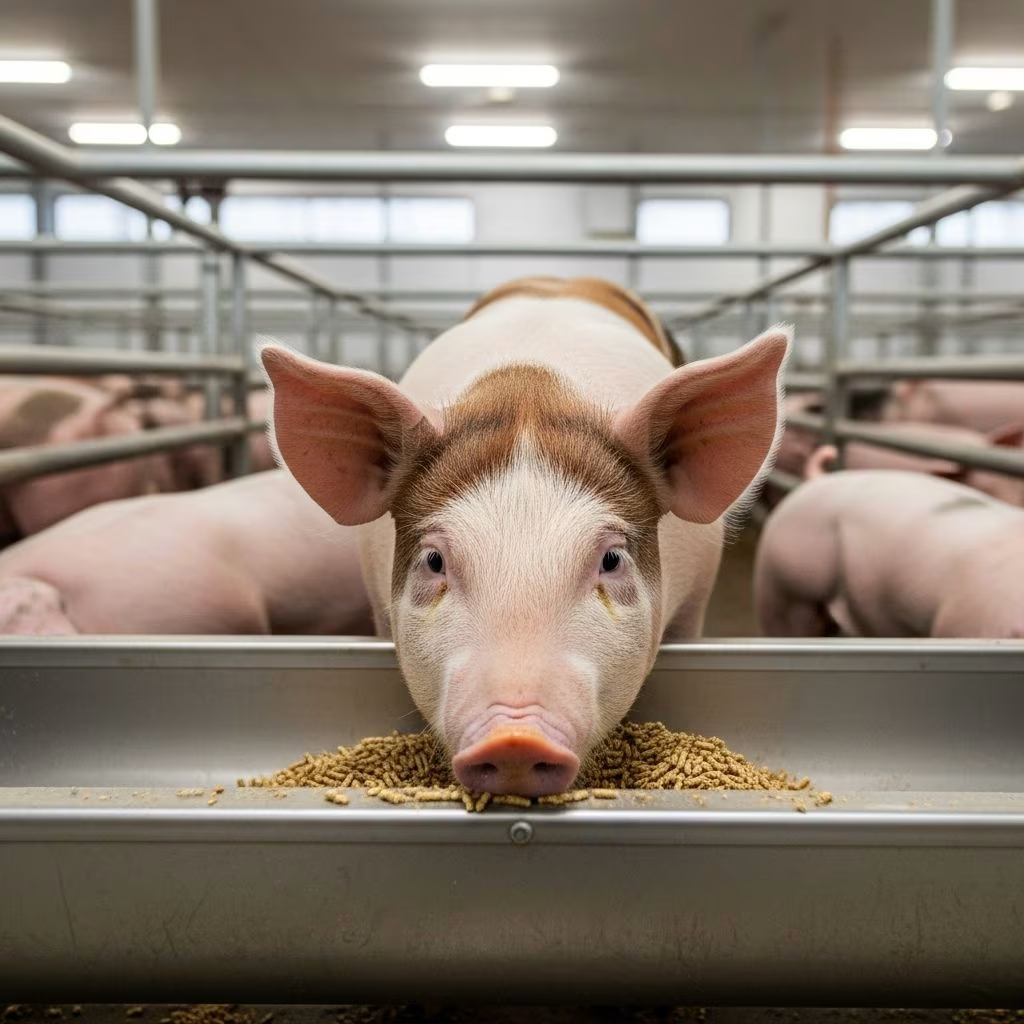
Effective pig feeding is the cornerstone of successful swine production, directly influencing growth rates, reproductive success, and overall herd health. By selecting appropriate feed ingredients, adjusting rations to match physiological needs, and implementing advanced techniques, producers can minimize waste, cut costs, and enhance sustainability. This guide delves into essential practices for feeding pigs across all life stages, drawing on proven methods to support efficient farming.
Core Principles of Swine Diet Formulation
Swine diets must provide balanced energy, proteins, minerals, vitamins, and water to meet demands for maintenance, growth, and reproduction. Primary energy sources include cereal grains like corn, barley, and wheat, which supply digestible carbohydrates. These grains should be processed—ground or rolled—to improve nutrient availability. For instance, corn and sorghum benefit from medium-fine grinding to around 550–600 microns, while wheat requires coarser processing at 650–700 microns to avoid digestive issues.
Protein supplementation is critical, with soybean meal dominating due to its palatability and complementary amino acid profile to grains. It comprises over 90% of supplemental proteins in many regions. Full-fat soybeans can be used post-heat treatment to neutralize antinutritional factors like trypsin inhibitors. Alternative proteins from vegetable sources, such as green soya beans or local leaves like cola-cassia, offer cost-effective options, providing up to 46% crude protein when cooked.
- Energy sources: Corn, barley, wheat bran, broken rice, cassava.
- Protein boosters: Soybean meal, vegetable proteins, oilseed extracts.
- Minerals and additives: Feed phosphate, trace minerals, fatty acids, vitamins.
Alternative feeds like distillery residues, banana stems, and food waste can supplement diets but require careful handling. Distillery waste suits growing pigs but not pregnant sows due to alcohol content. Banana stems, chopped and salted, add bulk but low nutrients. Food waste must be cooked to eliminate pathogens. Clean water remains non-negotiable for all stages.
Life Stage-Specific Feeding Regimens
Pigs have distinct nutritional needs by age and status. Tailoring feeds prevents deficiencies and supports optimal development.
Newborn Piglets and Creep Feeding
Piglets begin with colostrum for immunity, transitioning to creep feed around day 7. Offer 20–50g daily of fine, palatable mixes like rice bran, broken rice, and maize to encourage intake before weaning at 21 days. Gradually mix with weaner meal in the final week to ease the shift. This builds appetite and gut health, minimizing post-weaning stress.
Weaners and Growers
Weaned pigs (5–25kg) need high-protein starters (18–22% CP) for rapid growth. Average daily gain targets 0.95kg with 2kg feed intake. Lysine, often limiting in corn-soy diets, requires supplementation to lower overall protein without sacrificing performance. Feed 0.5–1kg/day initially, scaling to 2–3kg as they grow.
| Weight Range | Daily Feed (kg) | Key Focus |
|---|---|---|
| 5–10kg | 0.5–1.0 | High digestibility, palatability |
| 10–25kg | 1.5–2.5 | Protein for lean growth |
| 25–50kg | 2.5–3.5 | Balanced energy/protein |
Growing-Finishing Pigs
For pigs 50kg to market weight (110–120kg), diets shift to 14–16% CP with emphasis on efficient gain (0.8–1kg/day) and feed conversion (2.5–3kg feed/kg gain). Split-sex feeding—separate diets for gilts and barrows—optimizes outcomes, as barrows deposit more fat. Self-feeders work well, with pigs consuming 5–7lbs daily.
Breeding Stock Nutrition
Dry sows and gilts receive 2–2.5kg/day maintenance feed, plus 1kg extra pre- and post-service. Lactating sows get 2.5kg base + 0.25kg per piglet. Boars need 2–2.5kg, increasing with activity. Limit energy in dry sows to control body condition.
Advanced Feeding Techniques for Efficiency
Modern strategies reduce environmental impact and costs. Low-protein diets supplemented with synthetic amino acids like lysine cut nitrogen excretion by balancing requirements precisely. Combined with precision feeding—individualized rations via technology—nitrogen efficiency reaches 61%.
Phase feeding matches diets to growth phases, minimizing excess nutrients. Multi-phase programs (e.g., 4–5 diets from wean to finish) outperform single diets. Hand-feeding twice daily or hybrid self/hand methods suit show pigs, controlling intake for muscle development.
- Precision feeding: Sensors adjust real-time to pig needs, slashing waste 30%.
- Low-CP diets: Reduce urinary nitrogen losses 24%.
- Supplements: Amino boosters, omega-3s, electrolytes for immunity and stress.
Feed Processing and Management Best Practices
Grinding enhances digestibility but avoid over-fine particles causing ulcers. Pelleting improves intake, especially for piglets. Mixing home rations—cooking raw materials like soya or cassava—breaks down toxins. Store feeds dry to prevent mold.
Feeding frequency: Young pigs thrive on frequent small meals (up to 13/day via self-feeders). Monitor body condition; adjust for heat stress or poor growth.
Sustainability and Economic Considerations
Efficient feeding lowers manure nutrients, cutting pollution. Using local byproducts like rice bran or distillers reduces import costs. Precision methods yield economic gains through better feed efficiency.
Frequently Asked Questions (FAQs)
What is the best starter feed for piglets?
Creep feeds with fine grains, soybean meal, and milk replacers, offered from day 7 at 20–50g/day.
How much to feed growing pigs daily?
2–3.5kg depending on weight, targeting 0.8–1kg gain.
Can food waste be fed to pigs?
Yes, if cooked and sterilized to kill pathogens.
What role does lysine play in pig diets?
Lysine limits growth in grain diets; supplementing allows lower protein levels.
How to feed lactating sows?
2.5kg maintenance + 0.25kg per piglet, ad lib water.
Key Takeaways for Pig Producers
- Match diets to life stage for optimal performance.
- Incorporate grains, proteins, and supplements judiciously.
- Adopt precision and low-protein strategies for sustainability.
- Process feeds properly and monitor intake.
References
- How to Farm Pigs – Feeding — The Pig Site. 2023. https://www.thepigsite.com/articles/how-to-farm-pigs-feeding
- Feeding Strategies to Reduce Nutrient Losses and Improve… — PMC (NCBI). 2021-10-27. https://pmc.ncbi.nlm.nih.gov/articles/PMC8581561/
- Show Pig Feeding Programs — Purina Animal Nutrition. 2024. https://www.purinamills.com/show-feed/education/detail/show-pig-feeding-programs
- Show Pig Feeding Secrets: Tips for Every Growth Stage — Thompson Show Feed. 2023. https://thompsonshowfeed.com/blog/show-pig-feeding-secrets-tips-for-every-growth-stage
- Feeding Levels and Practices in Pigs — Merck Veterinary Manual. 2024. https://www.merckvetmanual.com/management-and-nutrition/nutrition-pigs/feeding-levels-and-practices-in-pigs
- The Complete Pig Feeding Guide: From Wean to Finish — Osborne Livestock Equipment. 2023. https://osbornelivestockequipment.com/pig-feeding-guide/
- Feed Management of Swine — USDA APHIS. 2000. https://www.aphis.usda.gov/sites/default/files/swine2000_is_feedmgmt.pdf



