Phosphine Gas Risks in Vet Clinics
Essential guide to recognizing, preventing, and responding to phosphine gas hazards from rodenticides in veterinary practice.
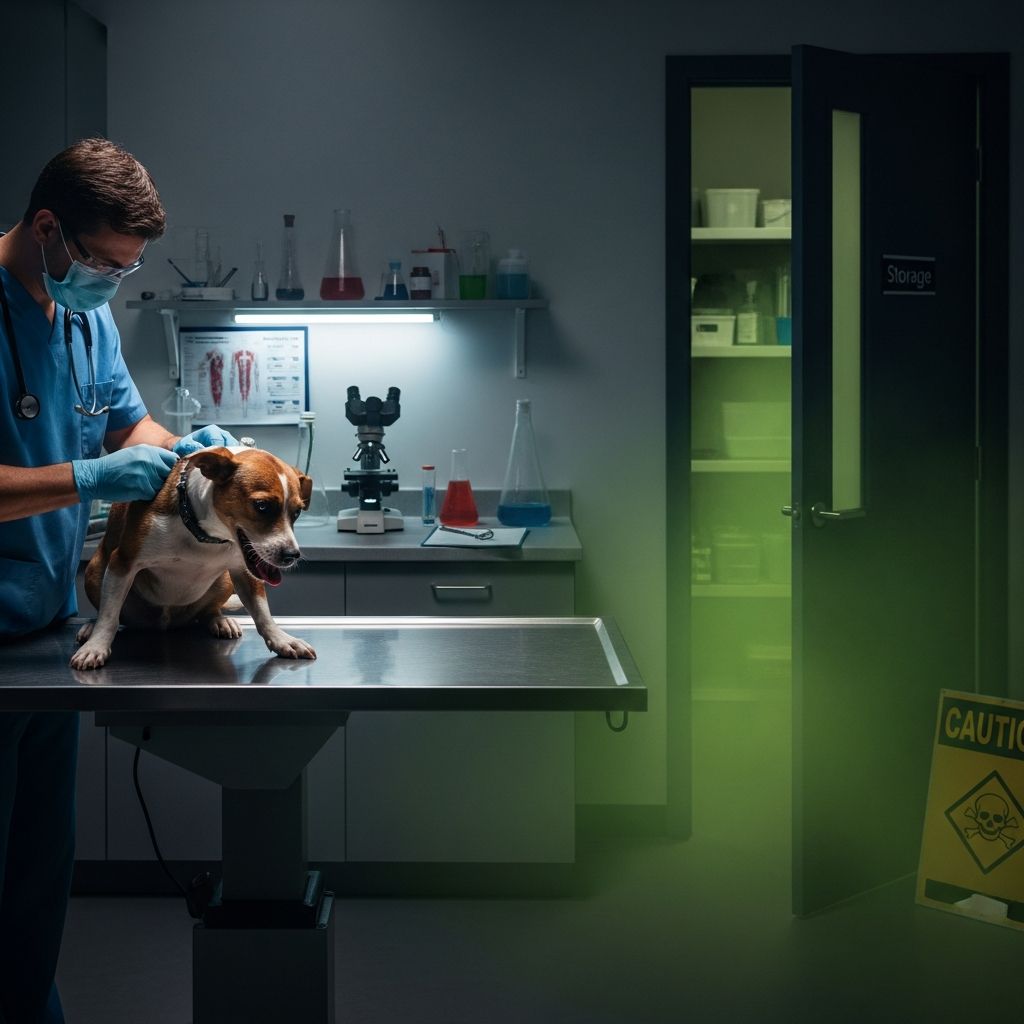
Phosphine gas (PH3) poses a significant yet often overlooked hazard in veterinary workplaces, primarily arising from pets ingesting zinc phosphide-based rodenticides. This highly toxic, colorless gas forms when these rodenticides react with stomach acids and water, potentially releasing during vomiting and endangering clinic personnel through inhalation.
Origins of Phosphine Gas in Veterinary Environments
Zinc phosphide (Zn3P2), a widely used rodenticide for controlling pests like gophers and moles, breaks down into phosphine gas upon contact with moisture in the gastrointestinal tract. Pets such as dogs commonly consume these baits, leading to regurgitation that liberates the gas into confined treatment areas. This mechanism has been documented in multiple incidents where veterinary teams faced acute exposure without prior warning.
The gas’s production is directly tied to the amount of stomach acid present, amplifying risks in cases of substantial ingestion. Unlike stable chemicals, phosphine is flammable, explosive at room temperature, and carries a distinctive garlic or decaying fish odor, serving as a potential early indicator for vigilant staff.
Health Impacts on Veterinary Personnel
Inhalation of phosphine disrupts cellular function by inhibiting oxidative phosphorylation and triggering lipid peroxidation, which damages pulmonary, nervous, hepatic, renal, and cardiovascular systems. Acute symptoms manifest rapidly, including chest tightness, throat burning, shortness of breath, nausea, headache, dizziness, and respiratory distress.
Severe exposures can escalate to pulmonary edema, convulsions, bronchitis, and fatality, though nonfatal cases typically resolve within 30 days with supportive care. No specific antidote exists, emphasizing the need for immediate evacuation and medical evaluation. Long-term effects remain rare, but chronic low-level exposure warrants monitoring.
| Symptom Category | Common Signs | Severity Level |
|---|---|---|
| Respiratory | Shortness of breath, chest pain, cough | Mild to Severe |
| Gastrointestinal | Nausea, vomiting, abdominal pain | Mild |
| Neurological | Headache, dizziness, convulsions | Moderate to Severe |
| Cardiovascular | Weakness, arrhythmias | Severe |
This table summarizes key symptoms observed in veterinary exposure cases, highlighting the multi-systemic nature of phosphine toxicity.
Documented Incidents in Veterinary Practices
From 2006 to 2011, the CDC’s National Institute for Occupational Safety and Health (NIOSH) recorded four phosphine poisoning events across veterinary hospitals in Michigan, Iowa, and Washington, affecting eight staff members. All victims experienced transient symptoms, with full recovery in dogs involved.
- In one Michigan case, a 53-year-old technician and 61-year-old office manager suffered breathing difficulties and nausea after a dog regurgitated zinc phosphide-laced vomit; both recovered without hospitalization.
- Another incident involved a veterinarian with multiple sclerosis who induced vomiting in a 62-pound dog, leading to her admission for observation due to prolonged symptoms like chest pain and sore throat.
- A Colorado event in 2010 sent an ER doctor and three technicians to the hospital after a canine patient emitted the gas, confirmed as zinc phosphide-related.
- Analysis of vomitus in the Washington case detected phosphorus and trace zinc, validating the source.
These cases underscore phosphine’s rarity but high impact, with NIOSH noting only these reports in the period, yet stressing occupational vigilance.
Regulatory Standards and Exposure Limits
The Occupational Safety and Health Administration (OSHA) sets a permissible exposure limit (PEL) of 0.3 ppm as an 8-hour time-weighted average for phosphine in workplaces. Animal studies indicate a 4-hour LC50 of 11 ppm in rats, classifying it as highly toxic (EPA Danger signal word).
Veterinary settings, often poorly ventilated, exceed these limits during incidents. State health departments and poison control centers play key roles in post-exposure guidance, recommending air monitoring by fire services.
Prevention Strategies for Veterinary Teams
Proactive measures, informed by AVMA and CDC guidelines, minimize risks. Clinics should train staff on rodenticide recognition and implement protocols before treating suspect cases.
- Initial Assessment: Inquire about potential zinc phosphide exposure from pet owners upon arrival.
- Ventilation Protocols: Conduct emesis induction outdoors or in well-ventilated areas; avoid enclosed exam rooms.
- Personal Protective Equipment (PPE): Use respirators, gloves, and goggles when handling potentially exposed animals.
- Emergency Response: Evacuate immediately if vomiting occurs, ventilate the space, and call fire department for gas detection.
- Alternatives Promotion: Educate clients on non-chemical pest control like snap traps to reduce incidence.
Storage of rodenticides at home and in clinics must prevent pet access, with clear labeling and secure disposal.
Safe Treatment Approaches for Affected Animals
Treating pets with zinc phosphide ingestion requires balancing decontamination and gas avoidance. Administer activated charcoal post-emesis if feasible, but prioritize staff safety. Monitor animals outdoors, using fans for airflow. Most dogs recover fully with supportive care, as seen in reported cases.
Decontamination involves gastric lavage only in controlled, open-air settings with full PPE. Hydration and antiemetics help manage secondary effects without inducing further vomiting indoors.
Training and Clinic Preparedness
Regular drills on phosphine scenarios enhance response times. Post incident, conduct air quality tests and medical follow-ups. Integrate into occupational health programs, as recommended by NIOSH for veterinary services.
Collaborate with local fire departments for phosphine meters, ensuring rapid re-entry assessments. Document all exposures for trend analysis and regulatory reporting.
Broader Implications for Animal Healthcare
Beyond rodenticides, phosphine appears in fumigants like aluminum phosphide, posing similar risks in mixed-use facilities. Veterinary staff handling imported cases or shelter animals face compounded exposures. Public awareness campaigns can curb misuse of these pesticides.
Global data from agencies like WorkSafe Queensland highlight anaemia, bronchitis, and motor disturbances as potential outcomes, reinforcing universal precautions.
Frequently Asked Questions (FAQs)
What does phosphine gas smell like?
It often smells like garlic or decaying fish, though high concentrations may overwhelm olfactory detection.
How quickly do symptoms appear after exposure?
Symptoms can onset within minutes to hours, starting with respiratory irritation.
Is phosphine carcinogenic?
No published data confirm carcinogenic effects in humans; focus remains on acute toxicity.
Can phosphine affect pregnant staff?
Reproductive effects lack data; evacuation and medical advice are critical regardless.
What if a pet owner is exposed at home?
Seek fresh air, contact poison control, and avoid indoor confinement.
Conclusion
Vigilance against phosphine gas fortifies veterinary workplace safety, protecting teams while ensuring effective animal care. Adopting AVMA protocols transforms potential tragedies into manageable events.
References
- Canine patient emits toxic gas, sending veterinary staff hospital — dvm360. 2010-12-07. https://www.dvm360.com/view/canine-patient-emits-toxic-gas-sending-veterinary-staff-hospital
- Occupational Phosphine Gas Poisoning at Veterinary Hospitals — CDC MMWR. 2012-04-27. https://www.cdc.gov/mmwr/preview/mmwrhtml/mm6116a3.htm
- Occupational Phosphine Gas Poisoning at Veterinary Hospitals — CDC NIOSH. 2012. https://stacks.cdc.gov/view/cdc/183236
- Inhalation Risks from Phosphide Fumigants — NPIC Oregon State. N/A. https://npic.orst.edu/mcapro/phosphine.html
- Meet phosphine, a gas commonly used for industrial fumigation — University of Iowa Research. 2025-01. https://research.uiowa.edu/news/2025/01/meet-phosphine-gas-commonly-used-industrial-fumigation-can-damage-your-lungs-heart-and
- Phosphine Hazard Summary — NJ.gov RTK. N/A. https://nj.gov/health/eoh/rtkweb/documents/fs/1514.pdf
Similar Articles






Read full bio of Sneha Tete