

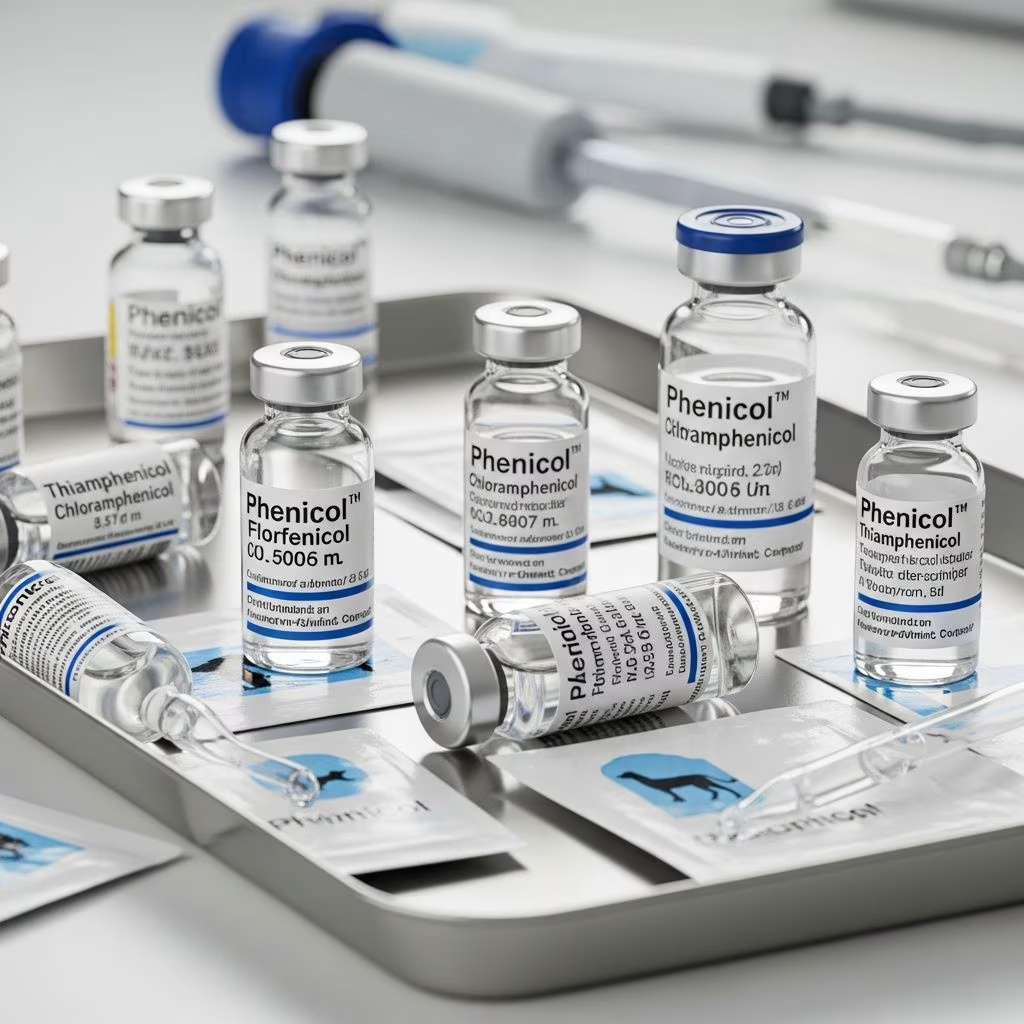
Phenicols represent a vital class of broad-spectrum antibiotics employed in veterinary settings to combat a wide array of bacterial infections. These agents, primarily chloramphenicol and its derivatives like florfenicol, target protein synthesis in bacteria, offering effectiveness against both gram-positive and gram-negative pathogens. Despite their potency, regulatory restrictions and potential toxicities necessitate judicious use, particularly in food-producing animals.
Historical Development and Key Compounds
The journey of phenicols began with chloramphenicol, discovered in the mid-20th century from soil bacteria, establishing it as a cornerstone in antimicrobial therapy. Its broad activity profile made it indispensable for treating stubborn infections. Over time, concerns over side effects prompted the creation of safer analogs such as thiamphenicol and florfenicol. Thiamphenicol offers reduced toxicity but diminished potency, while florfenicol enhances antibacterial strength, particularly against respiratory pathogens in livestock.
In the United States, chloramphenicol holds approval solely for canine use, with extralabel applications in equines. Florfenicol, conversely, is sanctioned for cattle respiratory ailments, swine via medicated feed or water, fish, and as an otic solution for dogs. These approvals reflect a balance between efficacy and public health safeguards, prohibiting chloramphenicol in food animals due to residue risks.
Mechanisms of Antibacterial Action
Phenicols exert their effects by attaching to the 50S ribosomal subunit in bacterial 70S ribosomes, disrupting peptidyl transferase. This halts peptide bond formation, preventing protein chain elongation essential for bacterial survival and replication. Typically bacteriostatic, high doses of chloramphenicol can turn bactericidal against certain organisms.
This ribosomal interference extends to mitochondrial ribosomes in eukaryotes, explaining toxicities like bone marrow suppression. The action proves versatile, penetrating tissues, abscesses, and even the central nervous system, where many antibiotics falter.
Spectrum of Activity and Resistant Pathogens
Phenicols demonstrate robust coverage against numerous gram-positive and gram-negative bacteria, anaerobes like Bacteroides fragilis, intracellular agents such as Rickettsia and Chlamydia, and pathogens including Salmonella, Pasteurella, Mycoplasma, and Brucella. Chloramphenicol excels against anaerobes and retains utility against multidrug-resistant strains like MRSA and MRSP.
- Gram-positive efficacy: Effective versus staphylococci, streptococci.
- Gram-negative coverage: Targets Escherichia coli, Proteus, Bordetella.
- Anaerobes and intracellular: Strong against Bacteroides, rickettsiae.
- Limitations: Most Pseudomonas aeruginosa strains resist.
This spectrum positions phenicols as reserves for infections unresponsive to first-line therapies.
Pharmacokinetics Across Species
Absorption varies by formulation and route. Oral chloramphenicol achieves therapeutic plasma levels rapidly in horses (5 mcg/mL at 50 mg/kg IM within 6-8 hours). Injectable florfenicol suits intramuscular or subcutaneous administration in cattle.
Distribution excels due to lipid solubility, crossing blood-brain barriers and accumulating in pus. Metabolism occurs hepatically via glucuronidation, with excretion primarily renal. Half-lives differ: shorter in horses, necessitating frequent dosing.
Clinical Applications by Animal Species
Dogs and Cats: Chloramphenicol treats skin, wound, bone, respiratory, gastrointestinal, and CNS infections like meningitis or Rocky Mountain Spotted Fever. Its deep penetration suits abscesses and purulent material.
Horses: Extralabel oral use for systemic infections, achieving peaks quickly via IM routes.
Cattle and Swine: Florfenicol targets bovine respiratory disease (BRD) from Mannheimia haemolytica, Pasteurella multocida. Swine receive it orally for similar issues.
Other Species: Topical otic in dogs; medicated feed for fish.
Dosing Guidelines
| Drug | Species | Dosage (mg/kg) | Route/Frequency |
|---|---|---|---|
| Chloramphenicol | Cats | 12.5–20 | PO, q12h |
| Chloramphenicol | Dogs | 25–50 | PO, q8h |
| Chloramphenicol | Horses | 45–60 | PO, q6-8h (ELDU) |
| Florfenicol | Cattle | 20 | IM, q48h (up to 4 doses) |
| Florfenicol | Swine | 200 (feed) | Oral, 5 days |
Dosages demand veterinary oversight, adjusting for severity and species.
Safety Profile and Adverse Effects
Bone marrow suppression, including aplastic anemia, poses the gravest risk with chloramphenicol, though rarer in animals than humans. Dose-dependent and reversible, it manifests more with florfenicol at high doses (50 mg/kg/day for weeks in cats). Neonates face heightened vulnerability due to immature glucuronidation.
- Hematologic: Leukopenia, thrombocytopenia; monitor blood counts.
- Gastrointestinal: Vomiting, diarrhea, anorexia.
- Reproductive: Gonadal damage in rats; caution advised.
- Other: IV propylene glycol vehicles risk hemolysis, collapse in large animals.
Immunosuppression delays vaccine responses; withhold vaccinations during therapy. Excessive topical use impairs wound healing via protein synthesis inhibition.
Regulatory Considerations and Resistance
Chloramphenicol’s food animal ban stems from residue persistence and human aplastic anemia links. Veterinary use confines to pets in many regions.
Resistance arises via ribosomal protection, acetylation, or efflux pumps. Prudent use preserves efficacy against MDR pathogens.
Practical Administration Tips
Administer with food to mitigate GI upset. Compounded palatability aids compliance in cats. Therapeutic drug monitoring guides dosing in prolonged courses.
Alternatives and Comparative Efficacy
When phenicols falter, tetracyclines, macrolides, or fluoroquinolones serve as substitutes, though cross-resistance varies. Florfenicol outperforms chloramphenicol in vitro against BRD agents.
Frequently Asked Questions (FAQs)
Is chloramphenicol safe for pregnant animals?
Limited data; potential fetal toxicity warrants avoidance unless benefits outweigh risks.
Can phenicols treat viral infections?
No, exclusively antibacterial; ineffective against viruses, fungi, or parasites.
How long until improvement?
Typically 48-72 hours; complete full course to prevent resistance.
What monitoring is required?
Hematology every 7 days for extended therapy; clinical response daily.
Are there human handling precautions?
Yes, pregnant women avoid due to aplastic anemia risk from topical/residue exposure.
Future Directions in Phenicol Use
Ongoing research explores resistance mechanisms and novel derivatives to expand safe applications. Combination therapies may enhance spectra while minimizing doses.
References
- Phenicols Use in Animals – Pharmacology — MSD Veterinary Manual. 2023. https://www.msdvetmanual.com/pharmacology/antibacterial-agents/phenicols-use-in-animals
- Chloramphenicol for Veterinary Use — Wedgewood Pharmacy. 2023. https://www.wedgewood.com/professional-monographs/chloramphenicol-for-veterinary-use/
- Phenicols Use in Animals — Merck Veterinary Manual. 2023. https://www.merckvetmanual.com/pharmacology/antibacterial-agents/phenicols-use-in-animals
- Pharmacotherapeutics of chloramphenicol in veterinary medicine — PubMed (Peer-reviewed). 1981-05. https://pubmed.ncbi.nlm.nih.gov/7216874/
- Chloramphenicol — VCA Animal Hospitals. 2023. https://vcahospitals.com/know-your-pet/chloramphenicol



