
Pharyngeal Paralysis In Horses: Diagnosis And Treatment
Understand the causes, symptoms, diagnosis, and management of pharyngeal paralysis in horses to protect your equine companion's health.
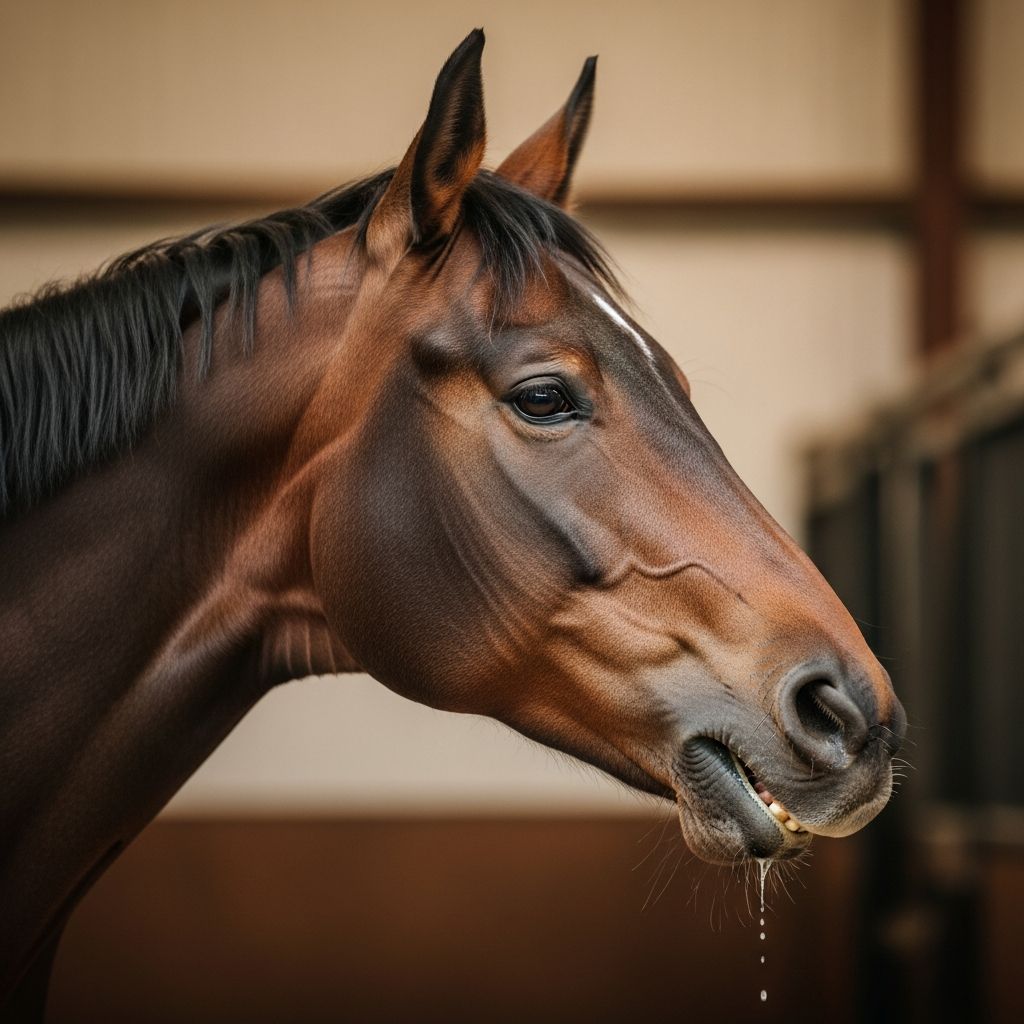
Pharyngeal paralysis represents a serious condition in horses where the muscles responsible for swallowing fail to function properly, leading to challenges in moving food and water from the mouth to the esophagus. This disorder can arise from various neurological or structural issues, posing risks such as aspiration pneumonia and dehydration if not addressed promptly.
Understanding the Pharynx and Its Role in Equine Digestion
The pharynx serves as a critical junction in the horse’s upper digestive and respiratory tracts, facilitating the coordinated propulsion of ingested material while protecting the airway. When paralysis occurs, this delicate balance is disrupted, often resulting in visible distress during feeding. Horses rely on precise nerve signals and muscle contractions to swallow effectively, and any interruption can lead to immediate welfare concerns.
In healthy equines, swallowing involves a sequence of events: food is gathered by the tongue, positioned at the back of the mouth, and then propelled over the base of the tongue into the pharynx. The soft palate elevates, the epiglottis covers the airway entrance, and pharyngeal muscles contract to direct the bolus into the esophagus. Paralysis impairs these actions, causing regurgitation or nasal reflux.
Primary Causes of Pharyngeal Dysfunction
Several factors contribute to pharyngeal paralysis, categorized into central nervous system (CNS) origins and peripheral issues. Central causes stem from brain or spinal cord problems, while peripheral ones involve local nerve or muscle damage.
- Central Nervous System Disorders: Conditions like encephalitis, lead poisoning, cranial injuries, brain abscesses, or tumors can impair nerve signals to the pharynx. Equine protozoal myeloencephalitis (EPM) is a notable infectious cause in horses.
- Peripheral Nerve Damage: Trauma to the throat area or infections directly affecting pharyngeal nerves are common. In horses, guttural pouch disorders dominate this category.
- Guttural Pouch Pathologies: Unique to equines, the guttural pouches are large diverticula of the Eustachian tubes prone to mycosis (fungal infection), empyema (pus accumulation), neoplasia (tumors), or temporohyoid joint osteoarthropathy. These can erode nearby nerves, leading to unilateral or bilateral paralysis.
- Genetic and Hereditary Factors: Hyperkalemic periodic paralysis (HPP), linked to specific genetic mutations, often presents with pharyngeal and laryngeal symptoms alongside muscle weakness.
Unilateral lesions, such as those from guttural pouch mycosis, may allow partial swallowing but still provoke symptoms like coughing during meals.
Recognizing Clinical Manifestations
Horses with pharyngeal paralysis exhibit unmistakable signs centered around feeding difficulties. The most prominent is dysphagia, where attempts to eat result in food or water spilling from the mouth or nostrils.
- Nasal discharge of undigested material, often milky from saliva mixing.
- Excessive drooling (ptyalism) due to unswallowable saliva.
- Coughing or gagging immediately after ingestion.
- Respiratory distress, including noisy breathing (stridor) or dyspnea, especially in bilateral cases.
- Grinding of teeth (bruxism) from discomfort or frustration.
Owners may notice rapid weight loss, dehydration, and reluctance to eat despite apparent hunger. In severe instances, horses extend their heads and necks to facilitate swallowing or stand with open mouths. Secondary complications include aspiration pneumonia from inhaled food particles, evident by fever, lethargy, and abnormal lung sounds. Cardiovascular instability and shock can follow prolonged dehydration.
Diagnostic Approaches for Accurate Identification
Diagnosis begins with a thorough history and physical exam, focusing on feeding behavior and neurological status. Veterinarians perform blood work, including complete blood count (CBC) and serum biochemistry, revealing hemoconcentration, electrolyte imbalances, and prerenal azotemia from fluid loss.
Advanced imaging and endoscopy are pivotal:
| Diagnostic Tool | Purpose | Key Findings |
|---|---|---|
| Endoscopy (Rhinolaryngoscopy) | Visualize pharynx and larynx | Paralysis, collapse, edema, guttural pouch abnormalities |
| Radiography (Skull/Thorax) | Assess bones, soft tissues, lungs | Fractures, pneumonia, foreign bodies |
| CT/MRI | Detailed CNS evaluation | Abscesses, tumors, EPM lesions |
| Ultrasonography | Examine guttural pouches | Mycosis, empyema |
| Serology | Test for infections | EPM antibodies |
Endoscopic exams during swallowing provoke reveal dynamic dysfunction, such as pharyngeal collapse or laryngopalatal dislocation. For HPP suspects, genetic testing confirms homozygosity.
Treatment Strategies and Management
Treatment targets the underlying cause while providing symptomatic relief. Supportive care is essential to prevent complications.
- Medical Interventions: Antibiotics or antifungals for infections; ligation or embolization for guttural pouch mycosis to halt hemorrhage risk. Acetazolamide aids HPP-related symptoms by reducing stridor. Fluid therapy corrects dehydration.
- Surgical Options: Tracheostomy for airway obstruction; pharyngeal reconstruction in select trauma cases. Temporohyoid joint issues may require arthrotomy.
- Supportive Measures: Soft, mashed feeds elevated to reduce aspiration; slings for recumbent horses; pneumonia monitoring.
Prognosis varies: fair for unilateral peripheral issues, guarded for bilateral or CNS causes. Early intervention improves outcomes.
Prevention and Risk Reduction
Minimize risks by ensuring stable housing to avoid trauma, prompt wound care, and vaccination against EPM vectors like opossums. Regular guttural pouch endoscopy in performance horses detects issues early. Genetic screening for HPP in breeding stock prevents inheritance. Nutritional balance avoids toxicities like lead.
Prognosis and Long-Term Outlook
Recovery depends on etiology severity. Peripheral guttural pouch treatments yield 70-80% success in resolving dysphagia, while CNS disorders often progress poorly. Chronic cases may retire from competition but maintain pasture comfort with management.
Frequently Asked Questions (FAQs)
What triggers pharyngeal paralysis in horses?
Common triggers include guttural pouch infections, trauma, EPM, and genetic conditions like HPP.
Can horses recover fully from this condition?
Yes, with early treatment of peripheral causes; CNS issues carry poorer prognoses.
How do I know if my horse has aspiration pneumonia?
Look for fever, cough, nasal discharge, and lethargy post-dysphagia episodes; confirm via thoracic radiographs.
Is pharyngeal paralysis hereditary?
It can be, especially via HPP in Quarter Horses.
What immediate steps should I take if my horse shows swallowing issues?
Withhold food/water, call a vet for endoscopy, and provide soft gruel if advised.
Case Studies and Real-World Insights
In one study, 37% of HPP-affected horses displayed pharyngeal collapse and stridor, with acetazolamide alleviating symptoms in many. Guttural pouch mycosis cases often present with unilateral signs but risk fatal hemorrhage, underscoring surgical urgency.
Monitoring at-risk horses during exercise reveals dynamic collapses, guiding tie-back surgeries for airway patency.
References
- Pharyngeal Paralysis — University of Basrah Faculty. 2023-11-06. https://www.faculty.uobasrah.edu.iq/uploads/teaching/1699622539.pdf
- Laryngeal and pharyngeal dysfunction in horses homozygous for hyperkalemic periodic paralysis — PubMed (American Journal of Veterinary Research). 1996-08-01. https://pubmed.ncbi.nlm.nih.gov/8756883/
- Pharyngeal Paralysis in Animals — MSD Veterinary Manual. Recent update (post-2020). https://www.msdvetmanual.com/digestive-system/pharyngeal-paralysis/pharyngeal-paralysis-in-animals
- Disorders of the Larynx in Horses — Merck Veterinary Manual. Recent update. https://www.merckvetmanual.com/horse-owners/lung-and-airway-disorders-of-horses/disorders-of-the-larynx-in-horses
- Pharyngeal Paralysis — University of Mosul. 2019-12-01. https://uomosul.edu.iq/public/files/datafolder_2901/_20191201_063734_670.pdf
Similar Articles








Read full bio of medha deb


