
Pharmacodynamics In Veterinary Medicine: Key Concepts
Explore how drugs interact with animal tissues to produce therapeutic effects, essential knowledge for veterinarians.
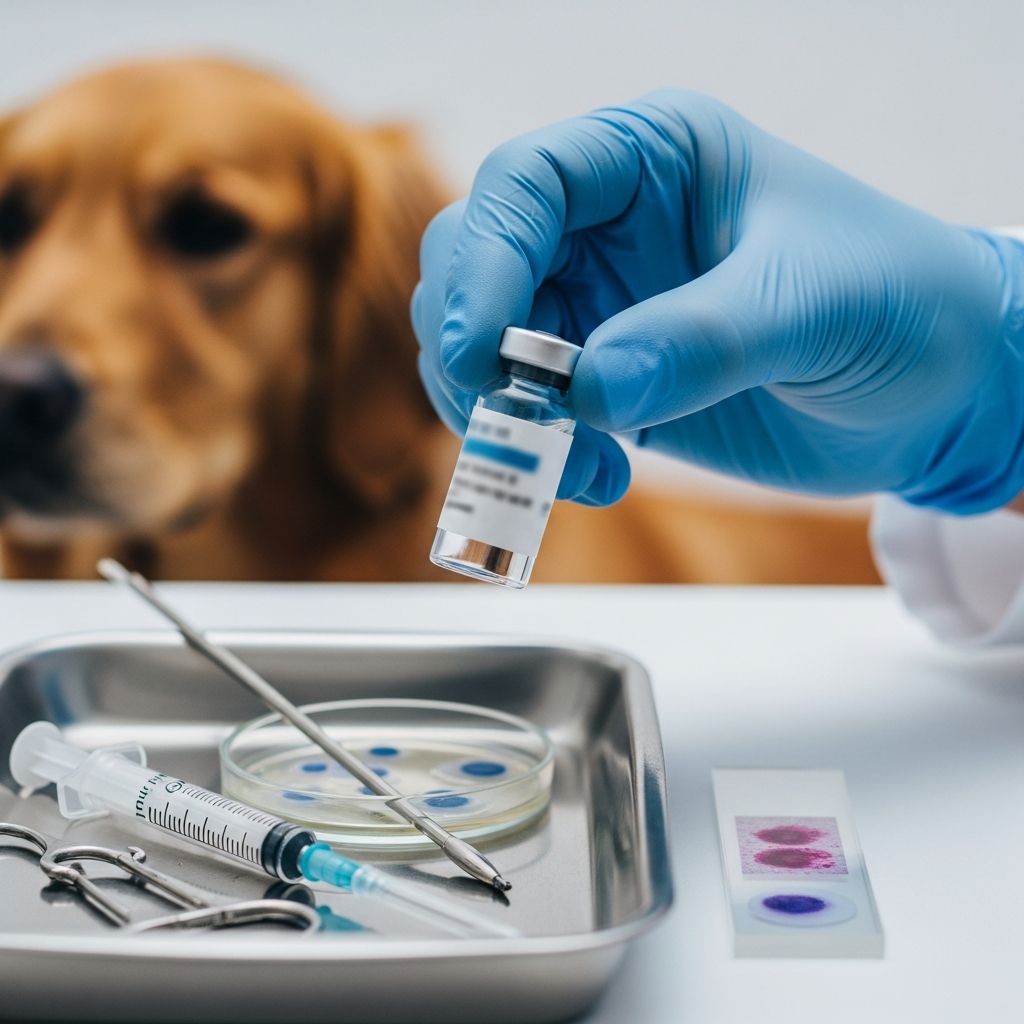
Pharmacodynamics examines the biochemical and physiological impacts of drugs on animal bodies, focusing on mechanisms that translate drug presence into therapeutic or adverse outcomes. This field is crucial for veterinarians to predict how medications will perform across species like dogs, cats, horses, and livestock.
Foundational Concepts of Drug Action
At its core, pharmacodynamics bridges drug concentrations—governed by pharmacokinetics—and observable effects. While pharmacokinetics tracks how animals process drugs (absorption, distribution, metabolism, excretion), pharmacodynamics reveals what happens once drugs reach target sites. Drug levels in plasma or tissues directly influence these effects, creating an interdependent relationship essential for dosing strategies.
Drugs primarily exert influence through interactions with proteins such as enzymes, ion channels, carriers, or receptors. Protein-mediated actions dominate, though some drugs operate via non-protein pathways, like altering physical properties of membranes or directly reacting with cellular components. Understanding these distinctions helps in selecting appropriate therapies for conditions ranging from infections to chronic pain in animals.
Receptors: Gatekeepers of Cellular Responses
Receptors are specialized proteins that detect drugs and initiate intracellular signaling cascades. They exhibit high selectivity for chemical structures, limited availability (saturation capacity), and direct linkage to specific physiological responses. In animals, these features ensure precise control over processes like hormone regulation or neurotransmission.
- Specificity: Receptors bind compounds with similar molecular shapes, akin to a lock-and-key model.
- Saturation: Once all receptors are occupied, additional drug yields no further effect.
- Effect linkage: Binding triggers predictable downstream events, such as muscle contraction or fluid secretion.
Signal transduction pathways amplify receptor signals, often involving second messengers like cyclic AMP or calcium ions, which propagate effects throughout cells and tissues.
The Dynamics of Drug Binding
Drug-receptor binding forms a reversible equilibrium, where association and dissociation rates determine occupancy. Plasma concentration proportionally drives binding until receptors saturate, introducing nonlinearity to the dose-response curve. This equilibrium explains why steady-state drug levels correlate with therapeutic efficacy in clinical settings.
Mathematically, binding follows the equation: Bound drug = (Total receptors × Drug concentration) / (Dissociation constant + Drug concentration). Here, the dissociation constant (K_D) quantifies binding affinity—lower values indicate stronger bonds.
Interpreting Dose-Response Curves
The relationship between log-transformed drug dose and effect produces a sigmoidal curve, a hallmark of pharmacodynamics. Key parameters include:
- EC50: Concentration producing 50% maximal effect, reflecting potency.
- Emax: Plateau representing maximum achievable response.
- Hill slope: Steepness indicating cooperativity in binding.
These curves guide veterinary dosing, ensuring efficacy without toxicity. For instance, in equine colic treatment, understanding EC50 helps tailor opioid doses.
| Parameter | Description | Veterinary Relevance |
|---|---|---|
| EC50 | Half-maximal effective concentration | Determines minimal therapeutic dose |
| Emax | Maximum effect | Ceiling of drug benefit |
| K_D | Dissociation constant | Measures binding strength |
Agonists, Antagonists, and Efficacy
Agonists activate receptors to mimic natural ligands, producing effects. Full agonists reach full Emax, while partial agonists yield submaximal responses despite saturation, useful in scenarios needing moderated activity like anxiolytics in cats.
Antagonists bind without activating, blocking agonists. Competitive antagonists shift curves rightward (higher EC50), reversible by increased agonist dose. Non-competitive types reduce Emax, unaffected by agonist concentration.
Intrinsic efficacy differentiates agonists: full types stabilize active receptor conformations (R*), partial ones less so. This two-state model (resting R vs. active R*) underpins modern receptor theory.
Species Variations in Drug Responses
Animals display pharmacodynamic differences due to receptor polymorphisms, signaling pathway variances, or protein expression levels. For example, cats metabolize acetaminophen poorly, leading to toxicity, while dogs tolerate it better. Ruminants’ forestomachs alter drug absorption, impacting onset.
Veterinarians must account for these in polypharmacy or off-label use, common in practice. Cross-species extrapolation from human data requires caution, as emphasized in veterinary pharmacology texts.
Receptor Regulation: Adaptation and Tolerance
Prolonged drug exposure triggers adaptations. Upregulation increases receptor numbers, shifting curves leftward for hypersensitivity. Downregulation decreases them, rightward shift and reduced Emax, as in beta-blocker tolerance in heart failure.
Desensitization phosphorylates receptors, uncoupling from effectors without altering numbers. Internalization sequesters receptors intracellularly. These mechanisms explain tachyphylaxis in chronic therapies like opioids for pain in horses.
Practical Applications in Veterinary Care
In practice, pharmacodynamics informs protocols. For antibiotics, time above MIC (minimum inhibitory concentration) predicts bacterial kill. Anti-inflammatories target cyclooxygenase enzymes, with COX-2 selectivity reducing GI risks in dogs.
Therapeutic index (TD50/ED50) quantifies safety margins. Narrow indices demand precise dosing, vital for chemotherapy in oncology.
Advanced Modeling: PK-PD Integration
Integrating pharmacokinetics and pharmacodynamics via modeling predicts outcomes. Emax models or sigmoid functions simulate responses, aiding individualized medicine. Software tools visualize these for educators and clinicians.
Frequently Asked Questions
What distinguishes pharmacodynamics from pharmacokinetics?
Pharmacodynamics focuses on drug effects and mechanisms, while pharmacokinetics studies body handling of drugs.
Why do dose-response curves sigmoid-shaped?
Receptor saturation causes initial slow rise, rapid middle, and plateau.
How do partial agonists benefit veterinary use?
They provide controlled effects, minimizing overdose risks in sensitive species.
What causes drug tolerance in animals?
Receptor downregulation, desensitization, or counter-regulatory responses.
Are human pharmacodynamic data applicable to vets?
Partially, but species differences necessitate veterinary-specific studies.
Challenges and Future Directions
Challenges include interspecies variability, age/size effects (e.g., neonates), and disease impacts on receptors. Future research leverages genomics for personalized pharmacodynamics, enhancing precision in veterinary medicine.
References
- Drug Action in Animals: Pharmacodynamics — Merck Veterinary Manual. 2023. https://www.merckvetmanual.com/pharmacology/pharmacology-introduction/drug-action-in-animals-pharmacodynamics
- Principles of pharmacodynamics and their applications in veterinary pharmacology — PubMed (Veterinary Research Communications). 2004-12-01. https://pubmed.ncbi.nlm.nih.gov/15601436/
- Drug Action in Animals: Pharmacodynamics — MSD Veterinary Manual. 2023. https://www.msdvetmanual.com/pharmacology/pharmacology-introduction/drug-action-in-animals-pharmacodynamics
- Introduction to the Principles of Veterinary Pharmacology — Oregon State University Open Textbook. 2023. https://open.oregonstate.education/veterinarypharmacology/
- Introduction to the Principles of Veterinary Pharmacology – First Edition — University of Minnesota Open Textbook. 2023. https://open.umn.edu/opentextbooks/textbooks/introduction-to-the-principles-of-veterinary-pharmacology-first-edition
Similar Articles








Read full bio of medha deb


