

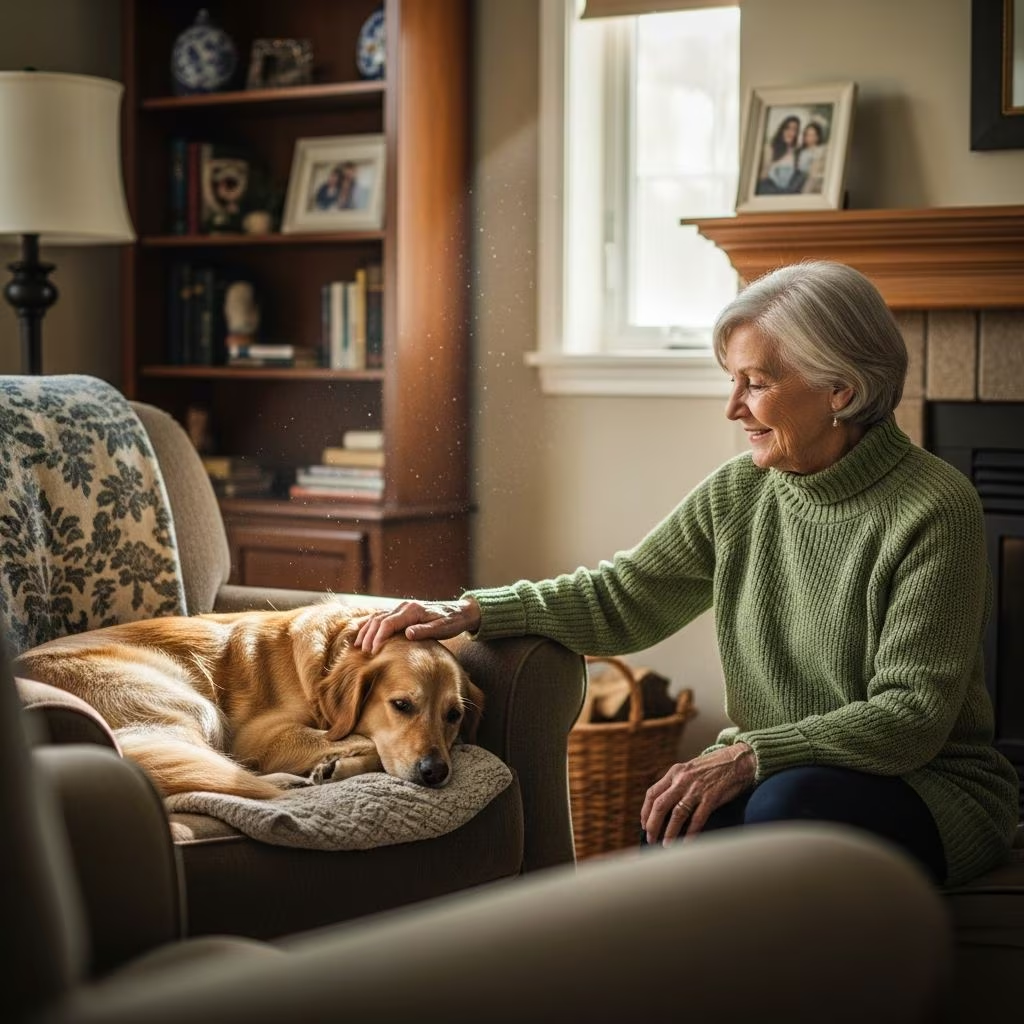
When children leave home for college, jobs, or independent lives, parents often face a profound sense of loss known as empty nest syndrome. This emotional shift can leave homes quieter and schedules emptier, prompting many to turn to pets for companionship. Pets not only fill the emotional void but also encourage healthier routines, yet they too may struggle with these changes, exhibiting signs of distress that require attentive care.
The Emotional Void Left by Departing Children
Empty nest syndrome manifests as sadness, disorientation, and even depression for many parents after years of centering life around family needs. Daily routines built around school runs, meals, and activities suddenly vanish, creating a palpable silence. Studies on family dynamics highlight how this transition disrupts long-established patterns, leading to feelings of irrelevance or purposelessness.
Pets emerge as natural allies in this phase. Their unwavering affection and dependence recreate a sense of being needed, much like raising children. Walking a dog or playing with a cat provides structure, combating isolation. Owners report that these interactions boost mood through endorphin release from physical activity and touch, fostering a renewed purpose.
- Daily structure: Pets demand feeding, exercise, and play, mirroring parental responsibilities.
- Emotional bonding: Cuddling and grooming sessions offer comfort during lonely evenings.
- Health benefits: Regular outings improve physical fitness and mental well-being.
How Pets Become Lifelines for Grieving Parents
Real-life accounts illustrate pets’ transformative impact. One parent, reeling from her daughter’s departure to culinary school, found solace in her cat. Shared naps in the child’s former room and evening grooming rituals eased heartache, helping her process grief. The pet’s presence prompted healthier eating habits too, as veterinary advice on weight management spurred mutual lifestyle improvements.
Beyond anecdotes, research supports these benefits. Companion animals integrate into family structures, providing non-human support that enhances emotional resilience. Outdoor activities with dogs, for instance, promote multispecies kinship, satisfying both pet and owner’s needs for movement and connection. This reciprocity strengthens bonds, making pets integral to daily life reconstruction.
| Benefit | For Parents | For Pets |
|---|---|---|
| Companionship | Reduces loneliness | Strengthens security |
| Exercise | Boosts fitness | Meets natural needs |
| Purpose | Restores routine | Encourages play |
Recognizing Distress in Pets During Transitions
While pets comfort owners, they too experience upheaval when family dynamics shift. Children often serve as playmates or routine anchors; their absence can trigger separation anxiety. Dogs and cats, highly attuned to human schedules, may not comprehend the permanence of these changes, leading to behavioral shifts.
For dogs, common indicators include excessive vocalization like barking or whining, destructive chewing on furniture or doors, pacing near exit points, drooling, panting, and indoor accidents despite house training. Research from the Journal of Veterinary Behavior estimates 17.2% of dogs show such symptoms, appearing immediately after departure or delayed.
Cats display subtler cues: avoidance of greetings, hiding, overgrooming to bald patches, aggression toward others, reduced appetite, or excessive sleep. These stem from their cautious nature, especially in those with feral backgrounds.
Dog-Specific Signs
- Barking, howling, whining
- Scratching doors or chewing frames
- Pacing or escape attempts
- Appetite changes or vomiting
Cat-Specific Signs
- Hiding or avoiding interaction
- Fur pulling or excessive grooming
- Loss of appetite
- Aggression or low posture
Strategies to Support Pets Through Change
Easing pet anxiety involves gradual adjustments and enrichment. Maintain familiar routines for meals and play to provide stability. Introduce a secondary caregiver early, using consistent phrases and feeding styles to build trust.
Enrichment tools are vital. For dogs, puzzle toys, snuffle mats, or lick mats deliver meals, channeling sniffing and chewing instincts. Ensure confinement areas like crates are positive through pre-training with treats and short absences. Exercise via walks or fetch meets physical needs, reducing stress.
Cats benefit from vertical spaces, interactive toys, and pheromone diffusers. Shared activities like laser play or brushing reinforce bonds with remaining household members.
- Preserve routines: Consistent feeding and play times.
- Enrich environment: Toys mimicking natural behaviors.
- Build support network: Bond with other family or friends.
- Monitor health: Consult vets for persistent issues.
Mutual Healing: Pets and Owners Adjusting Together
The empty nest phase offers opportunities for deeper pet-owner connections. Joint activities like daily walks not only tire energetic dogs but also get parents outdoors, countering sedentary isolation. Cats thrive on quiet lap time, providing tactile comfort during reflective moments.
Health improvements are bidirectional. Parents motivated to slim down overweight pets often adopt better diets themselves, as seen in cases where veterinary interventions sparked personal wellness journeys. This synergy underscores pets’ role in holistic recovery.
Long-term, pets prevent grief spirals. They remain devoted centers of our universe, unlike grown children pursuing independence. This constancy aids navigation of new life chapters, from hobbies to travel, with a loyal companion.
Potential Challenges and Professional Help
Not all transitions are smooth. Severe anxiety may signal underlying issues, warranting veterinary or behavioral specialists. Medications or therapy can complement lifestyle changes. Empty nesters must balance pet care with self-care to avoid over-reliance.
Consider pet age and health before adoption. Older animals suit less active lifestyles, while puppies demand energy. Rescue organizations offer matches tailored to empty nest dynamics.
FAQs
What is empty nest syndrome in pets?
Pets experience confusion and anxiety when family members, especially children, leave, disrupting routines and bonds.
Can adopting a pet cure empty nest feelings?
Pets provide significant relief but work best alongside social activities, hobbies, and counseling if needed.
How long does pet separation anxiety last?
With interventions, symptoms often improve in weeks, though some dogs take months.
Are certain breeds more prone to anxiety?
High-energy or velcro breeds like Labs or Velcro dogs show higher rates, but any pet can be affected.
Should empty nesters get a puppy?
Puppies suit active individuals; consider seniors or low-maintenance cats for calmer phases.
References
- Pets Experience Empty-Nest Syndrome, Too — Kinship. 2023. https://www.kinship.com/pet-behavior/empty-nest-syndrome-pets
- Understanding and Solving the Signs of Separation Anxiety in Pets — Wellness Petfood. 2021-06-21. https://www.wellnesspetfood.com/blog/returning-to-work-understanding-and-solving-the-signs-of-separation-anxiety-in-pets/
- Everyday Life Construction, Outdoor Activity and Health Practice — PMC (NCBI). 2020. https://pmc.ncbi.nlm.nih.gov/articles/PMC7312120/



