

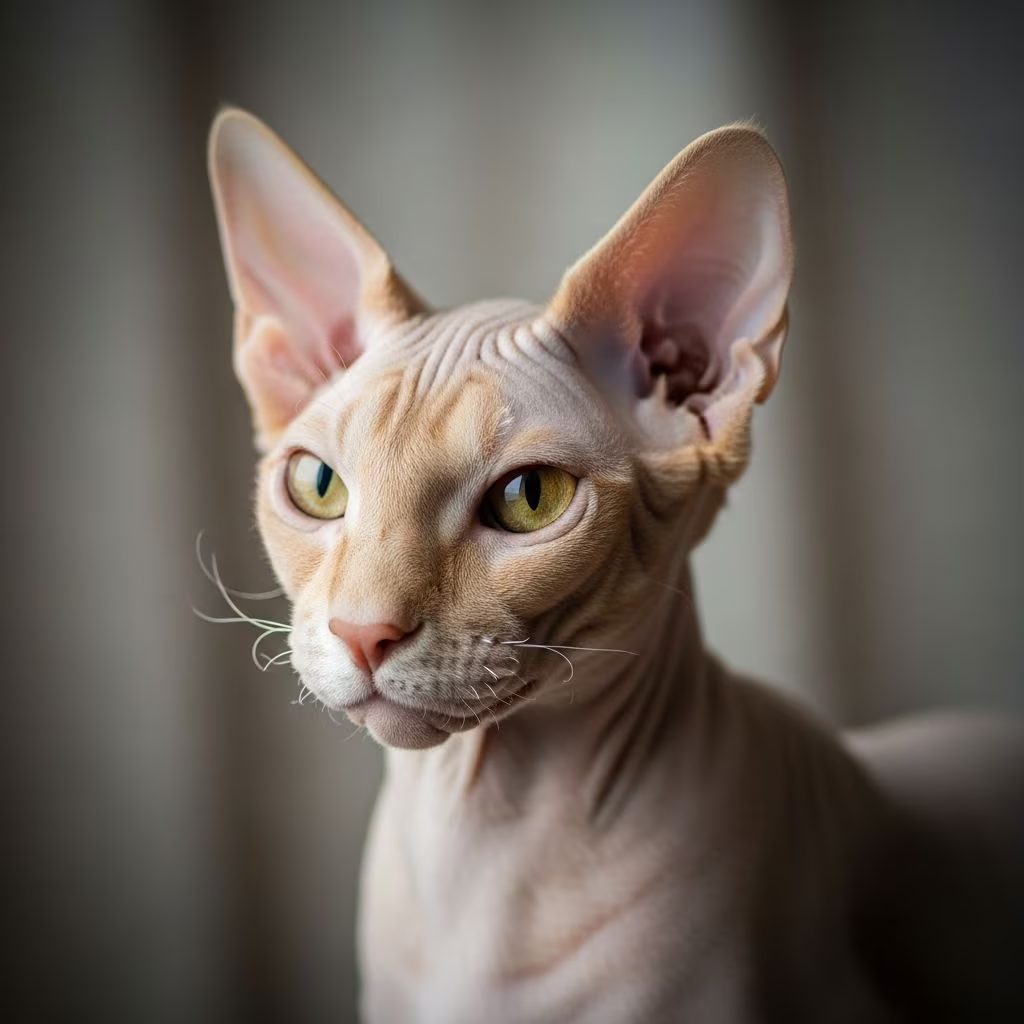
Peterbald cats stand out as one of the most distinctive and endearing breeds in the feline world, blending elegance with boundless energy. Originating from Russia, these cats captivate with their sleek, often hairless bodies, expressive faces, and dog-like devotion to their humans. Highly social and intelligent, they thrive in environments where they receive ample attention and playtime, making them unsuitable for homes where owners are frequently absent.
Origins and Development of the Peterbald Breed
The Peterbald breed emerged in the 1990s in St. Petersburg, Russia, through a deliberate crossbreeding effort between a hairless Donskoy (also known as Don Sphynx) and an Oriental Shorthair. This union produced the first litter in 1994, introducing a unique dominant hair-loss gene that sets Peterbalds apart from other hairless breeds like the Sphynx, whose gene is recessive.
Recognized by The International Cat Association (TICA) shortly after, the breed quickly gained popularity for its refined aesthetics and lively temperament. Breeders focused on enhancing the Oriental Shorthair’s slender build with the Donskoy’s baldness, resulting in cats that exhibit a spectrum of coat types. Unlike the Sphynx, Peterbalds can pass on their hairless trait more predictably due to the dominant inheritance pattern, allowing for greater consistency in breeding programs.
Over the years, the breed has been refined to emphasize athleticism and sociability, earning a reputation as a “champion of affection” among cat enthusiasts. Their development reflects a blend of Russian innovation and global feline standards, with ongoing registrations ensuring genetic health and diversity.
Distinctive Physical Characteristics
Peterbalds possess a striking appearance that combines delicacy with strength. Their bodies are long, cylindrical, and muscular, supported by slender, straight legs that give them a graceful, elongated silhouette. The neck is notably long and whippy, leading to a triangular head with high cheekbones, a prominent chin, and large, low-set ears that enhance their alert expression.
Eyes are almond-shaped and medium to large, available in vivid greens, blues, or coppers, often framed by fine whiskers that may be straight, curled, or absent depending on coat type. The tail is another highlight—long, tapering, and flexible, often moving like a dancer’s ribbon during play.
Feet are oval with long toes, featuring partially webbed front paws ideal for grasping toys, a trait inherited from their Oriental ancestry. Overall, Peterbalds convey an impression of refined power, with visible muscle definition under their warm, soft skin.
Coat Variations: From Bald to Velour
- Bald (Naked): Completely hairless at maturity, with ultra-smooth, chamois-like skin that’s highly inviting to touch.
- Flock: A subtle peach-fuzz covering, resembling the soft down of a newborn chick.
- Velour: Very fine, short hairs (1-5mm) creating a suede-like texture.
- Brush: Wiry, wavy hairs up to 15mm, unique to Peterbalds and often shedding minimally.
- Straight: Full short coat in non-hairless kittens, which may thin over time.
These variations stem from the dominant Hr gene, where kittens may be born coated but lose hair progressively. Colors span solids, tabbies, points, and whites, with patterns adding to their exotic appeal.
Temperament and Behavioral Traits
Renowned for their dog-like loyalty, Peterbalds form profound bonds with owners, often following them room-to-room and “talking” with chirps, trills, and meows. Highly intelligent, they excel at fetch, puzzle toys, and even leash walking, adapting quickly to travel and new environments.
Social butterflies by nature, they greet guests warmly, coexist harmoniously with dogs, cats, and children, and dislike solitude—potentially developing anxiety if left alone excessively. Their playful energy peaks in short bursts, followed by cuddly downtime under blankets or laps.
| Trait | Description |
|---|---|
| Affection Level | Extremely high; craves physical closeness |
| Energy | Athletic and agile, loves interactive play |
| Sociability | Excellent with families, pets, and strangers |
| Intelligence | Trainable, curious problem-solver |
| Vocalness | Frequently communicative |
This table summarizes key traits, highlighting why Peterbalds suit active, attentive households.
Health Considerations and Lifespan
Peterbalds typically live 10-15 years with proper care, benefiting from hybrid vigor in their lineage. Common concerns include skin sensitivities, requiring regular moisturizing baths to prevent dryness or oil buildup. They may be prone to hypertrophic cardiomyopathy (HCM), a heart condition monitored via genetic testing.
Dental hygiene is crucial due to reduced grooming; weekly brushing and vet checkups mitigate gum disease. Their high metabolism demands nutrient-dense diets to maintain muscle tone without obesity. Early socialization and spaying/neutering support longevity.
Grooming and Daily Care Essentials
Despite minimal shedding, hairless Peterbalds need weekly baths with mild, cat-safe shampoos to remove skin oils, followed by moisturizers like those formulated for Sphynx breeds. Dry skin can lead to irritation, so ear cleaning bi-weekly prevents wax buildup in their large ears.
Nail trims every 10-14 days, combined with scratching posts, keep claws manageable. Provide warm bedding, as they seek heat sources—heated pads or sunny spots are favorites. Nutrition should emphasize high-protein, low-carb foods to fuel their active lifestyles.
Ideal Living Environment
Draft-free homes with climbing structures, interactive toys, and perches encourage their acrobatic nature. Multi-level cat trees mimic their love for heights, while puzzle feeders stimulate minds. Avoid isolation; companionship from humans or pets is vital.
Breeding Insights and Genetic Uniqueness
The Peterbald’s autosomal dominant hairlessness (Hr gene) means one parent carrier produces bald offspring reliably, unlike recessive Sphynx traits. Responsible breeding pairs Donskoy with Orientals or fellow Peterbalds, screening for HCM and PKD (polycystic kidney disease).
Kittens often start with straight coats that evolve, requiring patient owners. Ethical breeders prioritize health certifications and socialization, ensuring kittens join forever homes around 12 weeks.
Peterbald Cats in Modern Homes
These cats excel in apartments with engaged owners, apartments, or family settings, bringing joy through antics like leaping and “hosting” visitors. Their warmth against skin provides therapeutic comfort, and trainability extends to tricks like high-fives.
Adopting from rescues or reputable catteries costs $1,500-$3,000, reflecting rarity. Their presence elevates daily life, turning routines into adventures.
Frequently Asked Questions (FAQs)
Are Peterbald cats hypoallergenic?
Partially; low dander suits many allergy sufferers, but individual reactions vary. Regular bathing helps.
Do Peterbalds need warm clothes in winter?
Yes, sweaters or onesies protect against cold, as they lack insulating fur.
Can Peterbalds be left alone during the day?
Not ideally; they prefer company. Consider daycare or companions if working long hours.
How do Peterbalds compare to Sphynx cats?
Peterbalds have elegant Oriental builds and dominant baldness, versus Sphynx’s stockier frames and recessive gene.
What is the best food for Peterbald kittens?
High-quality, protein-rich kitten formulas supporting growth and skin health.
References
- Peterbald – TICA – The International Cat Association — TICA. Accessed 2026. https://tica.org/breed/peterbald/
- Peterbald Cat Guide: Unique Traits & Feline Breed Info — Bailey’s CBD. Accessed 2026. https://baileyscbd.com/blogs/cat-breeds/peterbald-cat-distinct-feline-breed-traits
- Peterbald – Cat Breeds — Basepaws. Accessed 2026. https://basepaws.com/cat-breeds/peterbald
- What to Know About a Peterbald — WebMD. Accessed 2026. https://www.webmd.com/pets/cats/what-to-know-about-a-peterbald
- Peterbald Cat Breed Profile — Litter-Robot. Accessed 2026. https://www.litter-robot.com/blog/peterbald-cat/
- Peterbald Cat Breed — Purina CA. Accessed 2026. https://www.purina.ca/cats/cat-breeds/peterbald-cat-breed



