

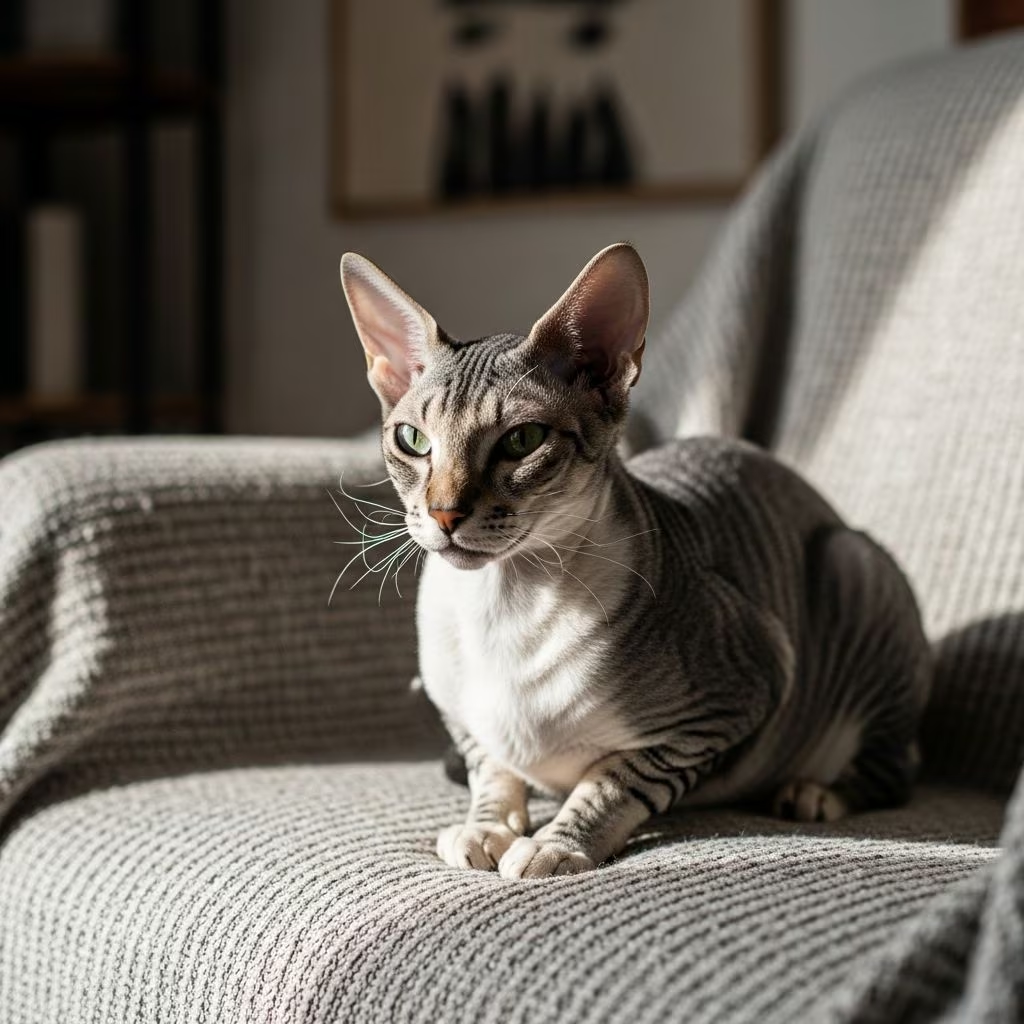
The Peterbald stands out as a captivating feline breed, renowned for its sleek, often hairless appearance and lively spirit. Originating from Russia, this medium-sized cat combines the elegance of Oriental lines with the distinctive baldness of Sphynx relatives, making it a favorite among enthusiasts seeking a unique companion.
Origins and Development of the Peterbald
The story of the Peterbald begins in 1994 in St. Petersburg, Russia, where breeder Olga S. Mironova pioneered the breed by mating a Don Sphynx (also called Donskoy) with an Oriental Shorthair. This crossbreeding effort introduced a dominant gene responsible for the breed’s signature hairlessness or altered coat textures, setting it apart from other felines.
Early kittens from these pairings, such as Nocturne Iz Murino and Radma vom Jagerhof, laid the foundation for the breed’s standards. The name “Peterbald” honors its rapid rise in popularity around St. Petersburg. Recognition followed swiftly: The International Cat Association (TICA) accepted the breed in 1997, granting championship status in 2005, with the brush coat variety elevated in 2008. Today, the Cat Fanciers’ Association (CFA) also acknowledges it, though it remains rare globally.
Breeding emphasizes outcrosses with Oriental Shorthair, Siamese, Balinese, and Javanese to refine the modern type: long, lithe bodies and refined features. This evolution has produced a cat that blends hairless novelty with Oriental grace.
Distinctive Physical Characteristics
Peterbalds exhibit a slender, muscular frame typical of medium-sized cats, weighing 6-10 pounds with a high metabolism supporting their athletic build. Their heads are wedge-shaped with straight profiles, almond eyes, large upright ears, and firm chins. Necks are long and elegant, torsos tubular and refined, legs straight and slender, ending in oval paws with long, webbed toes for exceptional dexterity. Tails are whip-like, enhancing their graceful movements.
These traits allow Peterbalds to manipulate objects adeptly, akin to dexterous hands, aiding in play and exploration. Muscles are prominently defined, especially in hairless varieties, giving a sculpted appearance.
Diversity in Coat Types and Colors
Unlike fully hairless breeds, Peterbalds display a spectrum of coat variations due to their unique genetics, inherited dominantly. Kittens may change coats as they mature, born fuzzy or coated before shedding to baldness.
- Ultra Bald (Chamois): Completely hairless, velvety soft skin with possible fine down on nose or paws.
- Brush: Wiry, kinky guard hairs forming a sparse, coarse texture; whiskers often curled.
- Velour/Flock: Suede-like short fuzz, peach-fuzz softness.
- Straight: Short, close-lying coat without undercoat, resembling Oriental Shorthairs.
- Full Coat: Rare, normal fur in non-gene carriers.
Colors span solids, tabbies, points, and patterns in diverse shades like blue-eyed rarities. Whiskers vary from vestigial to crinkled.
Temperament and Behavioral Traits
Peterbalds are highly social, intelligent, and affectionate, often shadowing owners and greeting guests. They possess moderate vocalization, less intense than Siamese relatives, and thrive on interaction. Playful and energetic, they excel in agility, training easily due to smarts.
These cats harmonize with children, dogs, and other felines, displaying curiosity without aggression. Their tenderness demands reciprocation; isolation leads to distress. Not ideal for cold environments, they seek warmth and company.
| Trait | Description |
|---|---|
| Affection Level | Extremely high; loves cuddles and lap time |
| Energy Level | Active and athletic; needs daily play |
| Social Needs | Thrives in multi-pet homes; family-oriented |
| Vocal Tendency | Moderate chirps and meows |
| Trainability | Highly responsive to tricks and commands |
Essential Care and Grooming Needs
Peterbalds require weekly baths to manage skin oils, preventing greasiness, especially in bald types. Use cat-safe shampoos; dry thoroughly to avoid chills. Skin feels warm and soft, prone to dryness—moisturize with vet-approved lotions.
Nail trims bi-weekly leverage their dexterous paws; provide scratching posts. Dental care is crucial sans fur protection; brush teeth regularly. Ears clean weekly to prevent wax buildup.
Diet: High-protein, calorie-dense food matches their metabolism. Warm beds, clothing in cold climates, and litter boxes in cozy spots suit their preferences.
Health Considerations and Lifespan
Peterbalds enjoy 12-15 years with proper care, robust from selective breeding. Monitor skin for acne, infections; hypertrophic cardiomyopathy (HCM) screening advised due to Oriental ties. High metabolism risks obesity if under-exercised; regular vet checks essential.
The dominant bald gene spares recessive issues of other hairless breeds. Early socialization prevents shyness.
Bringing a Peterbald into Your Home
Acquire from reputable breeders emphasizing health testing; expect $1,500-$4,000. Kittens need gradual introductions. Environment: Vertical spaces, interactive toys, companions if owners work.
Ideal owners: Active families valuing devotion. Not for aloof households.
Peterbalds in Cat Shows and Culture
Championship success highlights their allure, like Blue Belle’s blue-eyed rarity. Their exotic look and poise shine in competitions. Culturally, they symbolize modern breeding innovation.
Frequently Asked Questions (FAQs)
Are Peterbald cats truly hairless?
Not always; coats range from bald to straight, changing post-birth.
Do Peterbalds make good pets for beginners?
Yes, their sociability suits novices committing to grooming and play.
Can Peterbalds live in cold climates?
They dislike cold; provide heated beds and sweaters.
Are they hypoallergenic?
Potentially lower dander, but unverified; test for allergies.
How do I groom a Peterbald?
Bathe weekly, moisturize skin, trim nails, clean ears.
References
- Peterbald cat History — orientalcat.eu. N/D. https://www.orientalcat.eu/peterbald-cat-history
- Peterbald Cat Breed Origins and Coat Types — HowStuffWorks. N/D. https://animals.howstuffworks.com/pets/peterbald-cat.htm
- Peterbald Cat Guide: Unique Traits & Feline Breed Info — Bailey’s CBD. N/D. https://baileyscbd.com/blogs/cat-breeds/peterbald-cat-distinct-feline-breed-traits
- Peterbald — Wikipedia. N/D. https://en.wikipedia.org/wiki/Peterbald
- Peterbald cat breed, photo — top-cat.org. N/D. https://en.top-cat.org/breeds-articles/breed/77
- Peterbald Breed Introduction — TICA. 2018-08. https://tica.org/wp-content/uploads/2018/08/TICA-Peterbald-Breed-Introduction.pdf



