

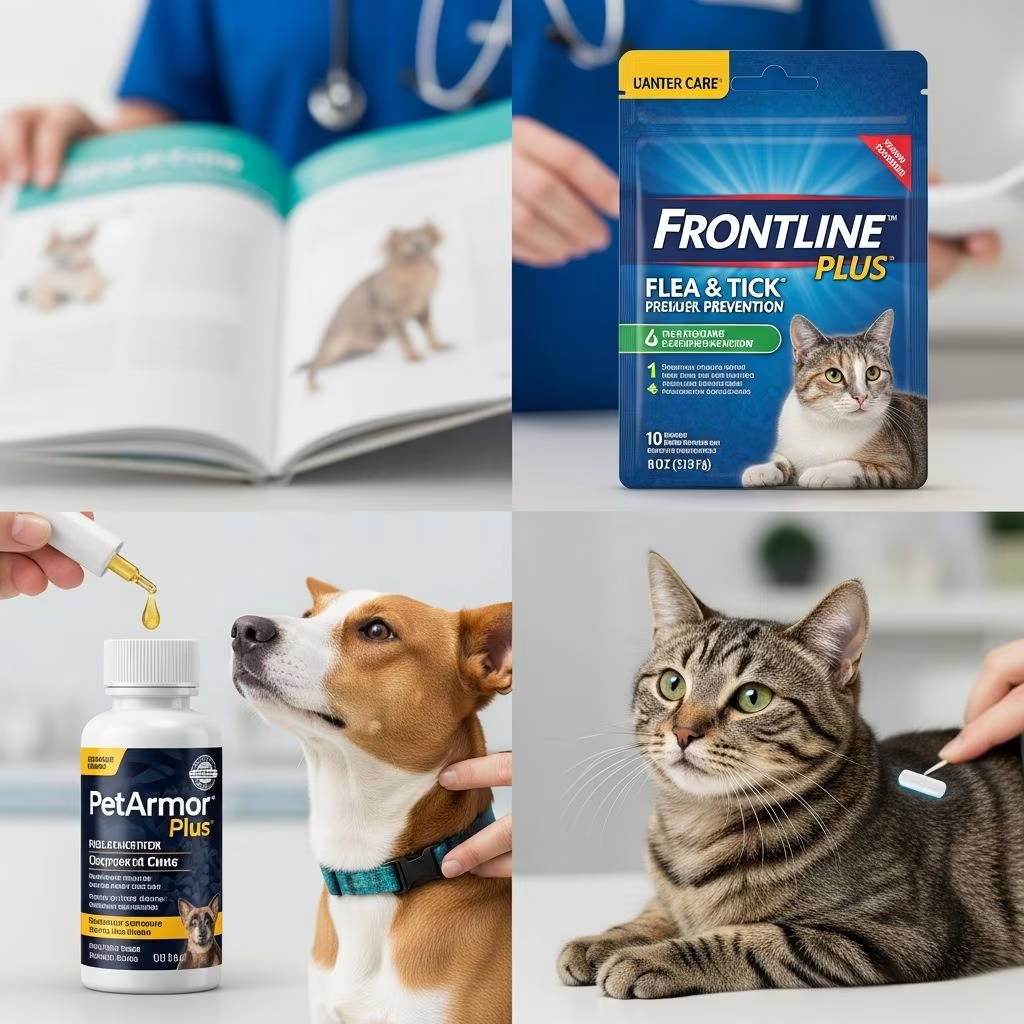
Pet owners face numerous choices when selecting parasite prevention products for their dogs and cats. Among the most commonly compared options are PetArmor Plus and Frontline Plus, two topical treatments that have become household names in veterinary medicine. Both products deliver month-long protection against fleas, ticks, and other parasites through a simple spot-on application method. Understanding how these treatments work, their similarities, differences, and cost implications helps pet owners make informed decisions that balance effectiveness with budget considerations.
The Mechanics of Topical Parasite Protection
Topical treatments, commonly referred to as spot-on solutions, represent a significant advancement in pet parasite management. These liquid formulations are applied directly to the skin at the base of the neck, where pets cannot lick or ingest them. The treatment then spreads across the skin surface through natural oils, creating a protective barrier that persists for approximately 30 days.
The efficacy of these spot-on treatments operates through two distinct mechanisms. First, the primary active ingredient eliminates parasites on contact without requiring the parasite to bite the animal. Second, a secondary compound prevents flea eggs and larvae from maturing into adults, thereby interrupting the reproduction cycle and preventing future infestations. This dual-action approach provides comprehensive protection across all parasite life stages.
Active Ingredient Composition and Effectiveness
A critical similarity between PetArmor Plus and Frontline Plus lies in their identical chemical composition. Both products contain fipronil at 9.8% concentration and s-methoprene at 8.8% concentration. Fipronil functions as a broad-spectrum insecticide that disrupts the nervous systems of adult fleas and ticks, causing paralysis and death. S-methoprene acts as an insect growth regulator, preventing immature fleas from developing into reproductive adults.
Because the active ingredients are chemically identical, the efficacy profiles of both treatments are virtually equivalent when used as directed. Any perceived performance differences between the two products are typically anecdotal rather than scientifically documented. Both formulations successfully control flea infestations at all life stages—adult, egg, and larvae—while also eliminating ticks and chewing lice in both dogs and cats. Additionally, both products help manage sarcoptic mange in dogs.
Age Requirements and Pet Compatibility
Both PetArmor Plus and Frontline Plus share identical age and weight requirements for safe use. These products are approved for use on dogs and cats as young as 8 weeks of age, with the specific formulation selected based on the animal’s body weight. Pet owners must carefully match their animal’s weight to the appropriate product size to ensure proper dosing and safety.
An important distinction exists regarding cross-species application. While dog formulations of both products can be used safely on cats, the reverse does not apply. Formulations designed specifically for dogs should never be applied to cats, as the concentrations may be unsafe for feline physiology. Pet owners must always verify they are purchasing the correct species-specific product.
Cost Comparison and Budget Considerations
Price represents the most significant practical difference between these two treatments. Frontline Plus typically commands a premium price point that is 30-50% higher than PetArmor Plus. For a three-month supply, Frontline Plus generally costs between $35-$60 depending on dog size, while PetArmor Plus for the same period typically ranges from $7-12 per month or approximately $21-36 for three months.
This substantial price differential does not reflect differences in active ingredients or efficacy but rather brand recognition, marketing investment, and market positioning. PetArmor Plus operates as a generic alternative developed to provide cost-conscious pet owners with an equivalent solution at a fraction of the price. For households managing multiple pets or operating on tight budgets, this cost savings can be quite meaningful without sacrificing parasite protection quality.
| Feature | PetArmor Plus | Frontline Plus |
|---|---|---|
| Active Ingredients | Fipronil 9.8%, S-methoprene 8.8% | Fipronil 9.8%, S-methoprene 8.8% |
| Duration | 30 days | 30 days |
| Monthly Cost | $7-12 | $12-20 |
| Water Resistant | Yes (after 24 hours) | Yes (after 24 hours) |
| Protected Parasites | Fleas, ticks, lice, mites | Fleas, ticks, lice, mites |
Application Process and Practical Considerations
Both treatments utilize identical application methods that are straightforward for pet owners to administer at home. The process involves parting the animal’s fur at the base of the neck, exposing a small area of skin, and applying the entire contents of the pipette directly to the skin. The liquid should not be squeezed onto the fur, as this reduces effectiveness. Most animals tolerate this application well, though some may experience minor temporary irritation at the application site.
After application, pet owners should wait at least 24 hours before bathing or swimming their pets. This waiting period allows the active ingredients to distribute properly across the skin and establish the protective barrier. Once this period has elapsed, both products remain effective even with occasional bathing or swimming, though frequent water exposure does not enhance their performance.
Side Effects and Safety Considerations
Most pets tolerate both PetArmor Plus and Frontline Plus without adverse reactions when applied according to label directions. Potential side effects are generally mild and temporary. Some animals may experience slight localized irritation at the application site, manifesting as temporary redness or mild dermatitis. Lethargy or mild gastrointestinal upset occurs rarely and typically resolves within a few hours.
Pet owners should never apply these products more frequently than monthly or exceed the recommended dosage for their pet’s weight category. Overdosing increases the risk of adverse reactions without improving parasite control. Animals with known sensitivity to the active ingredients, a history of seizures, or certain health conditions should be evaluated by a veterinarian before treatment begins. Pregnant or nursing pets require veterinary consultation before application, though both products are generally considered safe for these populations when used appropriately.
Frequently Asked Questions
Does PetArmor Plus work as effectively as Frontline Plus?
Yes, when used as directed, PetArmor Plus delivers equivalent effectiveness to Frontline Plus because both products contain identical active ingredients in identical concentrations. Scientific efficacy is comparable between the two treatments.
Can I bathe my pet immediately after application?
No. Both products require at least 24 hours after application before bathing to ensure the active ingredients properly distribute across the skin. Bathing too soon may reduce effectiveness by washing away some of the medication before absorption is complete.
Why does Frontline Plus cost significantly more if it has the same ingredients?
The price difference reflects brand recognition, marketing expenses, market positioning, and brand establishment rather than differences in active ingredients or efficacy. PetArmor Plus functions as a generic equivalent that provides the same protection at a lower cost.
Which product is better for cats versus dogs?
Both products are equally effective for dogs and cats when the correct species-specific formulation is selected. The chemical composition remains identical across species formulations. Pet owners must ensure they purchase the formulation designed specifically for their pet’s species.
At what age can I start using these products on kittens or puppies?
Both PetArmor Plus and Frontline Plus are approved for use on puppies and kittens as young as 8 weeks of age. Always verify your young pet’s weight falls within the appropriate product range before application.
Making Your Decision
Selecting between PetArmor Plus and Frontline Plus ultimately comes down to individual priorities and circumstances. For pet owners seeking maximum value without compromising protection, PetArmor Plus delivers identical active ingredients and comparable effectiveness at substantially lower cost. The 30-50% price savings make a meaningful difference for households managing parasite prevention across multiple animals or operating on limited budgets.
Frontline Plus may appeal to pet owners who prefer established brand names, have had success with the product previously, or prioritize brand loyalty over cost considerations. Both products have been used successfully by veterinarians and pet owners for years, building trust through consistent performance.
Regardless of which product is selected, consistency in application remains crucial. Monthly applications should be administered on schedule to maintain continuous protection throughout the year. Missing doses or delaying applications creates windows where parasites can establish infestations. Setting calendar reminders or scheduling applications with other monthly routines helps ensure compliance.
Consulting with a veterinarian before starting any flea and tick prevention program ensures the selected product is appropriate for your specific pet’s age, weight, health status, and living environment. Veterinarians can also recommend alternative products if your pet has sensitivities or if your local flea and tick population shows resistance to these ingredients.
References
- PetArmor Plus vs Frontline Plus – PetBucket — PetBucket. Accessed 2025. https://www.petbucket.com/c/4585033/1/petarmor-plus-vs-frontline-plus.html
- PetArmor Plus for Dogs vs 5 Top Alternatives: Best Flea Defense — ThePetVet. Accessed 2025. https://thepetvet.com/petarmor-plus-for-dogs-vs-alternatives/



