

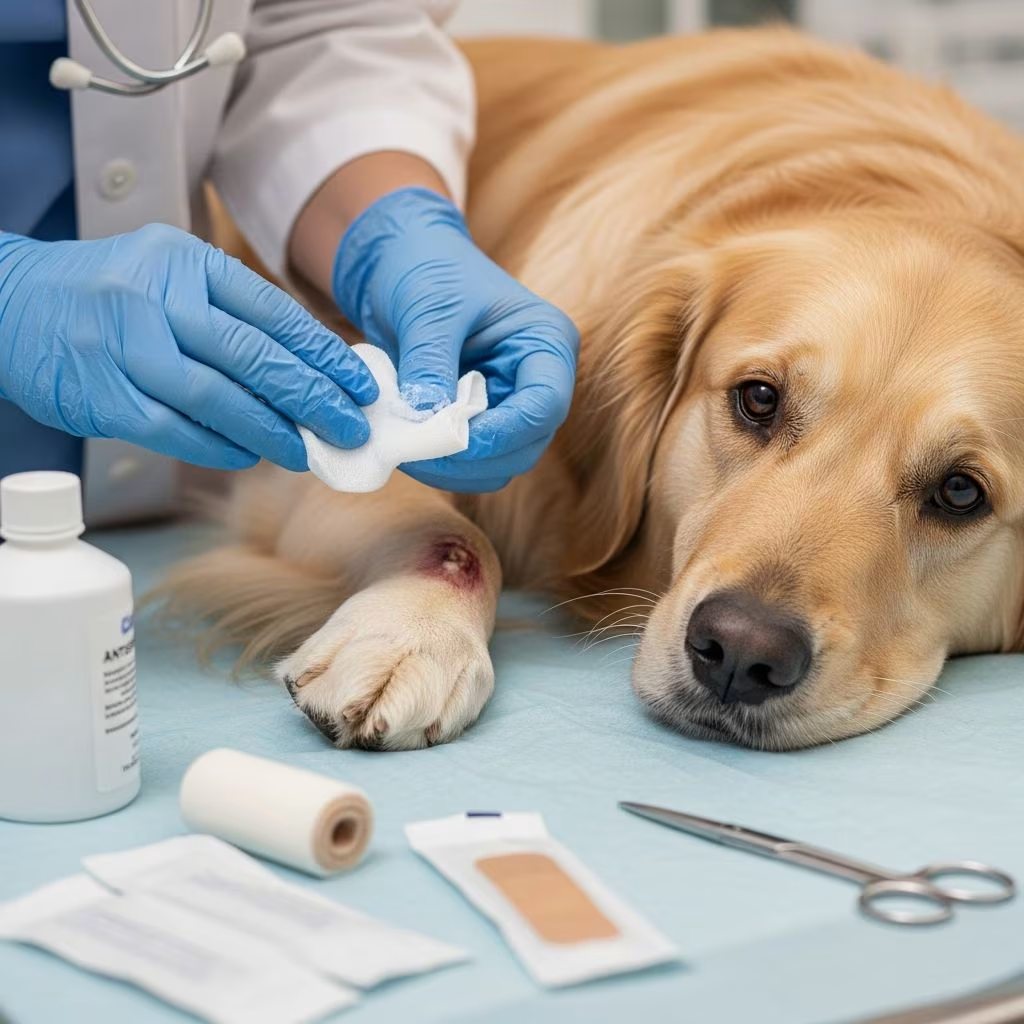
Proper management of wounds in pets is crucial for preventing infections, reducing pain, and facilitating swift recovery. This guide outlines essential steps from immediate response to long-term healing, drawing on proven veterinary practices.
Understanding Wound Types in Pets
Wounds in animals vary widely based on cause and severity. Common types include lacerations from sharp objects, punctures from bites or thorns, abrasions from dragging injuries, and degloving wounds where skin is stripped from underlying tissue. Each requires tailored care to address contamination levels and tissue damage.
- Clean wounds: Recent, superficial injuries with minimal bacteria, ideal for immediate closure.
- Contaminated wounds: Exposed to dirt or saliva, needing thorough cleaning before any suturing.
- Infected wounds: Showing pus, swelling, or foul odor, demanding antibiotics and debridement.
- Chronic wounds: Non-healing due to poor blood supply or repeated trauma, often requiring specialized dressings.
Classification helps determine urgency; for instance, bite wounds carry high infection risk from deep bacterial penetration.
Immediate First Aid for Pet Injuries
Act quickly but safely upon discovering a wound. Prioritize animal stabilization—check for shock signs like pale gums or rapid breathing before focusing on the injury.
- Control bleeding: Apply firm, direct pressure with a clean cloth for 5-10 minutes. Elevate the limb if possible. Avoid tourniquets unless trained, as they risk tissue damage.
- Prevent further harm: Muzzle aggressive or pained pets and restrain gently to avoid self-trauma.
- Cover loosely: Use a sterile gauze pad taped lightly to shield from contaminants without restricting circulation.
Do not use hydrogen peroxide or alcohol, as they damage healthy tissue and delay healing. Seek veterinary attention for deep, large, or bleeding wounds that don’t stop within 10 minutes.
Comprehensive Wound Cleaning Techniques
Cleaning removes debris, bacteria, and dead tissue, reducing infection odds. Perform under sedation in a clinic for best results.
Hair removal: Clip fur widely around the wound after applying sterile lubricant to block hair entry. This creates a clean field for inspection.
Irrigation essentials: Flush with copious lukewarm saline (0.9% sodium chloride) at moderate pressure—use a 35-50 mL syringe with 18-19 gauge needle. Aim for 1-2 liters per wound, as volume trumps solution type for bacterial reduction. Irrigation dislodges microbes deep in tissues while allowing tissue assessment.
| Method | Pressure Level | Purpose |
|---|---|---|
| Syringe flush | Low-moderate (8 psi) | Gentle debris removal |
| Pressure irrigator | Moderate-high (15 psi) | Deep cleaning without tissue trauma |
| High-pressure jet | Avoid (>30 psi) | Drives bacteria deeper |
Post-irrigation, inspect for foreign bodies like glass or thorns using good lighting and magnification.
Debridement: Removing Dead Tissue
Debridement excises non-viable tissue to promote healing. Viable tissue appears pink, bleeds when cut, and contracts on incision.
- Sharp debridement: Scalpel or scissors under anesthesia for precise removal.
- Autolytic: Moist dressings soften necrotic tissue naturally over days.
- Mechanical: Wet-to-dry bandages pull off dead tissue at changes.
- Chemical: Topical enzymes like papain-urea for selective digestion.
For questionable tissue, delay and reassess in 24-48 hours, as demarcation clarifies viability.
Strategies for Wound Closure
Decide on closure based on contamination, location, and skin availability. Primary closure suits clean, fresh wounds (<6-12 hours old).
Primary closure: Suture layers individually to eliminate dead space. Use monofilament absorbable sutures for deep layers, non-absorbable for skin. Tension-relieving patterns like walking sutures prevent dehiscence.
Delayed primary (secondary) closure: Re-clean and close after 3-5 days of open management, once granulation tissue forms. Ideal for moderately contaminated wounds.
Open management: Best for heavy contamination or skin loss. Heal by second intention—contraction and epithelialization. Regular bandage changes support this.
Bandaging and Dressings for Protection
Bandages shield healing tissue from trauma, desiccation, and bacteria while absorbing exudate.
Bandage layers:
- Contact layer: Non-adherent like telfa or silver-impregnated for infection control.
- Absorbent layer: Cast padding or gauze for moisture management.
- Outer layer: Conforming gauze and tape for security.
- Tertiary layer: Vet wrap or stockinette for extremities.
Specialized options:
- Honey or Manuka dressings: Antibacterial, promote autolysis.
- Hydrogels: Maintain moist environment for chronic wounds.
- Foams: High absorbency for exudative wounds.
Change every 1-3 days, monitoring for strikes (soaking through) or loosening. Tie-over bandages secure awkward sites like the head.
Drains and Infection Control
Penrose or Jackson-Pratt drains prevent fluid accumulation in large wounds. Secure proximally with mattress sutures of contrasting color for easy removal after 3-5 days when drainage serosanguineous.
Antibiotics target infected wounds: Culture first, then broad-spectrum like cephalexin pending results. Analgesics (opioids, NSAIDs) manage pain multimodally.
Monitoring Progress and Complications
Track healing daily: Granulation (red, bumpy tissue), contraction, epithelialization. Complications include dehiscence, seroma, or osteomyelitis in deep wounds.
| Sign | Action |
|---|---|
| Increasing redness/swelling | Culture, antibiotics |
| Foul discharge | Debride, drain |
| No granulation >7 days | Biopsy for neoplasia |
Home care: E-collars prevent licking; clean with saline, re-bandage as instructed.
Advanced Reconstruction Techniques
For extensive defects, options include skin grafts (meshed for expansion), axial flaps for blood supply, or omentalization using abdominal fat’s angiogenic properties. Refer to boarded surgeons for these.
Home Care Tips for Pet Owners
After discharge:
- Inspect daily for changes.
- Administer meds as prescribed.
- Prevent activity on healing limbs.
- Contact vet for fever, lethargy, or wound opening.
Frequently Asked Questions
Can I clean my pet’s wound at home?
Gently flush small, superficial wounds with saline, but deep or bleeding ones need professional care to avoid complications.
How long does a sutured wound take to heal?
Sutures typically stay 10-14 days; full strength returns in 3-6 weeks depending on size and location.
What if my pet licks the bandage?
Use an Elizabethan collar immediately and re-bandage if wet.
Is honey safe for pet wounds?
Medical-grade Manuka honey yes, under vet guidance for its antimicrobial benefits.
When should I rush to the ER?
Uncontrolled bleeding, deep punctures, exposed bone, or signs of shock.
References
- Helpful Tips For Managing Wounds In Veterinary Patients — Today’s Veterinary Practice. 2023. https://todaysveterinarypractice.com/wound-management/helpful-tips-for-managing-wounds-in-veterinary-patients/
- Initial Wound Management in Small Animals — Merck Veterinary Manual. 2024. https://www.merckvetmanual.com/emergency-medicine-and-critical-care/wound-management-in-small-animals/initial-wound-management-in-small-animals
- Wound Management for Veterinary Technicians — American Animal Hospital Association (AAHA). 2022-06. https://www.aaha.org/trends-magazine/june-2022/f1-wound-care/
- BSAVA Manual of Canine and Feline Wound Management — PubMed Central (PMC). 2024. https://pmc.ncbi.nlm.nih.gov/articles/PMC11135577/



