

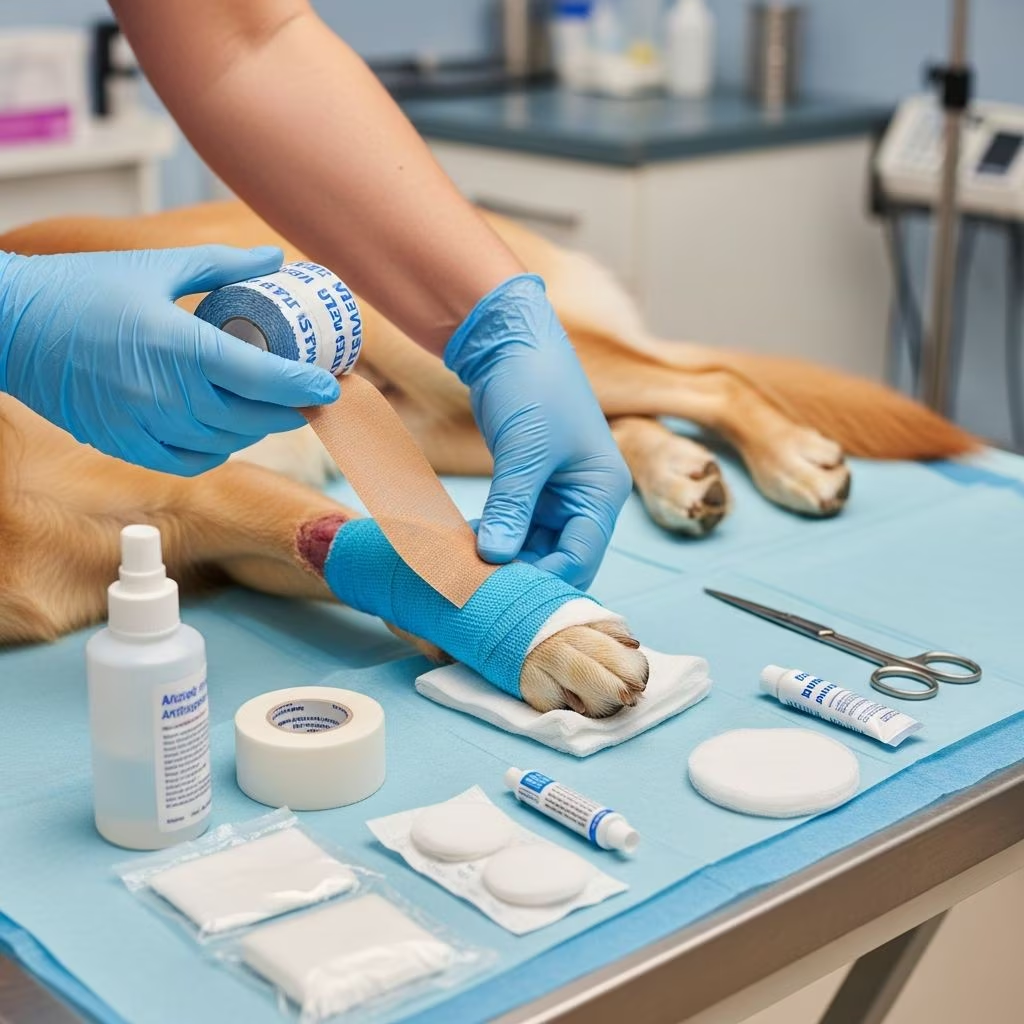
Proper bandaging and dressing of wounds in small animals like dogs and cats play a crucial role in promoting healing, protecting against infection, and minimizing discomfort. These techniques form the backbone of wound care after initial stabilization, lavage, and debridement, helping to create an optimal environment for tissue repair.
Foundations of Wound Care Before Bandaging
Before applying any bandage, ensure the animal is stable, as life-threatening issues must take precedence over local wound treatment. Initial steps include controlling bleeding with direct pressure or pneumatic cuffs rather than tourniquets to avoid complications, followed by thorough lavage to reduce bacterial load and improve visibility. Analgesia is essential for pain management, and for infected wounds, collect samples for culture before starting broad-spectrum antibiotics like first-generation cephalosporins.
Wounds are classified by contamination level: clean, contaminated, infected, or dirty, which dictates whether primary closure, delayed closure, or open management is appropriate. Viable tissue appears pink and bleeds when cut, guiding debridement decisions.
Core Principles Guiding Bandage Selection
Bandages serve multiple functions: absorbing exudate, maintaining moisture balance, preventing contamination, immobilizing the area, and compressing to reduce swelling. Moist wound healing is preferred over dry methods, as it supports healthier white cell activity and autolytic debridement. Factors influencing choice include wound location, size, exudate volume, infection status, and patient mobility.
- Primary layer: Contacts the wound directly, managing moisture and promoting healing.
- Secondary layer: Absorbs fluids and pads for comfort.
- Tertiary layer: Provides compression and protection.
- Cast or splint (optional): For immobilization.
Types of Primary Wound Dressings
The primary dressing is pivotal, as it interfaces directly with the wound bed. Selection depends on the healing phase: inflammatory, proliferative, or remodeling.
| Dressing Type | Best For | Key Benefits | Change Frequency |
|---|---|---|---|
| Nonadherent films | Clean, low-exudate wounds | Impermeable to bacteria, allows moisture vapor transmission | Every 3-5 days |
| Hydrogels | Dry or necrotic wounds | Rehydrates tissue, autolytic debridement | Daily to every 2 days |
| Foams | Moderate to high exudate | Absorbs excess fluid, maintains moist environment | Every 2-3 days |
| Alginates | Bleeding or infected wounds | Forms gel on contact with exudate, hemostatic | Daily if heavy exudate |
| Silver-impregnated | Infected wounds | Antimicrobial action without resistance | Every 3-7 days |
Traditional wet-to-dry gauze, once common for mechanical debridement, is now less favored due to pain and tissue trauma during changes; modern moist options are superior for most cases.
Building Effective Multilayer Bandages
A well-constructed bandage mimics the skin’s barrier while supporting healing. Start with clipping hair and applying sterile lubricant around the wound for hygiene.
Step-by-Step Application Guide
- Prepare the wound: Lavage copiously with saline or balanced solutions at low pressure to avoid driving bacteria deeper.
- Apply primary dressing: Cut to fit without overlapping edges, secure lightly if needed.
- Add absorbent secondary layer: Use cast padding or cotton for cushioning and fluid uptake.
- Wrap tertiary layer: Apply conforming gauze with 50% overlap, even tension to avoid pressure points.
- Secure outer layer: Use cohesive bandage or tape; avoid circumferential tightness that could cause ischemia.
For extremities, start distal and work proximally to promote lymphatic drainage. Ensure two fingers fit under the bandage for proper tension.
Specialized Bandaging for Challenging Locations
Wound sites vary in complexity, requiring tailored approaches.
- Distal limbs: Robert Jones bandage with extra padding for compression and stability, ideal post-surgery or for fractures.
- Trunk/axial: Tie-over or stent bandages to secure dressings without full wraps.
- Head/neck: Stockinette tubes or figure-eight patterns to accommodate movement.
- Tail: Spiral wraps with minimal padding to avoid slippage.
Degloving injuries or pressure sores benefit from open management with frequent changes until granulation tissue forms, potentially followed by flaps or grafts. Bite wounds, often deeply contaminated, require drains or open healing.
Monitoring and Maintenance Protocols
Regular assessment prevents complications like maceration, slippage, or ischemia. Change bandages every 1-3 days initially, less frequently as exudate decreases.
Signs of problems:
- Swelling, coldness, or pain distal to bandage (ischemia).
- Foul odor, increased discharge (infection).
- Strike-through soiling (inadequate absorption).
Owners should monitor for chewing; use Elizabethan collars. In clinic, document wound progress: size reduction, granulation, contraction.
Advanced Options for Non-Healing Wounds
For chronic or stalled wounds, incorporate adjuncts like negative pressure wound therapy (vacuum-assisted closure) to draw out fluid and stimulate granulation, or topical antimicrobials. Honey dressings offer natural antibacterial properties, while growth factors may accelerate proliferation in select cases. Always prioritize aseptic technique and gentle handling.
Home Care Instructions for Pet Owners
Post-discharge, educate owners on daily checks: ensure bandage stays dry/clean, restrict activity, and report issues promptly. Avoid baths until healed; use E-collars religiously.
Frequently Asked Questions (FAQs)
What if my pet’s bandage gets wet?
Replace immediately to prevent skin maceration and bacterial growth; contact your vet for guidance.
How often should I change a wound dressing at home?
Follow vet instructions, typically every 24-48 hours for oozing wounds, but never delay if soiled.
Can I use human bandages on my dog?
No; pet-specific materials prevent allergies and ensure proper fit—consult a professional.
What promotes fastest wound healing in pets?
Moist environments, nutrition (high-protein diet), and infection control outperform dry methods.
When is surgery needed for a pet wound?
For deep lacerations, degloving, or those resisting open management after 5-7 days.
Preventing Wound Complications
Proactive strategies reduce risks: early intervention, multimodal pain control, and owner compliance. Costs vary—surgical closure may exceed repeated bandaging long-term, but open methods suit unstable patients.
References
- Initial Wound Management in Small Animals — Merck Veterinary Manual. 2023. https://www.merckvetmanual.com/emergency-medicine-and-critical-care/wound-management-in-small-animals/initial-wound-management-in-small-animals
- Management of Specific Wounds in Small Animals — Merck Veterinary Manual. 2023. https://www.merckvetmanual.com/emergency-medicine-and-critical-care/wound-management-in-small-animals/management-of-specific-wounds-in-small-animals
- Care of Open Wounds in Dogs — VCA Animal Hospitals. 2023. https://vcahospitals.com/know-your-pet/care-of-open-wounds-in-dogs
- Principles of Wound Management and Wound Healing in the Exotic Animal Patient — PMC (NCBI). 2015-10-01. https://pmc.ncbi.nlm.nih.gov/articles/PMC4663678/
- Wound Management for Veterinary Technicians — AAHA Trends Magazine. 2022-06. https://www.aaha.org/trends-magazine/june-2022/f1-wound-care/



