

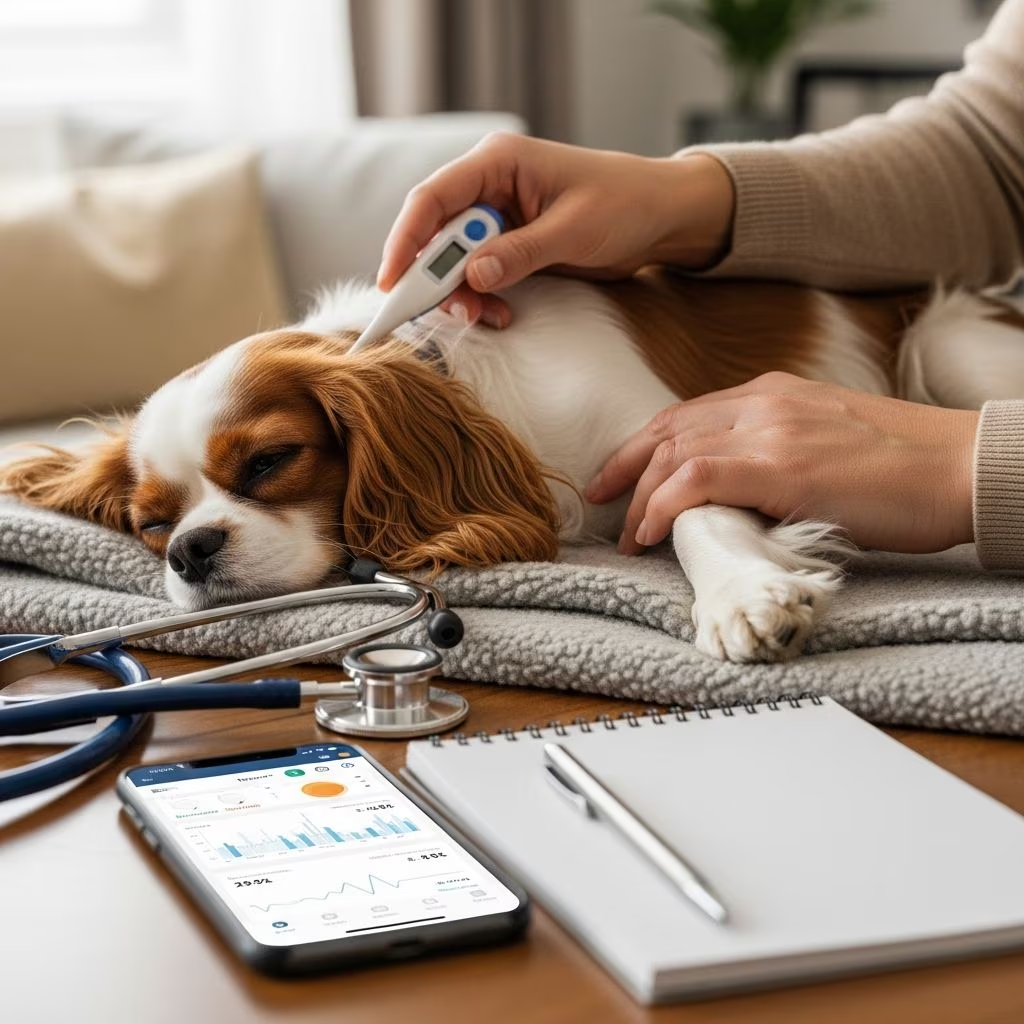
Tracking vital signs is a fundamental skill for any pet owner, offering insights into your dog’s or cat’s well-being that can reveal hidden health concerns before they escalate. By regularly checking parameters like body temperature, heart rate, respiration, pulse, gum color, and hydration status, you create a baseline for normalcy unique to your pet. This proactive approach complements veterinary care, enabling timely interventions.
Why Home Monitoring of Vital Signs Matters
Vital signs provide objective data on your pet’s physiological state, influenced by factors such as age, breed, size, and activity level. Establishing personal baselines during calm moments helps distinguish normal variations from abnormalities signaling pain, infection, dehydration, or cardiac issues. Veterinary professionals emphasize that owners who monitor these signs can contribute valuable information during checkups or emergencies.
Stress from travel or excitement can temporarily alter readings, so practice measurements when your pet is relaxed. Tools needed are simple: a digital rectal thermometer, lubricant, stopwatch, and your hands for pulse detection. Consistency in technique ensures reliability.
Normal Ranges for Dogs and Cats: A Quick Reference
Understanding typical values is crucial, though they vary by species, size, and individual health. Use this table as a starting guide, but consult your vet for breed-specific norms.
| Vital Sign | Dogs (Small/Medium/Large) | Cats | Notes |
|---|---|---|---|
| Temperature (°F) | 100-102.5 | 100.5-102.5 | Rectal measurement most accurate |
| Heart Rate (bpm) | 90-120 / 70-110 / 60-90 | 140-180 | At rest; varies by size |
| Respiration (breaths/min) | 18-34 | 20-40 | Count chest rises/falls |
| Pulse | Matches heart rate | Matches heart rate | Regular rhythm essential |
These ranges are drawn from veterinary guidelines; deviations warrant professional evaluation, especially if multiple signs are off.
Step-by-Step: Measuring Body Temperature
Body temperature is a key indicator of fever, hypothermia, or infection. Dogs and cats run warmer than humans, with rectal readings providing the gold standard accuracy over ear or axillary methods.
- Prepare supplies: Digital thermometer (avoid glass/mercury), water-based lubricant (e.g., KY Jelly or petroleum jelly), pet treats for rewards, and an assistant if possible.
- Position your pet: Calm them in a quiet area. For dogs, stand or lay on side; lift tail gently. For cats, wrap in a towel if fidgety, exposing the rectal area below the tail base.
- Lubricate and insert: Apply lubricant to the thermometer tip. Insert 1 inch for small pets/cats, 2-3 inches for larger dogs. Hold securely until it beeps (about 10-60 seconds).
- Record and clean: Note the reading, clean the thermometer with alcohol, and praise your pet.
Normal canine temperature is 100°F to 102.5°F (37.8-39.2°C); felines slightly higher at 38.3-39.2°C. Hyperthermia above 103°F may indicate heatstroke; hypothermia below 99°F signals shock. Practice weekly to build confidence.
Assessing Heart Rate and Pulse
Heart rate and pulse reflect cardiovascular efficiency. They should match in rhythm and rate; discrepancies suggest issues like arrhythmias.
Finding the Heartbeat
Locate on the left chest where the elbow meets the ribcage. Place your palm flat; feel the ‘lub-dub’ beats. Count for 15 seconds (multiply by 4) or 30 seconds (by 2) using a stopwatch. Small dogs: 90-140 bpm; large: 60-90 bpm. Cats: 140-220 bpm at rest.
Checking the Pulse
The femoral artery, inside the hind leg at mid-thigh, pulses strongly. Use index/middle fingers (not thumb) to press gently. Count simultaneously with heart rate to verify sync. Weak, irregular, or bounding pulses indicate problems like dehydration or shock.
Tip: Train during playtime; excited rates are higher, so baseline resting values.
Evaluating Respiration Rate
Respiratory rate gauges lung function and pain levels. Observe chest wall rise/fall (one breath) without touching, as handling can alter it. Count 30 seconds at rest, multiply by 2. Dogs: 18-34 breaths/min; cats: 16-40.
Rapid breathing (tachypnea) may signal pneumonia, heart failure, or anxiety; slow (bradypnea) could mean opioid effects or respiratory depression. Abdominal effort or open-mouth breathing in cats is abnormal. Monitor post-exercise recovery to full rest.
Quick Checks: Gum Color and Hydration
These non-invasive tests complement TPR (temperature, pulse, respiration).
- Gum Color: Lift lip; healthy gums are pink, moist, plopping back quickly. Pale: anemia/shock; blue: oxygen lack; yellow: liver issues; brick-red: toxicity/fever.
- Hydration (Skin Tenting): Pinch skin at shoulder blades/neck. It should snap back instantly. Tented skin >2 seconds indicates dehydration. Check mucous membrane tackiness and eye sunkenness.
Combine with capillary refill time: Press gum until white, release; color returns in <2 seconds normally.
When to Worry: Red Flags and Next Steps
Isolated changes might be benign, but clusters demand action:
- Temperature >103°F or <99°F
- Heart/pulse >20% above baseline or irregular
- Respiration >40/min at rest
- Abnormal gum color or prolonged skin tenting
Call your vet immediately for emergencies like collapse, vomiting, or lethargy alongside abnormalities. Share your log for precise diagnosis. Trends over days are more telling than snapshots.
Building a Vital Signs Log for Your Pet
Maintain a journal: date, time, vital values, context (e.g., post-walk), and observations. Apps or spreadsheets work too. Review monthly; share at vet visits. This empowers you as a health partner.
Frequently Asked Questions (FAQs)
Can I use an ear thermometer instead of rectal?
Ear thermometers are less accurate for pets due to ear canal shape; rectal remains preferred for precision.
How often should I check vital signs?
Weekly for healthy pets; daily if ill or senior. Always before/after meds or events.
What if my pet resists temperature taking?
Use treats, distractions, or vet demos. Start young; never force to avoid trauma.
Do puppies/kittens have different normals?
Yes, higher rates: puppies 120-160 bpm, kittens 200-300 bpm. Consult breed charts.
Is pulse the same as heart rate?
Normally yes; mismatches signal vascular issues.
Advanced Tips for Confident Monitoring
Invest in pet-specific tools like flexible thermometers. Video abnormal breaths for vets. For brachycephalic breeds (e.g., Bulldogs, Persians), higher baselines apply—vet confirmation essential. Seasonal factors: heat elevates temp/respiration.
Integrate with weight tracking and behavior notes for holistic health snapshots. Educate family members for consistency.
References
- Normal Vital Signs in Dogs and Cats — Mount Pleasant Vet Clinics. Accessed 2026. https://www.mountpleasant.com.sg/education/normal-vital-signs-in-dogs-and-cats/
- TPR for Dogs: Understanding Vital Signs in Canine Health — Halo Collar. Accessed 2026. https://www.halocollar.com/blog/dog-health/tpr-dogs-understanding-vital-signs-canine-health/
- Checking your pet’s vital signs — Veterinary Bärenwiese. Accessed 2026. https://tierarzt-baerenwiese.de/en/checking-your-pets-vital-signs/
- Vital Signs — Know What’s Normal for Your Pet — Animal Medical Center of New York. Accessed 2026. https://www.amcny.org/pet_health_library/vital-signs/
- Recording Vital Signs – Animal Behavior College — Animal Behavior College. 2023-10. https://www.animalbehaviorcollege.com/wp-content/uploads/2023/10/VAP-Stage-3-SneakPeek.pdf
- Understanding Your Pet’s Vital Signs During a Checkup — The Animal Hospital. Accessed 2026. https://www.theanimalhospital.net/understanding-your-pets-vital-signs-during-a-checkup/
- What’s a Normal Dog Temperature, Heart and Breathing Rate? — American Red Cross. Accessed 2026. https://www.redcross.org/take-a-class/resources/learn-pet-first-aid/dog/normal-temperature-heart-breathing-rate



