Urinalysis for Pets: Complete Guide to Urine Testing
Understanding urinalysis: How veterinarians use urine tests to assess pet kidney and urinary system health.
Understanding Pet Urinalysis: A Comprehensive Overview
Urinalysis is one of the most important diagnostic tools veterinarians use to assess the health of your pet’s kidneys and urinary system. This routine test analyzes the physical and chemical properties of urine, providing valuable insights into your pet’s overall health status. By examining what’s present in your pet’s urine, veterinarians can detect infections, kidney disease, diabetes, and other metabolic disturbances that might not be apparent from a physical examination alone. Understanding what urinalysis reveals and why it’s important can help you better advocate for your pet’s health care.
What is Urinalysis?
Urinalysis is a laboratory test that evaluates the composition and appearance of urine. The test provides a comprehensive assessment of urine properties, revealing information about kidney function, urinary system health, and potential metabolic issues. Unlike blood tests that require venipuncture, urinalysis is non-invasive and relatively simple to perform, making it an ideal screening tool for routine health examinations. This test is particularly valuable because it can identify early signs of disease before clinical symptoms become apparent, allowing for prompt intervention and treatment.
Why is Urinalysis Important?
Urinalysis serves multiple purposes in veterinary medicine. It measures how well the kidneys are functioning, identifies inflammation and infection in the urinary system, helps detect diabetes and other metabolic disturbances, and provides crucial information for interpreting blood test results. When your pet presents with urinary signs such as frequent urination, difficulty urinating, or blood in the urine, urinalysis is typically the first diagnostic test performed. This is essential because several urinary tract disorders can mimic the signs of a urinary tract infection, so urinalysis helps veterinarians distinguish between different conditions and develop appropriate treatment plans.
Methods of Urine Sample Collection
The method used to collect a urine sample significantly impacts the quality and interpretation of results. Different collection techniques are available, each with specific advantages and disadvantages depending on your pet’s condition and cooperation level.
Free-Catch (Midstream) Collection
Free-catch collection is the most common and least invasive method of obtaining a urine sample. This technique involves catching urine in a sterile container as your pet naturally urinates. The sample can be collected at home and brought to your veterinary clinic. The primary advantage of free-catch collection is its non-invasive nature and ease of execution. However, contamination from the external genitalia, hair, or environmental debris is possible, which may affect the accuracy of results. Additionally, bacteria from the surrounding area may contaminate the sample.
Catheterization
Catheterization involves passing a very narrow sterile catheter up the lower urinary passage, called the urethra, into the bladder. A sterile syringe is then attached to the catheter, and urine is withdrawn from the bladder into the syringe. This technique is less invasive than cystocentesis and provides a relatively sterile sample. Catheterization is particularly useful when a voluntary sample is not available, especially in uncooperative male dogs. The method allows for direct access to bladder urine while minimizing contamination from the lower urinary tract.
Cystocentesis
Cystocentesis is a more invasive procedure where a needle is inserted directly into the bladder through the abdominal wall to withdraw urine. This type of sample is ideal for assessing the bladder and kidneys and for detecting bacterial infection, as it provides a completely uncontaminated sample. However, cystocentesis has several disadvantages: it is more invasive than other methods, the bladder must be relatively full, and uncooperative patients may not remain still for the collection. An ultrasound may be used to accurately locate and sample the urine from the bladder, especially in larger or obese patients. Despite these challenges, cystocentesis provides the most accurate sample for culture and sensitivity testing when bacterial infection is suspected.
How is Urinalysis Performed?
Urinalysis consists of four distinct parts, each providing different information about your pet’s urinary health. Understanding each component helps explain why veterinarians consider urinalysis such a valuable diagnostic tool.
Part 1: Assessment of Appearance
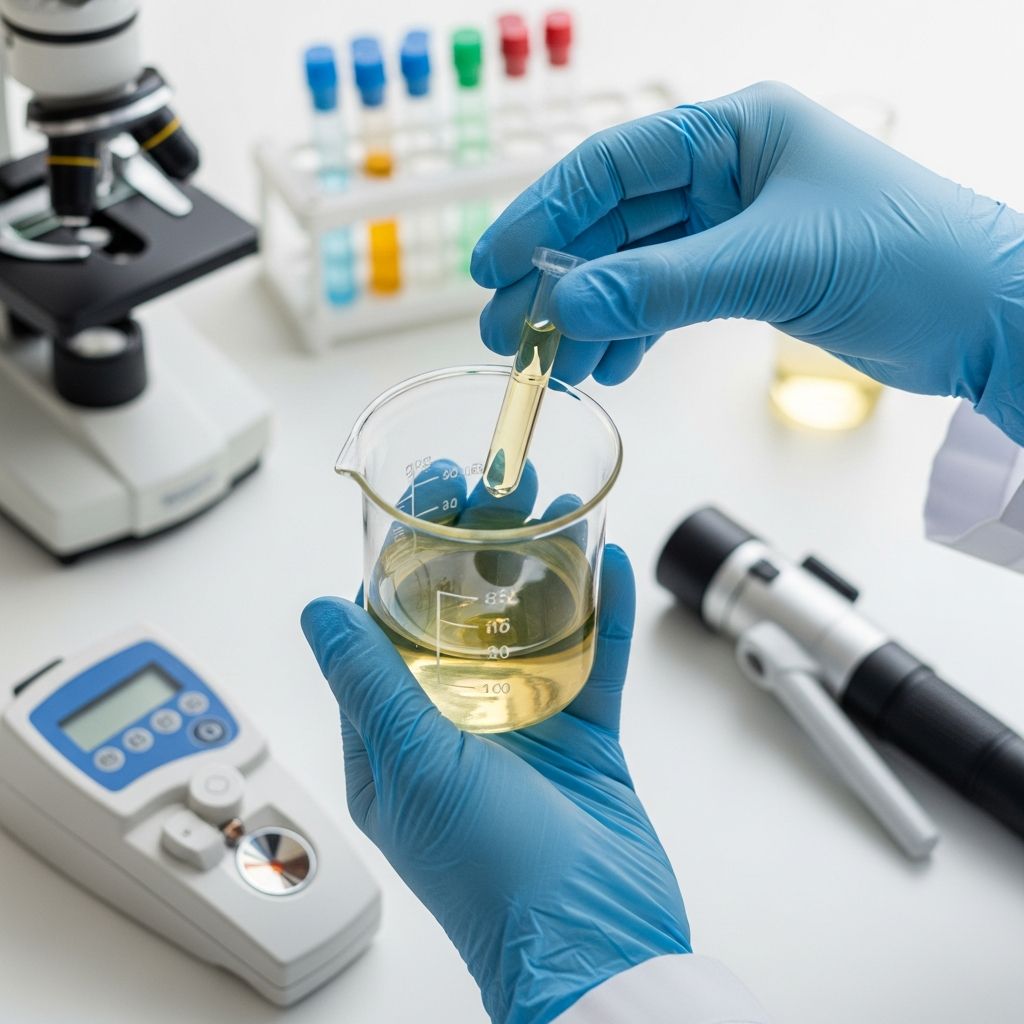
The first step in urinalysis involves examining the physical appearance of the urine, specifically its color and turbidity (cloudiness). Normal urine typically ranges from clear to pale yellow, depending on concentration. The color can be affected by hydration status, diet, and various diseases. Abnormal colors might indicate the presence of blood, bile, or other substances. Increased cloudiness or turbidity indicates that cells or other solid materials are present in the urine. This finding typically warrants further investigation through microscopic examination of the urine sediment to determine what substances are present and whether they are clinically significant.
Part 2: Measurement of Urine Concentration
The concentration of urine, also known as specific gravity, measures how concentrated the urine is relative to water. This measurement indicates how efficiently the kidneys are concentrating urine and can reveal information about hydration status and kidney function. Dilute urine may indicate conditions such as kidney disease, diabetes insipidus, diabetes mellitus, Cushing’s disease, or the use of corticosteroid medication. Conversely, concentrated urine suggests dehydration or, occasionally, other metabolic issues. Specific gravity measurements are essential for interpreting other urinalysis results, as some findings may be significant in dilute urine but not in concentrated urine.
Part 3: Chemical Analysis
Chemical analysis of urine is performed using a dipstick, which is a small strip of plastic that holds a series of individual test pads. Each test pad measures a different chemical component and changes color to indicate the amount of that substance in the urine. The dipstick is briefly immersed in the urine sample, and after a short waiting period, the color of the test pads is compared to a reference chart. This chart translates the intensity of the color to an actual measurement of each chemical component. This rapid, non-invasive method provides immediate results for several important substances, making it an efficient screening tool.
Part 4: Microscopic Examination
The microscopic examination of cells and solid material in the urine represents the most detailed component of urinalysis. Most of the analysis is performed on whole urine as it comes from the animal, but microscopic examination requires special preparation. The urine sample is placed in a tube and centrifuged, or spun in a circle at very high speed, to force cells and solid material to settle to the bottom. This accumulated material, called sediment, is collected and spread on a microscope slide for examination under magnification. This component reveals red blood cells, white blood cells, bacteria, crystals, and tissue cells from different parts of the urinary system.
Chemical Components Detected in Urinalysis
The chemical analysis phase of urinalysis detects several important substances that provide valuable diagnostic information:
Protein
The presence of protein in urine is called proteinuria. In healthy animals, little to no protein should be present in urine because protein molecules are too large to pass through the kidney’s filtering system under normal circumstances. Mild proteinuria in concentrated urine may not cause concern, but proteinuria in dilute urine should be investigated as it may signal developing kidney disease. If proteinuria is not due to inflammation or bleeding in the urinary system, it is more likely a sign of true kidney disease, which often requires further investigation and specialized testing such as the protein:creatinine ratio.
Blood
Blood in the urine usually indicates bleeding somewhere in the urinary system. Sometimes blood appears due to how the sample was collected; small amounts of blood are often found in samples collected by cystocentesis or catheterization. However, when blood in the urine doesn’t appear to be due to the sampling method, it is associated with diseases such as bacterial infection, bladder stones, trauma, or cancer, so further investigation is recommended.
Additional Chemical Markers
Urinalysis also measures pH (acidity), glucose, ketones, and other chemical components. Abnormal levels of these substances can indicate various metabolic disturbances, including diabetes, ketoacidosis, and urinary tract infections.
Understanding Urine Sediment Findings
Urine sediment examination under the microscope reveals the microscopic components of your pet’s urine. These findings provide critical diagnostic information about urinary system health.
Red Blood Cells
Small numbers of red blood cells are often found in urine collected by cystocentesis or catheterization as a result of the collection procedure itself. However, large numbers of red blood cells usually indicate bleeding within the urinary system. This may be caused by conditions such as bladder stones, infection, coagulation problems, trauma, cancer, or other serious conditions.
White Blood Cells
Small numbers of white blood cells in a free-catch sample may not be significant, but in general, an increased number of white blood cells indicates inflammation somewhere in the urinary system. Inflammation is often secondary to bacterial infection but can also indicate other inflammatory conditions. White blood cell casts, which are tubular clusters of white blood cells, specifically indicate inflammation of the kidneys and warrant further investigation.
Bacteria
The presence of both bacteria and inflammatory cells in the sediment indicates there is likely a bacterial infection somewhere in the urinary system. Ideally, when bacteria are identified, the urine should be sent to the laboratory for culture and sensitivity testing to determine what types of bacteria are present and which antibiotic should be used to treat the infection.
Crystals and Stones
Various types of crystals may appear in urine sediment. The presence of crystals may indicate underlying bladder stones or urinary calculi. When crystals are identified, your veterinarian may recommend radiographs (X-rays) or ultrasound of the abdomen to look for bladder stones. If stones are present, they may be sent to a referral laboratory for analysis of their mineral content, as this information can guide dietary recommendations to prevent recurrence.
Parasite Eggs
Rarely, parasite eggs are found in urine, typically from parasites that affect the urinary system or reproductive tract. Discovery of parasite eggs requires appropriate treatment with antiparasitic medications.
Increased Turbidity: What Does Cloudiness Mean?
Increased cloudiness or turbidity in urine indicates that cells or other solid materials are present. This finding is not a diagnosis by itself but rather an indicator that further investigation is needed. Increased turbidity is typically associated with the presence of blood, inflammatory cells, crystals, mucus, or debris. The microscopic examination of the sediment determines what is actually present and whether it is clinically significant. Some findings, such as a small amount of mucus in free-catch samples, may be insignificant, while others, such as numerous white blood cells or bacteria, warrant further investigation and treatment.
Additional Tests Following Urinalysis
Based on urinalysis findings, your veterinarian may recommend additional diagnostic tests to further investigate abnormal results. These may include culture and sensitivity testing for bacterial infections, imaging studies such as radiographs or ultrasound to visualize the urinary system, cytology to examine bladder cells for cancer, or blood tests to assess kidney function and metabolic status. Each additional test provides complementary information that helps veterinarians develop a comprehensive understanding of your pet’s condition and formulate an appropriate treatment plan.
Frequently Asked Questions About Pet Urinalysis
Q: How often should my pet have a urinalysis performed?
A: Urinalysis should be performed as part of routine health examinations, typically annually for young, healthy pets and more frequently for senior pets or those with health conditions. If your pet shows urinary signs, urinalysis should be performed immediately to investigate the cause.
Q: Can I collect a urine sample at home?
A: Yes, free-catch samples can be collected at home by catching midstream urine in a sterile container. However, the sample should be refrigerated and brought to your veterinarian within a few hours to prevent bacterial overgrowth and ensure accurate results.
Q: What does it mean if my pet has protein in their urine?
A: Protein in urine, called proteinuria, may indicate kidney disease or inflammation in the urinary system. The significance depends on whether the urine is concentrated or dilute and whether other abnormalities are present. Your veterinarian may recommend additional testing to determine the cause.
Q: How long does urinalysis take?
A: Initial urinalysis results can be available within hours, as the chemical analysis using dipsticks is rapid. However, microscopic examination and any culture or sensitivity testing may take 24-48 hours for complete results.
Q: Is urinalysis painful for my pet?
A: Free-catch collection is completely non-invasive and painless. Catheterization and cystocentesis are more invasive procedures, but they are performed by trained veterinary professionals and are generally well-tolerated with minimal discomfort.
References
- Urinalysis — VCA Animal Hospitals. 2025. https://vcahospitals.com/know-your-pet/urinalysis
- Urinary Tract Infections (UTIs) in Dogs — VCA Animal Hospitals. 2025. https://vcahospitals.com/know-your-pet/urinary-tract-infections-utis-in-dogs
- Testing for Inappropriate Urination (Urinating in the House) — VCA Animal Hospitals. 2025. https://vcahospitals.com/know-your-pet/testing-for-inappropriate-urination-urinating-in-the-house
- Urine Protein — VCA Animal Hospitals. 2025. https://vcahospitals.com/know-your-pet/urine-protein
- Testing for Increased Thirst and Urination — VCA Animal Hospitals. 2025. https://vcahospitals.com/know-your-pet/testing-for-increased-thirst-and-urination
Similar Articles







Read full bio of Sneha Tete