

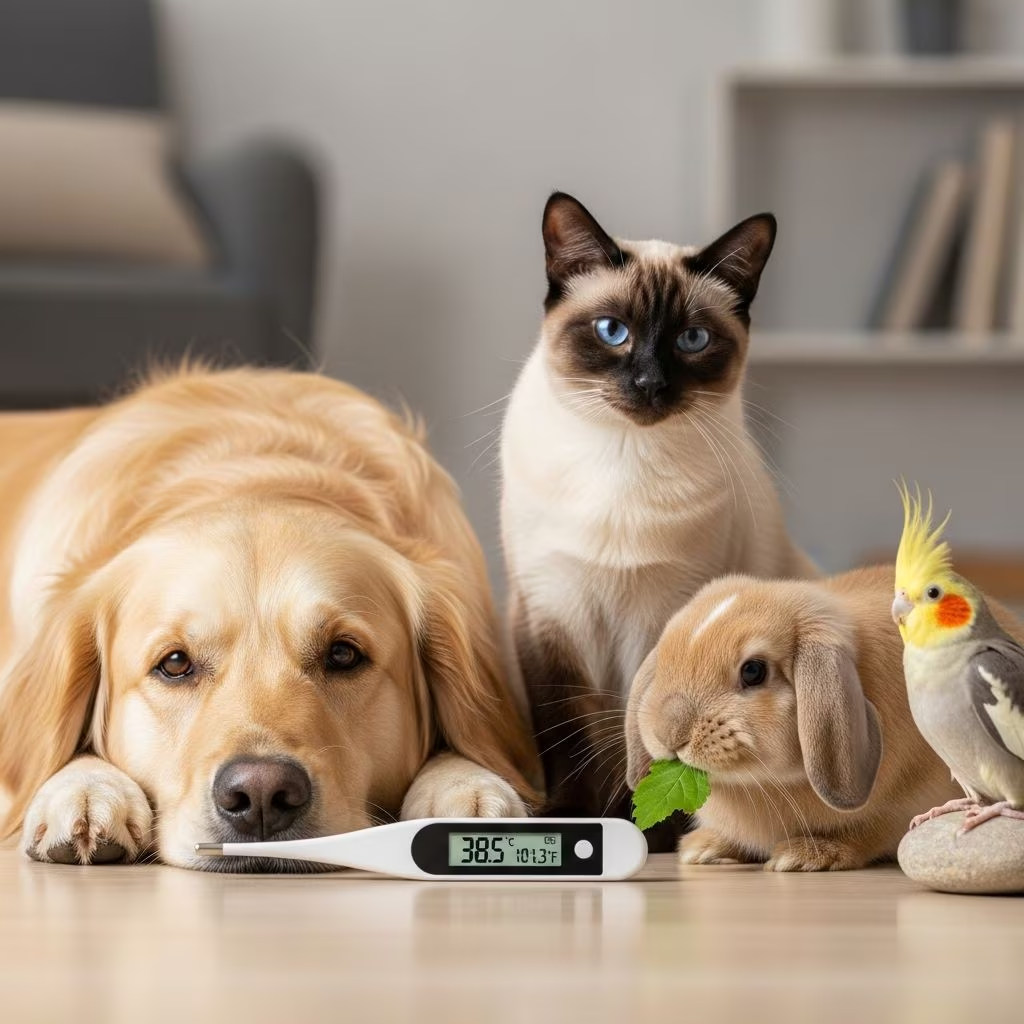
Monitoring your pet’s body temperature is a vital skill for every pet owner. It allows you to spot potential health issues early, such as infections or heatstroke, before they escalate. Normal temperatures vary slightly between dogs and cats, typically ranging from 99.5°F to 102.5°F for dogs and 100°F to 102.5°F for cats. Deviations outside these ranges can signal problems, making accurate measurement crucial.
Why Track Your Pet’s Temperature?
Temperature fluctuations often indicate underlying conditions. A fever above 103°F in dogs or cats might point to inflammation or infection, while hypothermia below 99°F could result from exposure to cold or shock. Regular checks help track recovery during illness or post-surgery care. Unlike humans, pets can’t verbalize discomfort, so objective data from a thermometer provides clear insights.
Environmental factors like hot weather or stress can also affect readings. For instance, during summer, dogs are prone to heat exhaustion if temperatures exceed 104°F. Proactive monitoring prevents emergencies and supports informed discussions with veterinarians.
Normal Temperature Ranges by Species
| Pet Type | Normal Range (°F) | Normal Range (°C) | Notes |
|---|---|---|---|
| Dogs | 99.5 – 102.5 | 37.5 – 39.2 | Puppies may run slightly higher |
| Cats | 100.0 – 102.5 | 37.8 – 39.2 | Kittens similar to adults |
| Puppies/Kittens | 100.0 – 103.0 | 37.8 – 39.4 | Monitor closely in young pets |
These ranges are established through veterinary studies comparing core body temperatures. Always use pet-specific guidelines, as breed size influences baselines—smaller dogs often have higher normals.
Gold Standard: Rectal Temperature Measurement
Rectal thermometry remains the most precise method for both dogs and cats, closely mirroring core body temperature. Research confirms it outperforms alternatives like ear or axillary methods in accuracy.
Step-by-Step Guide for Dogs
- Choose a digital thermometer dedicated to pet use; avoid glass models to prevent breakage.
- Apply generous lubricant like petroleum jelly or K-Y Jelly to the tip.
- Secure your dog in a calm position—lap for small breeds, standing for larger ones with tail lifted gently.
- Insert 1 inch for small dogs, 2-3 inches for large breeds; hold steady for 20-60 seconds until it beeps.
- Wipe clean with alcohol and store safely.
For cats, hold them securely against your chest, inserting about 1 inch. Patience is key—rushing can cause resistance.
Safety Tips
- Never force insertion; if stool blocks, gently redirect.
- Supervise children during the process.
- Disinfect after each use to avoid cross-contamination.
Alternative Methods: Pros and Cons
While rectal is ideal, less invasive options exist for stress-sensitive pets. However, studies show they often underestimate true core temperature.
Ear (Tympanic) Thermometry
Veterinary infrared ear thermometers target the eardrum’s heat radiation. Position the probe deep into the horizontal canal, angling toward the jaw opposite. Effective for cooperative dogs, but ear infections or wax buildup skew results. Not recommended for cats due to narrow canals.
Accuracy varies; one study found ear readings up to 1°F lower than rectal in dogs. Practice improves reliability.
Axillary (Armpit) Approach
This non-penetrative method suits fearful pets. Place the probe in the armpit fold, covering with the leg for 1-3 minutes. Newer app-connected devices like Mella enhance tracking. Cats tolerate it best (96.6% acceptance rate), but readings can differ by over 0.9°F from rectal, limiting interchangeability.
Other Innovations
Subcutaneous microchips and smart collars (e.g., PetPace) offer continuous monitoring via implanted sensors or wearables. Microchips correlate well with pulmonary artery temps but require implantation. Collars provide trends without handling, ideal for remote health logs. Avoid forehead or non-contact infrared scanners—hair interferes, yielding unreliable data.
Recognizing Temperature-Related Issues
Hyperthermia (Fever or Overheating)
Temps over 103°F warrant attention; above 106°F is an emergency. Symptoms include lethargy, rapid panting, drooling, or collapse. Causes: infections, toxins, or heatstroke. Cool gradually with fans and wet towels; rush to a vet for IV fluids.
Hypothermia
Below 99°F signals trouble, common in wet, chilled pets. Signs: shivering, weakness, slow heart rate. Warm slowly with blankets and warm (not hot) water bottles; seek professional care.
When to Contact a Veterinarian
- Temperature exceeds 103°F (dogs) or 102.8°F (cats) persistently.
- Below 99°F or sudden drops.
- Accompanied by vomiting, diarrhea, or appetite loss.
- Post-surgery or during chronic illness monitoring.
Trends matter more than single readings—log daily if your pet is unwell.
Tools and Supplies Checklist
| Item | Purpose | Tips |
|---|---|---|
| Digital Rectal Thermometer | Primary accuracy | Pet-dedicated, fast-read |
| Lubricant (KY Jelly/Vaseline) | Comfortable insertion | Water-soluble preferred |
| Pet Ear Thermometer | Quick alternative | Vet-grade only |
| Alcohol Wipes | Cleaning | Disinfect between uses |
| Smart Collar/Microchip | Continuous tracking | For tech-savvy owners |
Frequently Asked Questions (FAQs)
Can I use a human thermometer for my pet?
Digital ones work if cleaned thoroughly, but dedicate one to avoid hygiene risks. Never use oral human models rectally without adaptation.
How often should I check my pet’s temperature?
Daily during illness or heatwaves; otherwise, baseline checks monthly suffice for healthy pets.
Is a warm nose a sign of fever?
No—nose temperature doesn’t correlate reliably with core body heat. Always use a thermometer.
What if my pet resists temperature taking?
Try treats, calm environments, or alternatives like axillary. Vet demos help build confidence.
Are there breed-specific temperature norms?
Small breeds trend higher; consult your vet for tailored advice.
Advanced Monitoring for Proactive Care
Beyond basics, integrate temperature data with apps for graphs showing patterns. Combine with heart rate from wearables for holistic views. For multi-pet homes, label thermometers to prevent mix-ups.
Training pets eases the process—pair with rewards for positive associations. In emergencies, knowing exact temps aids vets immensely.
Empower yourself with these techniques. Accurate home monitoring bridges gaps between vet visits, fostering healthier, happier pets.
References
- Comparison of three methods of temperature measurement in hypotensive and normotensive dogs. — Journal of the American Veterinary Medical Association. 2007-06-15. https://pubmed.ncbi.nlm.nih.gov/17571987/
- How to Safely Take a Dog or Cat’s Temperature at Home. — Zoetis Petcare. Accessed 2026. https://www.zoetispetcare.com/blog/article/safely-take-dog-cat-temperature-home
- Measuring Body Temperature. — Petriage Clinical Insights. 2021. https://petriage.com/clinical-insights/measuring-body-temperature/
- Temperature taking methods for cats. — EveryCat Health Foundation. 2015. https://everycat.org/cat-health/temperature-taking-methods-for-cats/
- Taking Your Pet’s Temperature. — Animal Medical Center. 2017-07-19. https://www.amcny.org/blog/2017/07/19/taking-your-pets-temperature/



