

Pet Store Puppies: Why You Shouldn’t Rescue One
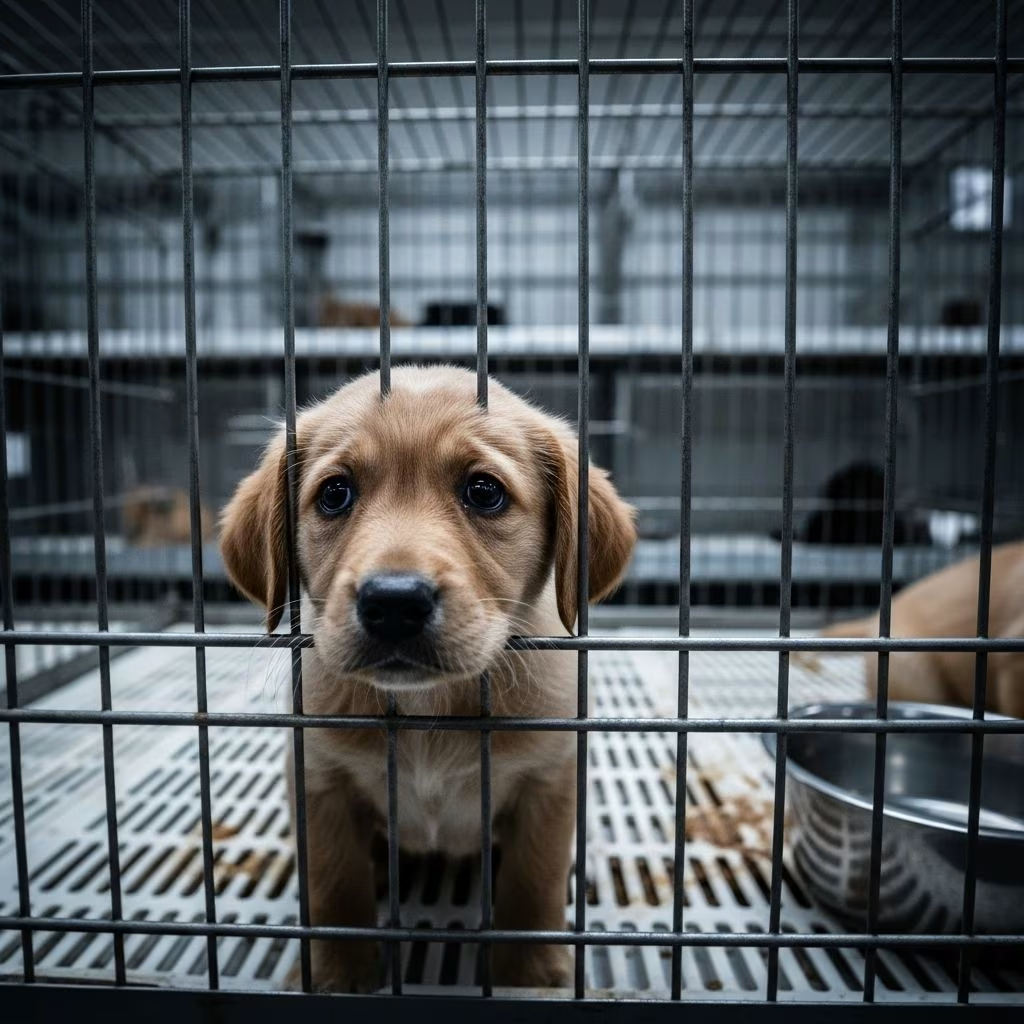
When you see a sad-looking puppy in a pet store cage, the impulse to rescue it is understandable. Your heart aches for the adorable creature behind the glass, and you want to give it a loving home. However, while your intentions are compassionate, purchasing a pet store puppy inadvertently supports a system that causes immense suffering to thousands of dogs. Understanding the connection between pet store purchases and puppy mills is crucial for making ethical decisions about pet ownership.
The reality is that almost all puppies sold in pet stores come from puppy mills — factory-like breeding operations where dogs are treated as profit-generating commodities rather than living beings. By purchasing a pet store puppy, you’re not saving that one dog; you’re perpetuating a cycle that ensures hundreds of thousands more puppies will be bred in inhumane conditions and sent to stores to replace the ones that sell.
How Pet Stores Keep Puppy Mills in Business
Pet stores operate like any other retail business, with puppies as inventory. When you purchase a puppy from a pet store, the store interprets your purchase as market demand for that breed. The store immediately places an order with puppy mill brokers for a replacement puppy, ensuring the cycle continues.
This supply-and-demand model is the fundamental reason why buying pet store puppies perpetuates the puppy mill industry. Every single puppy sold represents a direct order for another puppy to be bred in mills. Your well-intentioned gesture of rescuing one puppy directly causes the suffering of another puppy still living in a mill.
The Business Model Behind Pet Store Puppies
Pet stores are highly profitable operations precisely because they purchase puppies at a fraction of what they charge customers. An 8-week-old puppy might carry a price tag of $1,500 in a store, yet the pet store purchased that same puppy from a mill broker for a few hundred dollars. This massive markup is only possible because reputable breeders would never sell to pet stores — it violates the code of ethics established by breed clubs and the American Kennel Club.
Responsible breeders cannot afford to sell to pet stores because the profit margins would be too low. They invest heavily in health testing, proper socialization, and animal welfare, making their puppies far more expensive to produce. Pet stores rely entirely on puppy mills, which prioritize quantity over quality and cut every possible corner to maximize profit.
What Happens to Unsold Pet Store Puppies
As puppies age beyond the most desirable 8-week mark, they become less marketable. Pet stores handle unsold inventory just like any retail business would — they mark items down.
An 8-week-old puppy priced at $1,500 will gradually be reduced to $1,200, then $1,000, and so on. Eventually, the price drops to what the store originally paid the puppy mill broker — typically a few hundred dollars. If the puppy still doesn’t sell, stores may give the puppy away to employees, friends, or rescue organizations rather than continue paying for its care.
This practice reveals how pet stores view puppies: as merchandise, not as living beings. The older and larger a puppy becomes, the less valuable it is as an inventory item. This callous approach to living creatures is at odds with the values of anyone who genuinely cares about animal welfare.
The Real Problem: Puppies Still in Mills
While it’s natural to focus on the sad puppies you can see in a pet store, this perspective misses the larger tragedy. The puppies in pet stores are the fortunate ones — they’ve already escaped the mills. The real victims are the hundreds of thousands of dogs and puppies still living in puppy mills, never experiencing sunlight or fresh air, confined to tiny cages for the sole purpose of producing more puppies.
These breeding dogs live their entire lives in inhumane conditions, producing litter after litter until their bodies wear out. They’re then typically discarded. By never buying from pet stores, you’re working to shut down the mills where the majority of suffering occurs.
Conditions in Puppy Mills
Puppy mills are factory farms for dogs where profit takes priority over the health, comfort, and welfare of the animals. Dogs live in cramped, filthy cages with minimal veterinary care. They receive inadequate nutrition, little to no socialization, and exist solely to produce puppies for profit. Many breeding dogs suffer from untreated infections, parasites, and genetic problems that are passed on to their offspring.
Behavioral and Health Problems in Pet Store Dogs
Beyond the ethical issues, purchasing pet store puppies comes with significant personal risk. Scientific studies have documented that dogs obtained as puppies from pet stores show substantially more behavioral problems than dogs from reputable breeders.
Documented Behavioral Issues
Research comparing pet store dogs with dogs from noncommercial breeders reveals stark differences:
- Pet store dogs show significantly greater aggression toward human family members
- They display increased aggression toward unfamiliar people
- Pet store dogs are more aggressive toward other dogs
- They experience greater fear of other dogs and typical life events
- Separation-related problems and anxiety are more common
- House soiling issues occur more frequently
- Pet store dogs scored less favorably than breeder dogs on every behavioral variable measured
For no behavior evaluated in scientific studies did pet store dogs score more favorably than dogs from noncommercial breeders. The chances of a pet store dog developing serious behavior problems are significantly higher compared to dogs obtained from small, responsible breeders.
Health Complications
Beyond behavioral issues, pet store puppies often come with expensive health problems. Puppy mills are notorious for producing sickly purebreds with genetic health issues, parasites, and infections. Many pet store puppies require immediate veterinary care and ongoing medical treatment. What seemed like a financial bargain at the pet store often becomes a financial burden when veterinary bills pile up.
The Compassionate Alternative: Don’t Enter Pet Stores
For compassionate people who care deeply about suffering animals, the solution is straightforward but requires discipline: adopt a “do not enter” approach to pet stores that sell puppies. This means:
- Don’t go into pet stores that sell puppies, even to look
- Don’t purchase supplies from stores that sell puppies
- Don’t expose yourself to the emotional manipulation of seeing puppies in cages
This advice isn’t callous; it’s practical. The longer you stand in front of a puppy cage, the more difficult it becomes to walk away. But walking away is exactly what saves dogs’ lives. Understanding that your refusal to buy is an act of animal advocacy makes it easier to leave the store empty-handed.
Why This Approach Works
Supply and demand drives the pet industry. If pet stores don’t sell puppies, they won’t order more from mills. If stores can’t sell mill-bred puppies, breeders will reduce production. This is how change happens in commerce — through the purchasing decisions of consumers.
What to Do Instead: Adopt From Shelters and Rescues
If you want to help puppies and dogs, your energy is far better directed toward local shelters and rescue organizations. These facilities are overflowing with dogs of all ages, breeds, and sizes, many of whom are puppies. By adopting from a shelter or rescue:
- You save a life and create space for another animal in need
- You support organizations doing genuine animal welfare work
- You avoid the behavioral and health problems associated with pet store dogs
- You receive proper health and behavioral screening
- You often get a dog that’s already been spayed or neutered and vaccinated
Many shelters also offer adoption assistance programs, training resources, and ongoing support to ensure your adoption is successful.
Industry Change: Pet Stores Converting to Ethical Models
Public pressure has successfully pushed some pet stores to transform their business models. Rather than selling puppy mill dogs, progressive stores now partner with shelters and rescue groups to offer homeless pets for adoption. This change demonstrates that pressure from informed consumers can create meaningful change in the pet industry.
However, research shows that roughly 600 stores in the United States still sell puppy mill dogs, including Petland, the largest national chain procuring puppies from commercial breeders. These stores continue to operate because consumers continue to purchase puppies, often unaware of the consequences of their purchases.
Legislative Action and Community Efforts
Beyond individual purchasing decisions, many communities are taking legislative action to address the puppy mill problem. Some jurisdictions have passed ordinances banning the sale of commercially bred puppies in pet stores, requiring stores to offer only shelter and rescue animals for adoption.
By supporting these legislative efforts and educating your community about puppy mills, you can help create systemic change that addresses the problem from multiple angles.
Frequently Asked Questions
Q: If I don’t buy the pet store puppy, won’t it suffer in the store?
A: The puppy may eventually be marked down or given to a rescue organization. But more importantly, your purchase doesn’t save that puppy — it orders another puppy to replace it. The only way to truly help is to stop purchasing from stores entirely and support adoption instead.
Q: Are all pet stores connected to puppy mills?
A: Nearly all pet stores that sell purposely bred puppies are supplied by mills. Any responsible breeder would refuse to sell to a pet store, as it violates the code of ethics established by breed clubs and the American Kennel Club.
Q: How can I tell if a puppy comes from a mill?
A: If a puppy is being sold in a pet store, online retailer, or by a breeder who won’t let you visit their breeding facility, it likely comes from a mill. Responsible breeders sell directly to families, not through retail channels.
Q: What should I do if I’ve already bought a pet store puppy?
A: Love your dog and provide it with excellent care. Many pet store dogs require extra patience, training, and veterinary attention due to their background. Going forward, support shelter adoption and advocate against puppy mills in your community.
Q: Can I help by donating to pet store puppies instead of buying them?
A: Supporting rescue organizations and shelters with donations is far more effective than trying to help through pet stores. These organizations do genuine animal welfare work and can help many more animals with each dollar received.
References
- Don’t Buy Pet Store Puppies: Here’s Why & What to Do — Best Friends Animal Society. https://bestfriends.org/pet-care-resources/dont-buy-pet-store-puppies-heres-why-what-do
- Studies of Dogs From Puppy Mills — Best Friends Animal Society. https://bestfriends.org/pet-care-resources/studies-dogs-puppy-mills
- Stopping Puppy Mills — Best Friends Animal Society. 2022-08-30. https://bestfriends.org/stories/best-friends-magazine/stopping-puppy-mills
- What Are Puppy Mills and Why Are They Bad? — Best Friends Animal Society. https://bestfriends.org/pet-care-resources/what-are-puppy-mills-and-why-are-they-bad
- What Is a Puppy Mill? — Best Friends Animal Society. https://bestfriends.org/advocacy/ending-puppy-mills/what-puppy-mill



