

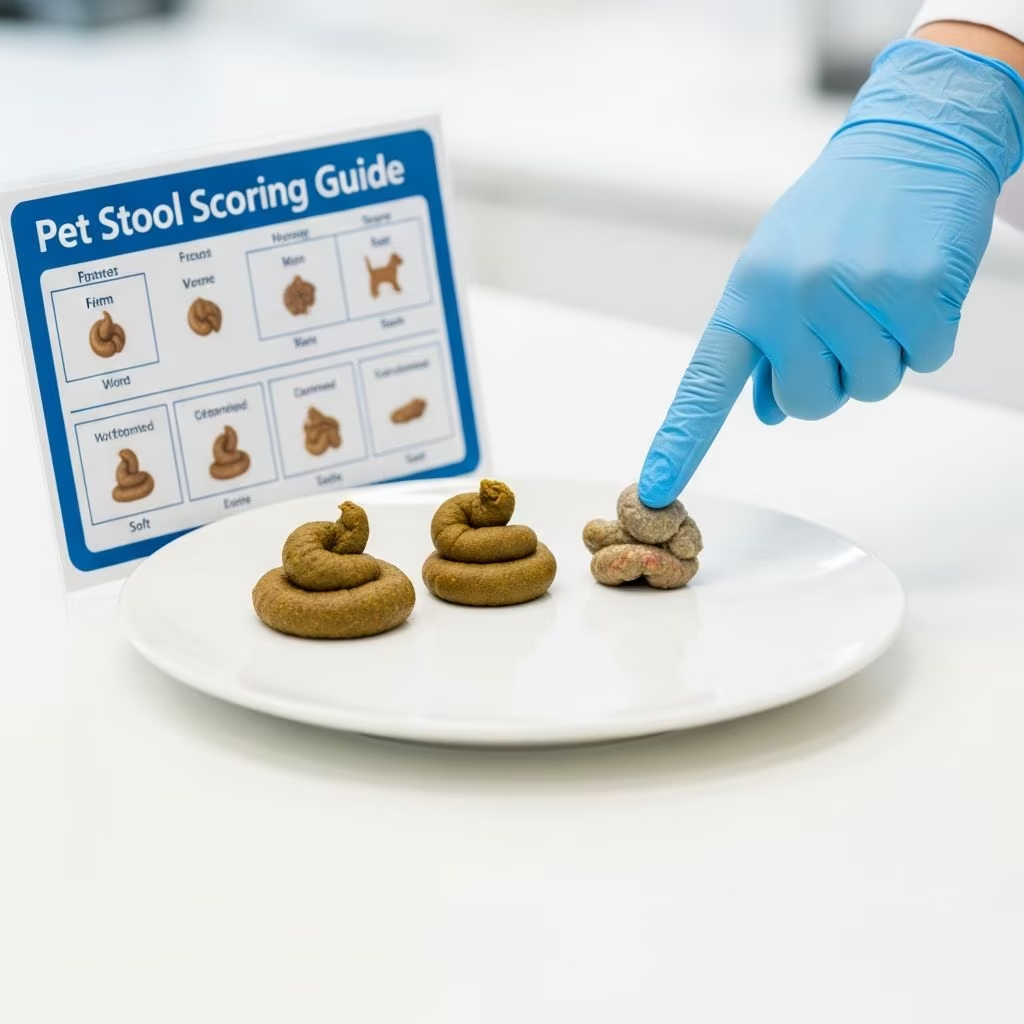
Evaluating the consistency of your pet’s stool provides critical insights into their gastrointestinal well-being. Standardized fecal scoring systems, developed by veterinary nutrition experts, allow pet owners and professionals to objectively assess stool quality, ranging from optimal firmness to concerning liquidity. These tools help detect dietary imbalances, hydration issues, or underlying medical conditions early.
Why Monitor Your Pet’s Stool Quality?
Stool consistency reflects the efficiency of a pet’s digestive process, water absorption in the intestines, and overall gut health. Ideal stools are firm yet pliable, easy to pick up, and segmented, indicating balanced nutrition and hydration. Deviations, such as overly hard pellets or watery messes, signal potential problems like dehydration, poor diet, parasites, or infections.
- Early Detection: Regular checks can reveal issues before they escalate into serious illness.
- Diet Optimization: Scores guide adjustments in food type or portion sizes for better digestion.
- Vet Communication: Precise scores help veterinarians diagnose faster during consultations.
For dogs and cats, maintaining scores in the optimal range supports nutrient absorption and prevents discomfort.
Core Principles of Fecal Scoring Systems
Veterinary fecal scoring typically uses numerical scales from 1 to 5 or 1 to 7, where lower numbers denote firmer stools and higher ones indicate softer or liquid forms. Always score the entire stool sample, noting the predominant consistency if mixed. Tools from brands like Purina and Royal Canin provide visual references with descriptions.
| Aspect | Dogs | Cats |
|---|---|---|
| Scale Range | 1-5 or 1-7 | 1-5 |
| Optimal Score | 2-3 | 2-3 |
| Key Focus | Shape, moisture, residue | Cracks, dryness, form |
These systems emphasize moisture content as the primary indicator of intestinal health.
Detailed Fecal Scoring for Dogs
Dogs’ stools vary by breed, size, and age, but general guidelines apply. Puppies may have softer stools due to faster metabolism, while adults aim for log-like forms.
Adult Dog Scoring (1-5 Scale)
- Hard/Dry: Crumbly pellets that leave no ground residue; suggests low moisture intake.
- Formed Firm: Segmented with visible cracks; minimal residue, easy pickup.
- Moist Log: Smooth shape starting to lose definition; slight residue possible.
- Soft Pile: Pasty with shape but mushy; noticeable residue.
- Liquid: No form, watery; urgent health concern.
Puppy Variations
Puppies often score higher due to developing guts. Mini and maxi breeds have tailored visuals, prioritizing higher scores in mixed samples.
Ideal Dog Stool: Score 2-3 – Firm, sausage-shaped, breaks cleanly.
Cat Stool Assessment Breakdown
Cats produce smaller, more compact stools influenced by their obligate carnivore diet. Litter box checks make scoring straightforward.
Standard Cat Scale (1-5)
- Crumbling Dry: Hard crumbs, no mark when crushed; dehydration risk.
- Cracked Firm: Defined cracks, dry exterior; breaks into pieces under pressure.
- Soft Defined: Moist with shape retention; little residue.
- Very Soft: Wet segments visible; retains some water but not liquid.
- Liquid: No texture, splashes; immediate vet attention needed.
Cats in optimal ranges (2-3) show smooth digestion from high-protein diets.
Interpreting Scores: Normal vs. Problematic
Scores 2-3 signal health; 1 or 4+ warrant action. Track over days for patterns.
| Score Range | Description | Implications | Action |
|---|---|---|---|
| 1 | Very hard pellets | Constipation, low fiber/water | Increase hydration, add fiber |
| 2-3 | Firm, shaped | Optimal digestion | Maintain routine |
| 4 | Soft, mushy | Mild upset, diet change | Monitor, adjust food |
| 5-7 | Liquid/watery | Diarrhea, infection | See vet promptly |
Small bowel issues often yield watery scores (5-7), while large bowel problems produce semi-formed (4-5) with straining.
Factors Affecting Stool Consistency
Diet is paramount: High-quality proteins promote firmness, while fillers cause looseness. Sudden food switches disrupt gut flora.
- Hydration: Insufficient water hardens stools; excess softens.
- Exercise: Promotes motility for ideal scores.
- Stress/Parasites: Alter scores rapidly.
- Medications: Antibiotics may loosen stools temporarily.
Breed-specific needs, like giant puppies, require nuanced scoring.
Practical Tips for Daily Stool Checks
Incorporate scoring into routines: Walk dogs to inspect immediately; sift litter boxes cleanly.
- Observe fresh stool before cleanup.
- Compare to charts visually.
- Log scores with notes on diet/activity.
- Photograph for vet sharing if persistent issues.
Use apps or printable charts for consistency.
When to Escalate to Veterinary Care
Persistent scores outside 2-3, blood/mucus presence, or accompanying symptoms like vomiting demand professional evaluation. Diarrhea (scores 5+) risks dehydration quickly in pets.
- Scores 1 repeatedly: Rule out blockages.
- Scores 6-7: Test for pathogens.
- Sudden shifts: Check for toxins/diet errors.
Improving Scores Through Nutrition and Care
Opt for digestible kibble with prebiotics for gut support. Gradual diet transitions prevent disruptions. Probiotics aid recovery from loose stools.
Hydration hacks: Wet food, fountains for cats. Fiber supplements firm up soft stools safely.
Common Myths About Pet Stool
- Myth: All soft stool is bad. Fact: Puppies nurse better with score 4.
- Myth: Color alone diagnoses. Fact: Consistency trumps color for initial assessment.
Frequently Asked Questions (FAQs)
What is the perfect stool score for my dog?
Scores 2-3: Firm, log-shaped, minimal residue.
How often should I score my cat’s stool?
Daily via litter box for patterns.
Does wet food cause loose stools?
Not inherently; quality matters over moisture.
Can stress affect scores?
Yes, via gut motility changes.
What if scores vary daily?
Track trends; single days may reflect meals.
Advanced Insights: Small vs. Large Bowel Indicators
Differentiate issues: Small bowel diarrhea is voluminous and watery (high scores), large bowel is frequent small amounts with straining (mid-high scores).
This guide empowers proactive pet parenting. Consistent scoring fosters healthier companions.
References
- Faecal Score Guide — Royal Canin Vet Portal. 2020-05. https://vetportal.royalcanin.co.uk/wp-content/uploads/2020/05/FINAL_Faecal_Score_Guide_digital_version.pdf
- Purina Fecal Scoring Chart — Sunstone Vets. N/A. https://www.sunstonevets.com/blog/www-sunstonevets-com-purina-fecal-scoring-chart/
- VET-3691 Canine and Feline Fecal Scoring Chart — Marcom. N/A. https://webapi.gather.marcom.com/permalink/0kEssCnV5UWlzLAY58FuDg/VET-3691%20-%20Canine%20and%20Feline%20-%20Fecal%20Scoring%20Chart.pdf
- Diarrhea in Pets: Causes and Treatments — Animal Medical Center. N/A. https://www.amcny.org/pet_health_library/diarrhea-causes-and-treatments/
- Fecal Scoring System for Adult Dogs — Royal Canin. N/A. https://my.royalcanin.com/UserFiles/Docs/Digital-Toolkit/gi-fecal-scoring-chart-dog.pdf
- Faecal Scoring Chart — Purina Vet Centre. 2021-11. https://vetcentre.purina.co.uk/sites/default/files/2021-11/Faecal%20scoring%20chart_general%20use.pdf
- Fecal Scoring System — Nestle Purina (University of Missouri VHC). 2020-07. https://vhc.missouri.edu/wp-content/uploads/2020/07/Nestle-Purina-Fecal-Scoring-System.pdf



