
Pet-Safe Veggies Guide
Discover nutritious vegetables that enhance your dog's and cat's health while avoiding digestive issues and toxicities.
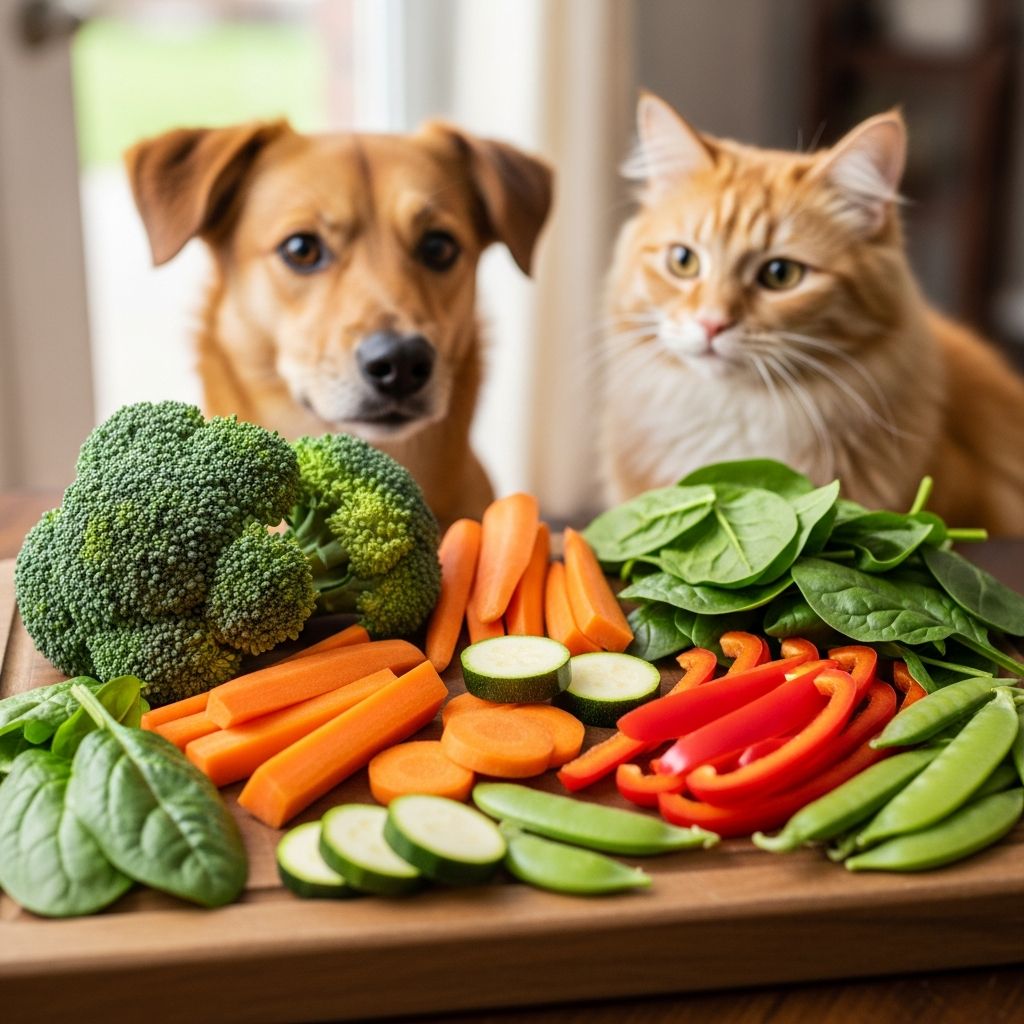
Vegetables offer valuable nutrients like fiber, vitamins, and antioxidants that can complement a pet’s diet when introduced properly. For dogs and cats, selecting the right ones and preparing them correctly minimizes digestive upset while maximizing health gains.
Why Include Vegetables in Pet Diets?
Plants provide low-calorie options rich in essential compounds that support immunity, digestion, and weight control. Dogs, as omnivores, tolerate many varieties better than obligate carnivores like cats, who benefit from pureed forms for easier assimilation. Limit veggies to under 10% of daily intake to avoid nutritional imbalances.
Top Vegetables Beneficial for Canines
Dogs enjoy a range of produce that aids dental health, gut function, and overall vitality. Always wash thoroughly and serve in appropriate sizes.
Carrots: Crunchy and Nutritious
These root veggies deliver beta-carotene, converting to vitamin A for eye health, alongside fiber for bowel regularity. Raw baby carrots scrape teeth, reducing plaque, but cook for small breeds to prevent choking.
- Portion: 1-3 small carrots daily (4-12 calories)
- Prep: Peeled, sliced; raw or steamed
- Caution: High sugar content; excess leads to weight gain or cavities
Green Beans: Low-Calorie Fiber Boost
Loaded with vitamins A, C, K, and protein, these promote satiety without extra pounds. Plain canned, frozen, or fresh work well.
- Portion: Up to 1/2 cup for medium dogs (8-15 calories)
- Prep: Chopped bite-size, steamed or raw
- Benefits: Supports heart health and digestion
Sweet Potatoes: Vitamin Powerhouse
Rich in A, B6, C, and fiber, they bolster the nervous system when cooked and mashed. Ideal for overweight dogs in moderation.
- Portion: 1-2 tablespoons mashed
- Prep: Baked or boiled, no skin
- Warning: Avoid for diabetics due to carbs
Vegetables Suitable for Felines
Cats process plants less efficiently, so puree or finely chop. Small amounts prevent urinary or thyroid issues.
Broccoli and Cauliflower: Antioxidant-Rich
Steamed florets offer vitamin C and fiber, easing digestion when cooked. Limit to avoid gas from isothiocyanates.
- Portion: 1-2 teaspoons pureed
- Prep: Boiled/steamed, mashed
- Benefit: Anti-inflammatory properties
Pumpkin: Digestive Aid
Plain canned or cooked flesh regulates bowels, high in fiber and water. Excellent for hairballs or constipation.
- Portion: 1 teaspoon to 1 tablespoon
- Prep: Pureed, no pie filling
- Note: Low-calorie hydration source
Shared Favorites for Dogs and Cats
Certain veggies suit both species with adjusted servings.
| Vegetable | Dog Serving | Cat Serving | Key Nutrients | Prep Tips |
|---|---|---|---|---|
| Asparagus | 1-3 tbsp cooked | 1-2 tsp sparingly | Vitamins A,B,C; folate | Steamed spears |
| Cabbage | 1/8 cup/20lbs | 1-2 tsp weekly | Vitamin C,K; fiber | Shredded, cooked |
| Green Peas | 1-2 tbsp | 1 tsp | Protein, fiber, K | Fresh or canned plain |
| Zucchini | 1/4 cup sliced | 1 tsp diced | Water, vitamins A,C | Raw or cooked |
Preparation Best Practices
Cooking breaks down fibers: steam cruciferous types, boil roots, puree for cats. Remove skins/seeds; avoid seasonings, oils, or salt. Introduce gradually to monitor tolerance.
Vegetables to Strictly Avoid
Some pose severe risks like toxicity or blockages.
- Onions/Garlic/Chives: Cause anemia via red blood cell damage
- Raw Potatoes: Solanine toxin; cooked only, no skin
- Wild Mushrooms: Liver failure; stick to safe cultivated like portobello
- Rhubarb Leaves: Oxalates harm kidneys
- Green Tomatoes: Solanine present
Nutritional Comparison Table
| Vegetable | Calories (per serving) | Fiber | Vitamins | Suitable For |
|---|---|---|---|---|
| Carrots | Low (4-12) | High | A, K | Dogs mainly |
| Green Beans | Low (8-15) | High | A,C,K | Both |
| Broccoli | Low | Medium | C | Both small amt |
| Pumpkin | Very low | High | A | Both |
Portion Guidelines by Pet Size
Scale based on weight and calorie needs.
- Tiny dogs/cats (<10lbs): 1-2 tsp
- Small (10-25lbs): 1-3 tbsp
- Medium (25-50lbs): 1/4-1/2 cup
- Large (>50lbs): 1/2-1 cup daily max
Consult vets for seniors, pups, or those with conditions.
Frequently Asked Questions
Can pets eat raw vegetables?
Some like carrots and green beans yes for dogs; cook harder ones. Cats prefer pureed.
Are canned veggies okay?
Yes, if low-sodium, no additives: green beans, peas, pumpkin.
How often to feed veggies?
Daily in moderation or as treats, watching for reactions.
Do veggies replace pet food?
No, supplements only; balanced kibble/wet food primary.
Safe for puppies/kittens?
Small amounts post-weaning; vet approval first.
Enhancing Pet Health with Veggies
Beyond basics, mushrooms like shiitake support immunity and liver function in moderation. Combine with proteins for complete meals. Track weight, stool, energy to adjust. Veggies freshen breath (celery) and aid detox. For obese pets, they curb hunger; diabetics need low-glycemic choices.
Seasonal sourcing ensures freshness. Home-cooked toppers: steam carrots/beans, freeze in cubes for treats. Monitor allergies: itching, vomiting signal issues. Annual bloodwork verifies balance.
References
- Safe and Unsafe Vegetables For Dogs & Cats — Preventive Vet. 2023. https://www.preventivevet.com/pets/safe-vegetables-for-dogs-and-cats
- What Vegetables Can Dogs and Cats Eat — Holistic Vet Blend. 2024. https://holisticvetblend.com/blogs/news/what-veggies-can-dogs-and-cats-eat
- What Vegetables Can Dogs Eat? — PetMD. 2025-03-15. https://www.petmd.com/dog/nutrition/what-vegetables-can-dogs-eat
- Safe Fruits and Veggies for Pets — Topaz Veterinary. 2024. https://www.topazvet.com/safe-fruits-veggies-for-pets/
- Fruits and Vegetables Dogs Can Eat — American Kennel Club. 2024-06-10. https://www.akc.org/expert-advice/nutrition/fruits-vegetables-dogs-can-and-cant-eat/
- What Fruits and Vegetables Are Safe For Your Pet? — AirVet. 2023. https://www.airvet.com/blog/what-fruits-vegetables-are-safe-for-pets
- Can You Feed Pets Certain Fruits and Veggies — VCA Animal Hospitals. 2024. https://vcahospitals.com/resources/preventive-dog/nutrition/can-you-feed-pets-certain-fruits-and-veggies
Similar Articles








Read full bio of medha deb


