Complete Guide to Pet Rat Nutrition and Diet
Essential dietary guidelines for maintaining optimal health and nutrition in pet rats.
Understanding Pet Rat Dietary Requirements
Pet rats are omnivores requiring a carefully balanced diet to maintain optimal health and prevent common nutritional deficiencies. Unlike wild rats, domesticated rats depend entirely on their owners for proper nutrition. The foundation of any rat’s diet should consist of a high-quality commercial rodent ration specifically formulated to meet their unique nutritional needs. A proper diet not only supports growth and maintenance but also plays a crucial role in preventing obesity, cancer, and other weight-related diseases that commonly affect pet rats.
The basis for modern rat nutrition standards comes from extensive research conducted by leading animal nutritionists. Kirk Klasing at UC Davis, recognized as a world-leading expert in animal nutrition, developed contemporary feeding guidelines based on nutritional requirements established by the National Research Council. These evidence-based standards ensure that commercial diets meet the physiological needs of adult, non-pregnant rats while promoting longevity and quality of life.
Primary Diet: Pellets and Blocks
The foundation of your pet rat’s diet should consist of a high-quality commercial pellet or block formulation. A rodent ration containing 12-16% crude protein and 4-6% fat, either in pellet or block form, is recommended for adult pet rats. Some veterinary sources recommend even higher minimum protein levels of 16% to ensure adequate nutrition. This formulation provides the essential amino acids, vitamins, and minerals necessary for maintaining muscle mass, bone health, and overall metabolic function.
Selecting the appropriate commercial diet is one of the most important decisions a rat owner can make. Quality commercial diets typically include whole grains, fortified ingredients, and additional nutritional supplements to ensure complete nutrition. When evaluating different brands, examine the ingredient list and nutritional content carefully. High-quality diets avoid unnecessary fillers and artificial additives while maintaining the proper balance of macro and micronutrients.
Different life stages may require adjusted protein levels. Young rats aged 3-7 weeks, as well as pregnant and lactating females, require higher protein intake to support growth and milk production. These rats can consume up to twice as much food as typical-sized adult rats and may benefit from supplemental protein sources. In contrast, adult non-pregnant and non-lactating rats thrive on lower-protein formulations that help maintain lean body weight and support kidney health, particularly in male rats.
Supplementing with Fresh Fruits and Vegetables
While commercial pellets provide complete nutrition, supplementing the diet with fresh produce adds variety, enrichment, and additional micronutrients. Fresh fruits and vegetables should comprise approximately 20% of your rat’s daily caloric intake. This supplementation provides not only nutritional benefits but also enrichment opportunities, as rats enjoy the variety and foraging naturally associated with consuming whole foods.
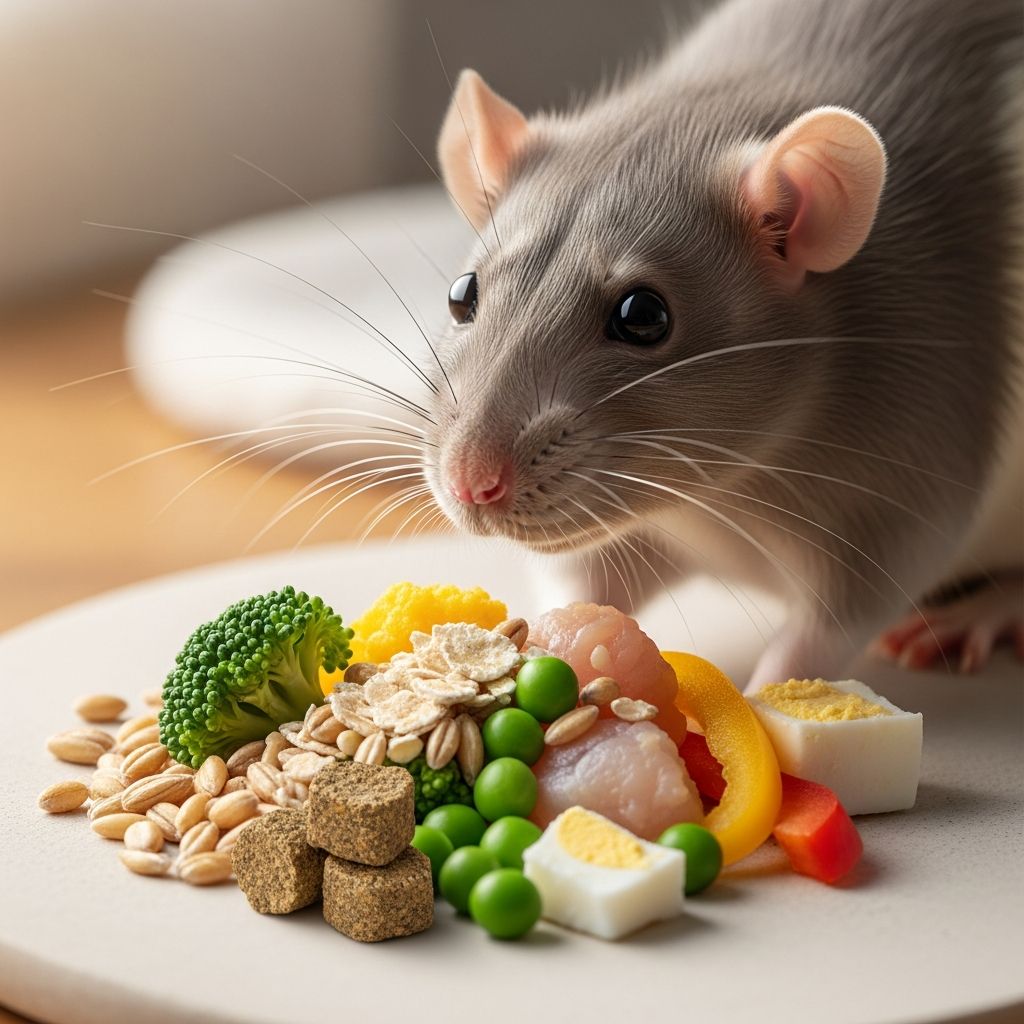
Recommended fresh vegetables include nutrient-dense options such as dark leafy greens, broccoli, sweet potato, corn-on-the-cob, and peas. These vegetables provide essential vitamins, minerals, and fiber without excessive calories. Suitable fresh fruits include berries, bananas, papaya, and apricot. All produce should be thoroughly washed and provided as fresh as possible. Rats can consume vegetables and fruits raw or cooked using low-fat preparation methods including steaming, boiling, baking, or roasting.
Proper food handling is essential when feeding fresh produce. Any uneaten fresh food should be removed from the cage within 6 hours to prevent spoilage and bacterial growth. This is particularly important in warm environments where perishable items rapidly decompose. Frozen fruits and vegetables can be offered, but owners should carefully check sodium content if they are commercially frozen with added salt.
Occasional Treats and Supplemental Foods
Beyond the staple diet and fresh produce, occasional treats provide mental stimulation and behavioral enrichment. Appropriate occasional treats include sugar-free or low-sugar cereals such as Cheerios, puffed wheat, rice cereals, and spoon-size shredded wheat. Plain popcorn and dry oatmeal are also well-tolerated treats that rats generally enjoy.
Whole wheat pasta and bread offer carbohydrate-based treats that can be offered in moderation. These foods provide variety while contributing minimal excessive calories or fat. Commercially available seed-based diets may also be offered occasionally; however, if fed as the bulk of the diet, seed formulations predispose rats to obesity and nutritional deficiencies and should be avoided as primary food sources.
Additional protein supplementation can support optimal nutrition, particularly for breeding females, young rats, and elderly or ill animals. Suitable protein sources include cooked meats such as chicken, beef, and fish, as well as cooked eggs prepared with butter to add dietary fat. Soy milk and cooked tofu provide vegetable-based protein alternatives. Oatmeal mixed with whole milk, goat milk, or soy milk combines carbohydrates with protein for additional nutritional support.
Foods to Avoid and Special Considerations
Certain foods should be avoided entirely or used with extreme caution in rat diets. Cheese, while seemingly innocuous, is high in fat and rodents cannot tolerate large amounts of lactose. This combination makes cheese unsuitable for regular feeding despite its palatability to rats. Foods high in salt and fat, including processed and baked goods, should be minimized in the diet.
Seed-based diets warrant particular attention as they promote obesity when fed as dietary staples. While seeds like sunflower and pumpkin seeds can be offered raw or unsalted and roasted in moderation due to their healthy fats and protein content, they should never constitute the primary diet. Similarly, nuts, while nutritious and chock-full of healthy fats, protein, fiber, vitamins and minerals, should always be offered unsalted and in controlled portions due to their high caloric density.
Specialized Dietary Needs
Certain health conditions require dietary modifications to support treatment and improve outcomes. Rats with kidney or heart disease benefit from low-sodium diet protocols. In these cases, owners should select low-sodium lab blocks or specialized formulations and limit fresh produce to vegetables and fruits only, carefully checking sodium content of any frozen items. All salty, baked, and processed foods must be eliminated from the diet, along with dairy products. Using filtered or bottled water instead of tap water further reduces sodium intake.
Elderly or ill rats with diminished appetites may require dietary adjustments to ensure adequate caloric intake. Flavored or instant oatmeal can entice appetite when prepared appropriately. High-calorie supplemental options include Nutri-Cal, a commercially available high-calorie paste, or products such as Ensure mixed with wheat or rice baby cereal. These concentrated nutrition sources provide essential calories when standard pellets alone prove insufficient.
Introducing Dietary Changes
Rats demonstrate natural neophobia regarding novel foods, meaning they exhibit fear or reluctance toward unfamiliar dietary items. When transitioning from an existing diet to new formulations, gradual introduction over several weeks allows rats to accept new foods without gastrointestinal upset or complete dietary rejection. Initial introduction should involve offering new foods as occasional treats or foraged items while continuing the established base diet and fresh produce supplementation. Gradually increasing the proportion of new food allows rats to acclimate to different textures, tastes, and nutritional profiles.
Commercial Diet Options Comparison
Several high-quality commercial diets are available for pet rats, each with distinct nutritional profiles and ingredient lists.
| Diet Product | Crude Protein | Crude Fat | Key Features |
|---|---|---|---|
| Oxbow Essentials Adult Rat | 15.0% (min) | 4.0% (min) | Whole brown rice, oat groats, wheat bran |
| Rascally Rat Nutri-Berries | 11% (min) | 3.8% (min) | 67% fortified pellets, whole grains, bananas, cranberries, peas |
| Standard Pellet/Block | 12-16% | 4-6% | General recommendation for adult rats |
Different commercial formulations serve different purposes. Rascally Rat Nutri-Berries, specifically designed for adult non-pregnant rats, contain lower protein levels ideal for maintaining kidney health and preventing obesity. The 11% protein content, while lower than some alternatives, proves sufficient when following recommended daily portions. These specially formulated berries contain all-natural ingredients and low calories to help rats maintain lean body weight. Standard lab blocks and Oxbow formulations typically contain higher protein levels suitable for active rats or those with increased nutritional demands.
Feeding Guidelines and Portion Control
Precise portion control prevents obesity, one of the most common health problems affecting pet rats. Commercial diet packaging typically includes feeding guidelines based on rat weight. Most adult rats require approximately one ounce of food daily, though individual needs vary based on activity level, metabolism, and body composition. When using specialized diets like Rascally Rat Nutri-Berries, the recommended feeding ratio consists of 80% Nutri-Berries, 20% fresh fruits and vegetables, and unlimited fresh water. Even if rats do not consume their entire daily allocation, carefully calculated portions account for minor waste.
Young rats require higher caloric intake and increased protein to support growth. A common feeding approach for young rats aged 3-7 weeks involves providing 50% specialty Nutri-Berries, 30% standard lab blocks or complete diets such as Oxbow, and 20% fresh fruits and vegetables. This balanced approach ensures adequate nutrition during critical growth periods while preventing excessive fat accumulation.
Frequently Asked Questions
Q: What is the minimum protein requirement for pet rats?
A: Adult non-pregnant rats require a minimum of 12-16% crude protein, though some formulations contain as low as 11% when feeding guidelines are followed precisely. Pregnant and lactating females, as well as young rats, require higher protein levels to support growth and milk production.
Q: Can rats eat dried fruits?
A: Yes, dried fruits like bananas, mango, cranberries, raisins, apple, and pineapple can be offered, but they should count toward the 20% fresh produce allocation rather than supplement it. Dried bananas should contain no added sugar and should not be fried.
Q: How often should fresh food be removed from the cage?
A: All uneaten fresh produce should be removed within 6 hours to prevent spoilage, bacterial growth, and cage contamination.
Q: Is it safe to feed rats cheese?
A: No, cheese should be avoided as it is high in fat and rodents cannot tolerate large amounts of lactose, making it unsuitable despite rats’ enjoyment of its taste.
Q: What should I feed elderly or ill rats?
A: Elderly or ill rats with reduced appetite may benefit from high-calorie supplements like Nutri-Cal paste, Ensure with baby cereal, or flavored oatmeal to ensure adequate nutrition and maintain body weight.
Q: Can rats eat nuts and seeds?
A: Yes, unsalted nuts and seeds like sunflower and pumpkin seeds can be offered raw or roasted in moderation, but due to their high fat and caloric content, they should never constitute the primary diet.
References
- Diet Figure 1 – Lafeber’s Rascally Rat Nutri-Berries — Rat Guide. Accessed November 2025. https://ratguide.com/care/figures-care/diet-figure-1-lafeber.php
- Care of the Pet Rat – Diet Guidelines — Lafeber Veterinary. https://lafeber.com/vet/
- Diet – Rat Guide — Rat Guide. Accessed November 2025. https://ratguide.com/care/nutrition/diet.php
- Basic Information Sheet: Rat – LafeberVet — Lafeber Veterinary. https://lafeber.com/vet/basic-information-for-rats/
- Caring for a Pet Rat: What to Expect — PetMD. Accessed November 2025. https://www.petmd.com/exotic/care/caring-for-pet-rat
- Pet Rat Care Do’s And Don’ts — Lafeber Co. – Small Mammals. https://lafeber.com/mammals/pet-rat-care-dos-and-donts/
Similar Articles








Read full bio of Sneha Tete