Pet Rat Nail Care: Essential Guide for Healthy Rodent Paws
Master pet rat nail care with expert techniques, tools, and tips for stress-free grooming.
Understanding Pet Rat Nail Care: A Complete Guide to Healthy Paws
Proper nail care is an essential component of pet rat health and hygiene that many new rat owners find challenging. Unlike some other small rodents, rats have nails that require regular attention to prevent overgrowth, scratching injuries, and discomfort. Understanding the structure of rat nails and recognizing when trimming is necessary forms the foundation of effective nail care. This comprehensive guide explores everything you need to know about maintaining your rat’s nails in optimal condition.
Why Nail Care Matters for Your Pet Rats
Rat nails naturally curve and grow continuously throughout their lives. When left untrimmed, these sharp nails can become problematic in several ways. First, overgrown nails can snag on cage materials, bedding, hammocks, and clothing, potentially causing the entire nail to tear away from the nail bed. This is not only painful but can also result in bleeding and infection. Additionally, excessively long nails become sharper and can cause scratches during normal activities or self-grooming, leading to skin irritation and potential infections.
Young rats typically have especially long but soft nails, while as they age, nails become thicker and potentially more problematic. Elderly rats sometimes develop thick, opaque nails that curl inward, particularly if they have mobility issues. In some cases, rats with certain health conditions or external parasites may scratch themselves excessively, and well-trimmed nails can help prevent self-inflicted wounds during these itching episodes.
Recognizing When Your Rat Needs a Nail Trim
Not all rats require frequent nail trimming. Healthy, active rats typically wear down their nails naturally through daily activities and cage exploration. However, certain signs indicate that your rat would benefit from professional trimming. If you notice your rat’s nails beginning to curl or if they appear to be causing discomfort when walking, trimming becomes necessary. Additionally, if your rat leaves scratches on itself during self-grooming, or if individual nails are catching on cage materials, it’s time to trim. When nails become noticeably needle-sharp to the touch, this is another clear indicator that trimming is overdue.
Essential Tools and Supplies for Nail Trimming
Before attempting to trim your rat’s nails, gather all necessary supplies to ensure a safe and efficient process:
Required Equipment
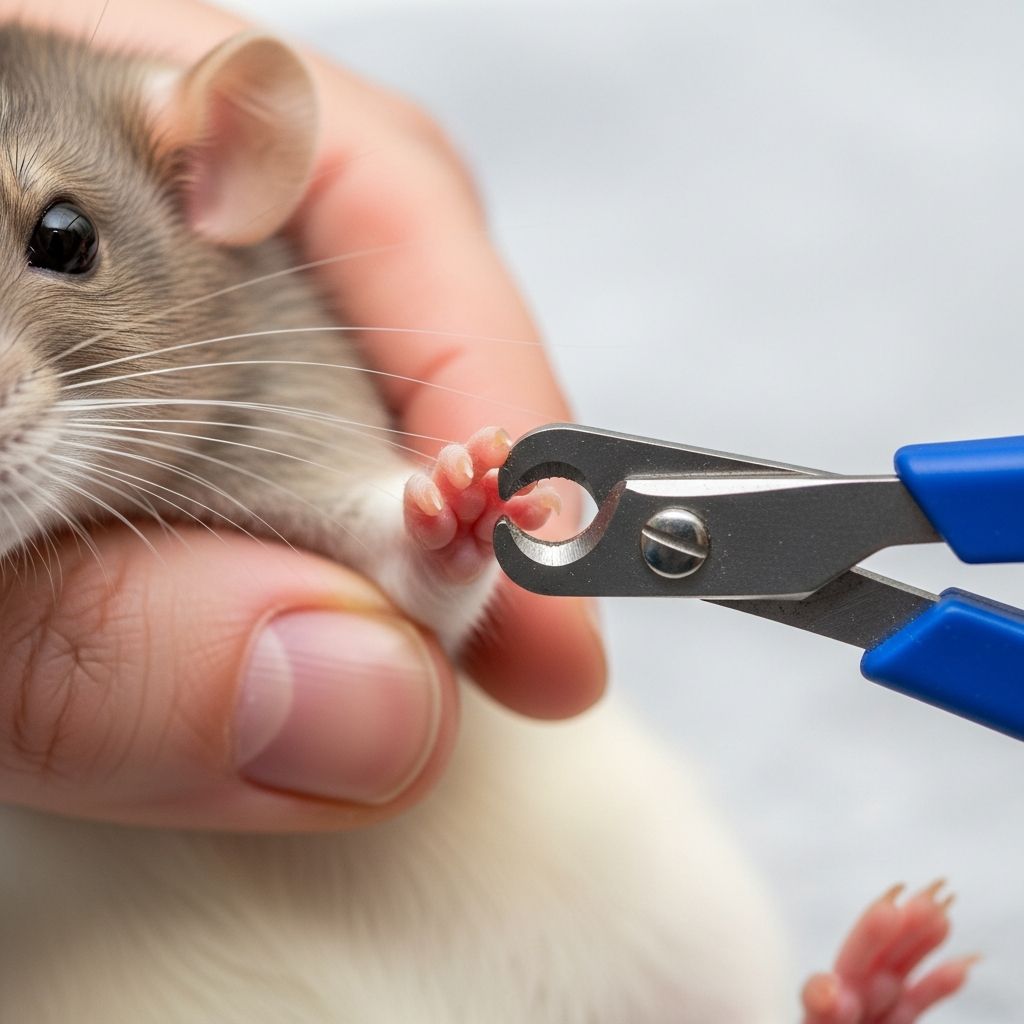
- Scissor-style nail clippers (preferred over guillotine-style clippers designed for cats and dogs)
- Human or small animal nail clippers work equally well
- Adequate lighting source (headlamp or well-lit area)
- Dark-colored surface or clothing (such as dark pants) to provide contrast for better visibility
- Styptic powder, cornstarch, or white flour to stop bleeding if you accidentally cut the quick
- High-value treats for positive reinforcement
- Optional: reading glasses for better visualization
- An extra person to gently hold your rat during the process
The Nail Anatomy: Understanding What You’re Trimming
Rat nails have a unique structure that requires careful attention during trimming. Each nail contains a central blood supply called the quick, which is covered in clear keratin. The quick extends a certain distance into the nail, and accidentally cutting into it will cause bleeding and pain. Understanding this anatomy is crucial for safe trimming. The quick appears as a darker line or spot within the nail, and your goal is to trim only the clear, needle-sharp portion of the nail that extends beyond the quick.
Step-by-Step Nail Trimming Techniques
The Two-Week Introduction Method
For rats unfamiliar with nail trimming, a gradual introduction process significantly reduces stress and improves cooperation. This method emphasizes patience and positive associations:
Week One: Desensitization Phase
Begin by touching your rat’s feet, toes, and fingers daily as if you’re preparing to trim their nails. This familiarization process helps your rat become accustomed to having their extremities handled. After three days of once-daily touching, increase the frequency to twice daily. By the end of the first week, your rat should be comfortable with foot handling and less anxious about the trimming process.
Week Two: Trimming Phase
After completing the desensitization week, begin the actual trimming process by cutting just one nail per day for an entire week. This minimal approach ensures the experience remains positive and non-traumatic. Have treats ready to provide immediately after each nail trim, and offer verbal praise throughout the process. This positive reinforcement creates favorable associations with nail care.
Ongoing Trimming Protocol
You can continue trimming one to two nails daily on an ongoing basis. If your rats become more tolerant and comfortable, you can gradually build up to trimming four to five nails per session. However, always prioritize your rat’s comfort level over speed.
Best Practices for Safe and Effective Trimming
Positioning and Visibility
Proper positioning dramatically improves trimming safety and efficiency. Wear dark-colored clothing, such as black pants, and trim your rat’s nails while they rest in your lap. This dark background provides excellent contrast, allowing you to see exactly what you’re trimming and clearly identify the quick. Good lighting is essential—consider using a headlamp if natural light is insufficient.
The Actual Cutting Process
Always trim slowly and carefully, removing only a tiny piece of the nail tip. Make sure your rat isn’t wiggling their toes before you cut, and hold their foot firmly to prevent sudden movement. Your goal is to cut the nail just enough to make it blunt and remove the needle-sharp point. Never cut into the pink or clear center portion of the nail.
Safety Precautions
If there’s ever any doubt about where the quick is located, don’t trim. It’s better to trim less than to risk cutting into the blood supply. Keep styptic powder or white flour nearby at all times in case you accidentally cut too far. If bleeding occurs, apply the powder immediately to stop the bleeding and monitor the nail for any signs of infection.
Alternative Nail Care Methods
Filing Instead of Clipping
Some rat owners find success using emery boards to file down nails instead of clipping them. This method takes longer but may be less stressful for rats who are particularly anxious about nail trimmers. You can experiment with filing just one nail at a time to gauge your rat’s tolerance.
Natural Nail Maintenance
While some owners place rough surfaces like sandpaper, bricks, cinder blocks, or lava rocks in rat cages with the intention of naturally wearing down nails, this approach has significant drawbacks. These rough surfaces can create cuts, scrapes, calluses, and general discomfort—similar to humans walking barefoot on rocky terrain. Most experts recommend avoiding this method in favor of active trimming when necessary.
Trimming While Your Rat Eats
Some rats will allow you to trim their nails while they’re eating. This distraction technique works remarkably well for certain individuals. Place high-value food in a small dish toward the edge of a bathroom counter or table. While your rat eats, kneel down to their eye level and slowly maneuver the clippers into position. Trim one to two nails per session while they’re focused on food. This method requires no restraint, which many rats prefer.
Trimming While Your Rat Sleeps
For rats with particularly accessible nails, you can carefully trim one or two nails while your rat is sleeping inside your shirt or jacket. This requires extreme care and only works when the nails are easily reachable without unnecessary movement of the sleeping rat.
Handling Special Situations
Rats with Excessive Scratching
When rats have external parasites or other conditions causing severe itching, trimming their nails becomes especially important. Sharp nails combined with vigorous scratching can cause significant self-inflicted wounds. In these cases, prioritizing back nail trimming helps prevent wounds from becoming infected or worsening.
Rats Resistant to Trimming
Some rats resist nail trimming despite your best efforts with gradual introduction and positive reinforcement. If your rat shows extreme stress or refuses to cooperate despite all techniques, and if they aren’t scratching themselves excessively or experiencing problems with snagging nails, it may be acceptable to leave their nails untrimmed. Always prioritize your rat’s emotional well-being and consult your veterinarian for professional advice in these situations.
Comparison of Nail Trimming Tools and Methods
| Method/Tool | Pros | Cons | Best For |
|---|---|---|---|
| Scissor-style clippers | Better control, clear visibility, safer | Requires practice and precision | Most rats, regular trimming |
| Emery board filing | Less intimidating, no quick risk | Time-consuming, less effective | Anxious rats, gentle maintenance |
| Rough cage surfaces | Passive maintenance | Can cause injury, uncomfortable | Not recommended |
| Professional vet trimming | Expert handling, stress-free | Cost, scheduling | Problem nails, difficult rats |
When to Seek Professional Help
If your rat has nails that are severely curled, discolored, or infected, or if you’re uncomfortable performing the procedure yourself, don’t hesitate to contact your veterinarian. Exotic animal veterinarians have experience with rat nail care and can perform the service safely and efficiently. Additionally, consider asking your local rat rescue for hands-on training if you’re a visual learner who would benefit from seeing the technique performed before attempting it yourself.
Frequently Asked Questions About Rat Nail Care
Q: How often should I trim my rat’s nails?
A: Frequency varies by individual rat. Active, healthy rats may need trimming monthly or less frequently, while others might need trimming every 2-4 weeks. Monitor your rat’s nails regularly and trim as needed when they start to curl or become sharp.
Q: What should I do if I cut the quick and my rat’s nail bleeds?
A: Apply styptic powder, cornstarch, or white flour immediately to stop the bleeding. Most bleeding stops within a few minutes. Watch the nail for signs of infection over the following days, and contact your veterinarian if you notice swelling, discharge, or if bleeding doesn’t stop.
Q: Can I use human nail clippers on my rat?
A: Yes, human nail clippers work well for rat nails. Choose scissors-style clippers rather than guillotine-style. Make sure clippers are sharp and clean before use.
Q: My rat won’t sit still for nail trimming. What should I do?
A: Try the gradual introduction method described in this guide. Additionally, consider trimming while your rat is eating or using malt paste as a distraction. If stress levels remain high, consult your veterinarian or local rat rescue for professional assistance.
Q: Is it normal for my older rat to have thick, curled nails?
A: Yes, elderly rats commonly develop thicker, opaque nails that may curl inward, especially if they have reduced mobility. These nails require more frequent attention to prevent snagging and discomfort.
Q: Can I prevent my rat from needing nail trims?
A: While you cannot completely prevent nail growth, providing ample opportunities for climbing and exploring can help wear down nails naturally. However, most rats still benefit from occasional trimming regardless of cage enrichment.
References
- Trimming Your Pet Rats’ Nails — About Pet Rats. 2025. https://aboutpetrats.com/trimming-your-pet-rats-nails/
- Pawdicure Time! Trimming Rat’s Nails — Small Pet Select. 2025. https://smallpetselect.com/pawdicure-time-trimming-rats-nails/
- How Should I Groom My Rats? — RSPCA Knowledgebase. 2025. https://kb.rspca.org.au/knowledge-base/how-should-i-groom-my-rats/
- Rat Care Sheet — PetMD. 2025. https://www.petmd.com/exotic/rat-care-sheet
Similar Articles








Read full bio of Sneha Tete