

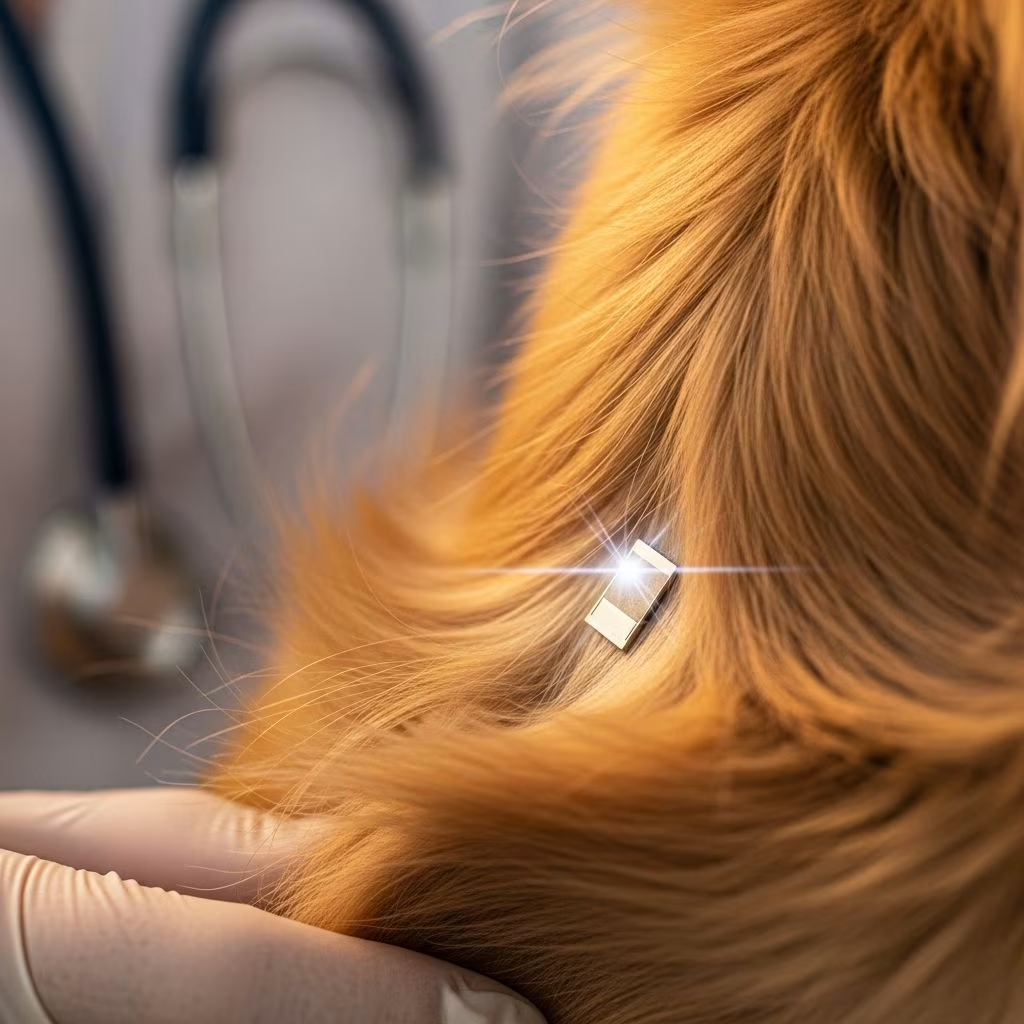
In an increasingly connected world, technology has revolutionized how we protect our beloved feline companions. One of the most significant advancements in pet safety is the microchip—a tiny device that serves as a permanent identification method for cats. Unlike traditional collars and tags that can fall off or fade, microchips offer a reliable backup solution that has reunited thousands of lost pets with their owners. This guide explores the fascinating science behind microchip technology, how it functions, and why every cat owner should consider this investment in their pet’s safety.
Understanding the Fundamentals of Microchip Technology
At its core, a pet microchip is a sophisticated yet simple device that relies on radio frequency identification (RFID) technology. This same technology powers many modern conveniences, from contactless payment systems to inventory tracking in warehouses. When applied to pet identification, RFID provides a passive solution that requires no battery or ongoing power source, making it ideal for long-term implantation.
The microchip itself is extraordinarily small—approximately the size of a grain of rice, measuring around 12 millimeters in length. Despite its diminutive size, this tiny cylinder contains an impressive amount of encoded information and sophisticated circuitry. The device is typically manufactured from biocompatible materials, meaning it won’t trigger allergic reactions or harm the animal’s body. Some versions even feature a polypropylene polymer cap that encourages tissue formation around the implant, anchoring it securely in place.
The Internal Architecture of a Microchip
Understanding what lies inside a microchip helps clarify how such a small device can perform such a crucial function. The microchip comprises several essential components working in harmony:
- Silicon Microchip: The core component that stores the unique identification data and contains the electronic circuits necessary to encode and process that information.
- Tuning Capacitor: This component receives electromagnetic power from an external scanner and routes it to the silicon microchip, essentially serving as a power conduit.
- Antenna Coil: A copper wire coil wound around the microchip that both receives the activation signal from the scanner and transmits the identification number back to the reader. In more technical terms, the coil acts as the secondary winding of a transformer, receiving power through inductive coupling.
- Protective Encapsulation: The entire assembly is enclosed in a biocompatible glass or ceramic cylinder that prevents the body from rejecting the implant.
These components work together in an elegant system. The coil and capacitor form what’s known as a resonant LC circuit, which is tuned to the specific frequency of the scanner’s magnetic field. This tuning allows the microchip to generate power efficiently when activated, despite having no internal battery.
How Microchips Operate Without Power
One of the most remarkable aspects of microchip technology is that it functions without any internal power source. This passive design is precisely what allows the microchip to remain effective throughout a cat’s entire lifespan without replacement or maintenance.
The microchip remains completely inert, storing data silently beneath your cat’s skin until it encounters a microchip scanner. The scanner is the critical component that activates the microchip. When a veterinarian or animal shelter staff member passes a scanner over the implantation site, the scanner emits a signal on one of several radio frequencies: 125kHz, 128kHz, or 134.2kHz. This electromagnetic signal travels through the tissue and reaches the dormant microchip, energizing the capacitor within the device.
Once energized, the microchip transmits its unique identification number back to the scanner through a process called backscatter. Backscatter involves the microchip modulating the electromagnetic field to communicate its stored data back to the reader. The scanner then interprets these radio waves and displays the identification number on its liquid crystal display (LCD) screen.
The Implantation Procedure and Placement
The process of implanting a microchip in a cat is remarkably straightforward and can be performed by any veterinarian during a routine office visit. Most cats don’t require anesthesia for the procedure, making it a quick and minimally invasive process.
Before implantation begins, the veterinarian scans the sterile microchip directly in its package to confirm that the identification code matches the barcode label, ensuring data integrity from the outset. The microchip is then loaded into a specialized applicator gun or syringe containing a small needle.
For cats, the standard implantation site is between the shoulder blades, where a loose pocket of skin provides an ideal location. The veterinarian gently lifts the skin in this area, quickly inserts the needle, and activates the applicator, depositing the microchip into the subcutaneous tissue. The procedure typically takes only seconds. After insertion, the veterinarian scans the cat to verify that the chip is reading properly and functioning correctly.
Frequency Standards and Compatibility Issues
An important consideration in microchip technology involves the radio frequencies used by different chips. Unfortunately, not all microchips operate on the same frequency, which can create compatibility problems.
The three primary frequencies used in microchips are 125kHz, 128kHz, and 134.2kHz. The ISO standard recommends 134.2kHz as the universal frequency for all new microchips, as these chips read faster and more consistently than older, lower-frequency alternatives. However, many older microchips still in use operate on the 125kHz frequency.
This frequency variation presents a significant problem: a scanner calibrated for one frequency may fail to detect a chip operating on a different frequency. This incompatibility has resulted in tragic cases where lost pets with microchips couldn’t be identified because shelters were using incompatible scanners. Many veterinarians and shelters recommend scanning multiple times with different universal scanners to ensure detection before concluding that a pet lacks a microchip.
The Registration Database: Connecting Chips to Owners
While the microchip itself stores only the unique identification number and chip brand information, the true power of microchip technology lies in the registration databases that link this number to the pet owner’s contact information.
When a microchip is implanted, the veterinarian provides the owner with registration information. The owner must then register the microchip’s unique number in a database, entering their name, address, telephone number, and email address. When a lost cat is found and scanned at a shelter or veterinary clinic, staff members look up the identification number in the registry database, either online or by telephone, to retrieve the owner’s contact information and facilitate reunification.
Currently, multiple databases exist, and efforts are ongoing to standardize and integrate these systems for easier access. Pet owners are responsible for keeping their registration information current, as outdated contact details can prevent successful reunification even with a properly functioning microchip.
Microchips Beyond Identification: Additional Applications
While permanent identification remains the primary function of pet microchips, the technology has expanded to offer additional benefits for cat owners. One innovative application involves electronic pet doors equipped with microchip sensors.
Microchip-activated pet doors allow owners to restrict access to specific cats while keeping other animals out of feeding areas or designated zones. This proves particularly valuable in multi-cat households where different cats require different diets—such as when one cat has special nutritional needs or weight management requirements. The door automatically recognizes the microchip of authorized cats and grants access while denying entry to others, providing security and dietary control without the need for traditional barriers.
Recovery Rates: The Remarkable Impact of Microchipping
Statistical evidence powerfully demonstrates the life-saving potential of microchips. Studies show that microchipped cats have a significantly higher recovery rate compared to non-microchipped felines. Approximately 39% of microchipped cats that become lost are reunited with their owners, compared to only 1.8% of cats without microchips. This dramatic difference highlights why veterinarians consistently recommend microchipping as an essential component of responsible pet ownership.
Durability and Longevity
Pet owners often wonder about the lifespan of microchips. The good news is that microchips are extraordinarily durable and long-lasting. Because they contain no moving components or batteries, microchips typically don’t need replacement for the entire life of the pet. The biocompatible materials used in construction ensure that the device remains stable and functional for decades without degradation.
The glass or ceramic encapsulation protects the microchip from the body’s immune responses, while the inert materials used throughout prevent corrosion or deterioration. Some microchips even incorporate special polymer enclosures that encourage tissue growth around the implant, further securing it in place. This integration with surrounding tissue makes accidental migration rare and ensures the chip remains accessible to scanners throughout the pet’s life.
Considerations and Limitations
While microchips are valuable tools in pet safety, potential owners should understand their limitations. Microchips do not function as GPS devices and cannot actively track a lost pet’s location. The chip only transmits information when actively scanned by a reader, meaning a lost cat won’t be found unless it ends up in a facility with access to a microchip scanner.
Additionally, the frequency incompatibility issue discussed earlier remains a potential problem. Outdated or incorrectly calibrated scanners may fail to detect older chips, leading to false negatives. This underscores the importance of universal scanners and current registration in multiple databases when possible.
Another consideration involves keeping registration information current. A microchip is only useful if the owner’s contact information is accurate and up-to-date in the registry database. Pet owners who move, change phone numbers, or switch email addresses must update their microchip registration to ensure successful reunification if their cat becomes lost.
Frequently Asked Questions About Cat Microchips
Does microchipping hurt cats?
No. The procedure is similar to a routine injection and causes minimal discomfort. Most cats show no reaction to the implantation, and many owners report their cats don’t seem to notice the tiny chip under their skin after implantation.
Is microchipping reversible?
While surgical removal of a microchip is technically possible, it is difficult and not recommended. The tissue that grows around the implant anchors it securely in place, making removal an invasive surgical procedure that poses greater risks than simply leaving the inert chip in place.
How often should cats be scanned?
Microchipped cats should be scanned at veterinary visits to ensure the chip is still functioning properly and reading correctly. If a cat becomes lost, animal shelter staff will scan them as part of intake procedures.
What information does a microchip store?
The microchip itself stores only the unique identification number and the manufacturer information. Owner contact details are stored separately in registry databases, not within the chip itself.
Can microchips fail?
Microchip failure is extremely rare due to the absence of moving components and batteries. However, scanner incompatibility or outdated databases can create situations where functional chips appear inaccessible, emphasizing the importance of using universal scanners and maintaining current registrations.
Making the Decision to Microchip Your Cat
For cat owners seeking to provide comprehensive identification and safety measures for their pets, microchipping represents a worthwhile investment. The procedure is quick, affordable, painless, and provides permanent identification that cannot be lost, damaged, or removed by accident. Combined with traditional ID tags and collars, a microchip creates multiple layers of protection for lost cats.
The dramatically improved recovery rates for microchipped cats speak to the technology’s effectiveness. In an increasingly mobile world where cats sometimes escape or become lost despite our best efforts, a microchip serves as an insurance policy that could mean the difference between permanent separation and joyful reunification with a beloved feline companion.
References
- How the Pet Microchip Works — HowStuffWorks/Science. https://science.howstuffworks.com/innovation/everyday-innovations/pet-microchip1.htm
- Microchip implant (animal) — Wikimedia Foundation. https://en.wikipedia.org/wiki/Microchip_implant_(animal)
- Understanding Cat Microchips: What They Look Like and How They Work — Oreate AI. https://www.oreateai.com/blog/understanding-cat-microchips-what-they-look-like-and-how-they-work/4ca5d820998ef94c408db835405d1df7
- Everything You Should Know About Microchipping Cats — Newport Harbor Veterinary Hospital. https://www.newportharborvets.com/services/cats/cat-microchip
- Microchipping Your Cat — VCA Animal Hospitals. https://vcahospitals.com/know-your-pet/microchipping-your-cat
- Microchipping 101 — Purina Pro Club Knowledge Center. https://prckc.org/wp-content/uploads/microchipping-101.pdf
- 5 Things You Need to Know About Microchipping Your Pet — Virginia Tech College of Veterinary Medicine. https://vetmed.vt.edu/news/2023/microchipping-your-pet.html



