

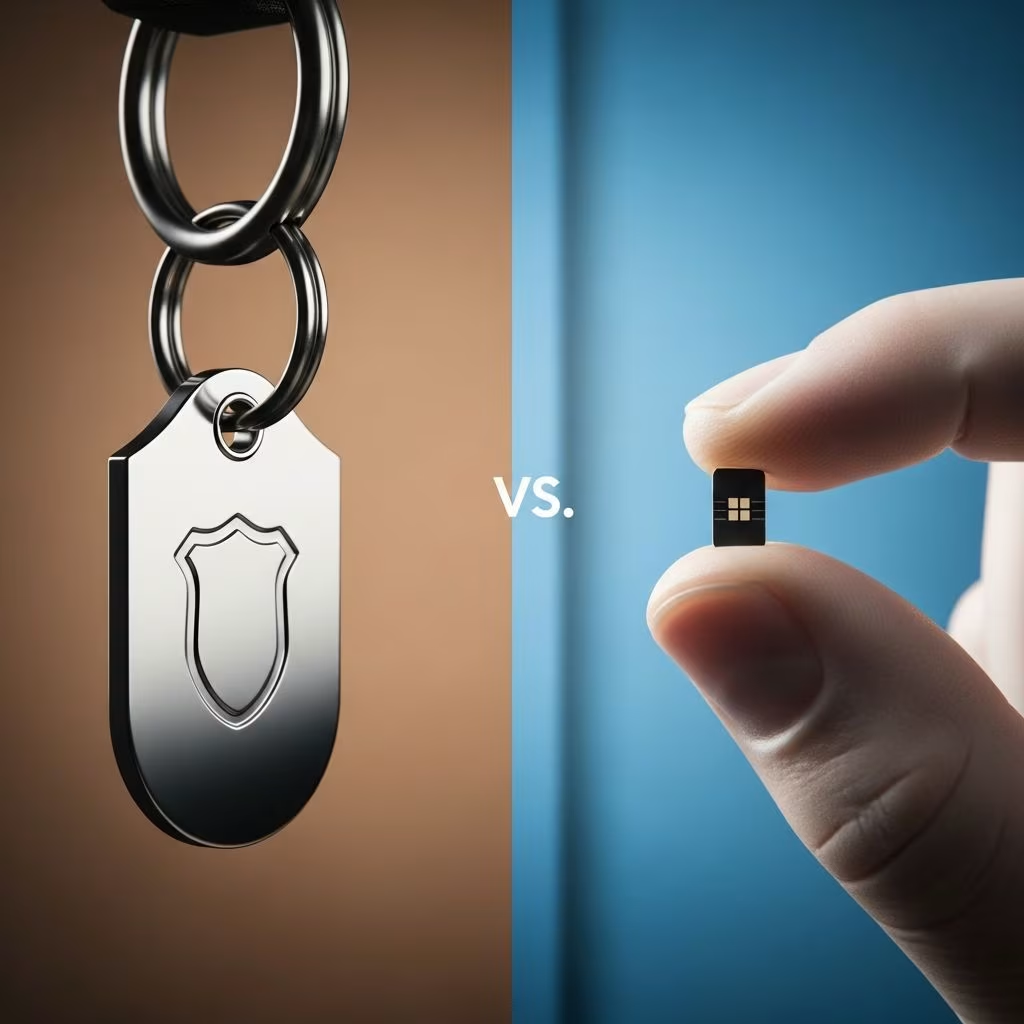
Losing a beloved pet ranks among the most distressing experiences for any animal owner. The anxiety, uncertainty, and desperate search that follows can last for weeks or months. However, modern identification technologies have made it significantly easier to reunite lost pets with their families. Understanding the various identification options available—and how they work together—is essential for responsible pet ownership.
Why Pet Identification Matters
Pet identification serves as your animal’s voice when they cannot communicate. Whether your dog slips through an open door, a cat escapes during a move, or another unexpected event occurs, proper identification dramatically increases the likelihood of recovery. Studies consistently demonstrate that pets with identification are returned to their owners far more frequently than those without. Beyond recovery, identification also helps shelters, veterinarians, and rescue organizations provide appropriate care and quickly locate owners during emergencies.
The Traditional Approach: Identification Tags
ID tags represent the most visible and immediate form of pet identification. Attached to a collar, these tags display essential information that any person who finds your pet can read instantly. The traditional metal or plastic tag typically includes your pet’s name, your phone number, and sometimes your address.
Advantages of ID Tags
- Immediate recognition by anyone who finds your pet—no special equipment required
- Cost-effective compared to other identification methods
- Simple to update contact information by replacing or engraving a new tag
- Visible deterrent that signals your pet is valued and belongs to someone
- Can be personalized with your pet’s personality or special needs
Limitations of ID Tags
- Collars can break, slip off, or be deliberately removed
- Tags may become worn, faded, or illegible over time
- Information displayed publicly may raise privacy concerns
- Only effective if someone actually finds and reads the tag
- Cannot be used to verify ownership in disputed situations
The Modern Solution: Microchip Technology
Microchipping represents a fundamental advancement in pet identification technology. A microchip is a tiny electronic device, approximately the size of a grain of rice, implanted beneath your pet’s skin. This permanent identifier contains a unique number linked to your contact information in a comprehensive database.
How Microchips Function
The microchip operates through radiofrequency identification technology. When a pet is found and brought to a veterinary clinic, animal shelter, or rescue organization, staff members scan the animal using a microchip reader. The device emits a radio signal that activates the microchip and displays its unique identification number on the reader’s screen. This number is then searched in the microchip registry database, which contains the owner’s current contact details and medical information about the pet.
Key Benefits of Microchipping
- Permanent and tamper-proof—cannot be lost, removed, or damaged like external tags
- Works regardless of whether the pet is wearing a collar
- Provides definitive proof of ownership in case of disputes
- Enables access to additional information such as medical history and behavioral notes
- Lasts throughout the pet’s lifetime without requiring replacement
- Increasingly recognized by shelters and veterinary facilities worldwide
Important Considerations for Microchips
- Requires a specialized microchip scanner to read—not visible to the general public
- Recovery depends on the lost pet reaching a facility with scanning capability
- Database information must be kept current; outdated contact details render the chip ineffective
- Initial implantation requires a veterinary visit and minor procedure
- May take days, weeks, or even longer for discovery if the pet avoids shelters and veterinary facilities
- Different microchip manufacturers use different frequency standards, though modern universal scanners are increasingly common
Emerging Technologies in Pet Identification
QR Code Tags
Quick Response code tags represent a bridge between traditional and digital identification methods. When scanned with a smartphone, these tags direct users to an online profile containing your pet’s information, medical history, behavioral notes, and your contact details. The primary advantage is that information can be updated instantly without changing the physical tag. However, this method depends on the finder having a smartphone and internet access, and not all people are familiar with scanning QR codes.
GPS Tracking Devices
Advanced pet owners increasingly turn to GPS trackers attached to collars for real-time location monitoring. These devices transmit your pet’s exact location to your smartphone via an application, enabling rapid response if your pet goes missing. Some models integrate activity monitoring to track your pet’s daily exercise and health patterns. The main drawbacks include regular charging requirements, subscription fees for GPS services, and the continued reliance on a collar that could be removed or damaged.
Pet Registration Services
Third-party registration services offer a middle ground between simple tags and microchips. These services maintain databases with your pet’s information, medical history, vaccination records, and behavioral characteristics. When someone finds your pet wearing a tag displaying the service’s phone number and an identification code, they can call the service, which then contacts you immediately. This method provides comprehensive information storage while ensuring rapid communication with finders.
Comparison of Identification Methods
| Method | Cost | Permanence | Accessibility | Recovery Speed | Privacy Level |
|---|---|---|---|---|---|
| ID Tags | Low ($5-20) | Temporary | Very High | Very Fast | Low |
| Microchips | Moderate ($25-50) | Permanent | Requires Scanner | Variable | High |
| QR Code Tags | Low-Moderate ($10-25) | Temporary | Smartphone Dependent | Fast | Moderate |
| GPS Trackers | High ($100-300+) | Semi-Permanent | App-Based | Real-Time | High |
| Registration Services | Moderate ($50-100/year) | Depends on Tag | Phone Call | Fast | High |
The Complementary Approach: Layered Identification
Security experts recommend using multiple identification methods simultaneously rather than relying on a single approach. This layered strategy dramatically increases recovery chances by addressing different scenarios and failsafes.
The ideal configuration combines a visible ID tag on the collar with a microchip implant. If your pet loses their collar, the microchip remains. If your pet is found by someone without access to a scanner, the ID tag enables immediate contact. When both methods are employed, research indicates that pet recovery rates more than double compared to using either method alone.
For maximum protection, consider adding a GPS tracker for active pets prone to wandering, or registering with a pet recovery service that maintains detailed information about your animal. Each additional layer of identification reduces the window of time your pet spends away from home and decreases the risk of permanent loss.
Maintaining Current Information
An identification system only functions effectively when information remains current. Many lost pets are never reunited with owners because contact information in databases is outdated or incorrect. If you move, change your phone number, or update your email address, immediately notify your microchip registry and update any registered identification services.
Review your pet’s identification tags annually to ensure they remain legible. Tags that have faded, become scratched, or partially illegible may be ignored by potential finders. Replace worn tags promptly, and always attach tags securely to the collar to prevent loss.
Specialized Identification Methods
Tattooing
Permanent tattoos, typically placed on the inner thigh or ear, represent an older identification method still used in some regions. Tattoos require anesthesia and professional application, and they may fade over time or become obscured by fur growth. Unlike microchips, tattoos can be detected without specialized equipment, but they are less common today and many veterinarians no longer recommend them as a primary identification method.
Frequently Asked Questions
How long does microchip implantation take?
The procedure typically takes only a few minutes during a regular veterinary visit. The microchip is injected between the shoulder blades, similar to a routine vaccination. Most pets experience minimal discomfort, and anesthesia is not required.
Will a microchip harm my pet?
Microchips are biocompatible and designed to remain inert within the body. Serious complications are extremely rare. Millions of pets worldwide have been microchipped without significant adverse effects.
How much does microchipping cost?
Microchip implantation typically costs between $25 and $50 at veterinary clinics. Some animal shelters and rescue organizations offer discounted microchipping services. Registry fees, if any, are minimal and often included in the initial procedure cost.
Can I change my contact information if my pet has a microchip?
Yes, absolutely. Contact your microchip registry provider to update your information. Most registries allow online updates that take effect immediately. Keep your registry account active and current throughout your pet’s life.
What if my found pet has a microchip from a manufacturer I don’t recognize?
Modern universal microchip scanners can read most microchip frequencies. If a scanner cannot read a chip, veterinarians and shelters have access to specialized equipment or can contact multiple registries to locate owner information.
Are there any safety concerns with pet GPS trackers?
GPS trackers are generally safe, though they add weight to the collar and require regular charging. Ensure the collar and tracker are appropriately sized for your pet to prevent discomfort or skin irritation.
Making Your Decision
Choosing pet identification methods depends on your individual circumstances, budget, and pet’s lifestyle. All pet owners should minimally use an ID tag on a collar combined with a microchip implant. This combination provides comprehensive protection across virtually all lost pet scenarios.
Pet owners with dogs prone to escaping or cats that venture outdoors might benefit from GPS trackers. Those concerned about having the most detailed information readily available should investigate pet registration services. The investment in proper identification is minimal compared to the heartbreak and effort of searching for a lost pet, and the potential cost of replacing a lost animal.
Conclusion
Pet identification has evolved dramatically from simple collar tags to include sophisticated microchip technology and innovative digital solutions. Modern responsible pet ownership requires implementing multiple identification methods to ensure that if your beloved animal goes missing, every available tool works to bring them home. By understanding the strengths and limitations of each method, and by maintaining current information across all identification systems, you provide your pet with the best possible protection against the tragedy of permanent loss.
References
- Identification methods for dogs and cats — ICAM Coalition. 2017. https://www.icam-coalition.org/wp-content/uploads/2017/03/Identification-methods-for-dogs-and-cats.pdf
- Vet’s 2025 Guide: Top 5 Pet ID Methods to Keep Your Dog Safe — Ask a Vet. 2025. https://askavet.com/blogs/news/vet-s-2025-guide-top-5-pet-id-methods-to-keep-your-dog-safe
- The ABC’s of Pet Identification — PetHub. https://www.pethub.com/articles/1141765/the-abc-s-of-pet-identification
- Microchipping vs Collars: What’s the Best ID for Your Pet? — West Babylon Animal Hospital. https://westbabylonanimalhospital.com/blog/microchipping-vs-collars-what-is-the-best-id-for-your-pet
- Pet Identification Options — Floofins and Co. https://www.floofinsandco.com/pet-identification-options
- Identification Tags & Microchips — American Humane Society. https://www.americanhumane.org/public-education/identification-tags-microchips



