
Pet Food Can Safety: Understanding Dent Risks
Learn when dented pet food cans are safe and when they pose health risks
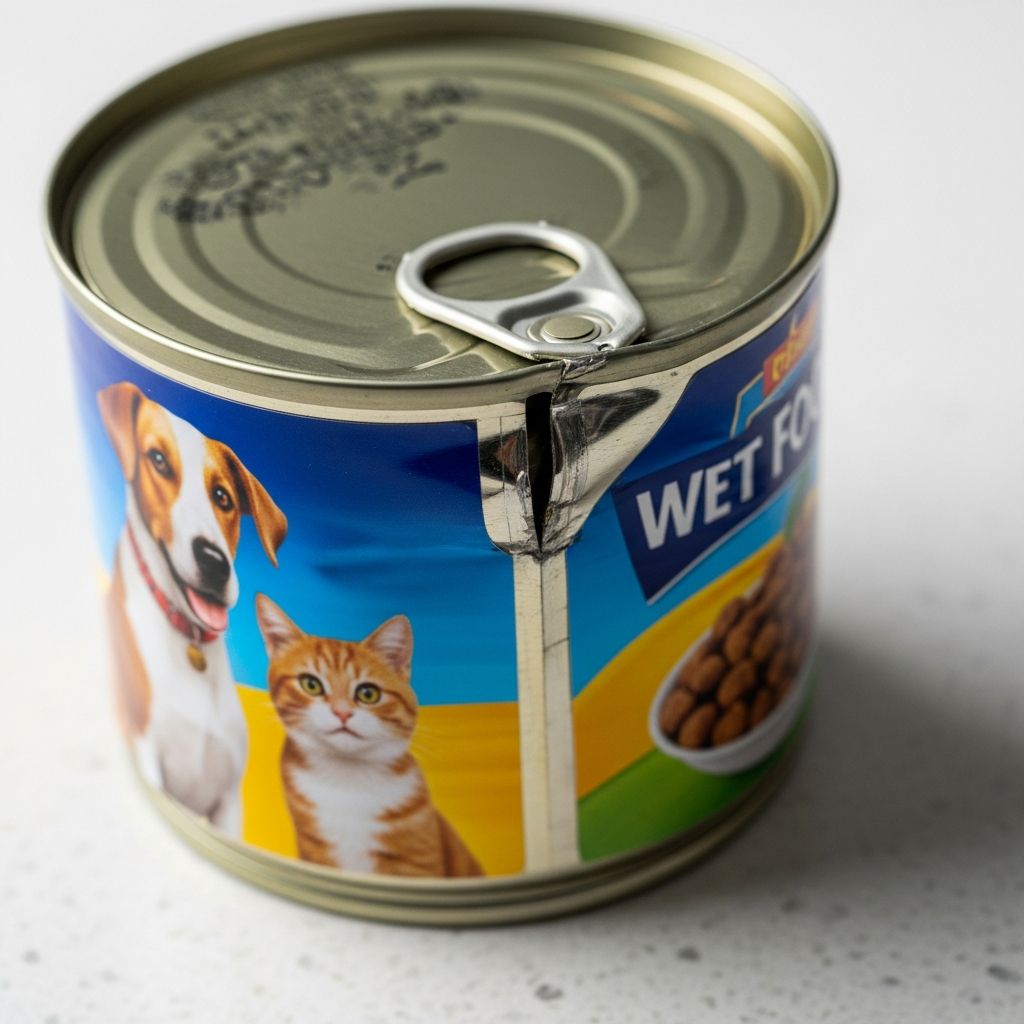
When shopping for pet food, many owners face a common dilemma: Is it acceptable to purchase or use a dented can at a discount, or does the damage present a genuine health hazard? This question becomes even more pressing when you discover a dented can in your pantry that you’ve already opened or are considering feeding to your beloved companion animal. The answer is more nuanced than a simple yes or no, as the safety of dented pet food depends on several critical factors related to the type and location of the damage, as well as potential contamination risks.
The Hidden Danger: Understanding Botulism in Pet Food
At the heart of concerns about dented pet food cans lies a serious bacterial threat: Clostridium botulinum, the organism responsible for botulism. This pathogenic bacterium produces a potent toxin that can cause severe illness in both cats and dogs. Understanding how this danger develops is essential for pet owners who want to make informed decisions about their animal’s nutrition.
Clostridium bacteria are anaerobic organisms, meaning they thrive in oxygen-free environments—precisely the conditions found inside sealed pet food cans. When a can’s seal becomes compromised through denting or damage, oxygen can infiltrate the container, potentially allowing these bacteria to proliferate and produce their dangerous toxins. The particularly troubling aspect of this threat is that the bacterial spores responsible for botulism cannot be destroyed through standard cooking or heating methods, such as the temperatures used in typical home food preparation (around 212 degrees Fahrenheit). This means that attempting to “save” a compromised can by cooking the contents will not eliminate the toxin and could potentially expose your pet to serious illness.
Storage temperature plays a crucial role in preventing bacterial growth and toxin formation. Refrigerated and processed pet foods with extended shelf lives must be maintained at temperatures colder than 38 degrees Fahrenheit to inhibit the growth of Clostridial bacteria and prevent toxin development. Any break in the can’s seal allows both temperature regulation and oxygen exposure to become compromised, increasing contamination risk.
Evaluating Can Damage: Which Dents Matter Most
Not every dent in a pet food can represents an equal threat to your pet’s safety. Understanding the different types of damage and their significance allows you to make educated decisions when evaluating compromised cans.
Deep Dents and Sharp-Edged Damage
The most concerning dents are those that are deep enough to visibly penetrate the can’s surface. If you can fit your finger into the dent or if the damage has created sharp or pointed edges, the structural integrity of the can has likely been compromised. These deeper indentations can create small openings or stress points in the metal where bacteria might enter, even if no visible hole is apparent to the naked eye. Sharp edges are particularly problematic because they often indicate that the metal has been bent severely, potentially creating micro-fractures in the can’s protective coating.
Seam-Related Damage
One of the most critical areas to inspect is the seam structure of the can. The vertical and horizontal seams where the can is welded together represent the weakest points in the can’s structural design. A dent that affects these seams—whether on the vertical seam running down the side of the can or the horizontal seams at the top and bottom rim—should be considered a significant red flag. Even tiny dents on the rim of a can warrant immediate discarding, as the rim is part of the sealing mechanism that keeps the contents protected. Damage to this area almost certainly means the seal has been compromised.
Minor Side Dents
Conversely, if a can has a dent along its flat side that is shallow, lacks sharp edges, and does not involve any of the critical seams or rim areas, the contents are likely still safe for consumption. These minor surface-level dents typically do not breach the can’s protective seal, meaning the anaerobic environment inside remains intact and contamination risk is minimal. However, even these seemingly safe dents should be evaluated using additional safety checks before deciding to use the food.
Warning Signs of Bacterial Contamination
Beyond assessing physical dent characteristics, certain visual and tactile indicators suggest that a can has already become contaminated with harmful bacteria. Being able to recognize these warning signs is essential for protecting your pet’s health.
Bulging and Bloating
If a can appears bulged or bloated—meaning the sides bow outward rather than remaining flat or slightly concave—this is a definitive sign of internal bacterial contamination. When anaerobic bacteria grow inside a sealed container, they produce gases as a byproduct of their metabolism. These gases accumulate inside the can, causing the metal to expand outward. A bulged can indicates active bacterial growth and toxin production and should never be fed to your pet under any circumstances, regardless of when the damage occurred or how it looks otherwise.
Leakage
Any visible leakage from a can—whether it appears as liquid seeping from a seam, rust staining around a weak point, or dampness on the exterior—indicates that the seal has been breached. Leaking can result from freezing damage during storage, overfilling during the manufacturing process, impact-related denting, or bacterial activity. In any case, leakage means the sterile environment inside has been compromised, and the food should be discarded immediately.
Unusual Sounds and Reactions
A simple pressure test can reveal important information about a can’s integrity. If you gently press on the top, bottom, or sides of a can and it “gives” or produces a popping or hissing sound, this suggests that gases have accumulated inside or that the seal is loose enough to allow air exchange. These cans should be discarded without hesitation. Conversely, if a can does not move or make any sound when pressed, this indicates the seal remains intact and the contents are likely still protected.
Content Appearance Changes
Open a can only if you’ve already decided to use it, but if you do, inspect the food carefully. Signs of contamination include unusual color changes in the food, unexpected cloudiness in what should be clear liquids, or any off-putting odors. Some contaminated cans may actually “spray” or explode their contents when opened due to internal gas pressure buildup. If any of these signs are present, do not allow your pet to consume the food.
Rust and Corrosion Concerns
Rust presents another dimension of can safety that deserves careful attention. Surface rust—the light, flaky rust that can be easily wiped away with a paper towel or finger—typically indicates only cosmetic damage and does not necessarily make the food unsafe for consumption. However, if rust has penetrated deeply into the can’s surface or if you notice rust staining on the interior of an opened can, the food should be discarded immediately. Rust that has “eaten through” the metal creates holes that allow bacteria to enter and contaminants to affect the food. Even rust visible only on the inside of a can, without corresponding exterior rust, indicates internal corrosion and structural compromise.
Making the Final Decision
When confronted with a dented can of pet food, follow this systematic evaluation process:
- Inspect the dent carefully to determine its depth, location, and whether it affects seams or the rim
- Press gently on all surfaces of the can to check for movement, popping sounds, or hissing
- Look for any signs of bulging, leaking, rust penetration, or discoloration
- Consider the storage conditions the can has experienced and how long it has been stored
- If the can passes all these checks, it is likely safe to use; if any red flags appear, discard it
- When in doubt, remember that the cost of replacing the food is minimal compared to the potential veterinary expenses and suffering your pet might experience from foodborne illness
Why Prevention Matters
Rather than placing your pet at risk by evaluating questionable cans, prevention offers a better approach. When shopping, avoid purchasing visibly dented cans entirely, and inspect cans before purchasing to ensure they arrive home in good condition. Store pet food cans in cool, dry locations away from potential impact hazards. Keep inventory organized so older cans are used first. If you accidentally dent a can at home, either use it immediately if it passes all safety checks, or return it to the store for replacement if purchased recently.
Frequency and Real-World Risk Assessment
While botulism from dented or damaged pet food cans is not a common occurrence, the potential consequences make it a risk worth taking seriously. The severity of botulism—which can cause paralysis, respiratory failure, and death if left untreated—means that even a small probability of contamination warrants caution. Veterinary treatment for botulism is intensive and expensive, and not all cases result in full recovery, particularly if treatment is delayed.
Frequently Asked Questions
Can I heat or cook the contents of a dented can to make it safe?
No. The toxins produced by Clostridium botulinum spores cannot be destroyed by standard cooking temperatures. Heating will not eliminate the hazard.
Is a tiny dent on the rim of a can ever acceptable?
No. Even minimal dents on the rim should prompt discarding, as the rim is integral to the sealing mechanism.
What should I do if my pet has already consumed food from a compromised can?
Monitor your pet closely for signs of botulism, including muscle weakness, difficulty swallowing, excessive drooling, or paralysis. Contact your veterinarian immediately if any of these symptoms appear.
Can I return dented cans to the store?
Most retailers will accept returns or provide replacements for dented cans, particularly if the damage is obvious and was present at purchase.
How should I store pet food cans to prevent damage?
Store cans in a cool, dry location at temperatures below 38 degrees Fahrenheit if possible. Keep them away from areas where they might be knocked or crushed, and organize them so they don’t stack too heavily.
References
- Is it safe to use food from dented cans? — U.S. Department of Agriculture (USDA). https://ask.usda.gov/s/article/Is-it-safe-to-use-food-from-dented-cans
- Botulism — Centers for Disease Control and Prevention (CDC). https://www.cdc.gov/botulism/index.html
- Clostridium botulinum and Botulism — Food and Drug Administration (FDA). https://www.fda.gov/food/foodbornepathogens/clostridium-botulinum-and-botulism
- Pet Food Safety — American Veterinary Medical Association (AVMA). https://www.avma.org/resources/pet-owners/petcare/pet-food-safety
- Safe Handling of Pet Food — Association of American Feed Control Officials (AAFCO). https://www.aafco.org/
Similar Articles








Read full bio of medha deb


