

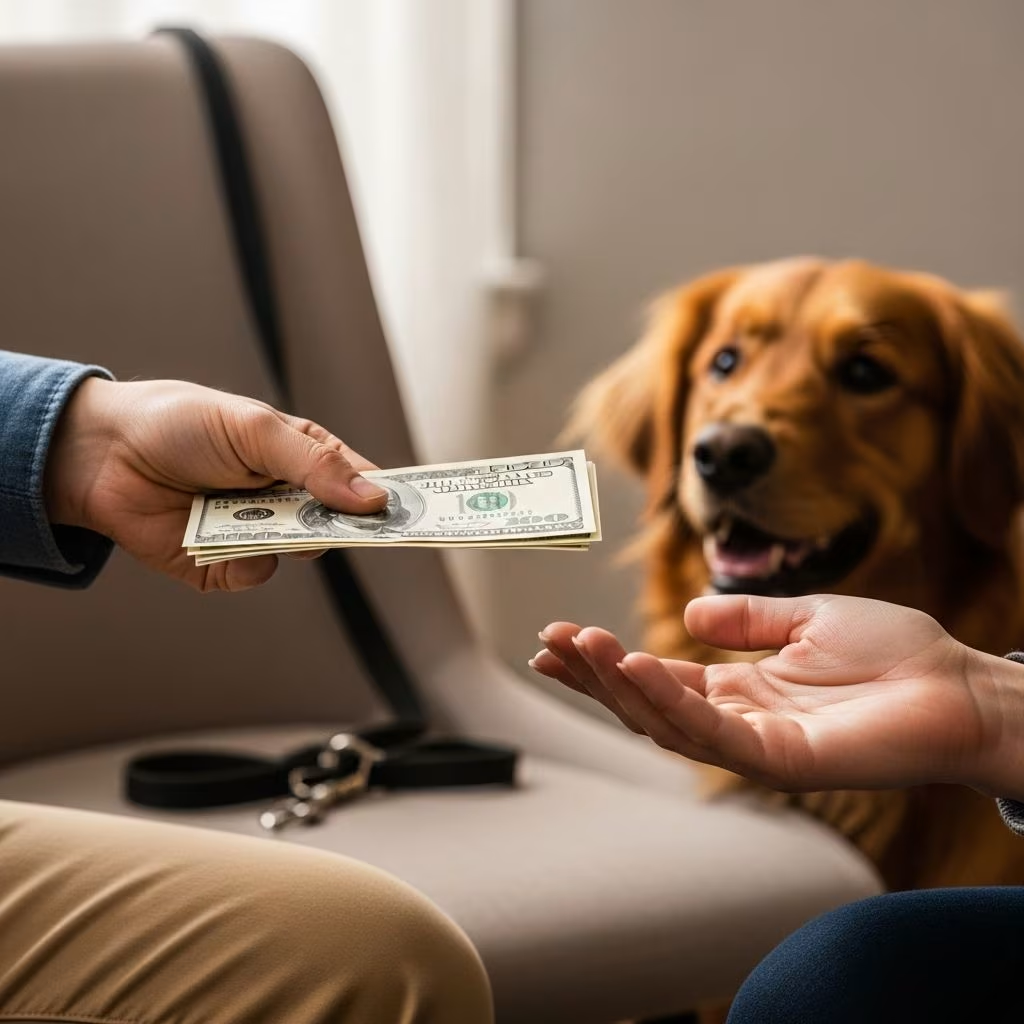
When you hire someone to care for your pet, you are entrusting them with a family member. As pet ownership continues to rise, many owners are wondering whether they should express gratitude through monetary compensation and, if so, how much is appropriate. The question of gratuity in the pet care industry reflects broader conversations about service workers and appreciation, yet it remains somewhat ambiguous for many pet owners.
Unlike traditional service industries where tipping conventions are well-established, pet care gratuity exists in a gray area. Your dog walker or pet sitter sets their rates with the expectation that this fee represents their full compensation, similar to how a plumber prices their services. However, acknowledging exceptional care through a tip is increasingly common and appreciated within the pet care community.
Understanding the Fundamentals of Pet Care Compensation
The foundation of tipping etiquette in pet care begins with understanding how these professionals structure their pricing. Pet sitters and dog walkers typically establish their service fees based on market rates, travel distance, time commitment, and the complexity of caring for specific animals. These rates represent what they consider fair compensation for their work.
It is important to recognize that unlike restaurant servers who may depend on tips as a significant portion of their income due to lower base wages, pet care professionals have already established their service rates as complete compensation. This distinction means that tipping is genuinely optional rather than a hidden expectation built into their business model. A pet sitter who charges forty dollars per visit has already factored in their labor, expertise, and overhead costs.
That said, the pet care industry has increasingly adopted tipping conventions similar to other service sectors. As pet owners become more conscious of service quality and professional dedication, many choose to tip as a way to express appreciation for work well done.
Service-Level Tipping Benchmarks
The amount you tip should align with the quality of service provided and the circumstances surrounding the care. Different service levels warrant different gratuity amounts:
| Service Quality Level | Suggested Tip Range | Context |
|---|---|---|
| Satisfactory to Good Service | 10%-15% | Regular walks or sitting with no issues |
| Excellent Service | 15%-20% | Reliable, attentive, and responsive care |
| Exceptional Service | 20%-25% or more | Goes above and beyond normal duties |
For standard dog walking services, a tip between 10% and 15% of your service fee is considered good practice. If your regular walker charges thirty dollars per walk and consistently provides reliable, quality service, a three to four dollar tip per walk acknowledges your satisfaction. Over the course of a month, this accumulates into meaningful appreciation.
Pet sitters who provide more comprehensive services, such as overnight care, medication administration, or extended stays, typically merit higher tipping percentages ranging from 10% to 20%. The longer the duration of service and the more responsibilities they undertake, the more appropriate it becomes to tip at the higher end of this range.
Circumstances That Warrant Increased Gratuity
Certain situations make tipping not just appreciated but genuinely appropriate, even if you typically do not tip:
- Holiday Service Periods: When your pet care provider works during major holidays such as Thanksgiving, Christmas Eve, Christmas Day, New Year’s Eve, or New Year’s Day, they are sacrificing time with their own families. Standard protocol suggests tipping 1.5 to 2 times your normal rate during these periods. If you usually tip five dollars per walk, consider offering ten dollars or more during holiday weeks.
- Extended Care Arrangements: When your pet sitter cares for your animal for a week or longer, such as during your vacation, a substantial tip becomes appropriate. Many owners gift one full week’s worth of service fees as a bonus, or calculate 15% to 25% of the total service cost.
- Emergency or Last-Minute Bookings: Pet care providers who accommodate sudden requests or emergency situations deserve recognition for their flexibility. Last-minute walks or unexpected care changes often require them to rearrange their schedule. A tip of five to ten dollars acknowledges this accommodation, and it also incentivizes them to prioritize your requests in future emergencies.
- Exceptional Problem-Solving: If your walker notices health concerns with your dog—such as unusual behavior, pale gums, or labored breathing—and takes prompt action to get your pet veterinary care, this warrants substantial appreciation. A minimum tip of twenty-five to fifty dollars acknowledges that they prevented a serious health crisis through their attentiveness and quick thinking.
- Backup Caregiver Coverage: When your regular walker is unavailable and a substitute covers a walk, a small tip of five to ten dollars encourages backup providers to prioritize your dog in future situations. This creates a positive relationship that benefits you when scheduling conflicts arise.
Professional Categories and Their Tipping Ranges
Different types of pet care professionals operate under different contexts, and tipping expectations vary accordingly:
Dog Walkers: A standard tip for dog walkers is 10% to 15% of their service fee for regular, quality care. For a thirty-dollar walk, this translates to three to four dollars. Many pet owners choose to give tips on a weekly basis or accumulate them for a monthly bonus.
Pet Sitters and Overnight Care Providers: Pet sitters warrant slightly higher tipping ranges from 10% to 20%, depending on the complexity of their duties and the duration of service. Overnight care providers, medication administration, and those managing multiple pets simultaneously merit the higher end of this range.
Dog Groomers: Professional groomers are typically tipped at 15% to 20% rates, similar to how you would tip a hairstylist. Quality grooming is physically demanding work, and building a relationship with a skilled groomer who understands your dog’s temperament and coat type justifies generous appreciation.
Friends and Family Members: When friends or family members care for your pet, the tipping convention becomes more flexible. If your friend watches your dog for one or two walks while you are in a meeting, a tip is not expected. However, if a friend provides week-long care while you travel, demonstrating appreciation through money or a thoughtful gift is appropriate.
Practical Methods for Delivering Gratuity
How you deliver a tip can matter as much as the amount itself. Different delivery methods suit different situations:
Cash in an Envelope: Cash remains the most appreciated form of tipping in the pet care industry. Place cash in a small envelope with the pet care provider’s name and a thank you message written on the front. Leave it near the leash or supply area where they will find it during pickup. This method is immediate, tangible, and prevents any awkwardness about whether the money was left intentionally.
Direct Handoff: If you are home during walk pickup or drop-off, handing your pet care provider cash directly while saying something specific like “Thanks for staying late yesterday when Rover had diarrhea” creates a warm, personal interaction. This face-to-face appreciation often means more than the monetary amount itself.
Digital Payments: Venmo, Cash App, PayPal, and app-based payment systems offer convenient tipping options, particularly for pet owners who rarely carry cash. Many pet care platforms now integrate tipping features directly into their booking systems, making it seamless to add gratuity after confirming satisfaction with the service.
Monthly Lump-Sum Bonuses: Rather than tipping after each walk, some pet owners prefer to consolidate appreciation into a monthly payment. This reduces mental overhead and gives pet care providers predictable bonus income. A monthly tip of twenty-five to fifty dollars for regular service can feel more substantial than scattered smaller tips.
Annual Bonuses: For long-term pet care providers whom you have worked with consistently for years, an annual bonus demonstrates extended appreciation. This might be equivalent to one week’s pay or a percentage of annual service costs, delivered during the holidays or on your working anniversary.
Addressing Common Tipping Scenarios
The Meet-and-Greet Question
Many pet owners wonder whether they should tip during an initial meet-and-greet consultation with a potential dog walker or pet sitter. The answer is typically no. Meet-and-greets represent unpaid time that the service provider invests hoping to secure your business. They are betting on future work, not expecting immediate compensation. However, if the consultation was genuinely exceptional—perhaps the walker provided detailed advice, spent substantial time understanding your dog’s needs, or drove considerable distance—a ten to twenty dollar gesture is thoughtful but never obligatory.
When You Have Not Been Tipping
If you have used a pet care provider for months or years without tipping and now feel guilty, addressing it is simpler than you might think. Rather than overthinking, simply provide a slightly larger tip with your next service and include a brief note saying “Playing catch-up on appreciation—thanks for everything.” No need to profusely apologize or over-explain. Your pet care provider will appreciate the gesture and move forward positively.
Service Quality Concerns
If you have experienced poor or mediocre service, you are under no obligation to tip. Gratuity recognizes quality and dedication. If your dog walker consistently arrives late, seems disengaged, or your pet comes home uncleaned despite requested baths, poor service does not warrant tips. However, if you wish to continue the relationship, discussing expectations directly is more productive than withholding tips as a silent protest.
Comparing Services from Different Platforms
Rover and similar pet care platforms handle tipping through integrated systems where your credit card is already charged for the service fee, with an option to add tip afterward. In these cases, tipping is never required but always appreciated. Cash-based arrangements with independent dog walkers may feel more personal and give you direct control over tip delivery.
Building Long-Term Relationships Through Recognition
Consistent appreciation creates loyalty and ensures your pet remains a priority. Pet care providers who remember which clients consistently value their work through tips are more likely to prioritize those clients for emergency bookings, last-minute requests, and to provide extra attention during regular visits. While this should not be your sole motivation for tipping, it is a practical reality of service relationships.
Over time, a pet care provider who knows they are genuinely valued by you may go beyond their standard duties. They might alert you to behavioral changes, suggest training techniques, or take special precautions during bad weather. These extras emerge naturally when professionals feel their effort is recognized and appreciated.
FAQ Section
Is tipping my dog walker mandatory?
No. Tipping is entirely optional and at your discretion. Your pet care provider’s stated service rate represents their full expected compensation. However, tipping for exceptional service or specific circumstances is increasingly common and appreciated.
What if I cannot afford to tip regularly?
Regular tipping is not expected. If budget constraints prevent frequent tips, consider tipping during holidays or after particularly long service periods. Even occasional recognition is meaningful.
Should I tip differently for a first-time dog walker versus a regular provider?
Yes. A first-time walker providing satisfactory service might receive a smaller tip or no tip at all. A provider you have worked with consistently for a year who knows your dog’s personality and preferences warrants more generous appreciation.
How do I handle tipping when paying through an app?
Most pet care apps include a tipping option after service completion. You can add a percentage or fixed amount directly through the app, which then gets transferred to your provider through their account.
What is appropriate to give as a non-monetary tip?
Gift cards to coffee shops, restaurant gift cards, hand-written thank you notes, or small gifts related to pet care are thoughtful alternatives to cash. However, monetary tips remain most practical for service providers who can use them immediately.
References
- Do You Tip Dog Walkers? How Much to Tip Pet Sitters – Tails — Tails. 2024. https://trytails.com/guides/pricing/do-you-tip-dog-walkers/
- Do You Tip a Dog Walker, Pet Sitter, or Groomer? — Dogster. 2024. https://www.dogster.com/lifestyle/do-you-tip-a-dog-walker-or-sitter
- Tipping in the Pet Service Industry — The Savvy Sitter. 2024. https://thesavvysitter.org/blog/tipping-in-the-pet-service-industry
- Should You Tip Pet Sitters? Veteran Pet Sitters Chime In — Little Friends Pet Sitting. 2024. https://littlefriendspetsitting.com/should-you-tip-pet-sitters-veteran-pet-sitters-chime-in/
- Should I tip my sitter? — Rover Support. 2024. https://ayuda-es.rover.com/hc/en-gb/articles/360024182451-Should-I-tip-my-sitter



