

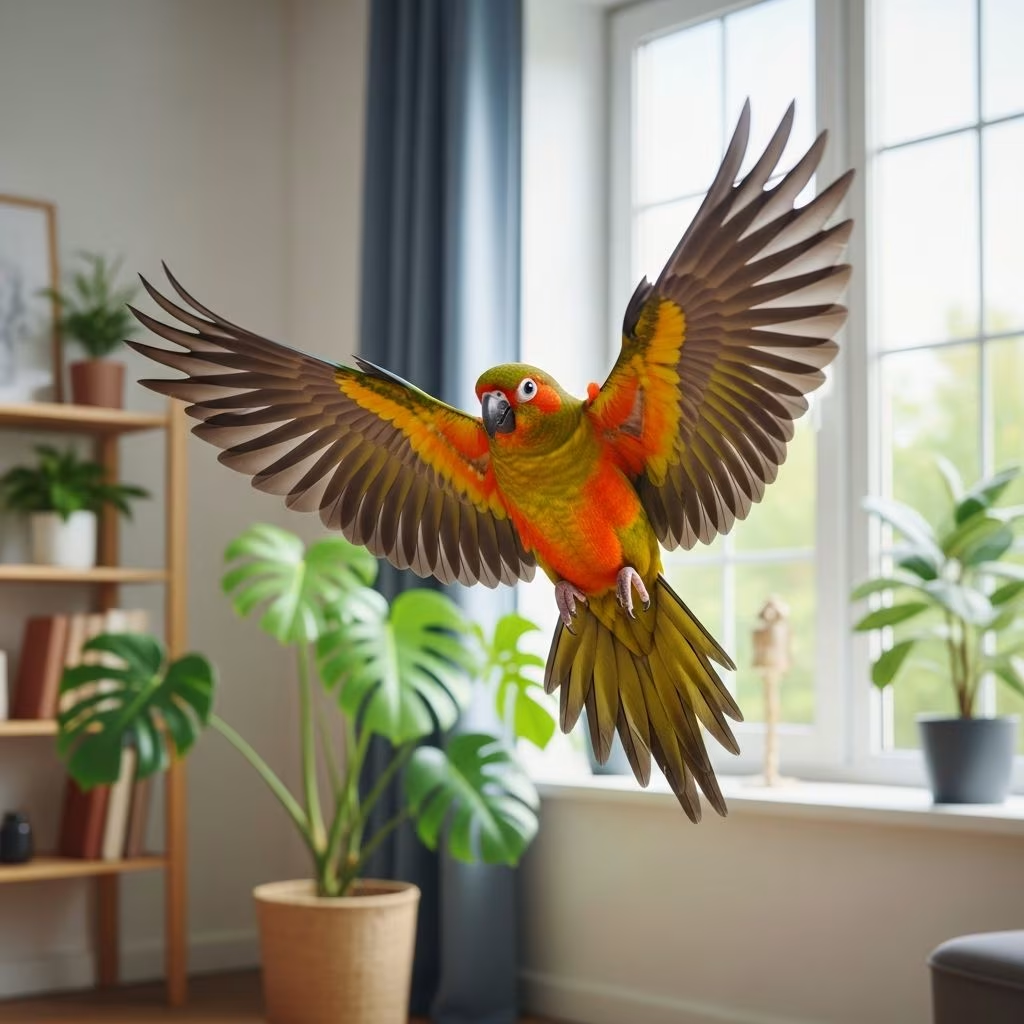
Pet Bird Flight Training: A Complete Guide
Flight training is one of the most rewarding experiences you can share with your pet bird. Whether you have a young fledgling or an adult bird, understanding the fundamentals of flight training will help you develop a stronger bond with your feathered companion while promoting their physical and mental health. This comprehensive guide covers everything you need to know about teaching your bird to fly safely and effectively.
Understanding the Importance of Flight Training
Flight is essential for a bird’s overall well-being. Beyond the obvious physical benefits, flying provides crucial mental stimulation and helps birds develop confidence and natural behaviors. For birds that have had their wing feathers trimmed, flight training is more about gradual conditioning and encouraging short flights as they rebuild their flying abilities. Young, flighted birds naturally possess the instinct to fly, but they still need to develop important skills such as maneuvering, turning, flying upward and downward, and landing safely. These are learned behaviors that require practice and guidance from their human caregivers.
Like any physical activity, becoming proficient at flying requires birds to develop muscle memory and coordination. In the wild, birds learn these flight skills during the fledging process, but in captivity, pet owners must guide this learning journey. By investing time in proper flight training, you provide your bird with enrichment that extends far beyond simple exercise.
Building Communication Through Foundation Training
Before you begin flight training, your bird must master fundamental communication skills. This foundation is essential because flight training builds upon these basic behaviors. Start by teaching your bird simple commands and tricks such as the wave, the shake, and retrieving objects. These early training sessions establish the communication framework between you and your bird, teaching them how to interpret your cues and understand that following your instructions leads to positive rewards.
The “step up” command is particularly important as a prerequisite for flight training. This behavior demonstrates your bird’s willingness to cooperate and trust you, creating the behavioral foundation necessary for more advanced flight training. Once your bird reliably responds to basic commands through positive reinforcement, they are ready to progress to flight-specific training.
Positive Reinforcement: The Cornerstone of Successful Flight Training
Positive reinforcement training is absolutely essential for successful flight training. This approach relies on rewarding desired behaviors immediately after they occur, creating a clear association between the behavior and the reward. Birds are naturally motivated by rewards such as treats, praise, and attention, making positive reinforcement highly effective for shaping flight behaviors.
The training sequence follows a consistent pattern: cue-bridge-reward. The cue signals to your bird that it’s time to perform a specific behavior. The bridge, often a verbal marker like “good” or a clicker sound, marks the exact moment your bird performs the desired action. Finally, the reward reinforces that behavior, encouraging your bird to repeat it in the future. Understanding this sequence is fundamental to all effective bird training, including flight training.
It’s important to recognize that positive reinforcement training is not just about training the bird—it’s also about training the trainer. You must learn to read your bird’s body language, anticipate their behaviors, and deliver rewards at precisely the right moment. Consistency, timing, and patience are the hallmarks of successful positive reinforcement training.
Recall Flying: The Foundation of Flight Training
Recall flying is one of the first and most important flight training skills you should teach your pet bird. This exercise teaches your bird to fly toward you on command, creating a reliable connection between you and your bird. Recall is typically the easiest flight behavior to teach, especially if you’re starting with a young, flighted baby bird.
Starting With Natural Behavior
The key to teaching recall is to capture the natural behavior of your bird flying to you and then reinforce it. If you have a flighted baby bird, all you need to do initially is capture the moment when your bird naturally hops or flies to your arm. The very first time this happens, make a fuss, offer enthusiastic praise, and give your bird a favorite treat. Your bird will quickly learn that wonderful things happen when they fly to you, and they will naturally repeat this behavior more frequently.
Adding the Cue
Once your bird is consistently flying to you throughout the day for its reward, you can begin putting this behavior on cue. Watch your bird’s body language carefully, and as soon as you see them preparing to take flight, simultaneously give your verbal cue, such as “Come here.” By cueing almost simultaneously with their natural impulse to fly to you, your bird will begin to associate the verbal cue with the action. Over time, the cue will trigger the behavior, and your bird will fly to you on command.
Expanding Your Training Space
While you’re developing recall skills at home, you may eventually want to work in larger spaces such as a gymnasium. This expanded environment allows your bird to develop their flight skills over longer distances. When working in larger spaces, try holding your hand or arm above your head while calling “Come here.” Birds naturally prefer to land on the highest available perch, so this positioning takes advantage of their natural inclinations and makes the training more intuitive for your bird.
Target Flying: Directing Movement With Precision
Target flying complements recall training by giving you the ability to direct your bird’s flight to specific locations. This advanced skill involves teaching your bird to fly to a designated perch or target rather than always flying to your hand. Target flying is more challenging to teach than recall, but it provides valuable control and enrichment.
Teaching Your Bird to Return to the Perch
One of the most important aspects of target flying is teaching your bird to return to their designated perch. This is more difficult than teaching them to fly to your hand, but it’s essential for safe flight training. Start by positioning yourself very close to the perch—just a few feet away. Encourage your bird to fly to your hand and then gently guide them back to the perch where they can consume their reward. This teaches your bird that the perch is a safe landing spot and a place where good things happen.
As your bird becomes more confident, gradually increase the distance between you and the perch. Eventually, your bird will reliably fly to your hand from various distances and then back to their designated perch on command.
Gradual Progression and Distance Training
Successful flight training requires a gradual, progressive approach. Start with very short distances, where your bird might initially just be stepping or hopping to your hand rather than actually flying. These small movements build confidence and establish the behavior pattern. As your bird becomes more comfortable, gradually increase the distance between you and your bird, forcing them to use their wings to bridge the gap.
Continue practicing these exercises consistently, and as your bird becomes proficient, you can ask them to fly back and forth multiple times before providing their reward. This builds endurance and reinforces the behavior under various conditions. Gradually, you can introduce obstacles such as flying around corners or over barriers, teaching your bird to navigate their environment safely.
Advanced Flight Training Techniques
Once your bird has mastered basic recall and target flying, you can explore more advanced training techniques. These might include teaching your bird to fly around obstacles, navigate through doorways, or perform aerial maneuvers. Advanced flight training requires the same principles of positive reinforcement and gradual progression, but with increased complexity and environmental challenges.
Some trainers use target sticks or specific visual cues to guide birds through complex flight patterns. Others teach birds to respond to hand signals or specific verbal commands for different types of flights. The possibilities are limited only by your creativity and your bird’s individual abilities and limitations.
Safety Considerations for Flight Training
Safety must always be your primary concern when training your bird to fly. Ensure that your training environment is free from hazards such as ceiling fans, open windows, mirrors, and toxic substances. Your bird should never be allowed to fly unsupervised in unfamiliar environments. Always be aware of your bird’s physical condition and never push them beyond their current abilities or physical fitness level.
Before attempting outdoor flight training or free-flying, trainers must have a very comprehensive understanding of operant conditioning and flight dynamics. Free-flight training is significantly more complex and risky than indoor training and requires extensive preparation and expertise. Most pet bird owners should focus on safe indoor flight training that provides enrichment without excessive risk.
Creating the Ideal Training Environment
Your training environment significantly impacts your success. Choose a space that is safe, free from distractions, and appropriately sized for your bird’s current skill level. For beginners, a single room with limited furniture provides an ideal training space. As your bird progresses, you can gradually increase environmental complexity.
Establish a consistent training schedule with multiple short sessions throughout the day rather than one long session. Birds have relatively short attention spans, and frequent, brief training sessions are far more effective than lengthy, tedious ones. Each session should be positive and enjoyable for your bird, ending on a successful note that leaves them eager for the next training opportunity.
Maintaining Progress and Long-Term Success
Once your bird has learned flight behaviors, consistency is essential for maintaining these skills. Regular practice reinforces learned behaviors and prevents regression. Continue rewarding your bird for successful flights, and occasionally introduce new challenges or variations to keep training interesting and engaging.
Provide mental stimulation through varied toys, puzzles, and foraging activities. A well-enriched bird is more motivated and engaged during training sessions. Additionally, ensure your bird receives a nutritious, balanced diet appropriate for their species. Proper nutrition supports the muscle development and overall health necessary for successful flight training.
Common Challenges and Solutions
Some birds progress quickly through flight training while others require more time and patience. Common challenges include birds that are nervous about flying, birds that won’t return to their perch, and birds that lose interest in training rewards. Address these challenges by adjusting your approach, experimenting with different reward types, and ensuring your bird feels safe and supported throughout the training process.
If your bird shows excessive fear of flying, take additional time with foundation training and shorter flights. If your bird struggles to return to their perch, practice that specific behavior in isolation before combining it with longer flights. Flexibility and patience are essential when working through training challenges.
Frequently Asked Questions
Q: At what age should I start flight training my bird?
A: Young, flighted birds are often the easiest to train, as they naturally have the instinct to fly. However, birds of various ages can learn flight behaviors. Birds that have had their wings trimmed can rebuild flying abilities through gradual conditioning, typically requiring more time than flighted birds.
Q: What treats work best for flight training rewards?
A: High-value treats that your bird loves are essential. Mealworms are particularly popular for many bird species, but observe what your individual bird finds most motivating. Small portions of seeds, nuts, fruits, or specially formulated bird treats can all be effective rewards.
Q: How long should training sessions be?
A: Training sessions should be short and frequent rather than long and tedious. Most birds benefit from multiple 5-10 minute sessions throughout the day. This respects their short attention span and maintains their enthusiasm for training.
Q: Can I train my bird to fly outdoors?
A: Free-flight outdoor training requires extensive expertise in operant conditioning, behavior, and flight dynamics. Most pet bird owners should focus on safe indoor flight training. If you’re interested in outdoor training, seek guidance from experienced trainers and fully understand the significant risks involved.
Q: What should I do if my bird is afraid to fly?
A: Take additional time with foundation training and build confidence gradually with very short flights. Ensure your bird feels completely safe, use high-value rewards, and never force your bird to fly. Patience and positive experiences will gradually build confidence over time.
References
- Positive Reinforcement Training for Pet Birds — Lafeber Co. Pet Birds. 2024. https://lafeber.com/pet-birds/free-flight-lessons-exoticscon/
- A Step-by-Step Approach on How to Train Your Pet Bird — We Know Pets. 2024. https://www.weknowpets.com.au/blogs/news/a-step-by-step-approach-on-how-to-train-your-pet-bird
- So You Want to Train Your Pet Parrot for Free Flight — Avian Behavior Institute. 2024. https://avian-behavior.org/so-you-want-to-train-your-pet-parrot-for-free-flight/
- Bird Training: How to Train Your Bird Without Clipping — Parrot Volancy. 2024. https://parrotvolancy.com/bird-training/



