

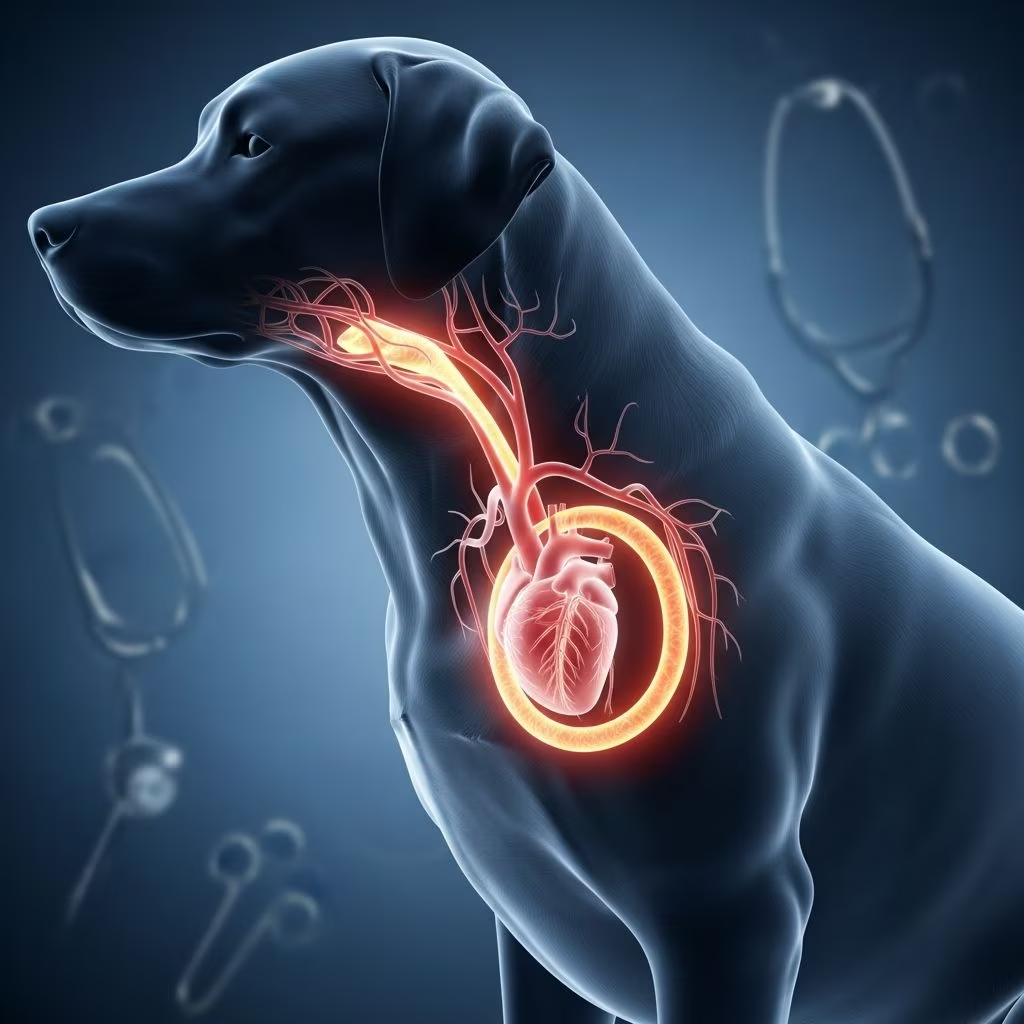
Persistent right aortic arch (PRAA) represents a congenital vascular abnormality where the right-sided aortic arch fails to regress during embryonic development, forming a ring that encircles and compresses the esophagus in young dogs. This condition, accounting for about 95% of vascular ring anomalies, typically manifests shortly after weaning when solid foods are introduced, leading to regurgitation and nutritional deficits.
Embryonic Origins of Vascular Ring Anomalies
During fetal development, the aortic arches form a symmetrical set of blood vessels around the trachea and esophagus. In normal canine embryology, the left fourth aortic arch persists to become the definitive aorta, while the right-sided arches regress. In PRAA, the right fourth aortic arch remains patent, encircling the esophagus with contributions from the trachea ventrally, the aorta dorsally, the pulmonary artery laterally, and the ligamentum arteriosum—a fibrous remnant of the ductus arteriosus—completing the ring posteriorly.
This abnormal persistence creates a tight vascular sling at the level of the heart base, specifically around the fourth intercostal space. The constriction prevents the passage of solid boluses, dilating the cranial esophagus proximal to the obstruction while the distal esophagus remains unaffected.
Breeds at Highest Risk and Genetic Factors
Certain breeds show a predisposition to PRAA due to inherited vascular developmental flaws. German Shepherds, Great Danes, and Irish Setters top the list, with additional reports in Labrador Retrievers, Golden Retrievers, and Boston Terriers.
- German Shepherds: Frequently documented in clinical cases, reflecting a possible polygenic inheritance pattern.
- Great Danes: Large-breed vulnerability linked to rapid growth phases post-weaning.
- Irish Setters: Historical prevalence in pedigree lines.
Affected puppies should not be bred, and parents warrant genetic screening. Siblings require thoracic imaging before breeding to avoid perpetuating the anomaly.
Classic Clinical Presentation in Puppies
Symptoms emerge 4-8 weeks post-weaning as puppies transition to kibble or canned food. The hallmark is regurgitation—a passive expulsion of undigested, tubular-shaped food without abdominal effort or retching, distinguishing it from vomiting.
| Symptom | Description | Frequency |
|---|---|---|
| Regurgitation | Post-meal reflux of undigested food, often hours after eating | Daily, worsening with solids |
| Weight Stunting | Failure to thrive despite voracious appetite | 90%+ cases |
| Aspiration Pneumonia | Coughing, lethargy, fever from inhaled material | 50-70% develop secondary infection |
| Emaciation | Malnutrition with pot-bellied appearance | Common in untreated cases |
Puppies appear hungry yet cachectic, with a distended cranial thorax from megaesophagus. Without intervention, chronic aspiration leads to fatal pneumonia.
Diagnostic Approach: From Radiographs to Advanced Imaging
Diagnosis hinges on thoracic radiography, with CT angiography providing definitive confirmation. Initial right lateral and dorsoventral views reveal:
- Cranial esophageal dilation: Gas or fluid-filled megaesophagus cranial to the heart base (fourth intercostal space).
- Tracheal deviation: Leftward shift at the heart base on dorsoventral projections, pathognomonic for PRAA.
Barium esophagrams, once standard, are now obsolete as plain films suffice; they risk aspiration. CT confirms the vascular ring, excluding rare alternatives like double aortic arch or aberrant subclavian artery.
Differentials include oesophageal strictures, foreign bodies, or neuromuscular disorders, but young age and focal dilation point to PRAA.
Surgical Intervention: Breaking the Vascular Ring
Left thoracotomy via the fourth-fifth intercostal space exposes the ligamentum arteriosum, the constricting band. Surgeons transect this ligament while preserving the phrenic, vagus, and recurrent laryngeal nerves. The ring opens, relieving esophageal compression.
Procedure details:
- Anesthesia and left lateral recumbency.
- Rib retraction for access over heart base.
- Palpation along esophagus to isolate ligamentum arteriosum.
- Division with nerve protection.
- Closure and post-op chest tube if needed.
Success rates exceed 90%, with most puppies eating solids within 48 hours post-surgery.
Pre- and Post-Operative Management
Preoperatively, liquid diets mitigate regurgitation; broad-spectrum antibiotics treat pneumonia. Postoperatively:
- Days 1-3: Blended food via syringe, elevated positioning.
- Weeks 1-4: Progressive texture increase, monitoring for dysphagia.
- Long-term: 80-90% achieve normal growth; 10-20% residual megaesophagus requires soft diets.
Complications like Horner’s syndrome or laryngeal paralysis are rare (<5%).
Prognosis and Long-Term Outcomes
Early surgery (under 4 months) yields excellent prognosis, with normal lifespans. Delayed intervention risks irreversible megaesophagus or pneumonia scarring. Annual thoracic radiographs track esophageal dilation.
Preventive Strategies for Breeders
Screen breeding stock with dorsoventral radiographs. Discontinue lines producing affected pups. Pedigree analysis aids risk reduction.
Frequently Asked Questions (FAQs)
What is the main symptom of PRAA in puppies?
Regurgitation of undigested food shortly after weaning onto solid diet.
Can PRAA be treated without surgery?
No, medical management only palliates; surgery is curative.
Is PRAA hereditary?
Yes, avoid breeding affected dogs and screen relatives.
How is PRAA diagnosed?
Primarily via thoracic radiographs showing tracheal deviation and esophageal dilation.
What breeds are prone to PRAA?
German Shepherds, Great Danes, Irish Setters.
References
- Persistent right aortic arch — Vet Times. 2023. https://www.vettimes.com/news/vets/small-animal-vets/persistent-right-aortic-arch
- Persistent right aortic arch (vascular ring anomaly) — Canadian Intercollegiate Dog Judging Program. Accessed 2026. https://cidd.discoveryspace.ca/disorder/persistent-right-aortic-arch-vascular-ring-anomaly.html
- Right Aortic Arch: Types, Symptoms & Treatment — Cleveland Clinic. 2023-10-27. https://my.clevelandclinic.org/health/diseases/right-aortic-arch
- Persistent Right Aortic Arch — Animal Surgical Center of Michigan. Accessed 2026. https://www.animalsurgicalcenter.com/persistent-right-aortic-arch
- Right Aortic Arches — StatPearls, NCBI Bookshelf. 2023-08-08. https://www.ncbi.nlm.nih.gov/books/NBK431104/



