

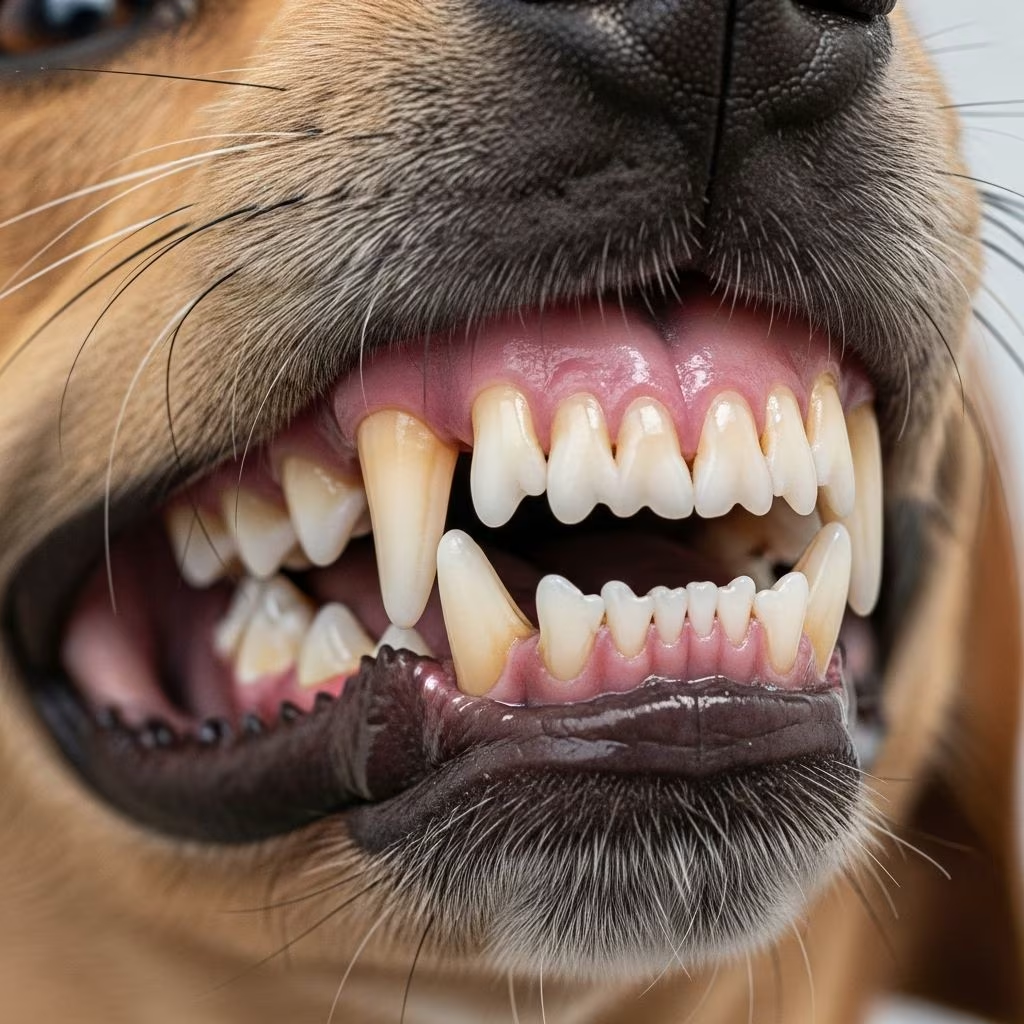
Persistent baby teeth, also known as retained deciduous teeth, occur when a pet’s primary teeth fail to shed as adult teeth emerge. This condition disrupts normal dental development, leading to overcrowding and potential long-term oral health complications in dogs and cats.
Understanding Normal Tooth Development in Pets
Pets like dogs and cats are born without teeth, but their deciduous set erupts within weeks. These 28 teeth in dogs (including 12 incisors, 4 canines, and 12 premolars) serve temporary purposes before permanent teeth replace them by around 6-7 months. The process relies on root resorption triggered by emerging adult tooth buds pushing against the primary roots.
In a healthy scenario, pressure from the permanent tooth causes the baby tooth’s roots to break down, allowing natural exfoliation. Canines typically erupt first, followed by incisors and premolars. Molars have no deciduous predecessors in carnivores, so retention never affects them.
Defining Persistent and Retained Deciduous Teeth
Terminology matters in veterinary dentistry. A persistent deciduous tooth remains alongside an erupted permanent tooth in the same socket, often due to failed resorption. A true retained deciduous tooth is rarer, present without any permanent successor visible clinically or on radiographs.
- Persistent: Both baby and adult teeth occupy the alveolus, causing misalignment.
- Retained: Only the primary tooth exists, with no adult tooth developing.
- Deciduous/Primary: Milk teeth that should shed seasonally like tree leaves.
- Secondary: Permanent adult dentition.
Any baby tooth lingering past 6-7 months signals a problem, especially canines, which are most prone.
Breeds and Pets Most Affected
Small breeds dominate statistics due to compact jaws unable to accommodate dual teeth sets. Common culprits include:
| Breed | Common Sites | Risk Level |
|---|---|---|
| Maltese | Maxillary canines | High |
| Yorkshire Terrier | Mandibular canines, incisors | High |
| Pomeranian | Premolars | High |
| Miniature Schnauzer | Canines | High |
| Cats (any breed) | Maxillary canines | Moderate |
Genetics play the primary role, with malpositioned permanent buds failing to apply resorption pressure. Environmental factors like infection or trauma are less common.
Why Persistent Teeth Cause Problems
Baby teeth blocking space force permanent teeth into abnormal positions, termed malocclusion. Maxillary permanent canines erupt rostrally (forward), while mandibular ones displace lingually (toward tongue).
- Crowding: Overlaps lead to plaque buildup, tartar, and periodontal disease.
- Traumatic Occlusion: Lingual mandibular canines abrade the palate, causing ulcers.
- Alveolar Underdevelopment: Dual roots stunt bone growth, weakening periodontal support and hastening adult tooth loss.
- Pain and Infection: Swelling, abscesses, and discomfort from trapped debris.
Early intervention prevents permanent orthodontic issues; delaying allows malposition to set.
Spotting the Signs Early
Symptoms are subtle initially—no overt pain signals during puppyhood exams. Key indicators include:
- Visible baby teeth past 6 months.
- Swollen gums around duplicates.
- Misaligned bite upon eruption.
- Excessive drooling or pawing at mouth (later stages).
Routine 4-6 month wellness checks catch most cases during vaccinations. Owners might notice during play or brushing.
Diagnostic Process: Exams and Imaging
Visual inspection suffices for obvious persistence, but full assessment requires anesthesia for:
- Intraoral Radiographs: Confirm root resorption, permanent tooth position, and absence/presence of successors. Essential to differentiate persistent from retained.
- Full Mouth Survey: Rule out multiples; up to 10% of small dogs have several.
X-rays reveal root length (often unresorbed), proximity to permanent buds, and fracture risks.
Treatment: Extraction as the Gold Standard
Immediate removal of the persistent baby tooth is consensus treatment post-6 months. “Wait and see” risks irreversible damage.
Extraction Technique: Delicate to protect nearby permanent teeth.
- Anesthesia and Radiography: Pre-op imaging guides approach.
- Elevation: Use wing-tipped elevators on mesial, labial, and distal surfaces only—avoid lingual mandibular to prevent permanent canine injury.
- Delivery: Forceps or rongeur removes the tooth intact; fracture leaves painful, non-resorbing roots prone to infection.
- Post-Op: Early extraction often self-corrects permanent tooth position.
Avoid home remedies like trimming, which exposes pulp, causes pain, and harms developing teeth.
Potential Complications and Prognosis
Skilled extraction yields excellent outcomes, with permanent teeth realigning naturally if addressed promptly. Complications include:
| Complication | Risk Factors | Prevention |
|---|---|---|
| Root Fracture | Rushed procedure | Complete delivery |
| Permanent Tooth Damage | Incorrect elevation | Directional caution |
| Infection/Abscess | Residual fragments | Post-op antibiotics |
| Persistent Malocclusion | Delayed treatment | Early intervention |
Untreated cases lead to extractions of valuable permanent teeth later.
Prevention Strategies for Pet Owners
Proactive care minimizes risks:
- Schedule dental checks at 4-6 months.
- Monitor eruption timelines.
- Choose breeders screening for dental genetics in predisposed breeds.
- Start gentle brushing early for hygiene.
Pet insurance covering dental procedures aids affordability.
FAQs on Persistent Baby Teeth
What if my pet is over 1 year with baby teeth?
Extraction remains viable; consult a veterinary dentist for advanced cases.
Can cats get this too?
Yes, though less common than dogs; maxillary canines are hotspots.
Is surgery always needed?
Yes for persistence; monitoring retained cases without successors is rare.
How much does extraction cost?
Varies by case; anesthesia, x-rays, and specialist fees apply—insurance helps.
Will my pet’s bite fix itself post-extraction?
Often yes if early; orthodontics may be needed otherwise.
Long-Term Dental Health After Treatment
Post-extraction monitoring ensures proper eruption. Annual cleanings prevent secondary issues like tartar from crowding history. Brachycephalic breeds (e.g., Pugs) need extra vigilance despite lower incidence.
In summary, recognizing persistent baby teeth empowers timely action, safeguarding your pet’s smile for life.
References
- The ABCs of veterinary dentistry: ‘R’ is for retained, primary, deciduous teeth — DVM360, Jan Bellows, DVM, DAVDC, DABVP, FAVD. Accessed 2026. https://www.dvm360.com/view/abcs-veterinary-dentistry-r-retained-primary-deciduous-teeth
- Retained Deciduous Teeth — Embrace Pet Insurance. Accessed 2026. https://www.embracepetinsurance.com/health/retained-deciduous-teeth
- Retained (Persistent) Deciduous Teeth in Cats — WellPets Animal Dental Care. Accessed 2026. https://www.wellpets.com/blog/176-retained-persistent-deciduous-teeth-in-cats/
- Retained Puppy Teeth — Veterinary Dental Specialties. Accessed 2026. https://vdspets.com/retained-puppy-teeth/
- Persistent Deciduous Teeth (Baby Teeth) in Dogs — VCA Animal Hospitals. Accessed 2026. https://vcahospitals.com/know-your-pet/retained-deciduous-teeth-baby-teeth-in-dogs



