

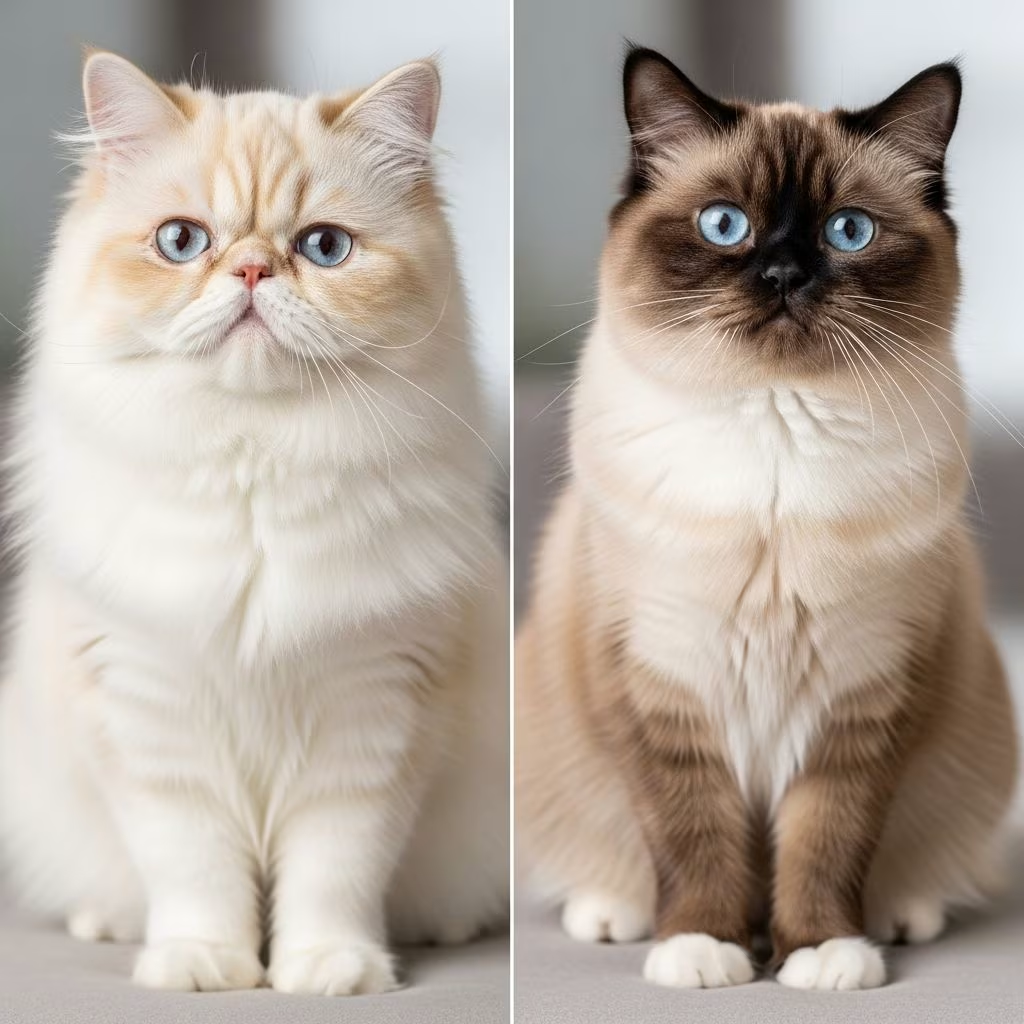
Persian and Himalayan cats captivate cat enthusiasts with their luxurious long coats and regal demeanors. While they share striking similarities, subtle distinctions in genetics, appearance, and behavior set them apart. This comprehensive comparison explores their histories, physical characteristics, temperaments, health profiles, care demands, and suitability for various households, helping you decide between these elegant breeds.
Historical Backgrounds of These Iconic Breeds
The Persian cat traces its roots to ancient Persia, now modern-day Iran, where it was revered for its beauty and grace. Traders introduced these cats to Europe in the 1600s, and by the 19th century, selective breeding refined their signature flat-faced, long-haired appearance. Today, Persians remain one of the most popular breeds worldwide, prized for their serene presence.
In contrast, the Himalayan emerged in the early 20th century through intentional crossbreeding between Persians and Siamese cats. Breeders in the 1920s and 1930s, particularly in Sweden and the United States, aimed to combine the Persian’s plush coat with the Siamese’s striking colorpoint pattern and vivid blue eyes. By the 1950s, the Himalayan gained recognition as a distinct breed in major cat registries, blending the best traits of its parent lines for a unique appeal.
These origins influence not just their looks but also their adaptability and health predispositions, with Himalayans often inheriting a touch more vitality from their Siamese ancestry.
Physical Traits: Size, Build, and Coat Variations
Both breeds boast compact, cobby bodies with short legs, rounded heads, and expressive faces, but differences emerge in stature and detailing. Persians typically measure 10-12 inches tall at the shoulder and weigh 7-12 pounds, presenting a stocky, muscular frame under their flowing fur. Himalayans are slightly larger, often standing 1-2 inches taller and carrying more substantial weight, up to 14 pounds, with a rounder, fuller body shape.
| Feature | Persian | Himalayan |
|---|---|---|
| Average Height | 10-12 inches | 11-14 inches |
| Average Weight | 7-12 lbs | 9-14 lbs |
| Body Type | Stocky, cobby | Rounder, fuller |
| Legs | Short, sturdy | Short, slightly longer |
The most eye-catching variance lies in their coats. Persians display an array of solid colors, tabby patterns, calicos, and bi-colors, with a dense, long double coat that stands off the body like a mane around the neck and chest. Himalayans, however, feature the exclusive colorpoint pattern—a genetic trait from Siamese heritage causing darker shades on cooler body areas like ears, face, paws, and tail. Common points include seal, chocolate, blue, lilac, red, and cream, all on a creamy white or pale body base.
Face types vary within both breeds: traditional \”doll-face\” versions have longer muzzles resembling Turkish Angoras, while modern \”peke-face\” or \”ultra-type\” exhibit flatter profiles, small ears, and large round eyes—blue or copper for Persians, always blue for Himalayans. These facial structures impact breathing and eye health, discussed later.
Temperament and Daily Interactions
Renowned for docility, both breeds thrive as affectionate companions. Persians embody quiet elegance, preferring to lounge in sunbeams or on laps, observing their world with calm curiosity. They bond deeply with owners but may withdraw from rowdy environments, suiting peaceful homes.
Himalayans inherit a spark from Siamese roots, blending Persian placidity with mild playfulness. More vocal and engaging, they enjoy interactive toys, gentle chasing games, and family snuggles. Their sociable nature makes them tolerant of children and other pets, though they retain a discriminating streak, choosing favorites.
- Playfulness: Persians: Low to moderate; Himalayans: Moderate, with bursts of energy.
- Affection Level: Both high, but Persians are lap cats, Himalayans more interactive.
- Vocalness: Persians: Quiet; Himalayans: Soft trills and meows.
- Family Fit: Excellent for both, with supervision around toddlers.
Exercise needs are minimal—15 minutes daily of light play suffices for either, prioritizing mental stimulation over vigorous activity.
Health Considerations and Lifespan Expectations
Both breeds share a lifespan of 10-15 years, but brachycephalic (flat-faced) traits introduce vulnerabilities. Persians face polycystic kidney disease (PKD), hypertrophic cardiomyopathy (HCM), eye conditions like progressive retinal atrophy, and respiratory issues from short noses. Peke-face Persians suffer tear staining, dental malocclusion, and heat sensitivity.
Himalayans inherit similar risks due to Persian genetics, including PKD and HCM, but Siamese sturdiness may confer slight resilience. Colorpoint genetics add potential for crossed eyes or temperature-sensitive enzyme issues affecting coat color. Regular vet screenings for genetic tests are essential.
Pro Tip: Opt for breeders screening for PKD via ultrasound and HCM via echocardiography to mitigate hereditary risks.
Grooming Routines and Maintenance Essentials
High-maintenance coats demand commitment. Daily brushing prevents mats in their fine, thick undercoats, with weekly baths using cat-safe shampoos for show-ready shine. Persians shed profusely year-round; Himalayans seasonally more intensely.
- Tools: Slicker brush, wide-tooth comb, mat splitter.
- Eye Care: Wipe daily to prevent staining from shallow sockets.
- Nail Trims: Bi-weekly.
- Dental: Brushing and annual cleanings combat periodontal disease.
Both prefer indoor living to protect coats from dirt and parasites, with litter boxes scooped daily.
Training, Lifestyle Compatibility, and Costs
Docile and intelligent, they respond to positive reinforcement for litter use, scratching post training, and basic cues. Clicker training works well for play-based learning.
Ideal for apartments or homes, they adapt to solo or multi-pet setups. Costs range $800-$2,500 for kittens from reputable breeders, plus $500-1,000 yearly for grooming, food, and vet care.
Quick Comparison Table: At a Glance
| Aspect | Persian | Himalayan |
|---|---|---|
| Coat Pattern | Varied solids/patterns | Colorpoint only |
| Energy Level | Low | Moderate |
| Grooming | Daily | Daily |
| Health Risks | PKD, HCM, respiratory | Similar + eye issues |
| Price Range | $800-$2,500 | $1,000-$3,000 |
Which Breed Fits Your Home Best?
Choose Persian for ultimate tranquility and coat diversity in a low-key setting. Select Himalayan for colorpoint allure and subtle liveliness. Both excel as loving pets; prioritize health-tested lines.
Frequently Asked Questions (FAQs)
Are Himalayan cats hypoallergenic?
No, neither breed is; their long coats shed heavily, producing dander.
Can Persians and Himalayans live together?
Yes, their similar temperaments foster harmony.
How often should I bathe these cats?
Weekly or as needed; overbathing dries skin.
Do they tolerate hot weather?
Poorly—provide AC and avoid direct sun.
What’s the difference in eye color?
Persians: Copper/blue; Himalayans: Always blue.
References
- Persian Cat vs Himalayan Cat: Key Differences (with Pictures) — Hepper. 2024. https://articles.hepper.com/persian-vs-himalayan-cat/
- Himalayan Cat vs Persian: What Sets Them Apart? — YouTube (Kitten Life). 2023-10-15. https://www.youtube.com/watch?v=rxzjTrv14e8
- Persian vs Himalayan Cat: What’s the Difference? (With Pictures) — Catster. 2024. https://www.catster.com/cat-breeds/persian-vs-himalayan-cat/
- Persian Cat VS. Himalayan Cat — YouTube (Kitten Life). 2023. https://www.youtube.com/watch?v=tcMMKrtmzh0
- Persian vs Himalayan Cats: A Detailed Comparison — Cats Luv Us. 2024-06-26. https://shop.catsluvus.com/2024/06/26/persian-vs-himalayan-cats-a-detailed-comparison/



