

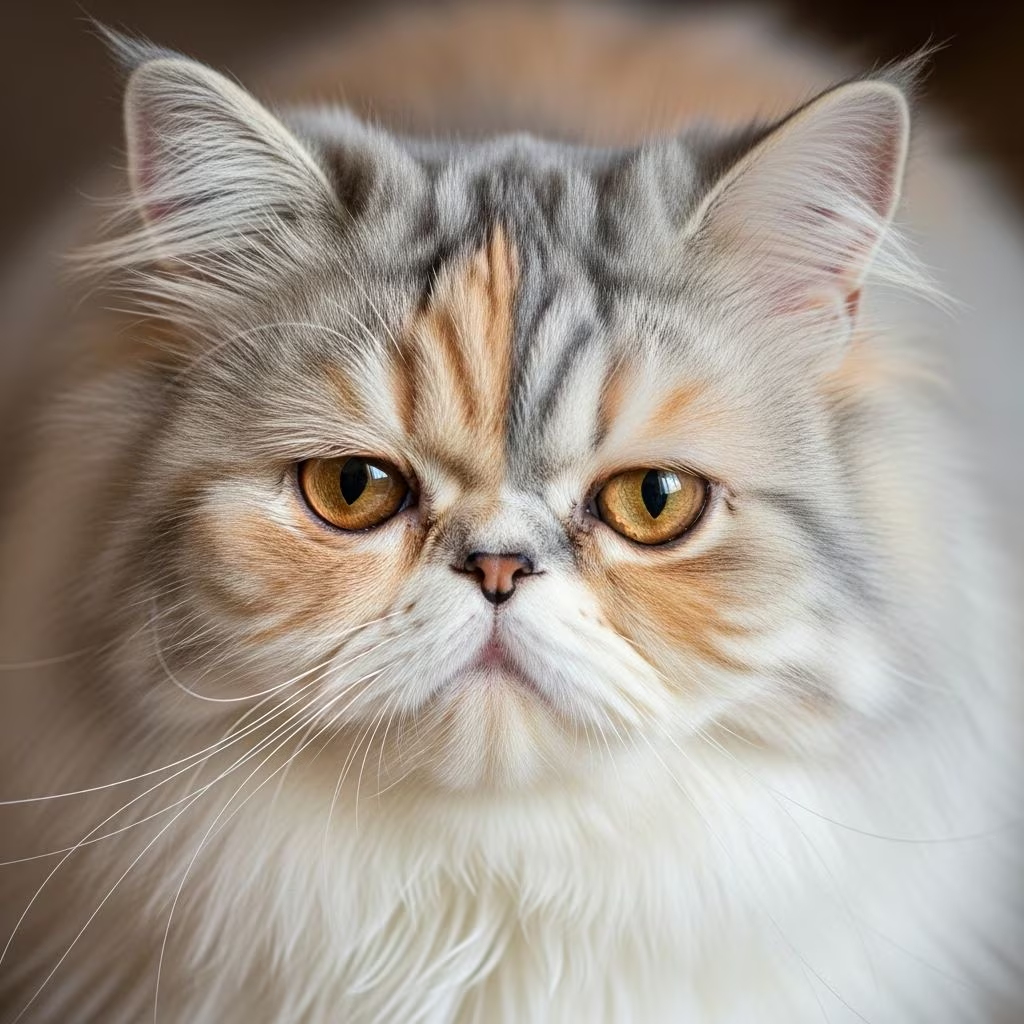
Persian cats are renowned for their luxurious long coats and flat faces, but their coat colors and patterns are equally captivating. From solid hues to intricate tabby designs and rare shaded varieties, Persians display an impressive spectrum that appeals to cat enthusiasts worldwide. This vet-verified guide covers the 18 most common Persian cat colors and patterns, ranked by rarity, with descriptions, eye color associations, and tips for identification.
Understanding Persian coat genetics helps explain why some colors like chinchilla silver are prized rarities while solids like white are ubiquitous. Breed standards from organizations like The Cat Fanciers’ Association (CFA) and The International Cat Association (TICA) recognize divisions including solids, silvers/goldens, smokes/shaded, tabbies, particolors, bicolors, and Himalayans. Whether you’re adopting, breeding, or simply admiring, knowing these variations enhances appreciation for this glamorous breed.
The Rarest Persian Cat Colors
Exotic and less common colors top the rarity list, often requiring precise breeding to achieve their unique appearances. These stand out in cat shows and command higher prices due to their scarcity.
1. Chinchilla Silver
Chinchilla silver Persians are the rarest, featuring a white undercoat with black tipping on only the top one-eighth of each hair, creating a sparkling effect. Their emerald or blue-green eyes rimmed in black add to the allure. Nose leather and paw pads are brick red. This color demands meticulous grooming to maintain its shimmering quality.
2. Chinchilla Golden
Similar to chinchilla silver but with a pale honey-gold undercoat tipped in black, chinchilla goldens glow warmly. Their green or blue-green eyes contrast beautifully against the golden base. These are exceptionally rare and highly sought after for their luxurious, metallic sheen.
3. Parti-Color
Parti-color Persians blend multiple shades in a mottled pattern, often including red, black, and cream. This division includes tortoiseshell variations with softly intermingled patches. Eye color is typically brilliant copper. Their unpredictable patterns make each cat unique.
4. Shaded Silver
Shaded silver Persians have a white undercoat with heavy black tipping on the back, sides, head, and tail, fading to white on the chin, ears, jowls, and underparts. Copper eyes enhance their elegant, smoky look. Slightly more common than chinchillas but still rare.
5. Shaded Golden
With a golden undercoat shaded black on the upper body, shaded goldens resemble antique gold. Their rarity stems from the need for the precise golden base without dilution. Green eyes are standard.
Moderately Rare Persian Cat Colors
These colors appear less frequently but are achievable with targeted breeding. They bridge rarities and commons, offering striking options for owners.
6. Seal Point (Himalayan)
Seal point Persians, part of the Himalayan pattern, have cream bodies with dark brown points on ears, face, legs, and tail. Bright blue eyes define this color. Recognized separately by some registries but integral to Persian lineage.
7. Blue Point
Blue points feature a glacial white or pale fawn body with medium blue-gray points. Their vivid blue eyes make them stand out. A dilute version of seal point, still somewhat uncommon.
8. Chocolate Point
Chocolate points have ivory bodies with warm milk-chocolate points. Blue eyes complete the look. Rarer due to the chocolate gene’s recessiveness.
9. Lilac Point
The softest Himalayan, lilac points show frosty white bodies with pinkish-gray points and blue eyes. Extremely dilute, making them scarce.
10. Lilac
Solid lilac is a pale dove-gray with lavender hints, often with light blue or slate eyes. Rarer among solids due to double dilution.
11. Chocolate
Solid chocolate Persians sport a warm medium-brown coat, brick-red nose, and copper eyes. Less common than black or blue.
Common Persian Cat Colors
The most accessible colors dominate pet homes and shows, valued for their classic beauty and ease of breeding.
12. Tabby Patterns
Tabby Persians come in mackerel (striped), classic (swirled), ticked, or spotted patterns across colors like brown, blue, silver, red, and cream. Copper or golden eyes prevail, with silver tabbies sometimes hazel or green. Patterns add playfulness to the Persian’s serene demeanor.
| Tabby Pattern | Description |
|---|---|
| Mackerel | Narrow stripes like a tiger |
| Classic | Bold swirls and marbling |
| Ticked | Even ticking without stripes |
| Spotted | Distinct spots along the body |
13. Bi-Color
Bi-colors combine white with another hue, such as black/white or red/white. Van patterns limit color to head and tail; classic bicolors have white underparts. Copper eyes standard, except some silver tabby/white with green.
14. Calico
Calicos feature white bases with black and red patches, often including dilute versions like lilac calico. Vibrant and female-dominant due to genetics.
15. Cream
Cream Persians have pale, buff-cream coats with rose or brick nose leather and copper eyes. A dilute red, soft and popular.
16. Blue
Blue (dilute black) is a shimmering gray from ash to steel tones, with golden or copper eyes. One of the most common alongside white.
17. Black
Jet-black Persians may sheen blue or brown in sunlight, with gold eyes. Reliable and affordable.
18. White
Pure white Persians, the show hall icons, have deep blue or copper eyes (odd-eyed possible). Pink nose leather and paw pads.
Persian Color Divisions Explained
TICA divides Persians into seven categories for breeding and shows: Solid, Silver/Golden, Smoke/Shaded, Tabby, Particolour, Bicolour, Himalayan. Each has specific eye colors:
| Division | Common Eye Colors |
|---|---|
| Solid | Copper, blue, odd-eyed (white) |
| Silver/Golden | Green, blue-green |
| Smoke/Shaded | Copper |
| Tabby | Copper, green/hazel (silvers) |
| Particolour | Copper |
| Bicolour | Copper, green/hazel (silvers) |
| Himalayan | Bright blue |
Eye Colors in Persian Cats
Eye color correlates strongly with coat. Solids often have copper; whites blue or odd; points always blue; silvers green-rimmed. This linkage aids identification and reflects genetics.
Caring for Persian Coats by Color
Regardless of color, Persians need daily brushing to prevent matting. Rarer shaded/smoke colors show dirt more, requiring frequent baths. White coats stain easily; blacks hide dust best. Use color-safe shampoos and monitor for sun-fading in chocolates/creams.
Persian Color Genetics Basics
Colors arise from genes: black/brown base, dilute (blue/chocolate), red, white spotting, silver inhibiting pigment. Points from Himalayan gene causing temperature-sensitive pigmentation. Breeders select for purity.
Frequently Asked Questions (FAQs)
What is the rarest Persian cat color?
Chinchilla silver tops the list for its precise black tipping on white undercoat.
Do all white Persians have blue eyes?
No, they can have blue, copper, or one of each (odd-eyed).
Are Himalayan Persians true Persians?
Yes, the pointed pattern is a Persian variation, sometimes shown separately.
What eye color do tabby Persians have?
Usually copper; silver tabbies may have green or hazel.
Can male Persians be calico?
Rarely, due to XX chromosome requirement; most are female.
References
- Persian Cat Colors: Rarest to Most Common — A-Z Animals. 2023. https://a-z-animals.com/animals/persian/persian-facts/persian-cat-colors-rarest-to-most-common/
- Persian cats’ colours and patterns described in detail — Untamed. 2023. https://untamed.com/blogs/cat-breeds/persian-cats-colors
- 18 Vet-Verified Persian Cat Colors & Patterns (With Pictures) — Catster. 2023. https://www.catster.com/lifestyle/persian-cats-colors/
- Persian — The Cat Fanciers’ Association. 2023-10-15. https://cfa.org/breed/persian/
- Examples of Persian Coat Colors — Doll Face Persian Kittens. 2023. https://dollfacepersiankittens.com/persian-coat-colors/
- Persian Color Genetics — Cacao Cattery. 2023. https://www.cacaocattery.com/persian-color-genetics.html



