

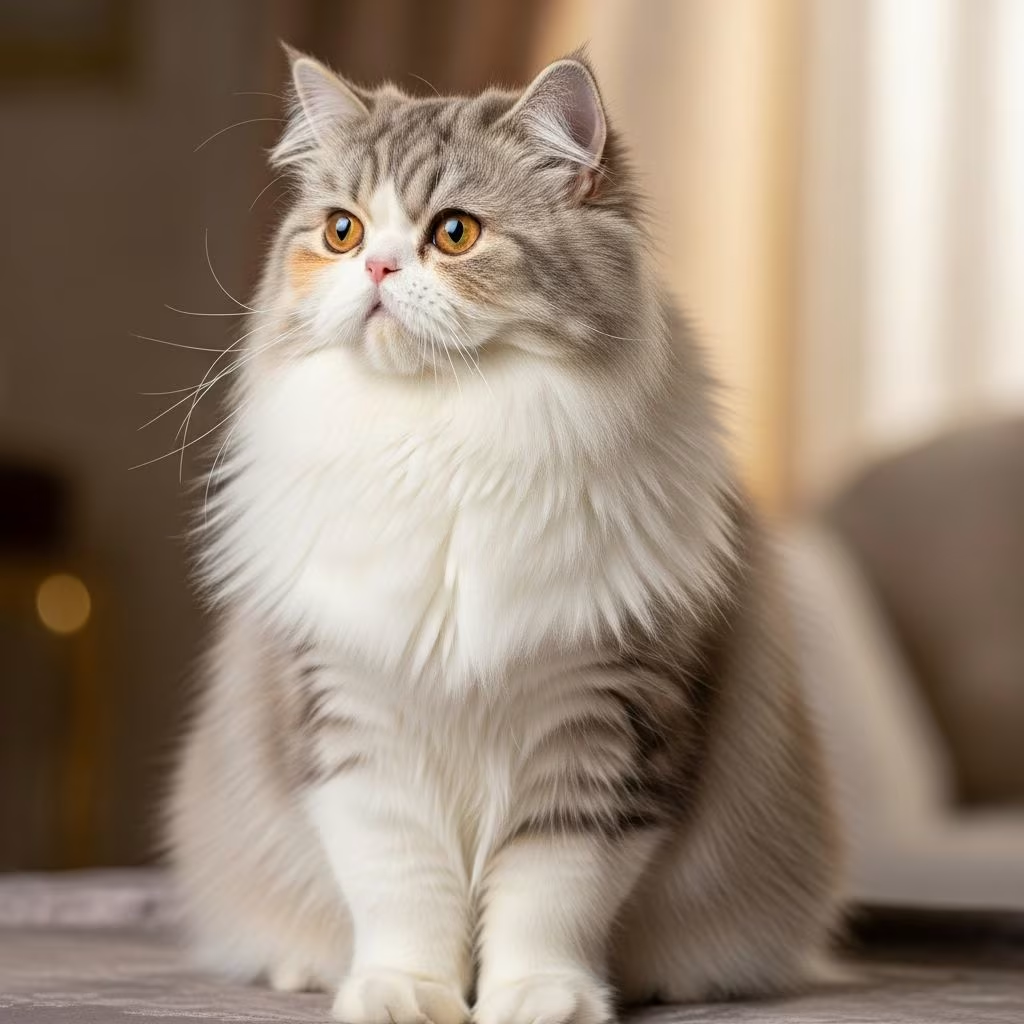
18 Vet-Verified Persian Cat Colors & Patterns (With Pictures)
Persian cats are renowned for their luxurious, flowing coats and distinctive facial features, but one of the most captivating aspects of these felines is the remarkable variety of colors and patterns available. Whether you’re considering adding a Persian to your family or simply curious about the breed’s aesthetic diversity, understanding the full spectrum of Persian cat colors can help you appreciate just how varied these beautiful animals can be. The Cat Fanciers’ Association recognizes numerous color divisions, each with its own unique characteristics and requirements.
The 13 Persian Coat Colors and Patterns
Persians can come in a variety of colors and patterns, and breeders continue to develop new variations while maintaining the breed’s distinctive characteristics. Understanding these colors helps potential owners know what to expect when selecting a Persian companion.
1. Solid
Solid Persians are stunning, long-haired cats with only one color throughout their coat. These cats represent the traditional and most recognizable form of Persian beauty. There are seven recognized main Persian colors for solid coats:
- White
- Black
- Blue
- Chocolate
- Cream
- Lilac
- Red
Solid-colored Persians can have three different eye colors: copper, blue, or one of each (odd-eyed). These cats tend to have a soft cast to their coat, giving them an almost ethereal appearance that is particularly striking when their fur catches natural light.
2. Black
Black is another popular Persian coat color, and black Persians usually have golden eyes that contrast beautifully with their dark fur. These cats can look pure black or can have a brown tint to their coat when the sun hits it at certain angles. The warm tones of their eyes against the darkness of their coat create a particularly striking appearance. Bobbie the Persian, a famous TikTok personality, is probably one of the most well-known black Persians, helping to popularize this color variation among modern cat enthusiasts.
3. Blue
Blue Persians aren’t actually blue in color but are instead gray. The exact shade of gray can range from lighter to darker tones, with most blue Persians displaying golden or slate-colored eyes. This is another really common Persian color and remains a favorite among breeders and cat show judges. The soft gray tone of their coat pairs beautifully with their luminous eyes, creating an almost mystical appearance that appeals to many Persian admirers.
4. Chocolate
Chocolate Persians display a rich, warm brown coloring that is deeper than cream but lighter than black. These cats typically have copper or golden-colored eyes that complement their chocolate-toned coat. The chocolate color is considered moderately rare compared to white, black, and blue variations, making these cats somewhat more exclusive and sought-after by collectors and show enthusiasts.
5. Cream
Cream Persians have a soft, pale color that ranges from ivory to light tan. These cats are often described as having a delicate, almost porcelain-like appearance. Their eyes are usually golden or copper-colored, enhancing their gentle aesthetic. Cream is considered a dilute version of red and remains a popular choice for those seeking a softer-looking Persian companion.
6. Lilac
Lilac Persians are similar to blue Persians in that they aren’t really purple but are more of a dilute gray color that can appear lilac in certain lighting conditions. They often have light blue- or slate-colored eyes, and like the cream Persian, can be lilac colored all over or display lilac patches throughout their coat. This is one of the rarer solid color variations and requires careful breeding to maintain the distinct coloration.
7. Red
Red Persians aren’t actually red but are more orange or apricot in color. They are a darker version of cream Persians but aren’t as dark as chocolate Persians. Their eyes are usually golden to brown in color, and they may be solid red or have red patches distributed throughout their coat. Red Persians display the warmth and vibrancy that many cat lovers find irresistible.
8. White
White Persians are very common and one of the most sought-after colors. Just about everyone wants a white, fluffy cat with its pristine, pure appearance. This is the “classic” color and the one most commonly seen at cat shows. White Persians can have deep blue eyes, brilliant copper eyes, or be odd-eyed, with one blue and one copper eye. These cats represent the quintessential Persian image that many people envision when thinking about the breed.
9. Tabby
Persians can come in the tabby variation, displaying one of four distinct patterns: mackerel, classic tabby, ticked, or spotted. More rarely, they can have a patched tabby appearance. Tabby Persians usually have at least two of the following colors in their coat:
- Blue
- White
- Silver
- Brown
- Cameo
- Cream
- Red
The tabby pattern adds visual complexity and interest to the Persian’s already luxurious coat, creating distinctive markings that can include stripes, swirls, and spots depending on the specific tabby pattern present.
10. Parti-Color
Parti-color Persians come in four different shades, combining multiple colors in distinctive patterns:
- Blue-cream
- Lilac-cream
- Chocolate tortoiseshell
- Tortoiseshell
While blue- and lilac-cream colors are muted and soft, torties have a vibrant and eye-catching appearance. The colors in parti-color Persians can be patched or softly intermingled, creating unique patterns on each individual cat. These cats typically have brilliant copper-colored eyes, which contrast beautifully with their multi-colored coats.
11. Bi-Color
Bi-color Persians display two distinct colors in their coat pattern. These cats come in three main styles:
- Van Persians—White coats with spots in two colors, usually on the head, legs, and tail
- Classic Persians—White bellies and legs with a different color on the top
- Calico Persians—Patches of black and red scattered over a white base coat
Bi-color patterns can appear in the following color combinations:
- Black and white
- Blue and white
- Red and white
- Cream and white
- Chocolate and white
- Lilac and white
- Calico
- Chocolate calico
- Lilac calico
- Dilute calico
All bi-color Persians have copper eyes, except for the silver tabbies with white, which can have green- or hazel-colored eyes. The distinctive two-tone appearance makes bi-color Persians particularly appealing to those seeking visual variety in their feline companion.
12. Smoke
Smoke Persians have a white undercoat deeply tipped in different colors, making them basically a darker version of the shaded coloring. These cats create a striking visual effect as their fur moves, revealing the contrasting white undercoat beneath the colored tips. Smoke Persians can display numerous color combinations:
- Black smoke
- Blue smoke
- Cream smoke
- Red smoke
- Tortoiseshell smoke
- Blue-cream smoke
- Chocolate smoke
- Lilac smoke
- Chocolate tortoiseshell smoke
- Lilac cream smoke
The smoke pattern requires copper-colored eyes and creates an elegant, sophisticated appearance that appeals to discerning cat enthusiasts and breeders.
13. Himalayan (Point) Pattern
The pointed color pattern, also referred to as the Siamese or Himalayan pattern, is one of the most distinctive Persian variations. The Persian takes on the very familiar markings of Siamese breeds, having darker ears, masks, feet, and sometimes tails. This pattern typically features a lighter body with darker coloration concentrated on the extremities. Traditional point colors include seal point, blue point, chocolate point, and lilac point. Himalayans are recognized as a distinct division by major cat associations and have bright blue eyes as a breed requirement. This striking contrast between the light body and dark points creates a particularly elegant and recognizable appearance.
Understanding Eye Color in Persians
Eye color varies significantly across Persian coat colors and patterns. Different color divisions have specific eye color requirements established by breed standards:
- Solid Persians: Three different eye colors possible—copper, blue, or odd-eyed
- Silver and Golden Persians: Green or blue-green eyes with black rims
- Smoke and Shaded Persians: Copper-colored eyes
- Tabby Persians: Silver tabbies can have green, hazel, or copper eyes, while other tabbies typically have copper eyes
- Parti-Color Persians: Brilliant copper eyes
- Bi-Color Persians: Copper eyes, except silver tabbies with white who may have green or hazel eyes
- Himalayan Persians: Bright blue eyes
Understanding eye color requirements helps breeders select appropriate pairings and assists potential owners in recognizing quality specimens of their desired color variation.
Rarity and Availability
Not all Persian colors are equally common or easy to find. Blue, black, and white Persians are the most common variations and are readily available from reputable breeders. Chocolate and lilac variants are much rarer and may require more extensive searching or longer wait times when obtaining them from breeders. Shaded and chinchilla varieties are considered exquisite and rare due to the careful breeding required to maintain their distinctive coloration. Some colors, particularly specialty variations and combinations, may only be available from specific breeders who specialize in these particular lines.
Silver and Golden Variations
Silver and gold are extremely popular colors for Persians. They are considered exquisite and rare and come in two different variants. Chinchilla variations feature white coats with black tips, creating a shimmering appearance. Shaded variations display uniform color shading over darker parts of the body. Shaded silver Persians have a shimmery coat with darker tips, making them just slightly different from a solid color Persian, though the shading makes a significant difference. They are often sought after due to their uniqueness and elegance. Similarly, shaded golden Persians are white with golden tips, appearing somewhat shaded and looking a bit like rusty metal dusted on white. These rarer variations require more careful breeding to maintain their distinctive appearance.
Frequently Asked Questions (FAQs)
Q: Are all Persian cat colors recognized by major cat associations?
A: The International Cat Association (TICA) accepts all Persian colors. The Cat Fanciers’ Association recognizes multiple color divisions including solids, tabbies, silver and goldens, shaded and smokes, parti-colors, calicos, bi-colors, and Himalayans. Always verify with your specific association regarding their current color standards.
Q: Which Persian cat color is the most valuable?
A: Rarer colors like lilac, chocolate, shaded silver, and shaded golden tend to be more valuable due to their limited availability and the careful breeding required to produce them. However, price can also depend on the individual breeder, the cat’s lineage, and specific show credentials.
Q: Do different Persian colors have different temperaments?
A: No, Persian cat temperament is determined by genetics, socialization, and individual personality rather than coat color. All Persian colors should display similar breed characteristics of being calm, affectionate, and docile.
Q: What determines a Persian cat’s eye color?
A: Eye color is genetically linked to coat color in Persian cats. Different color divisions have specific eye color requirements. For example, Himalayan Persians must have blue eyes, while most solid-colored Persians can have copper or blue eyes.
Q: Can a Persian cat change color as it grows?
A: Kittens may appear lighter at birth and develop their full color intensity as they mature. However, their basic color designation typically remains the same. Some colors like cream and red may appear more vivid or muted depending on lighting and age.
Q: Are there any health issues associated with specific Persian colors?
A: Generally, color itself doesn’t determine health; however, white Persians with blue eyes may have a higher incidence of deafness. Work with responsible breeders who conduct health testing regardless of the color you choose.
Q: How do I maintain the vibrancy of my Persian cat’s coat color?
A: Regular grooming, a quality diet rich in omega fatty acids, and protection from excessive sun exposure help maintain coat color vibrancy. White Persians particularly benefit from regular cleaning to prevent staining and yellowing of their coat.
References
- Persian Cat Colors: Rarest to Most Common — A-Z Animals. 2025. https://a-z-animals.com/animals/persian/persian-facts/persian-cat-colors-rarest-to-most-common/
- Persian cats’ colours and patterns described in detail — Untamed. 2025. https://untamed.com/blogs/cat-breeds/persian-cats-colors
- Persian – The Cat Fanciers’ Association — The Cat Fanciers’ Association. https://cfa.org/breed/persian/
- Persian Color Genetics — Cacao Cattery by Carissa Altschul. 2025. https://www.cacaocattery.com/persian-color-genetics.html
- Persian – TICA – The International Cat Association — The International Cat Association. https://tica.org/breed/persian/



