

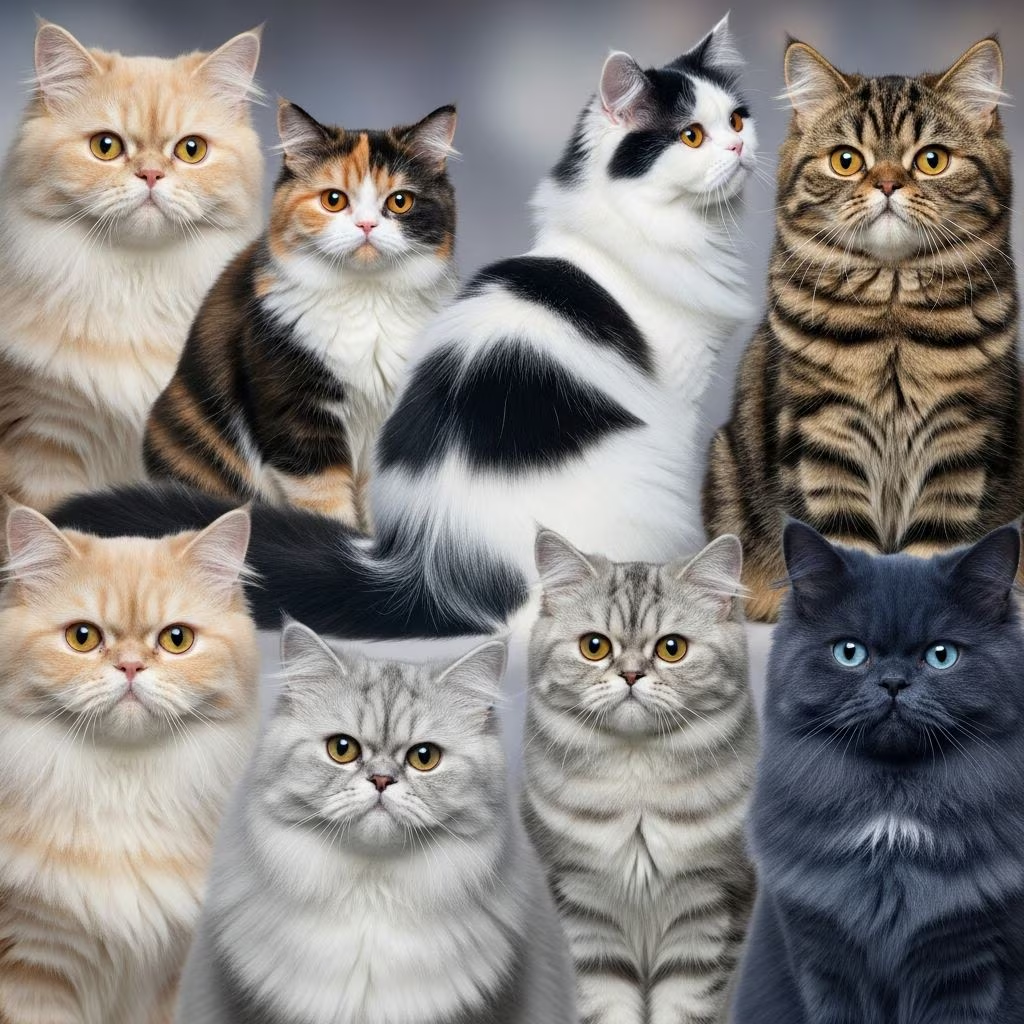
Persian Cat Coat Patterns and Colors Guide
Persian cats are renowned for their luxurious, flowing coats and striking appearances. One of the most captivating aspects of these felines is the incredible diversity of coat colors and patterns they can display. Whether you’re considering adopting a Persian cat or simply curious about the breed’s aesthetic variations, understanding the different coat types is essential. Persian cats can exhibit a remarkable range of colors and patterns, each with its own unique characteristics and genetic background.
Understanding Persian Cat Coat Genetics
The variety of colors and patterns seen in Persian cats results from complex genetic interactions. Two primary pigments control coat coloration: eumelanin, which produces black and brown shades, and pheomelanin, which is responsible for red and yellow tones. These pigments work together with various genes that control pigment production, pattern distribution, and color intensity. Some genes are dominant, while others are recessive or sex-linked, creating the full spectrum of Persian cat colors we see today.
Solid Persian Cat Colors
Solid Persians are stunning, long-haired cats with only one color throughout their coat. These base colors represent the foundation of Persian cat coloration. For solid colors to be recognized, the hue must be uniform from root to tip, creating that signature plush appearance Persian cats are famous for.
White
White is one of the most common and striking solid colors in Persian cats. White Persians display a pure, pristine coat that requires regular grooming to maintain its brilliance. These cats often have blue or copper-colored eyes.
Black
Black is another Persian coat color, and black Persians usually have golden eyes. Black Persians can look pure black or can have a brown tint to their coat when the sun hits it. The depth of color can vary, with some cats appearing jet black while others display a rich, warm tone.
Blue
Blue Persians aren’t really blue, but are actually gray in color. The exact shade of gray (or rather, blue) can range from lighter to darker, with most blue Persians having golden or slate-colored eyes. This is one of the more common Persian colors and represents a dilute version of black.
Red
Perhaps the most difficult of the solid colors is red, a term given to a wide range of reddish-orange hues in cats. The color can be a vibrant mahogany or any one of several shades of orange all the way down to a pale ginger. Interestingly, this color almost always fails to conceal the tabby lines hidden in each cat’s genetic makeup.
Cream
Cream is a dilute version of red, appearing as a pale, warm color. This delicate hue requires careful breeding to maintain evenness throughout the coat. Cream Persians have a soft, ethereal appearance that many cat fanciers adore.
Chocolate
Chocolate coloring is fairly new to the Persian, coming from the introduction of the pointed Himalayan. Bred to the solid-color Persian, the Himalayan pattern of points, which is recessive, can be made to disappear. This leaves the cat clothed all over in the color of the points, resulting in a rich, warm, chocolate-brown cat with copper eyes. This color is still quite rare and a good specimen is hard to find.
Lilac
The lilac Persian also comes from the Himalayan color spectrum. The color should be a rich, warm lavender with a pinkish tone. Like all dilute colors (a paler version of the original where cream replaces red or blue replaces black), it should be pale and even in tone. The lilac coloration results from a gene that causes fewer color granules to be deposited on the hair shaft, creating a lighter overall appearance.
Shaded and Tipped Persian Colors
Beyond solid colors, Persians display beautiful shaded and tipped variations. These patterns feature a white undercoat with colored tips, creating a sparkling or smoky effect.
Chinchilla Silver
The Chinchilla Silver is a delicate color that should be pure white on the chest and stomach, with the head, back, tail, and legs lightly tipped in black to create a sparkling silver appearance. The effect resembles the chinchilla, whose pelt is prized in the fur industry. In addition to the deep-green eye color, the face is further highlighted by a brick-red nose outlined in black.
Shaded Silver and Golden
Like the Chinchilla Silver, shaded variations have just a sparkling of color over a pure white undercoat. These cats display more extensive tipping than chinchillas but less than smokes, creating a beautiful gradient effect.
Cameo
A cameo Persian is lighter in color but usually has a coat similar to a chinchilla Persian. The difference is that a cameo Persian is white or cream colored, with light orange hair tips or “shading” throughout the coat. The cameo is aptly named, having the subtle suggestion of red.
Shell Cream
Shell cream is the same color pattern as any shell or chinchilla, with the coat appearing white and lightly tipped with cream over the back. It’s a very subtle color combination that creates an understated elegance.
Smoke Patterns
Smoke coloring represents one of the most striking patterns in Persian cats. A smoke coloring is a two-toned pattern and is basically a darker version of the shaded coloring. Smoke Persians have a gray base coat with patches of darker gray to black hairs, giving them a smoky appearance.
The smoke colors show the fullest expression of tipping. The coat appears at first glance to be that of a normal, fully colored cat. When parted, the color extends as much as halfway down the hair shaft, giving way at that point to pure white. This white undercoat is clearly apparent when the cat is in motion and shows in the longer frill around the neck.
Smoke Variations
Smoke patterns come in several color combinations:
- Black Smoke
- Blue Smoke
- Cream Smoke
- Red Smoke
- Tortoiseshell Smoke
- Blue-Cream Smoke
Tabby Patterns in Persian Cats
Persians can come in the tabby variation, having one of four distinct patterns: mackerel, classic tabby, ticked, or spotted. More rarely they can have a patched tabby look. Tabby Persians usually have at least two of the following colors in their coat: blue, white, silver, brown, cameo, cream, and red.
Brown Tabby
The ground color should be a coppery brown marked with black lines. Because of the high contrast between the two colors, the pattern is usually clear. These cats are affectionately nicknamed “brownies.”
Blue Tabby
Seldom seen, this is a pattern of deep blue on a bluish-ivory background. Ideally, both colors should have a patina of warm fawn overtones, which keep it from being a cold color. It’s difficult to get good contrast in this color combination.
Lilac Tabby
Also derived from the pointed Himalayan color, the ground color is a pale, frosty, pinkish lavender with markings in a darker lavender. Very rare, this pattern combines the delicate lilac hue with tabby striping.
Cameo Tabby and Cream Cameo Tabby
In these cats the ground color has been lightened to off-white, providing higher contrast. The cameo has marks in red, and the cream cameo has markings in cream. Both colors are rare and highly valued by cat enthusiasts.
Patched Tabby Patterns
Brown Patched Tabby, Blue Patched Tabby, Chocolate Patched Tabby, and Lilac Patched Tabby cats are actually a combination of two tabby colors on one cat. The brown patched is both a brown tabby and a red tabby on different parts of its body. The dilute blue is matched with dilute cream tabby. More soft and subtle are the chocolate/red and the lilac/cream combinations. These patterns are quite rich in the random mix of colors.
Parti-Color Persians
Parti-color Persians have several different colors, with their coat usually white with patches of all other colors. The exact colors can vary, but these cats display a beautiful combination of hues across their bodies.
Tortoiseshell and Blue-Cream
The tortoiseshell and blue-cream are a combination of two colors in the tipping. All are quite rare and extremely beautiful. These cats display a patchwork of colors that creates a unique, eye-catching appearance.
Calico Variations
Calico Persians display three colors in their coat. The traditional calico combines black, red, and white, while dilute calicos feature blue, cream, and white.
Chocolate Calico and Lilac Calico
This group includes cats of the same pattern using the rarer chocolate tortoiseshell and lilac-cream colors. These are particularly prized by collectors and breeders.
Bicolor Persians
The bicolor group is quite popular and consists of any accepted solid color and the preferred amount of white. These cats display a striking combination of a primary color with white patches or markings.
Colorpoint (Himalayan) Pattern
The pointed color pattern is also referred to as the Siamese or Himalayan pattern. The Persian takes on the very familiar markings of these particular breeds, having darker ears, masks, feet, and sometimes tails. The pigmentation in the coat slowly diminishes, giving it a faded look.
Interestingly, the overall color of your cat’s coat will depend on the temperature. If a cat is colder, the pigment will be darker, while warmer temperatures create warmer tones. This unique characteristic makes colorpoint Persians particularly interesting, as their appearance can shift seasonally.
Colorpoint Varieties
Common colorpoint variations include:
- Seal Point
- Blue Point
- Chocolate Point
- Lilac Point
- Red Point
- Cream Point
Smoke and White Combinations
Black, blue, red, cream, calico, dilute calico, chocolate calico, or lilac calico smoke in combination with white creates striking bicolor patterns. Any solid smoke color or particolor smoke and white fits in this division. Some of these colors are, as yet, only potential, and no actual cats have been registered.
Rarest Persian Cat Colors
While many Persian colors are relatively common, some remain exceptionally rare. The rarest colors include chocolate, lilac, and the various combinations featuring these dilute hues. Chinchilla Gold and certain calico variations are also quite uncommon. Breeders work carefully to maintain genetic diversity while preserving these rare and beautiful colorations.
Color Inheritance and Breeding
Persian cat colors result from selective breeding practices that have developed over many generations. Breeders carefully select cats with desired color traits to produce offspring with specific colorations. Understanding color genetics is crucial for responsible breeding, as it helps prevent hereditary health issues and maintain breed standards.
Caring for Persian Coats
Regardless of color or pattern, Persian cats require consistent grooming to maintain their beautiful coats. Daily brushing helps prevent matting, reduces shedding, and keeps the coat lustrous. Light-colored Persians may require more frequent bathing to maintain their pristine appearance, while darker colors may show dirt less easily.
Frequently Asked Questions
What are the most common Persian cat colors?
The most common Persian cat colors include solid white, black, blue, red, and cream. These colors represent the foundation of Persian breeding and are more readily available than rare variations.
How do temperature changes affect colorpoint Persian cats?
Temperature significantly influences colorpoint Persian coat coloration. Colder temperatures produce darker pigmentation, while warmer temperatures create lighter, warmer tones. This unique characteristic means your colorpoint Persian may appear different seasonally.
Are chocolate and lilac Persians recognized by cat associations?
Yes, chocolate and lilac Persians are recognized by major cat associations, though they remain relatively rare. These colors originated from the Himalayan breed and have been incorporated into modern Persian breeding programs.
What is the difference between a smoke Persian and a shaded Persian?
Smoke Persians display more extensive color tipping than shaded varieties, with color extending approximately halfway down the hair shaft. Shaded Persians have lighter tipping, creating a more subtle effect. Both feature white undercoats that become visible when the cat moves or the fur is parted.
Can Persian cats have tabby markings?
Yes, Persian cats can display tabby patterns in various colors including brown, blue, lilac, and cameo. Some tabbies also feature patched patterns combining two tabby colors on different parts of the body.
What makes calico Persians special?
Calico Persians display three distinct colors in their coats, typically black, red, and white, or blue, cream, and white in dilute versions. Nearly all calico cats are female due to the genetics of color inheritance.
How should I groom my Persian cat to maintain coat color?
Daily brushing is essential for all Persian cats to prevent matting and maintain coat color vibrancy. Light-colored Persians benefit from regular baths with quality cat shampoo to maintain their pristine appearance. Ensure your grooming routine includes attention to the delicate face area.
References
- Persian Cat Colors: Rarest to Most Common — A-Z Animals. 2024. https://a-z-animals.com/animals/persian/persian-facts/persian-cat-colors-rarest-to-most-common/
- 18 Persian Cat Colors & Patterns (With Pictures) — Catster. 2024. https://www.catster.com/lifestyle/persian-cats-colors/
- Persian Cat Colors: A Complete Guide — PetsCare.com. 2024. https://www.petscare.com/news/post/persian-cat-colors-guide
- Persian Breed Standard — The Cat Fanciers’ Association. 2024. https://cfa.org/
- Identification and Coat Colors Patterns — University of Florida Shelter Medicine. https://sheltermedicine.vetmed.ufl.edu/
- Persian Breed Information — The International Cat Association (TICA). 2024. https://tica.org/breed/persian/



