

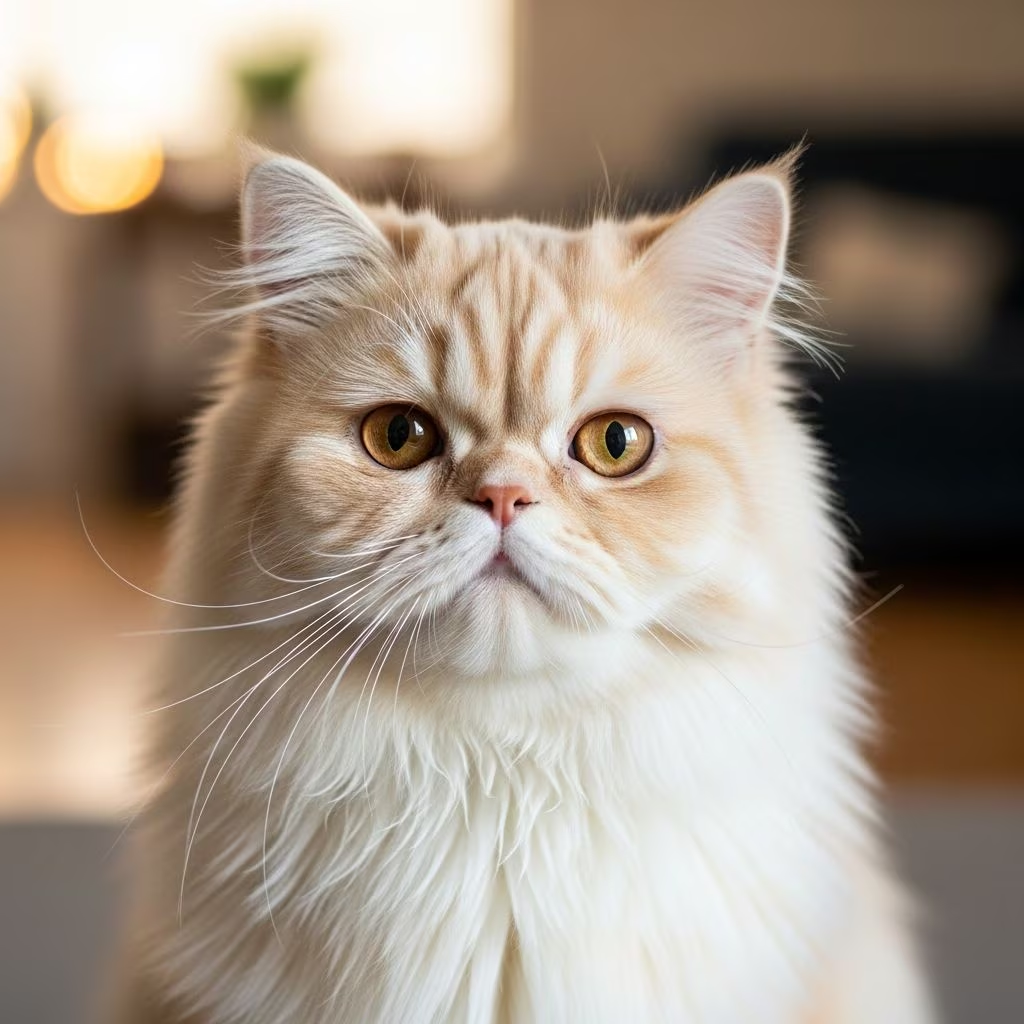
Understanding the Persian Cat Breed
The Persian cat is one of the most recognizable and beloved cat breeds in the world, known for its distinctive appearance and calm, gentle nature. These felines are characterized by their luxurious long coats, flat faces, and round features that give them an endearing expression. Persian cats have become increasingly popular as companion animals, particularly in North America and other developed nations, due to their affectionate yet independent personality and their suitability for indoor living environments.
With origins tracing back to the Persian Empire, these cats have been refined through selective breeding over centuries to create the breed standard we recognize today. Their popularity stems from their unique combination of stunning physical characteristics and a temperament that makes them ideal for many households seeking a calm, companionable feline friend.
Physical Characteristics and Appearance
Persian cats possess a distinctive appearance that sets them apart from other domestic cat breeds. Their physical structure embodies what feline enthusiasts refer to as the “cobby” body type, which emphasizes a compact, well-balanced frame.
Body Structure
The Persian cat’s body is solidly built and muscular despite its compact size. These cats typically weigh between 7 to 14 pounds, with males generally weighing 9 to 14 pounds and females weighing 7 to 11 pounds. Their height typically ranges from 10 to 15 inches, making them a medium-sized breed. Persians have short, well-boned, and heavily muscled legs that support their sturdy bodies. Their broad chests and level backs contribute to their well-balanced appearance. The tail is characteristically short and carried without a curve, positioned at an angle lower than the back.
Facial Features
The Persian’s face is perhaps its most distinctive feature, with characteristics that have become increasingly pronounced over time. Their head is large and round, with a uniquely flat and pushed-in appearance. This flat-faced, or brachycephalic, structure includes a shortened muzzle positioned in vertical alignment with the forehead and chin. Persians have notably full, round cheeks and a well-developed, firmly rounded chin. Their small, rounded ears are tilted forward and positioned on the sides of their head to maintain the rounded head contour.
Their eyes are perhaps their most captivating feature—large, round, and brilliant in color, they are set wide apart and low on the head to enhance the sweet expression for which the breed is known. Eye colors typically vary according to coat color and commonly include brown, copper, green, hazel, or gold hues.
Coat Characteristics
The Persian cat’s coat is one of its most defining and luxurious features. The coat is exceptionally long, thick, and full, standing off from the body. Despite being a single-layered coat, it is remarkably dense and requires significant maintenance. The texture is fine yet lustrous and glossy, giving the coat a beautiful, vibrant appearance. The long fur extends uniformly across the body, including the shoulders, and features an immense ruff that continues in a deep frill between the front legs.
Persian cats display a wide variety of coat colors and patterns. Common colors include white, blue, black, red, cream, chocolate, and lilac. More complex patterns include tabby variations such as classic and mackerel patterns, as well as patched or shaded colors. Some Persian cats exhibit “reverse” seasonal coat color changes, which are considered normal and expected variations in the breed.
Temperament and Personality
The Persian cat is renowned for its calm, gentle, and affectionate nature, making it an excellent choice for those seeking a peaceful feline companion. The breed’s personality is characterized by a unique blend of independence and selective affection.
Behavioral Traits
Persians are generally described as quiet cats with a placid, reserved demeanor. They are not typically vocal or attention-seeking, preferring instead to provide quiet companionship to their household members. These cats often exhibit bursts of kitten-like activity and will suddenly engage in playful antics, running around rooms and rolling about, though they are equally content to drape themselves over armchairs and observe their surroundings from a comfortable vantage point.
Their affectionate nature means they enjoy being petted and sitting in their owners’ laps, though they express this affection on their own terms. They will stretch out beside their owners, sleep in their beds, and sit on laps when in the mood, but they are also content to observe household activities from a distance. Research comparing cat owners’ perceptions has shown that Persians rated higher than non-pedigree cats on closeness and affection to owners, friendliness towards strangers, and cleanliness, while also demonstrating greater predictability in behavior.
Family Compatibility
Persians do well with mild-mannered children and laid-back dogs, making them suitable family pets in calm households. Their placid nature and preference for low-energy environments mean they adapt quite well to apartment living. These cats thrive on routine and predictability, with regular feeding times, grooming sessions, and quiet evenings contributing significantly to their sense of security. Sudden environmental changes such as furniture rearrangement, relocation, or the introduction of new pets may cause them to become unsettled.
Care Requirements
Caring for a Persian cat requires commitment and dedication, particularly regarding their grooming needs and overall health maintenance.
Grooming Essentials
The most demanding aspect of Persian cat care is grooming. Their long, thick coat requires regular and thorough maintenance to prevent matting, tangling, and skin issues. Daily brushing is recommended to keep the coat in optimal condition and to reduce shedding around the home. The grooming process often becomes an important bonding experience between the owner and cat, as Persians appreciate the attention and gentle handling involved in coat maintenance. Without proper grooming, the coat can quickly become matted and uncomfortable, potentially leading to skin problems.
Living Environment
Persian cats are well-suited to indoor living and do not require large spaces or outdoor access. They prefer calm, quiet environments where they can rest comfortably without excessive noise or activity. Providing low, cozy resting spots is ideal, as Persians are not typically inclined to jump or climb frequently like some other cat breeds. The flat-faced structure influences their behavior and physical capabilities, making them less likely to engage in high-impact activities.
Diet and Nutrition
A balanced, high-quality diet is essential for maintaining a Persian cat’s health and coat condition. While specific dietary recommendations should be discussed with a veterinarian, quality nutrition supports their overall wellbeing, maintains coat quality, and helps prevent obesity, which can be problematic given their lower activity levels.
Health Considerations
Potential Persian cat owners should be aware of several breed-specific health conditions and concerns associated with the breed’s physical characteristics.
Breed-Specific Health Issues
The Persian breed’s most distinctive feature—its flat face—is also the source of several health concerns. Brachycephalic (flat-faced) cats can experience breathing difficulties, eye problems, and dental issues. The extremely shortened muzzle can lead to breathing obstruction, particularly in extreme show-line Persians. Additionally, Persians are prone to polycystic kidney disease (PKD), an inherited condition affecting kidney function that requires genetic screening and careful breeding practices.
Their large, round eyes can be susceptible to tearing and require regular cleaning to prevent infection and staining of the facial fur. The breed’s long coat also makes them more prone to matting-related skin conditions if grooming is neglected. Dental crowding due to their jaw structure can sometimes lead to dental disease.
Health Monitoring
Regular veterinary check-ups are essential for Persian cats to monitor kidney function, dental health, and respiratory status. Responsible breeders have begun addressing extreme traits through selective breeding, and since 2004, breed standards have been modified to limit the development of excessively extreme facial features, with requirements that muzzles not be overly pronounced and that breed standards reflect more moderate flat-face characteristics.
Ideal Owner Profile
Persian cats are best suited for specific types of households and owners. They thrive with individuals or families who can provide a calm, stable environment and who are willing to commit to regular grooming maintenance. Ideal Persian cat owners appreciate quiet companionship over highly interactive play, have flexible schedules to accommodate grooming needs, and can provide a predictable daily routine. They are excellent choices for retirees, work-from-home professionals, and families with older children who can be gentle and respectful of the cat’s boundaries.
Comparison with Related Breeds
| Characteristic | Persian | Himalayan | Exotic Shorthair |
|---|---|---|---|
| Coat Length | Long, thick, luxurious | Long, thick | Short, dense |
| Grooming Needs | Daily required | Daily required | Moderate |
| Activity Level | Low to moderate | Moderate (more active) | Low to moderate |
| Temperament | Calm, placid, quiet | Active, playful | Calm, affectionate |
| Size | 7-14 pounds | 7-14 pounds | 7-12 pounds |
Frequently Asked Questions
Q: Are Persian cats good for apartment living?
A: Yes, Persian cats are excellent apartment dwellers. They adapt well to indoor living, do not require outdoor space, and their low activity level makes them ideal for smaller living environments. They prefer calm, quiet surroundings which most apartments can provide.
Q: How much grooming do Persian cats require?
A: Persian cats require daily grooming to maintain their long, thick coats and prevent matting. This is one of the most significant care commitments required for the breed. Without consistent grooming, their coat can become tangled and matted, leading to skin problems.
Q: Are Persian cats prone to health problems?
A: Yes, Persian cats can be prone to certain breed-specific health issues, including respiratory difficulties due to their flat faces, kidney disease, eye problems, and dental issues. Regular veterinary care and screening are important, and responsible breeders work to minimize these concerns.
Q: Do Persian cats get along with children and other pets?
A: Persian cats do well with mild-mannered children and laid-back dogs in calm households. However, they prefer quiet environments and may not tolerate rough handling or highly active households well. Supervision and gentle interaction are important.
Q: What is the typical lifespan of a Persian cat?
A: While specific lifespan information varies, well-cared-for Persian cats can live into their mid-to-late teens when provided with proper nutrition, regular veterinary care, and appropriate grooming maintenance.
Q: How selective are Persian cats about affection?
A: Persian cats are affectionate but selective about to whom they show affection. They bond closely with their household members but on their own terms. They enjoy being petted and sitting in laps when they choose, but they also value independence and observation from a distance.
References
- Persian Cat Breed Information — Purina US. 2025. https://www.purina.com/cats/cat-breeds/persian
- Persian Cat — Wikipedia. 2025. https://en.wikipedia.org/wiki/Persian_cat
- Persian Cat Behavior: What Owners Should Know — PurebredKitties. 2025. https://purebredkitties.com/blogs/persian-cat/persian-cat-behavior-what-owners-should-know
- Persian Cat Breed — Hill’s Pet Nutrition. 2025. https://www.hillspet.com/cat-care/cat-breeds/persian
- Persian (Iran Cat): Traits, Appearance, General Character — Vet Amerikan. 2025. https://www.vetamerikan.org/our-best-friends/cat-types/persian-(iran-cat)
- Persian Breed Standard — The Cat Fanciers’ Association. 2025. https://cfa.org/breed/persian/
- Persian Cat Facts: History, Personality, and Care — ASPCA Pet Insurance. 2025. https://www.aspcapetinsurance.com/resources/persian-cat-facts/



