

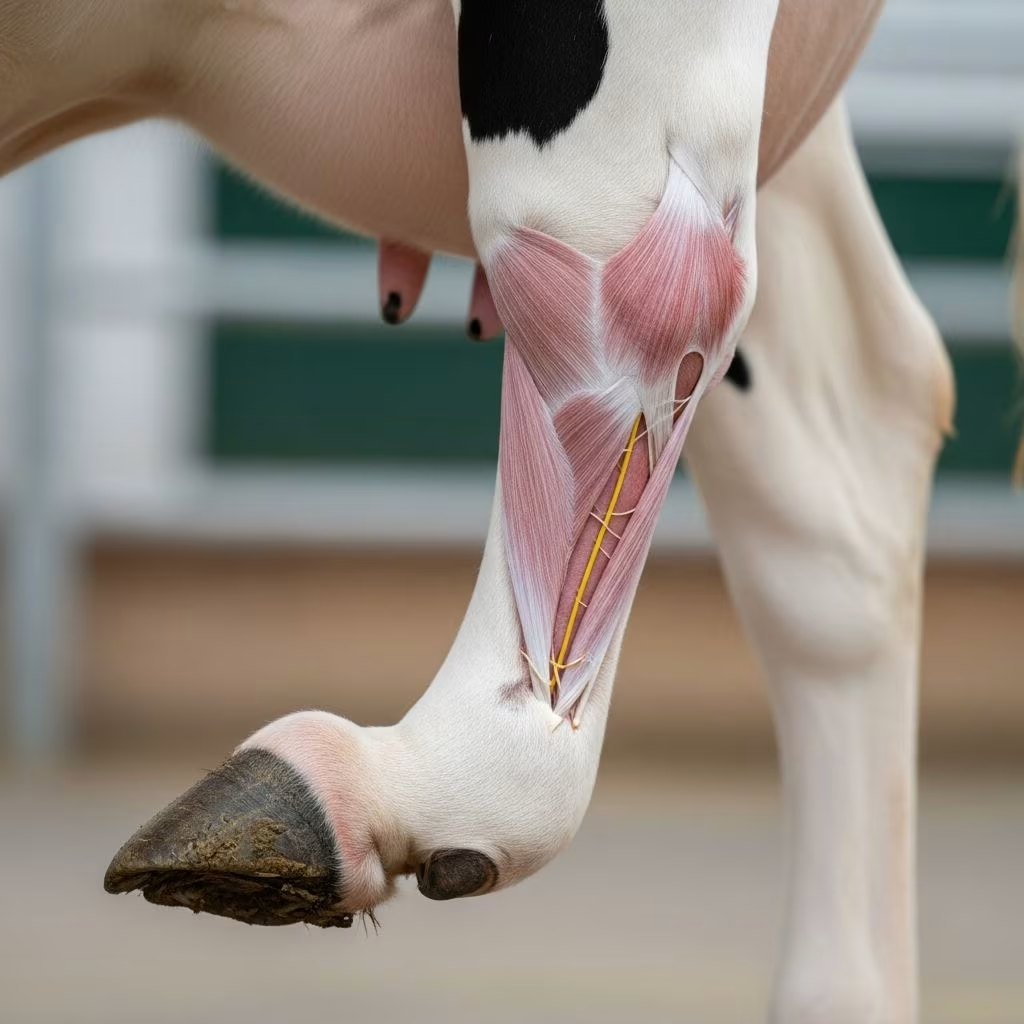
Peroneal nerve paralysis represents a significant challenge in bovine health, particularly affecting mobility and overall welfare in cattle herds. This condition arises from damage to the peroneal nerve, a key component of the sciatic nerve system responsible for controlling hock flexion and digit extension in the hind limbs. Farmers and veterinarians often encounter it in postpartum cows, where it leads to characteristic gait abnormalities and potential long-term complications if not addressed promptly.
Understanding the Anatomy of the Peroneal Nerve
The peroneal nerve, also known as the common fibular nerve, branches from the sciatic nerve and runs along the cranial aspect of the hind limb. It innervates muscles essential for stabilizing the hock joint and extending the digits, ensuring proper weight-bearing and propulsion during movement. Positioned superficially over the lateral femoral condyle and fibular head, this nerve is highly susceptible to compression or trauma, especially in large animals like cattle that spend extended periods in recumbent positions.
In cattle, the nerve’s pathway makes it vulnerable during critical physiological events such as calving. When a cow lies on a hard surface, direct pressure can impair nerve function, leading to temporary or prolonged dysfunction. Differentiating peroneal nerve issues from broader sciatic or tibial nerve damage is crucial, as it influences prognosis and management strategies.
Primary Causes and Risk Factors
Trauma from prolonged lateral recumbency stands as the leading cause of peroneal nerve paralysis. This often occurs during parturition, compounded by periparturient hypocalcemia (milk fever), which weakens muscle tone and prolongs downtime. Hard flooring like concrete exacerbates pressure on the nerve as it courses over bony prominences.
- Parturition-related trauma: Dystocia or difficult calving increases recumbency time, heightening risk.
- Hypocalcemia: Low blood calcium levels impair neuromuscular function, promoting extended lying periods.
- External compression: Improper housing with firm surfaces during recovery from illness or surgery.
- Injections or iatrogenic injury: Improper needle placement near the stifle can directly damage the nerve.
Other contributors include oversized calves during delivery, which necessitate forceful assistance and subsequent nerve compression. In dairy operations, high-producing cows face elevated risks due to metabolic demands around calving.
Recognizing Clinical Signs
Affected cattle exhibit distinct locomotor deficits. The hallmark is knuckling of the fetlock, where the animal stands with the dorsal hoof surface contacting the ground, resembling a ‘dropped’ fetlock. The hock appears hyperextended, and during ambulation, the limb drags, with the hoof scraping along the ground.
Severity varies:
- Mild cases: Intermittent knuckling during walking, with preserved sensation.
- Severe cases: Persistent dorsal hoof contact, reduced sensation over the dorsum of the fetlock, and inability to flex the hock properly.
Reflex testing reveals absent hock flexion while stifle and hip movements remain intact, distinguishing it from sciatic nerve involvement. Owners may notice abrasions on the dorsal pastern from repeated dragging.
Diagnostic Approaches
Diagnosis relies on clinical examination and history. Veterinarians assess gait, palpate the lateral stifle for swelling or tenderness, and perform neurologic tests. Key diagnostics include:
| Test | Expected Finding | Purpose |
|---|---|---|
| Hock flexion reflex | Absent | Confirms peroneal involvement |
| Sensation test (dorsal fetlock) | Diminished | Localizes lesion |
| Gait observation | Knuckling, dragging | Identifies severity |
| History review | Recent calving/recumbency | Establishes etiology |
Electromyography or ultrasound may aid in chronic cases but are rarely practical in field settings. Ruling out concurrent issues like obturator nerve paralysis (causing limb splaying) or tibial nerve damage (bilateral hock flexion) is essential.
Management and Treatment Strategies
Most instances involve neurapraxia—a conduction block without axonal disruption—resolving spontaneously within weeks. Conservative care focuses on neuroprotection and wound prevention.
- Supportive housing: Transfer to deep-bedded stalls with sand or straw for traction and pressure relief. Roll recumbent animals every 2-4 hours to prevent further compression.
- Protective bandaging: Apply padded bandages or splints to the fetlock, extending digits dorsally to avoid abrasions. In severe cases, short-term casting up to the hock may be used.
- Anti-inflammatories: Administer NSAIDs like flunixin meglumine (1.1-2.2 mg/kg IV/IM q24h for 3 days) or dexamethasone (0.05 mg/kg IM q24-48h for 5 days) to reduce swelling.
- Calcium supplementation: If hypocalcemia suspected, provide oral or subcutaneous calcium gluconate.
- Antibiotics: Prophylactic procaine penicillin (for 14-21 days) if infection risk from wounds or recumbency.
Avoid aggressive manipulation; monitor for improvement within 5 days. Non-responders warrant reevaluation for axonotmesis (structural damage) with poorer outcomes.
Prognosis and Recovery Timeline
Neurapraxia cases recover in 2-6 weeks with proper care, regaining full function. Severe axonotmesis may take months or result in permanent deficits like persistent knuckling.
- Good prognosis: Unilateral, mild signs, early intervention (>80% recovery).
- Guarded prognosis: Bilateral, prolonged recumbency, concurrent diseases (40-60% recovery).
- Poor prognosis: No improvement after 5 days, deep tissue damage.
Productivity losses include reduced milk yield and culling risks. Early detection improves herd economics.
Prevention in Dairy and Beef Operations
Proactive measures minimize incidence:
- Provide rubber mats or deep bedding in calving pens to cushion recumbency.
- Monitor high-risk cows (older, high producers) with calcium boluses pre-calving.
- Ensure dystocia assistance is gentle, avoiding excessive traction.
- Train staff on safe injection sites, avoiding the lateral stifle.
- Regular health checks post-calving to detect early paresis.
Implementing these reduces downer cow syndrome contributions from nerve injuries.
Related Nerve Injuries in Cattle
Peroneal paralysis often coexists with:
- Tibial nerve damage: Bilateral hock flexion, fetlock knuckling post-dystocia; recovery 2-3 months.
- Obturator nerve paralysis: Limb abduction issues, splaying; treat with hobbles and anti-inflammatories.
- Sciatic nerve involvement: More extensive deficits; differentiate via reflex testing.
FAQs on Peroneal Nerve Paralysis
Q: How long does recovery take?
A: Mild cases resolve in 2-4 weeks; severe ones up to 3 months with support.
Q: Can it affect both legs?
A: Typically unilateral, but bilateral if prolonged recumbency impacts both sides.
Q: Is surgery an option?
A: Rarely; conservative management suffices for most, per veterinary guidelines.
Q: What bedding is best?
A: Sand-based stalls offer stability and softness, preventing further trauma.
Q: Does hypocalcemia always cause this?
A: It predisposes by prolonging recumbency but isn’t the sole trigger.
References
- Peroneal Nerve Injury in Cattle — Merck Veterinary Manual. 2025. https://www.merckvetmanual.com/musculoskeletal-system/lameness-in-cattle/peroneal-nerve-injury-in-cattle
- Calving Part 3 – Nerve Damage — NADIS. Accessed 2026. https://www.nadis.org.uk/disease-a-z/cattle/calving-module/calving-part-3-nerve-damage/
- Calving Paralysis — MSD Veterinary Manual. 2025. https://www.msdvetmanual.com/musculoskeletal-system/lameness-in-cattle/calving-paralysis
- Nerve Damage – Large Animal Surgery — University of Minnesota Libraries Publishing. Accessed 2026. https://open.lib.umn.edu/largeanimalsurgery/chapter/nerve-damage/
- Nerve Paralysis in Cattle | Causes, Diagnosis & Treatment Explained — Pet Care Partners (YouTube). 2025-09-24. https://www.youtube.com/watch?v=U7RO7oMH54E
- Peroneal Nerve Injury — NCBI Bookshelf (StatPearls). 2023. https://www.ncbi.nlm.nih.gov/books/NBK549859/



