

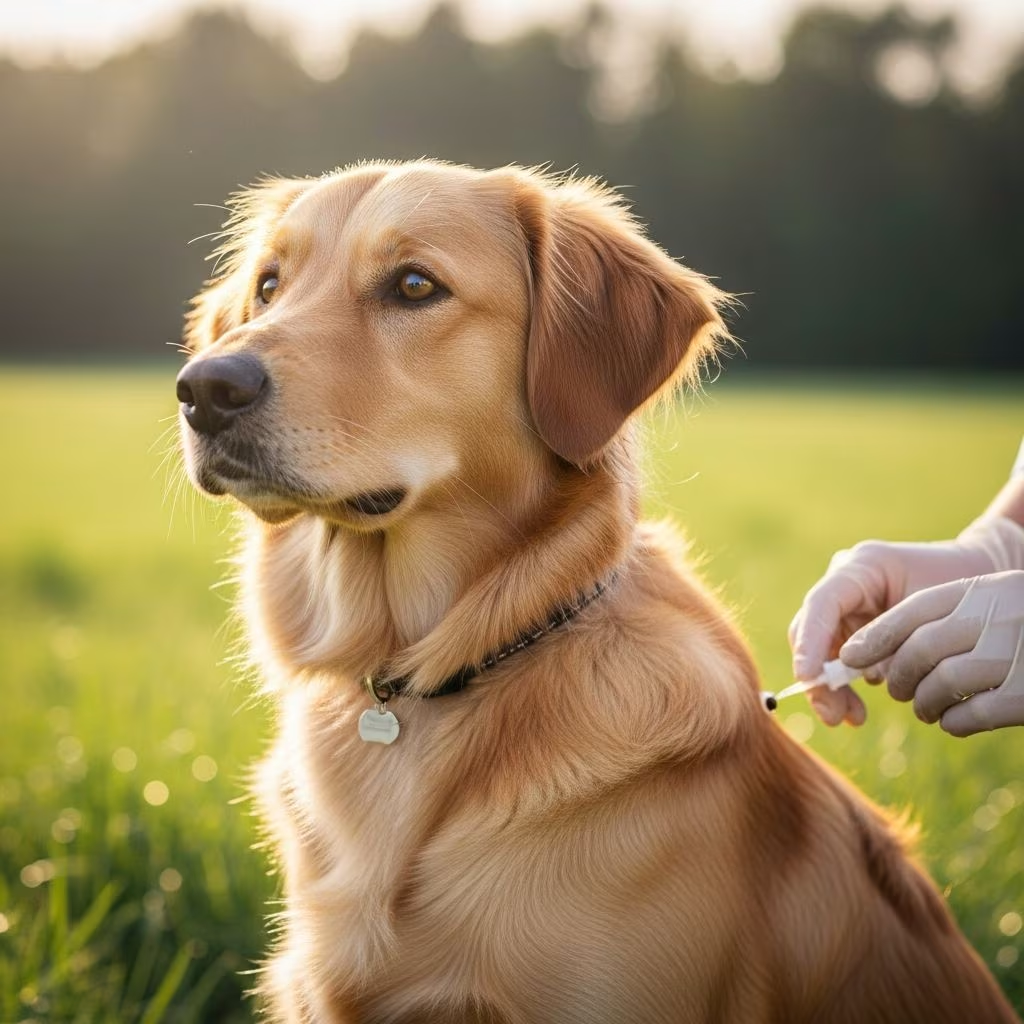
Permethrin stands as a cornerstone in canine parasite management, providing robust defense against fleas, ticks, and other pests when administered properly. This synthetic compound targets insect nervous systems effectively while posing minimal risk to dogs.
Understanding Permethrin’s Role in Pest Control
Derived from natural pyrethrins found in chrysanthemum flowers, permethrin mimics their insecticidal properties but offers enhanced stability. It binds to sodium channels in pest nerve cells, causing hyperexcitation, paralysis, and death. Dogs metabolize it efficiently via liver enzymes, unlike insects and arachnids that lack this capability.
This metabolic advantage makes permethrin ideal for topical applications in veterinary products. Common formulations include spot-on treatments like those combined with fipronil or imidacloprid, delivering month-long protection.
Key Advantages for Dog Owners
- Contact Repellency: Unlike bite-activated treatments, permethrin repels pests on contact, reducing saliva transmission that triggers flea allergy dermatitis.
- Broad-Spectrum Coverage: Targets fleas, ticks, mosquitoes, lice, mites, and flies, crucial in regions with vector-borne diseases like Lyme or leishmaniasis.
- Long-Lasting: Single applications protect for up to four weeks, distributed via skin oils.
Products adjust volume by dog size while maintaining consistent concentration, ensuring safety across weights from small breeds to giants.
Approved Products and Application Guidelines
Veterinary spot-ons such as Advantix, Vectra, and Effitix incorporate permethrin at safe levels. For instance, a 500 mg/ml concentration scales from 0.4 ml for tiny dogs to 4 ml for large ones.
| Product Example | Active Ingredients | Target Pests | Duration |
|---|---|---|---|
| Effitix | Fipronil + Permethrin | Fleas, ticks, sandflies, mosquitoes | 4 weeks |
| Advantix | Permethrin + Imidacloprid | Fleas, ticks, mosquitoes, lice | 4 weeks |
| FirstAct Plus | Permethrin blend | Fleas, ticks, mites | 4 weeks |
Apply between shoulder blades, parting fur to contact skin. Avoid bathing for 48 hours post-application; full water resistance develops thereafter.
Recognizing and Managing Side Effects
Adverse reactions occur in under 1% of cases at recommended doses. Most are mild and transient.
- Itching or oiliness at site (<1%)
- Vomiting if licked (<1%)
- Diarrhea or redness (<0.1%)
- Rare tremors or agitation (<0.1%)
Field studies show skin pruritus as the primary issue, often resolving without intervention. Combinations like permethrin-fipronil report fewer events than permethrin-imidacloprid.
In overdose scenarios, symptoms mimic pest toxicity: salivation, twitching, ataxia. No antidote exists; vets provide decontamination, IV fluids, and muscle relaxants. Prognosis excels with prompt care.
Critical Dangers for Cats in Multi-Pet Homes
Cats possess deficient glucuronidase enzymes, failing to detoxify permethrin. Even trace exposure via grooming treated dogs causes severe neurotoxicity.
Symptoms emerge rapidly:
- Tremors, seizures
- Ataxia, hypersensitivity
- Respiratory distress
- Potentially fatal outcomes
Separate pets for 24-72 hours post-treatment. Opt for cat-safe alternatives if close contact persists. Studies confirm no cat incidents when labels followed in shared homes.
Veterinary Perspectives on Safe Usage
Consult vets before use, especially for puppies under 8-12 weeks, pregnant, nursing, or medicated dogs. Contraindicated in permethrin-allergic animals.
EPA-licensed combos with dinotefuran/pyriproxyfen enhance safety for pups over 5 lbs. Monitor for unusual behaviors post-application.
Practical Tips for Effective Protection
- Weight-match products precisely.
- Apply in quiet areas to prevent licking.
- Store securely away from cats/fish.
- Rotate with oral preventives if resistance suspected.
- Combine with environmental controls like vacuums and yard sprays.
For travel to high-risk areas, permethrin’s repellency shines against disease vectors.
Comparing Permethrin to Alternatives
| Treatment Type | Mechanism | Cat Safety | Best For |
|---|---|---|---|
| Permethrin Spot-On | Contact/Repel | Toxic | Broad pests, FAD |
| Isloxazolines (Oral) | Systemic Kill | Safe | Flea/Tick only |
| Fipronil Alone | Contact Kill | Safe | Mild infestations |
Permethrin excels in repellency but demands caution around felines.
FAQs on Permethrin Use
Is permethrin suitable for all dog breeds?
Yes, for most over specified ages/weights, excluding those with known sensitivities. Herding breeds may need vet clearance.
How soon can I bathe my dog after treatment?
Wait 48 hours for settling; avoid shampoos for 2 weeks to preserve efficacy.
What if my cat grooms my dog?
Isolate 24+ hours or choose non-permethrin options. Watch for cat tremors.
Does permethrin prevent heartworm?
No; pair with macrocyclic lactones for comprehensive protection.
Are there natural alternatives?
Essential oils offer milder options but lack permethrin’s potency/speed.
Long-Term Health Considerations
Chronic low-level exposure shows no carcinogenic links in mammals per regulatory reviews. Focus remains on acute misuse risks.
Integrated pest management—treatment plus habitat reduction—minimizes reliance, preserving efficacy against evolving resistances.
References
- Is Permethrin Safe for Dogs? Our Vet Explains — Dogster. 2023. https://www.dogster.com/ask-the-vet/is-permethrin-safe-for-dogs
- Efficacy and Safety of a Permethrin-Fipronil Spot-On — PMC (Peer-reviewed). 2016-09-07. https://pmc.ncbi.nlm.nih.gov/articles/PMC5040778/
- Dinotefuran/Permethrin/Pyriproxyfen, Topical (Dogs only) — Boerum Hill Vet (Veterinary Handout). 2024-06-12. https://boerumhillvet.com/wp-content/uploads/2024/06/Handout_2024-06-12_13-09-57.pdf
- Pyrethrin/Pyrethroid Poisoning in Dogs — VCA Animal Hospitals. Recent. https://vcahospitals.com/know-your-pet/pyrethrin-pyrethroid-poisoning-in-dogs
- Permethrin General Fact Sheet — NPIC (Oregon State Univ). Recent. https://npic.orst.edu/factsheets/PermGen.html



