

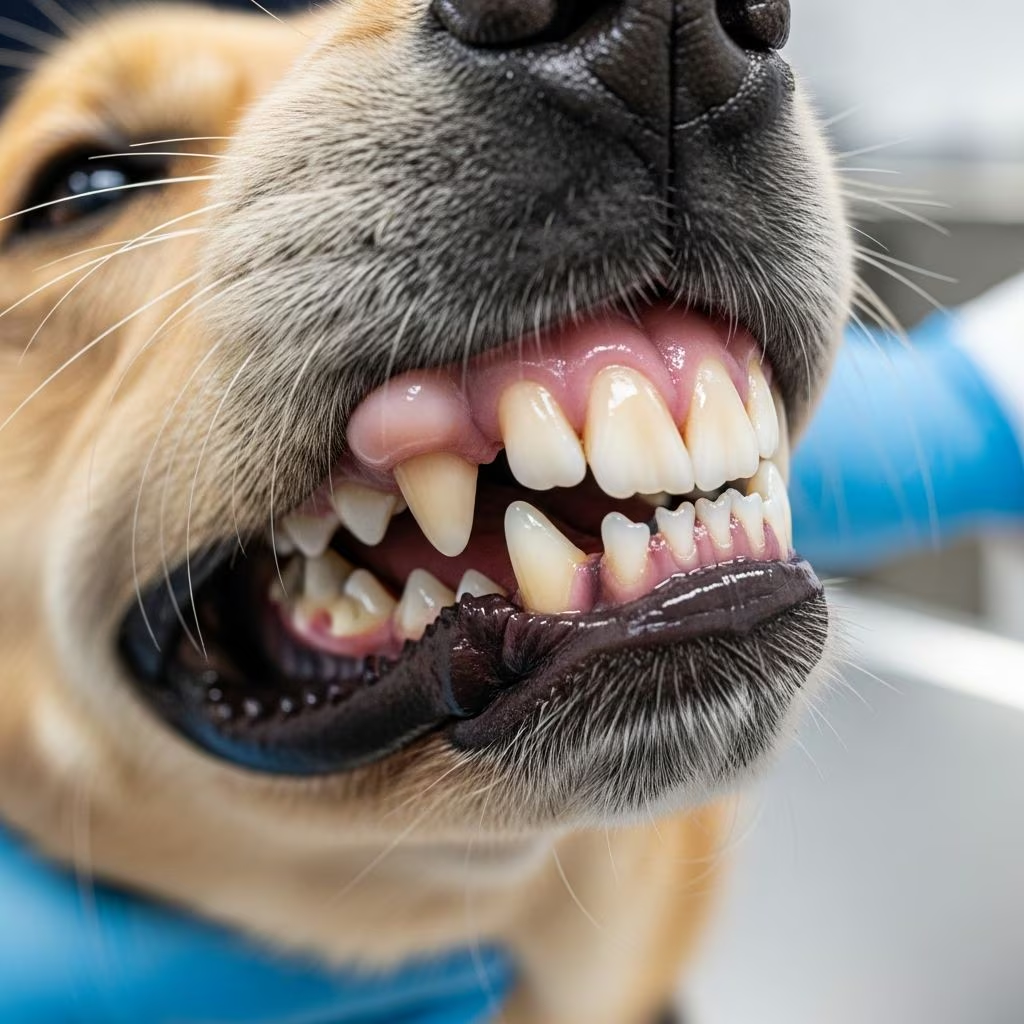
Understanding Peripheral Odontogenic Fibromas
Peripheral odontogenic fibroma (POF), formerly known as fibromatous and ossifying epulis, represents one of the most commonly diagnosed benign oral tumors in dogs. This condition arises from periodontal structures including the gums, ligaments, and bone surrounding the teeth. Understanding this condition is essential for dog owners and veterinary professionals alike, as early detection and appropriate treatment can significantly improve outcomes and preserve your pet’s oral health and quality of life.
POF is characterized as a benign, often slow-growing tumor that develops from the tissues supporting the teeth. Unlike malignant tumors, these growths do not spread to other parts of the body and typically remain localized to the oral cavity. The prevalence of POF in veterinary practice is remarkably high, with studies indicating it accounts for approximately 77.8% of all benign oral tumors in dogs and represents 2.8% of total biopsy submissions in veterinary pathology.
Classification and Terminology
Recent advances in veterinary pathology have led to updated nomenclature for oral tumors in dogs. The term “epulis” has been replaced with more precise diagnostic classifications to improve communication between veterinarians, pathologists, and pet owners. Peripheral odontogenic fibromas can be further sub-classified into different types, with the most common variants being the standard POF and the POF-ossifying type, which contains mineralized bone-like material within the tumor mass.
This reclassification represents a significant advancement in veterinary dentistry, as it allows for more accurate diagnosis and treatment planning. The distinction between POF and other similar-appearing lesions, such as focal fibrous hyperplasia (FFH), is particularly important because it directly impacts treatment recommendations and prognosis.
Clinical Presentation and Symptoms
Peripheral odontogenic fibromas present with several characteristic clinical features that pet owners should recognize:
Physical Appearance
POF typically appears as a smooth, broad-based gingival growth that may resemble a focal fibrous hyperplasia. The tumor can vary in appearance from smooth, pink, expansive growths to more pronounced cauliflower-like proliferations. In early stages, the lesion may appear as subtle gingival thickening that gradually progresses to obvious masses that can interfere with normal chewing and occlusion (bite alignment).
Location and Development
POFs most commonly develop in the anterior maxilla near the canine and incisor teeth, though they can occur in other areas of the mouth. These masses are characteristically firm gingival growths closely associated with specific teeth. Most commonly, POFs are diagnosed in middle-aged dogs at a mean age of approximately 8 years, though they can occur at various ages. There is no known sex or breed predilection, although some studies suggest that Boxers may have a higher risk of developing these tumors.
Behavioral Signs
While many dogs with small POFs may show no obvious signs, larger or more aggressive growths can cause discomfort, difficulty eating, bad breath, or behavioral changes related to oral pain. Some pets may experience challenges with their normal feeding habits or show reluctance to chew on hard foods.
Diagnostic Procedures
Initial Examination
Diagnosis of peripheral odontogenic fibroma begins with a thorough oral examination by a veterinarian. During this examination, your veterinarian will assess the size, location, consistency, and appearance of the gingival mass. They will also evaluate the overall oral health status, including any signs of dental disease or other abnormalities.
Biopsy and Histopathology
A biopsy is performed to definitively diagnose peripheral odontogenic fibromas. This procedure involves the surgical removal of a portion of the tumor tissue, which is then examined under a microscope by a pathologist experienced in oral pathology. Histopathological examination is the only reliable method to differentiate POF from similar-appearing lesions such as focal fibrous hyperplasia. POF demonstrates characteristic fibrous or fibromyxomatous proliferation containing variable amounts of odontogenic epithelium, which are the defining diagnostic features.
Imaging Studies
Dental X-rays of the affected region can indicate whether underlying bone is affected by the tumor. These radiographs help determine the extent of bone involvement and assist in treatment planning. For more complex cases or to better understand the three-dimensional extent of bone involvement, CT (computed tomography) scans of the head may provide superior insight into tumor boundaries and bone remodeling. Some POFs develop centers of ossification, which appear as distinct mineralizations within the soft tissue shadow on dental radiography.
Understanding the Pathology
Origin and Cellular Composition
POF originates from periodontal ligament cells that normally serve to anchor teeth to the jaw bone. Histopathologically, peripheral odontogenic fibromas are composed of benign masses of mesenchymal cells with features of periodontal ligament and gingival ligament fibroblasts. These tumors demonstrate proliferated fibroblasts within connective tissue accompanied by proliferated odontogenic epithelium with variable amounts of osteoid (bone-like material), cementum (the substance covering tooth roots), or dentin-like material.
Mixed Epithelial-Mesenchymal Origin
The presence of isolated strands of odontogenic epithelium represents a defining diagnostic feature that differentiates POF from focal fibrous hyperplasia and other similar lesions. This mixed epithelial and mesenchymal composition classifies POF as a mixed epithelial/mesenchymal odontogenic tumor rather than a purely mesenchymal neoplasm, which has important implications for understanding its biological behavior.
Hypercellular Variants
Recent research has identified a subset of hypercellular POFs (hPOFs) that display atypical histologic features, which initially raised concern regarding malignant potential. However, clinical evidence suggests that these hypercellular variants can be managed similarly to typical POFs and maintain an excellent prognosis with proper treatment.
Differential Diagnosis
Several other oral lesions in dogs can appear similar to peripheral odontogenic fibromas, making accurate diagnosis essential:
Focal Fibrous Hyperplasia
Focal fibrous hyperplasia (FFH) represents the primary differential diagnosis for POF. FFH consists of dense fibrous connective tissue with mature, widely scattered fibroblasts arranged in a dense collagen matrix. The critical distinguishing feature is the absence of odontogenic epithelium in FFH, while POF invariably contains epithelial components. FFH is a benign reactive lesion that occurs in response to inflammation or trauma, which distinguishes it from the neoplastic origin of POF.
Other Oral Tumors
Other conditions that may present similarly include canine acanthomatous ameloblastoma (CAA) and various other odontogenic tumors. Histopathological examination by an experienced oral pathologist is essential to ensure accurate diagnosis and appropriate treatment planning.
Treatment Options
Surgical Excision
Complete surgical removal is the primary and most effective treatment for peripheral odontogenic fibromas. Surgical management typically involves conservative resection of the gingival mass, extraction of the affected tooth or teeth, and curettage of the alveolar sockets, which involves removal of the remaining periodontal ligament tissue. Following these procedures, the wound is carefully closed to promote proper healing.
Surgical Considerations
The extent of surgical intervention depends on the size and depth of the tumor. Early intervention provides optimal prognosis, while delayed treatment may necessitate more extensive surgical procedures, including partial mandibulectomy (removal of a portion of the lower jaw) for complete excision in advanced cases. Ossifying lesions are more challenging to remove because the tissue is substantially firmer and more difficult to excise compared to non-ossifying variants.
Anesthesia and Recovery
Surgical treatment requires general anesthesia, which carries inherent risks. However, these risks are typically minimal in healthy dogs undergoing appropriate anesthetic protocols. Following surgery, pets require postoperative pain management and proper wound care to ensure optimal healing and recovery.
Prognosis and Long-Term Outcomes
Cure Rates
The prognosis for peripheral odontogenic fibroma is excellent, with cure rates approaching 95% following complete surgical excision. This outstanding success rate depends primarily on achieving adequate surgical margins and completely removing all tumor tissue, including the periodontal ligament component.
Recurrence Rates
Complete surgical excision yields excellent long-term outcomes with minimal recurrence risk when proper surgical margins are achieved. The benign nature of POF ensures the absence of metastatic potential, making local control the primary treatment objective. Recurrence is uncommon when the lesion has been completely removed, and the non-invasive nature of POF means it will not spread to other parts of the body.
Quality of Life
Prompt diagnosis and treatment of POF minimize patient discomfort and preserve maximum oral function. Early intervention allows for simpler surgical procedures with faster recovery times and better preservation of normal bite function and eating ability.
Prevention and Post-Treatment Care
Follow-Up Protocols
Regular postoperative monitoring ensures proper healing and early detection of any complications. Your veterinarian will schedule follow-up appointments to assess the surgical site and ensure normal healing. Sutures are typically removed 10-14 days after surgery, and most dogs recover well within this timeframe.
Oral Health Maintenance
Long-term oral health maintenance through routine dental care prevents development of additional gingival proliferative lesions. This includes regular professional dental cleanings, appropriate at-home dental hygiene practices, and monitoring for any signs of new growths or oral problems. Good oral hygiene can help reduce inflammation and other factors that might contribute to new tumor development.
Regular Monitoring
Pet owners should inspect their dog’s mouth regularly for any new growths or changes in appearance. Any new gingival masses or changes in eating behavior should be promptly reported to your veterinarian for evaluation.
Frequently Asked Questions
Q: Is peripheral odontogenic fibroma cancer?
A: No, peripheral odontogenic fibroma is a benign tumor, not cancer. It does not spread to other parts of the body and cannot metastasize. However, it does require treatment to prevent it from growing and interfering with normal oral function.
Q: Can POF be treated without surgery?
A: Surgical excision is the only effective treatment for peripheral odontogenic fibroma. Medical or pharmaceutical treatments are not effective for removing these tumors. Early surgical intervention provides the best outcomes.
Q: What is the recovery time after POF surgery?
A: Most dogs recover well within 10-14 days following surgery for POF removal. Complete healing of the surgical site typically takes 2-4 weeks. Your veterinarian will provide specific post-operative care instructions for your individual dog.
Q: How often do POFs recur after surgical removal?
A: Recurrence is uncommon when the peripheral odontogenic fibroma has been completely removed with appropriate surgical margins. Studies show excellent long-term outcomes with cure rates approaching 95% following complete excision.
Q: Are certain dog breeds more prone to POF?
A: While there is no known breed predilection overall, some studies suggest that Boxers may have a higher risk. There is also no sex predilection identified. POF can occur in any dog breed at any age, though it is most common in middle-aged and older dogs.
Q: Can my dog develop multiple POFs?
A: While POFs are generally solitary lesions, multiple lesions can occasionally be present. Regular oral examinations help detect any new growths early, allowing for prompt treatment.
References
- Peripheral Odontogenic Fibroma in Dogs: Vet Clinical Guide — Veterinary Dentistry. Available at: https://veterinarydentistry.net/peripheral-odontogenic-fibroma/
- It Is Not Called an Epulis Anymore — Today’s Veterinary Practice. Available at: https://todaysveterinarypractice.com/dentistry/small-animal-epulis/
- A Retrospective Review of the Histologic Features and Prognosis of Peripheral Odontogenic Fibromas in Dogs — PubMed. 2024. Available at: https://pubmed.ncbi.nlm.nih.gov/41108520/
- Oral Tumors in Small Animals — MSD Veterinary Manual. Available at: https://www.msdvetmanual.com/digestive-system/diseases-of-the-mouth-in-small-animals/oral-tumors-in-small-animals



