

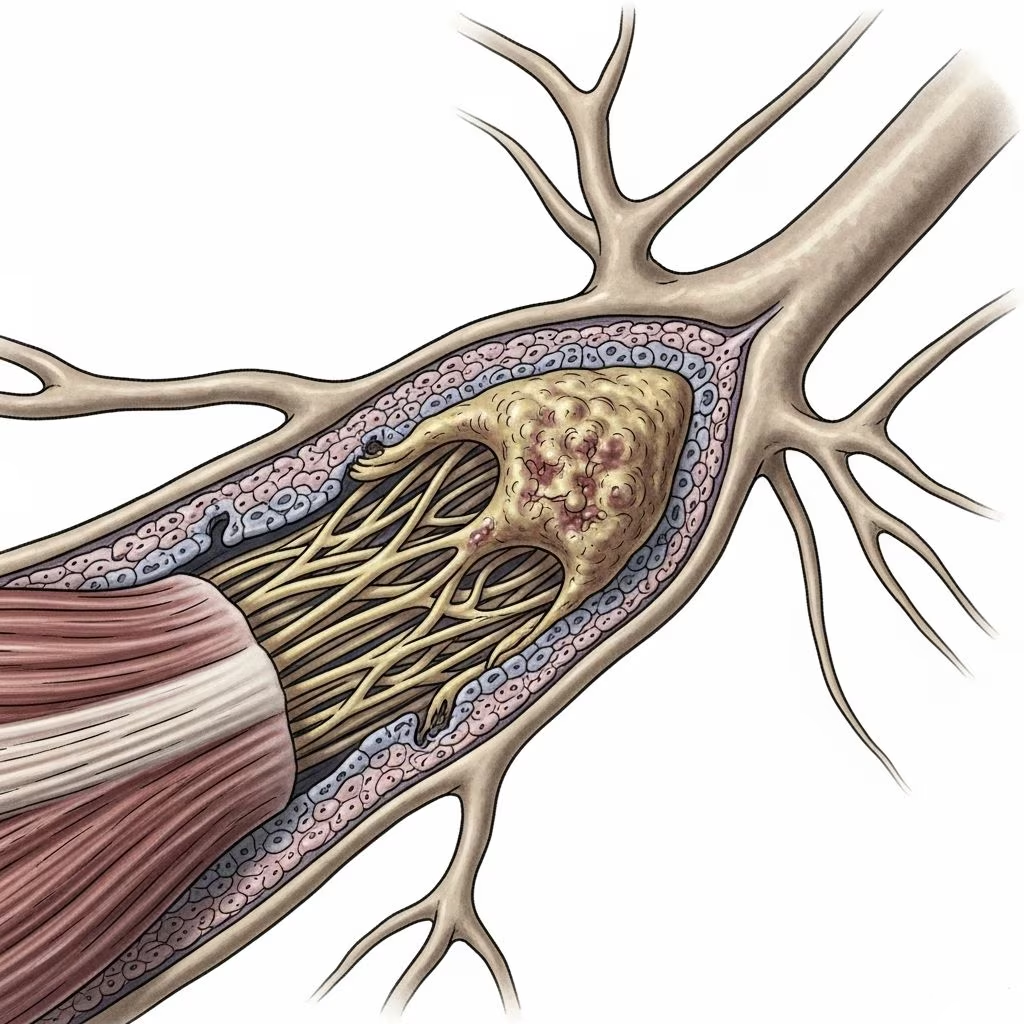
Peripheral nerve tumors represent a significant challenge in veterinary oncology, primarily affecting the supportive tissues around nerves in domestic animals. These neoplasms, often originating from Schwann cells or fibroblasts, can lead to debilitating neurological deficits. While most prevalent in dogs, they also occur in cattle and occasionally in other species, demanding precise diagnostic and therapeutic strategies.
Understanding the Biology of Nerve Sheath Neoplasms
Nerve sheath tumors encompass a spectrum of growths, including benign schwannomas (also called neurilemmomas) and neurofibromas, as well as their malignant counterparts known as malignant peripheral nerve sheath tumors (MPNSTs). These arise from the cells forming the protective myelin sheath or connective tissue of peripheral nerves. In dogs, they frequently develop in the brachial plexus, the network of nerves supplying the thoracic limb, leading to initial signs mimicking orthopedic issues.
Histologically, benign forms appear as well-circumscribed nodules, while malignant variants infiltrate surrounding tissues, complicating excision. MPNSTs account for a subset of soft tissue sarcomas and exhibit local aggressiveness, with metastasis being uncommon, which offers hope for localized control.
- Benign variants: Schwannomas and neurofibromas grow slowly and may remain asymptomatic for extended periods.
- Malignant forms: MPNSTs and neurofibrosarcomas show rapid progression, nerve invasion, and potential for recurrence post-resection.
Species-Specific Prevalence and Clinical Manifestations
Dogs are the most commonly affected companion animals, with tumors often targeting the brachial or lumbosacral plexus. Initial symptoms include unilateral lameness, muscle atrophy, and hypersensitivity to palpation along the affected limb. As the tumor expands, it causes paresis, proprioceptive deficits, and severe pain, progressing to complete limb dysfunction.
In cattle, these tumors are typically incidental findings at slaughter in aged animals, involving multiple nerves such as autonomic pathways or cranial nerve VIII. Unlike in dogs, they rarely cause clinical disease during life.
| Species | Common Sites | Typical Signs | Prevalence |
|---|---|---|---|
| Dogs | Brachial plexus, spinal roots | Lameness, pain, paresis | High |
| Cattle | Autonomic nerves, CN VIII | Often asymptomatic | Moderate |
| Cats/Other | Variable | Rarely reported | Low |
Cats experience these tumors infrequently, with sparse literature on presentations. Other neoplasms like lymphoma can secondarily involve peripheral nerves across species.
Diagnostic Approaches for Accurate Identification
Diagnosis begins with a thorough neurological examination revealing focal deficits, diminished spinal reflexes, and pain on nerve palpation. Electrodiagnostic tests, including electromyography (EMG) and nerve conduction studies, confirm neuropathy and localize the lesion.
Advanced imaging is crucial: MRI delineates tumor extent, invasion into spinal cord or vertebrae, and surgical planning feasibility. CT scans assess bony involvement, particularly in plexus tumors. Cytology from fine-needle aspirates often yields inconclusive results due to spindle cell morphology resembling other sarcomas; definitive diagnosis requires histopathology.
- Three-view thoracic radiographs to rule out pulmonary metastasis (rare but possible).
- Lymph node aspiration for staging.
- Biopsy: Incisional or excisional, with attention to achieving clean margins.
In paraneoplastic cases, unrelated tumors like insulinomas trigger immune-mediated neuropathy, presenting as progressive paraparesis without direct nerve infiltration.
Surgical Interventions: The Cornerstone of Therapy
Surgery remains the primary treatment, aiming for complete resection with wide margins. For brachial plexus MPNSTs in dogs, limb amputation or hemipelvectomy, often combined with laminectomy for spinal involvement, is standard. A retrospective study of 30 dogs reported 13% intraoperative and 37% postoperative complications, yet median disease-specific survival reached 570 days.
Histologic margins impact outcomes: R0 (complete) margins correlate with superior survival (median 850 days) versus R1 (microscopic residual) at 217 days. Recurrence at the proximal nerve stump occurs in up to 72% of cases, underscoring the infiltrative nature.
In spinal PNSTs, compartmental resection minimizes morbidity while targeting tumor bulk. Early intervention before extensive invasion enhances curative potential.
Adjunctive Therapies to Enhance Outcomes
Radiation therapy, particularly stereotactic radiosurgery (SRS), controls local progression when surgery is incomplete or declined. SRS achieves remission durations of 600-700 days with fewer anesthesia sessions, ideal for geriatric patients.
Chemotherapy serves as palliative for metastatic or inoperable cases, though efficacy data is limited. Multimodal approaches combining surgery, radiation, and chemo improve disease-free intervals.
For paraneoplastic neuropathy, treating the primary neoplasm (e.g., insulinoma resection) can reverse neurological signs.
Prognostic Factors and Long-Term Expectations
Prognosis varies by tumor grade, margins, and location. Benign tumors carry excellent outlooks post-excision, while MPNSTs have guarded prognoses with 1-year survival at 82% and 2-year at 22%. Proximal tumors near the spinal cord fare worse due to surgical complexity.
| Tumor Type | Median Survival | Recurrence Risk | Key Prognosticator |
|---|---|---|---|
| Benign PNST | Excellent | Low | Complete excision |
| Malignant MPNST | 511-570 days DFI/OS | 46-72% | R0 margins |
Factors like histologic grade do not always predict margins or survival, emphasizing individualized assessment.
Challenges in Managing Paraneoplastic Syndromes
Paraneoplastic neuropathy arises from immune cross-reactivity, most linked to insulinomas but also sarcomas and carcinomas. Dogs exhibit tetraparesis, hyporeflexia, and atrophy over weeks. Diagnosis hinges on tumor identification, electrodiagnostics, and biopsy exclusion of direct infiltration. Symptom resolution follows primary tumor control.
Emerging Research and Future Directions
Ongoing studies explore targeted therapies against Schwann cell markers and immunotherapy to curb recurrence. Improved imaging and minimally invasive techniques promise better margins with reduced complications.
Frequently Asked Questions (FAQs)
What are the first signs of a peripheral nerve tumor in my dog?
Look for unilateral lameness, pain on limb manipulation, muscle wasting, and reluctance to bear weight, often mistaken for joint issues.
Is amputation always necessary for treatment?
No, but for plexus-involved MPNSTs, it’s common to achieve local control; alternatives like radiation exist for non-surgical candidates.
Do these tumors metastasize frequently?
Metastasis is rare (<10%), with most morbidity from local invasion.
Can radiation replace surgery?
Not typically, but SRS provides effective palliation post-surgery or standalone, extending remission significantly.
What is the role of chemotherapy?
It’s adjunctive for aggressive or systemic disease, with variable response rates.
References
- Surgical and oncologic outcomes in dogs with malignant peripheral nerve sheath tumours of the brachial or lumbosacral plexus — Wiley Online Library. 2023-10-12. https://onlinelibrary.wiley.com/doi/10.1111/vco.12938
- Canine spinal peripheral nerve sheath tumours in 18 dogs (2014-2023): Surgical outcomes and prognostic factors — Frontiers in Veterinary Science. 2025. https://www.frontiersin.org/journals/veterinary-science/articles/10.3389/fvets.2025.1653812/full
- Neoplasia of the Peripheral Nerves and Neuromuscular Junction in Animals — Merck Veterinary Manual. 2023. https://www.merckvetmanual.com/nervous-system/diseases-of-the-peripheral-nerves-and-neuromuscular-junction/neoplasia-of-the-peripheral-nerves-and-neuromuscular-junction-in-animals
- Neoplasia of the Peripheral Nerves and Neuromuscular Junction in Animals — MSD Veterinary Manual. 2023. https://www.msdvetmanual.com/nervous-system/diseases-of-the-peripheral-nerves-and-neuromuscular-junction/neoplasia-of-the-peripheral-nerves-and-neuromuscular-junction-in-animals
- Nerve Sheath Tumors — The National Canine Cancer Foundation. 2023. https://wearethecure.org/learn-more-about-canine-cancer/canine-cancer-library/nerve-sheath-tumors/
- Neoplasia of the Nervous System in Small Animals — Merck Veterinary Manual. 2023. https://www.merckvetmanual.com/nervous-system/neoplasia-of-the-nervous-system/neoplasia-of-the-nervous-system-in-small-animals
- Peripheral Nerve Sheath Tumors in Dogs — PetCure Oncology. 2023. https://petcureoncology.com/peripheral-nerve-sheath-tumors-in-dogs/



