

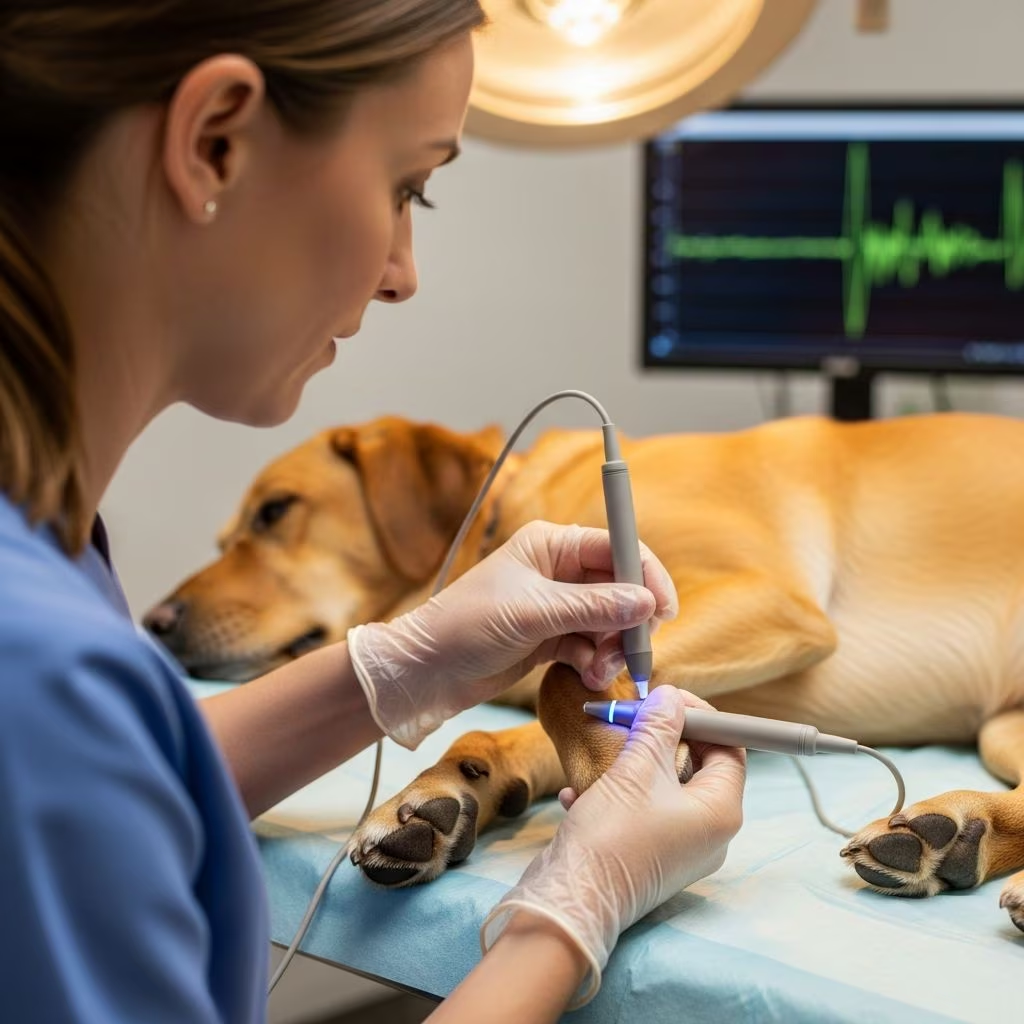
When your dog or cat visits the veterinarian, your vet performs numerous quick assessments to gauge your pet’s overall health status. Among these evaluations is a simple yet revealing test that requires no special equipment or invasive procedures: measuring how quickly blood returns to tissues after gentle pressure is applied. This fundamental diagnostic technique provides veterinarians with immediate insight into whether your pet’s circulatory system is functioning optimally or whether underlying health concerns may require further investigation.
Understanding the Fundamentals of Circulatory Assessment
The circulatory system represents one of the most critical physiological networks in your pet’s body. It transports oxygen-rich blood to tissues and organs while removing metabolic waste products. When this system operates efficiently, tissues receive adequate oxygen and nutrients necessary for survival and proper function. However, when circulation becomes compromised, tissues may suffer damage, organs may begin to fail, and serious medical emergencies can develop rapidly.
Veterinarians need efficient methods to quickly assess whether a pet’s circulation is adequate, especially during emergency situations when time is critical. Traditional diagnostic tools like blood tests and imaging studies, while valuable, require time to perform and analyze. This is where a simple physical examination technique becomes invaluable—one that takes mere seconds to complete yet provides meaningful clinical information.
The Mechanics of the Circulation Assessment Test
The assessment process relies on a fundamental principle: when external pressure is applied to living tissue, blood is temporarily forced out of the small blood vessels in that area, causing the tissue to blanch or turn pale. Once the pressure is released, blood rapidly refills those vessels, and normal coloration returns. The duration of this refilling process reveals crucial information about your pet’s circulatory status.
For dogs and cats, veterinarians typically assess this response by applying gentle but firm pressure to the gums above the upper teeth for several seconds. The gums are selected because they contain numerous small blood vessels close to the surface and because they are easily accessible and non-sensitive compared to other areas of the body. After maintaining pressure, the veterinarian releases it and observes how quickly the blanched area returns to its normal pink coloration.
In healthy animals, the tissue should return to normal color within 1 to 2 seconds after pressure is released. This rapid refilling indicates that blood pressure is adequate, the heart is pumping effectively, and blood vessels are responding appropriately to maintain tissue perfusion.
What Normal Results Indicate
When a pet demonstrates normal refilling time, several positive conclusions can be drawn about their physiological state:
- Adequate blood pressure: The heart is generating sufficient pressure to move blood throughout the body
- Proper hydration status: The pet likely has adequate fluid volume circulating in their bloodstream
- Normal hemodynamic function: The cardiovascular system is responding appropriately to maintain tissue perfusion
- Absence of shock: The pet is not experiencing circulatory collapse or reduced peripheral blood flow
- Healthy vessel responsiveness: Blood vessels are constricting and dilating appropriately
Identifying Abnormal Results and Their Implications
When refilling takes noticeably longer than the normal 1 to 2 second window, veterinarians recognize this as a potential warning sign. Prolonged refilling time suggests that blood is not reaching the peripheral tissues as quickly as it should, which can indicate several different medical problems.
A prolonged response can result from multiple underlying conditions affecting your pet’s circulatory system. These include dehydration, where fluid loss reduces the total blood volume available for circulation; various forms of shock, where the circulatory system cannot deliver oxygen to tissues despite adequate blood volume; heart disease, where the heart’s pumping ability is compromised; blood loss from trauma or internal bleeding; severe anemia, where insufficient red blood cells reduce oxygen-carrying capacity; and various infectious or inflammatory conditions that affect vascular function.
Certain medications and environmental factors can also influence the response. Cold temperatures, for example, cause the body to constrict peripheral blood vessels as a heat conservation mechanism, potentially extending refilling time even in otherwise healthy animals.
Clinical Applications in Emergency and Routine Care
The simplicity and speed of this assessment make it particularly valuable in emergency medicine settings where immediate decisions about treatment are necessary. When a pet arrives at an emergency clinic following trauma, apparent poisoning, or acute illness, veterinarians need rapid indicators of whether the circulatory system is functioning adequately to support life.
In research evaluating this technique’s clinical utility, studies demonstrated that the assessment correlates significantly with multiple important physiological parameters including body temperature, blood pressure, mucous membrane color, skin elasticity, and mental status in dogs. This means the simple test provides information extending beyond just circulation—it offers a window into the pet’s overall physiological state.
The test also proves useful for monitoring treatment effectiveness. Veterinarians can perform the assessment repeatedly, every 30 minutes if necessary in critically ill patients, to determine whether administered fluids are improving circulation or whether additional interventions are needed.
Factors Influencing Test Results
While this assessment is valuable, veterinarians understand that various factors can affect the results, potentially leading to misinterpretation if the examiner is not experienced or if clinical context is not considered.
Environmental temperature significantly impacts peripheral blood vessel behavior. Cold environments trigger vasoconstriction—narrowing of blood vessels—to preserve core body heat, potentially extending refilling time even in healthy animals. Conversely, warm environments promote vasodilation, potentially accelerating refilling.
Anxiety and stress in pets can trigger similar vascular responses, temporarily affecting results. A frightened animal experiencing adrenaline release may have altered peripheral perfusion due to stress responses rather than actual circulatory compromise.
Patient size and body weight can influence the assessment, as larger animals may have different baseline values compared to smaller animals. Breed variations and individual differences in coat color and pigmentation may also affect how easily veterinarians can visualize color changes.
Examiner technique and experience matter considerably. Pressure that is too gentle may not adequately blanch the tissue, while excessive pressure can cause discomfort or tissue damage. Timing accuracy requires practice and familiarity with normal values.
Integration with Comprehensive Physical Examination
Veterinarians do not rely solely on this single assessment when evaluating a pet’s circulatory status. Instead, they integrate it with numerous other physical examination findings and clinical observations to develop a complete understanding of the pet’s condition.
The appearance and color of the mucous membranes themselves provide important information. Healthy gums should be a bright, healthy pink color. Pale or whitish gums may indicate poor circulation or anemia. Bright red or brick-red gums may suggest fever or certain toxicities. Purple or blue-tinged gums indicate severe oxygen deprivation requiring emergency intervention.
Other assessment components include heart rate and rhythm, respiratory rate and effort, body temperature, blood pressure when equipment is available, skin turgor (how quickly skin returns to normal position when gently pulled), and the pet’s overall mental status and responsiveness.
Diagnostic Value in Different Clinical Scenarios
This assessment proves particularly valuable in specific clinical situations. In trauma cases, it helps determine whether internal bleeding or shock is developing. In septic patients with infection, it reveals whether the inflammatory response is affecting circulation. In cases of suspected dehydration from vomiting or diarrhea, it indicates the severity of fluid loss. In heart disease patients, it demonstrates how effectively the heart is maintaining circulation.
The assessment also helps guide treatment decisions. When a veterinarian determines that a pet requires fluid resuscitation, this test helps establish baseline values against which to measure improvement. As fluids are administered, repeatedly assessing refilling time shows whether circulation is improving, helping the veterinarian determine when adequate rehydration has been achieved.
Limitations and Clinical Context
While this test offers valuable clinical information, veterinarians recognize important limitations. The test has undergone less standardization than some other clinical assessments, and examiner technique can significantly influence results. A normal result does not absolutely rule out serious illness, as other systemic problems may exist despite normal peripheral perfusion. Additionally, certain disease states or medications may produce confusing results that require interpretation in light of the complete clinical picture.
For these reasons, this assessment should never be the sole basis for diagnosing a pet’s condition. Rather, it serves as one tool among many that veterinarians use to build a comprehensive understanding of their patient’s health status.
What Pet Owners Should Know
If your veterinarian performs this assessment during your pet’s visit, understanding what they are doing helps you appreciate the diagnostic process. This quick test requires no pain, special preparation, or equipment. Your veterinarian can perform it during routine wellness examinations or when your pet is ill to help determine the next steps in diagnosis and treatment.
Should your veterinarian identify prolonged refilling time, this does not necessarily indicate a specific diagnosis but rather signals that further investigation is warranted. Your veterinarian will likely recommend additional testing such as blood work, imaging studies, or other diagnostic procedures to identify the underlying cause and develop an appropriate treatment plan.
In emergency situations, this assessment helps your veterinarian make rapid decisions about treatment priority and intensity. A pet showing signs of poor circulation requires immediate interventions such as fluid administration, supplemental oxygen, and other emergency care to stabilize circulation and prevent organ damage.
Frequently Asked Questions
How often should this assessment be performed?
During routine wellness examinations, veterinarians typically perform this assessment once as part of the standard physical examination. In critically ill or hospitalized pets, assessment may be repeated every 30 minutes or more frequently if clinically indicated.
Can pet owners perform this assessment at home?
While pet owners can attempt this assessment, interpreting results accurately requires training and experience. Anxious pets or improper technique can produce misleading results. If you have concerns about your pet’s circulation or overall health, consulting your veterinarian provides more reliable assessment.
Does this assessment work the same way in cats as in dogs?
The basic principle applies to both species, though cats may be more anxious during examination, potentially affecting results. Veterinarians apply the same standards for normal refilling time in both dogs and cats.
What should I do if my veterinarian finds prolonged refilling time?
Follow your veterinarian’s recommendations for further diagnostic testing and treatment. Prolonged refilling time indicates the need for additional evaluation to identify the underlying cause and develop appropriate management.
References
- Standardized capillary refill time and relation to clinical parameters in dogs — PubMed Central/National Library of Medicine. 2021. https://pubmed.ncbi.nlm.nih.gov/34181819/
- Capillary Refill Time – StatPearls — NCBI Bookshelf/National Center for Biotechnology Information. 2024. https://www.ncbi.nlm.nih.gov/books/NBK557753/
- Capillary Refill Time: What Is It, Interpretation, and More — Osmosis. 2024. https://www.osmosis.org/answers/capillary-refill-time
- Prolonged CRT in Dogs — Santa Cruz Veterinary Services. 2023. https://www.pacificsantacruzvet.com/site/blog/2023/03/28/prolonged-crt-in-dogs
- What Is Capillary Refill Time? — Cleveland Clinic. 2024. https://my.clevelandclinic.org/health/diagnostics/23376-capillary-refill-time
- Parameters to Evaluate During Triage — Merck Veterinary Manual. 2024. https://www.merckvetmanual.com/multimedia/table/parameters-to-evaluate-during-triage



