
Perineal Urethrostomy In Cats: What To Expect And Recovery
Complete guide to perineal urethrostomy surgery for feline urinary obstruction relief.
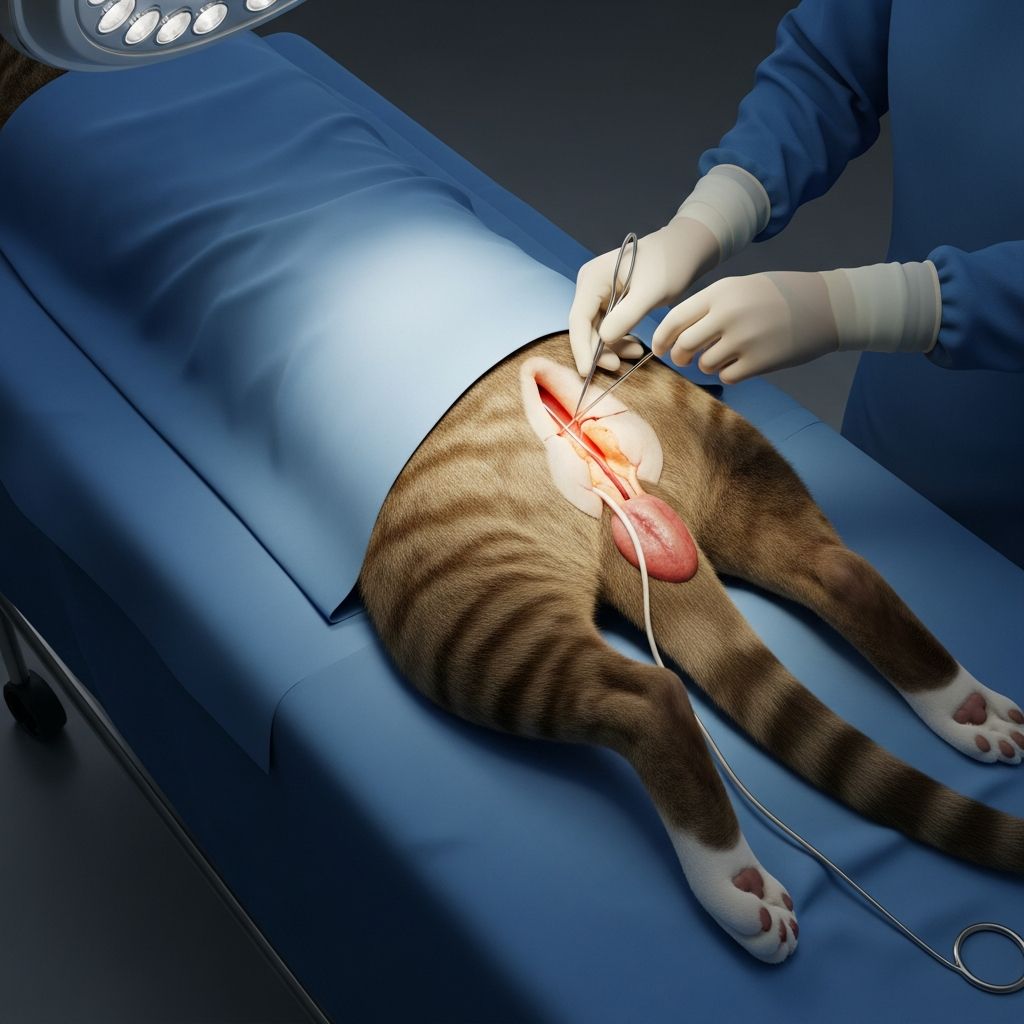
Understanding Perineal Urethrostomy Surgery in Cats
Perineal urethrostomy, commonly abbreviated as PU, is a specialized surgical procedure most frequently performed on male cats experiencing urinary obstruction. This procedure has become an important treatment option for cats with complicated or recurrent feline lower urinary tract disease (FLUTD). Understanding this surgical intervention can help cat owners make informed decisions about their pet’s health and quality of life.
The primary purpose of perineal urethrostomy surgery is to create a permanent alternative urinary opening that bypasses the narrowest section of the urethra. By removing the external portion of the penis and repositioning the urethra, veterinarians can significantly reduce the risk of future urinary blockages. This surgical approach has revolutionized the management of recurrent urethral obstructions in feline patients, offering cats improved long-term outcomes and an enhanced quality of life.
What Is Perineal Urethrostomy Surgery?
Perineal urethrostomy is a surgical procedure that removes the narrowest part of the urethra—the tube responsible for transporting urine from the bladder to the exterior of the body. This targeted removal allows urine to exit more easily and substantially lowers the risk of re-obstruction. The procedure creates a new urinary opening that decreases the overall length of the urethra, enabling urine to bypass the problematic narrowed region entirely.
While this procedure is most commonly performed on male cats with urinary obstruction, it can also be utilized in less common situations. Perineal urethrostomy may be recommended for cats that have experienced severe urethral trauma. In these cases, the procedure allows urine to exit the body before reaching the damaged portion of the urinary tract. This preventive approach helps ensure that complications such as scar tissue formation or infection do not result in additional urinary obstructions for the affected cat.
It is crucial to understand that while perineal urethrostomy dramatically improves urinary function and reduces obstruction risk, it does not cure the underlying urinary tract disease itself. The procedure addresses the mechanical obstruction but does not resolve the underlying conditions that may contribute to lower urinary tract disease in cats.
Indications for Perineal Urethrostomy Surgery
Cats become candidates for perineal urethrostomy under specific clinical circumstances. The procedure is typically considered when other urethral obstruction causes have been thoroughly ruled out, and cats have experienced continued recurrent urethral obstructions despite receiving appropriate medical management. This means that veterinarians have exhausted more conservative treatment options before recommending surgery.
Beyond FLUTD management, perineal urethrostomy can address several other urological conditions:
– Distal urethral trauma- Urethral stricture- Urethral neoplasia- Congenital urethral anomalies
The decision to proceed with perineal urethrostomy is made collaboratively between the veterinary team and the cat owner, ensuring that the benefits of the procedure outweigh any potential risks for the individual patient.
Pre-Surgical Preparation and Evaluation
Before undergoing perineal urethrostomy surgery, every cat must complete a comprehensive pre-surgical evaluation process. This preparation is essential to ensure the cat’s safety during anesthesia and to optimize surgical outcomes.
Pre-Surgical Examination and Testing
Your veterinarian will conduct a thorough physical examination and order pre-anesthetic blood testing prior to anesthesia administration. This comprehensive presurgical evaluation allows the veterinary team to assess your cat’s overall health status and confirm that the animal is an appropriate candidate for anesthesia and surgery. Blood work helps identify any underlying health conditions that might complicate the procedure or require special precautions.
Stabilization for Obstructed Cats
If your cat is currently experiencing a urinary obstruction at the time of surgery, stabilization becomes a critical preliminary step. This stabilization process involves administering intravenous fluids to correct dehydration and address any electrolyte abnormalities that may have developed. Pre-surgical stabilization not only makes your cat a better candidate for anesthesia but also significantly decreases the likelihood of post-operative complications. Cats with obstructive uropathy may have experienced serious metabolic derangements that must be corrected before proceeding to surgery.
How Perineal Urethrostomy Surgery Is Performed
After the pre-surgical evaluation is complete and your cat has been cleared for surgery, the veterinary team begins the procedural process. Understanding the surgical technique provides insight into why this procedure is so effective at preventing future urinary obstructions.
Anesthesia and Surgical Site Preparation
Your cat will receive medications and be placed under general anesthesia to ensure comfort and safety throughout the procedure. The anesthesia allows the surgical team to work efficiently while keeping your cat completely pain-free. Once anesthetized, the veterinary team meticulously prepares the surgical site by shaving hair from the perineal region and performing a thorough surgical scrub to eliminate bacteria from the skin surface. This aseptic preparation is crucial for preventing surgical site infections.
Surgical Positioning and Approach
The surgical team positions the cat strategically to maximize access to the surgical site. Perineal urethrostomies can be performed in different positions depending on the surgeon’s preference and the specific clinical situation. The traditional approach places the cat in sternal recumbency in the perineal position, with the pelvic limbs suspended over the padded back edge of the surgery table and the table tilted so the head is positioned downward. This positioning provides excellent exposure to the surgical area.
An alternative positioning technique involves dorsal recumbency, where the pelvic limbs are pulled cranially and the pelvis is tilted upward with the anus facing the surgeon. This alternative position proves particularly useful for cats that also require cystotomy (bladder surgery) and provides excellent exposure to the pelvic attachments of the penile body.
Surgical Incision and Dissection
The surgeon creates an elliptical incision around the prepuce and scrotum using a scalpel blade. The incision is extended approximately 5 millimeters circumferentially around these structures to allow proper removal without placing excessive tension on the urethrostomy site. Using specialized scissors and electrosurgery, the surgical team carefully dissects and isolates the distal tip of the penis from surrounding subcutaneous tissue. This dissection continues immediately adjacent to the penile body all the way to the base where the penis is firmly attached to the pelvis.
Urethra Incision and Modification
A crucial step involves incising the urethra along its dorsal midline, extending the incision cranially to the level of the bulbourethral glands and continuing the urethral incision to its full length. This careful incision creates the opening through which the urethral mucosa will be sutured to the skin. Alternatively, if a urethral catheter remains in place, the surgeon may incise the penis and urethra directly over the catheter using a specialized blade.
Mucocutaneous Closure and Stoma Creation
The surgeon appraises the urethral mucosa on one side of the urethral incision to the skin, typically using a simple continuous or interrupted suture pattern with appropriate suture material. This suturing continues until the penile body and urethra begin to narrow. The surgeon then ties off at this point and cuts the suture ends short. The remaining urethral mucosa ventral to the stoma is approximated to the skin to create a mucosal strip known as a “drainboard,” which helps minimize urine scalding. The completed perineal urethrostomy typically features a drainboard that is 1.5 to 2 centimeters long, and the stoma should allow passage of a 10-French urethral catheter.
Procedure Completion
The surgeon ligates the penile body distal to the mucocutaneous closures and amputates the tip of the penis before finishing the ventral portion of the second mucocutaneous suture pattern. Any remaining gaps in subcutaneous tissues and skin are closed with buried sutures. Finally, the purse-string suture that was initially placed in the anus is removed. The completed procedure creates a permanent, patent urinary opening that bypasses the problematic narrow portion of the feline urethra.
Post-Operative Care and Recovery
Following perineal urethrostomy surgery, proper post-operative care is essential for successful healing and optimal long-term outcomes. Your veterinarian will provide specific instructions tailored to your cat’s individual needs.
Pain Management
Appropriate pain control is a fundamental component of post-operative care. Long-acting opioids such as buprenorphine can be combined with a single perioperative dose of nonsteroidal anti-inflammatory medication in cats showing no evidence of renal dysfunction due to obstructive uropathy. This multimodal pain management approach ensures your cat remains comfortable during the healing process while minimizing discomfort.
Wound Care
Proper wound management significantly impacts healing outcomes. Cover the surgical wound with petroleum jelly to minimize urine scalding, which can occur as urine exits the new urinary opening. It is important to avoid removing clots that form on the incision, as this action causes additional trauma to both the surgical site and the cat.
Activity Restriction and Monitoring
Following surgery, your cat should be kept calm and confined to a small space during the initial recovery period. Limit jumping and running to prevent stress on the surgical site. Monitor the surgical incision daily for signs of excessive swelling, redness, discharge, or odor that might indicate infection. Your veterinarian will schedule follow-up appointments to ensure proper healing and monitor for any complications.
Long-Term Benefits and Outcomes
The long-term outcomes for cats undergoing perineal urethrostomy are generally excellent. Most cats have an outstanding quality of life postoperatively, with significantly reduced or eliminated risk of recurrent urethral obstructions. The recurrence rate of obstruction is notably low compared to the frequency of blockages prior to surgery, making this a highly effective long-term solution.
Cats adapt well to their altered urinary anatomy, and many owners report that their cats return to normal behavior and activity levels within weeks of surgery. The procedure provides both immediate relief from acute obstruction and long-term prevention of future urinary complications.
Potential Complications and Considerations
While perineal urethrostomy is generally a safe procedure with excellent outcomes when performed by experienced surgeons using proper technique and equipment, potential intraoperative and post-operative complications can occur. Possible complications may include infection, bleeding, stoma narrowing, or urine scalding. However, with proper surgical technique, appropriate pain management, and diligent post-operative care, these complications can typically be avoided or successfully managed.
Some cats may experience occasional urinary incontinence or dribbling, though this is usually manageable and tends to improve over time as the cat adapts to the new urinary anatomy.
Frequently Asked Questions About Perineal Urethrostomy
Q: Does perineal urethrostomy cure feline lower urinary tract disease?
A: No. While perineal urethrostomy dramatically reduces the risk of recurrent urethral obstruction by bypassing the narrowest section of the urethra, it does not cure the underlying urinary tract disease. The procedure addresses the mechanical obstruction but not the underlying condition that contributed to FLUTD.
Q: How long is the recovery period after perineal urethrostomy?
A: Most cats show significant improvement within 2-4 weeks. Complete surgical healing typically occurs within 4-8 weeks, though individual healing timelines may vary depending on the cat’s age, overall health, and how well post-operative care instructions are followed.
Q: Can female cats undergo perineal urethrostomy?
A: While perineal urethrostomy is primarily performed on male cats due to their narrower urethra, female cats can theoretically undergo the procedure. However, it is rarely necessary in females because their naturally wider urethra makes obstruction less likely.
Q: What is the success rate of perineal urethrostomy?
A: Perineal urethrostomy has an excellent success rate, with most cats experiencing resolution of recurrent urethral obstructions. The procedure typically prevents future blockages and allows cats to return to normal urinary function and activity levels.
Q: Will my cat have incontinence after perineal urethrostomy?
A: Most cats do not develop incontinence after perineal urethrostomy. Some cats may experience occasional mild dribbling initially, which typically resolves as they adapt to their altered urinary anatomy. If incontinence persists, your veterinarian can discuss management options.
Q: How much does perineal urethrostomy surgery typically cost?
A: The cost varies depending on your location, the veterinary practice, and any pre-operative or post-operative complications. Generally, perineal urethrostomy ranges from $1,500 to $3,500. Discuss pricing and payment options with your veterinarian.
Q: Can my cat live a normal life after perineal urethrostomy?
A: Yes, absolutely. Most cats return to normal behavior and activity levels following perineal urethrostomy. They adapt well to the surgical changes and enjoy improved quality of life with substantially reduced risk of painful urinary obstructions.
References
- Perineal Urethrostomy in Cats: Guide for Veterinarians — Clinician’s Brief. 2024. https://www.cliniciansbrief.com/article/perineal-urethrostomy-cat
- How to perform a feline perineal urethrostomy — DVM360. 2024. https://www.dvm360.com/view/how-perform-feline-perineal-urethrostomy
- Perineal Urethrostomy Surgery in Cats — VCA Animal Hospitals. 2025. https://vcahospitals.com/know-your-pet/perineal-urethrostomy-surgery-in-cats
- Perineal urethrostomy in cats – Veterinary Practice — Veterinary Practice. 2024. https://www.veterinary-practice.com/video/23-perineal-urethrostomy-in-cats
- A Step-by-Step Description of Feline Perineal Urethrostomy — MSPCA Angell. 2024. https://www.mspca.org/angell_services/a-step-by-step-description-of-feline-perineal-urethrostomy/
- Short- and long-term complications in 56 cats undergoing perineal urethrostomy — NIH PubMed Central. 2024. https://pmc.ncbi.nlm.nih.gov/articles/PMC10741294/
Similar Articles








Read full bio of medha deb




