

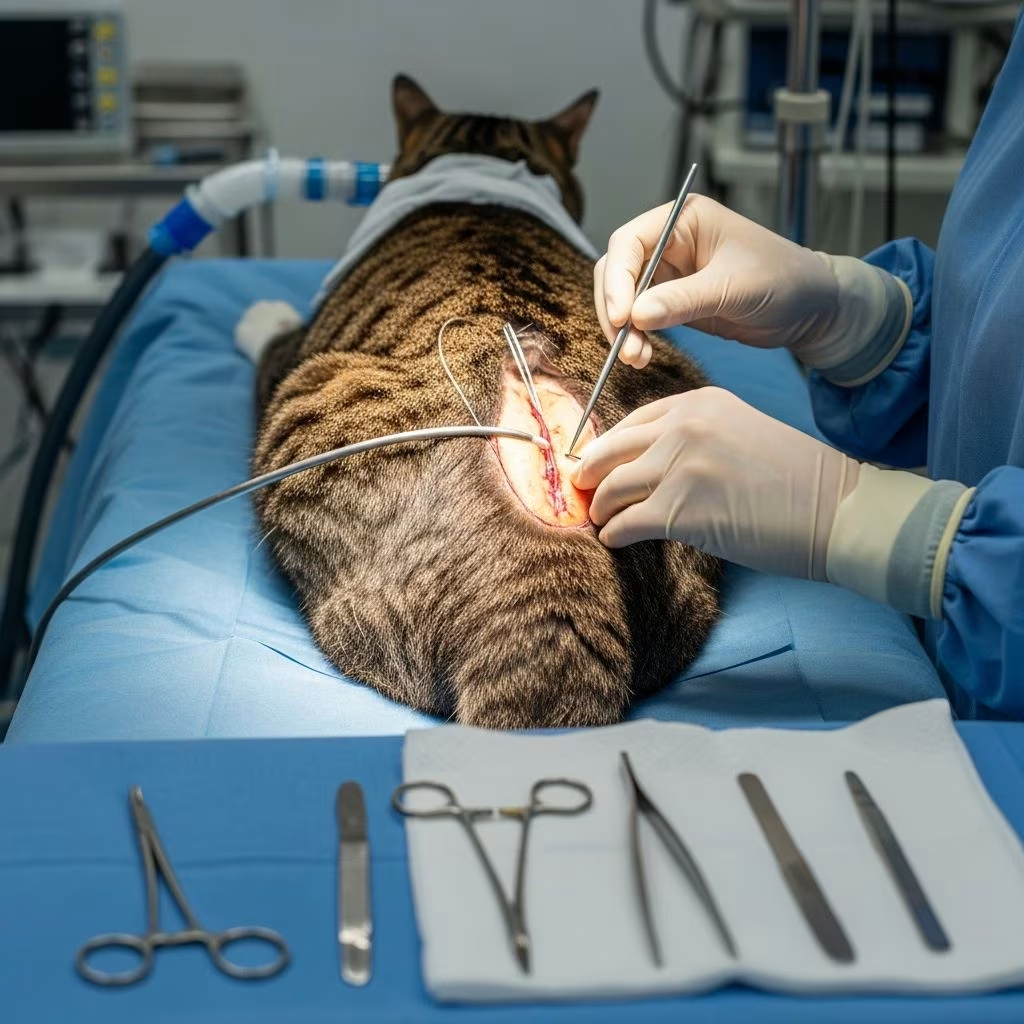
Perineal urethrostomy (PU) is a specialized surgical intervention designed primarily for male cats suffering from recurrent urethral obstructions. This procedure reconstructs the urethra by creating a wider permanent opening in the perineal region, significantly reducing the likelihood of future blockages associated with feline lower urinary tract disease (FLUTD).
Why Cats Need Perineal Urethrostomy
Male cats possess a narrow, tubular urethra that predisposes them to obstructions from urinary crystals, plugs, or inflammation. Conditions like idiopathic cystitis or urolithiasis can exacerbate this, leading to painful blockages that require emergency care. When medical management or catheterization fails repeatedly, PU becomes the recommended solution to bypass the problematic penile urethra.
Obstructions manifest through symptoms such as straining to urinate, vocalizing in pain, blood in urine, or complete inability to void, posing life-threatening risks like kidney damage or bladder rupture if untreated. Veterinary studies indicate that PU effectively minimizes recurrence rates, improving long-term quality of life as reported by owners.
The Surgical Process: Step-by-Step Overview
PU surgery demands precision and is typically executed by experienced veterinary surgeons. Cats are placed under general anesthesia, with positioning critical for optimal access—often sternal recumbency with hind limbs suspended or dorsal recumbency for combined procedures like cystotomy.
- Preoperative Preparation: The perineal area, including prepuce and scrotum, is clipped and aseptically prepared. A purse-string suture secures the anus to prevent contamination. An indwelling urinary catheter (e.g., 5-Fr red rubber) guides the urethra during dissection.
- Incision and Dissection: A fusiform incision encircles the penis, extending proximally to the bulbourethral glands but sparing 1 cm ventral to the anus. Sharp dissection separates penile tissue from the urethra, preserving retractor penis muscle integrity to avoid complications.
- Urethral Reconstruction: The distal penile urethra is transected, and the proximal urethra is mobilized. Mucosa is sutured to perineal skin using fine, interrupted sutures (e.g., 4-0 or 5-0 monofilament) in a tension-free manner, creating a stoma accommodating a 10-Fr catheter.
- Closure and Finishing: Subcutaneous tissues and skin are apposed meticulously. The distal penis is ligated and amputated. Post-closure, petroleum jelly protects the site from urine scalding.
Alternative ventral approaches in dorsal recumbency facilitate simultaneous bladder stone removal, enhancing efficiency for complex cases.
Immediate Post-Operative Care
Following surgery, cats receive multimodal analgesia, including opioids like buprenorphine and NSAIDs if renal function permits. An Elizabethan collar prevents self-trauma, while the stoma is monitored for patency and swelling.
Urine collection systems or protective coatings manage output initially. Owners apply petroleum-based ointments to avert scalding, avoiding clot removal to minimize irritation. Hospitalization spans 1-3 days, with discharge instructions emphasizing hygiene and litter box monitoring.
Long-Term Recovery and Management
Most cats resume normal urination within days, with full recovery in 2-4 weeks. Owners report high satisfaction due to low re-obstruction rates (under 10% in many studies). Dietary modifications—prescription urinary diets—and increased water intake via fountains remain crucial to prevent FLUTD flares.
| Recovery Timeline | Expected Milestones | Care Tips |
|---|---|---|
| Days 1-3 | Stoma healing, mild swelling | E-collar, pain meds, frequent checks |
| Weeks 1-2 | Reduced inflammation, normal voids | Gentle cleaning, ointment application |
| Weeks 3-4+ | Full activity, scar maturation | Monitor for UTIs, vet follow-up |
Potential Complications and How to Mitigate Them
While successful, PU carries risks like urinary tract infections (20-30% incidence), stoma stenosis, incontinence, or urine scalding. Intraoperative factors—atraumatic handling, precise suturing—minimize stricture formation.
- Infections: Prophylactic antibiotics and sterile technique reduce odds; monitor for fever or discharge.
- Stenosis: Occurs if sutures pull tight; revisions like subpubic urethrostomy salvage failures.
- Incontinence: Rare with pelvic urethra preservation; affects under 5% long-term.
Regular veterinary check-ups track healing, with revisions infrequent due to refined techniques.
Financial Considerations: Breaking Down the Costs
PU expenses vary by location, clinic, and case complexity but average $3,000-$6,000 USD. This encompasses anesthesia ($500-$1,000), surgery ($1,500-$3,000), hospitalization ($500-$1,000), medications ($200-$500), and diagnostics ($300-$800).
| Cost Component | Typical Range (USD) | Factors Influencing Price |
|---|---|---|
| Anesthesia & Monitoring | $500-$1,000 | Duration, patient health |
| Surgeon Fees | $1,500-$3,000 | Specialist vs. generalist |
| Hospital Stay | $500-$1,000 | Days required, ICU needs |
| Pre-Op Diagnostics | $300-$800 | Imaging, bloodwork |
| Post-Op Meds/Follow-Ups | $200-$500 | Antibiotics, pain relief |
| Total Estimate | $3,000-$6,000 | Excludes pet insurance |
Pet insurance often offsets 70-90% if pre-existing conditions are absent. Owners should inquire about payment plans or financial aid through clinics.
Alternatives to Perineal Urethrostomy
For milder cases, medical therapy—alpha-blockers, pain relief, stress reduction—suffices. Indwelling stents or urethrotomy offer temporary relief but higher recurrence. In dogs, similar PU techniques apply with adaptations.
Salvage options for PU failures include prepubic or subpubic urethrostomy, though continence risks persist.
Success Rates and Owner Experiences
Studies affirm PU’s efficacy: over 90% of cats avoid re-obstruction post-surgery, with survival exceeding 3-5 years. Owners note improved vitality, though lifelong FLUTD management is essential.
Frequently Asked Questions (FAQs)
Is perineal urethrostomy painful for cats?
Comprehensive pain control ensures minimal discomfort during recovery.
Will my cat still spray after PU?
Surgery doesn’t alter spraying behavior; behavioral consults may help.
How long does PU surgery take?
Typically 1-2 hours, depending on complications.
Can female cats get PU?
Rarely, due to wider urethras; reserved for trauma cases.
Does PU cure FLUTD?
No, it prevents blockages but not underlying inflammation.
This surgery transforms lives for cats plagued by obstructions, offering a proactive path forward with diligent aftercare.
References
- Perineal Urethrostomy in Cats: Guide for Veterinarians — Clinician’s Brief. 2023. https://www.cliniciansbrief.com/article/perineal-urethrostomy-cat
- How to perform a feline perineal urethrostomy — dvm360. 2023. https://www.dvm360.com/view/how-perform-feline-perineal-urethrostomy
- Perineal Urethrostomy — Dallas Veterinary Surgical Center. 2024. https://www.dvsc.com/perineal-urethrostomy
- Perineal Urethrostomy: Feline Urinary Obstruction — Animal Works Veterinary. 2023. https://animalworksvets.com/perineal-urethrostomy-feline-urinary-obstruction/
- Feline Perineal Urethrostomy Ventral Approach — Today’s Veterinary Practice. 2023. https://todaysveterinarypractice.com/urology-renal-medicine/practical-techniques-from-the-navc-institute-feline-perineal-urethrostomy-ventral-approach/
- Perineal urethrostomy in male dogs — Technique description — PMC (NCBI). 2021-10-29. https://pmc.ncbi.nlm.nih.gov/articles/PMC8591582/



