

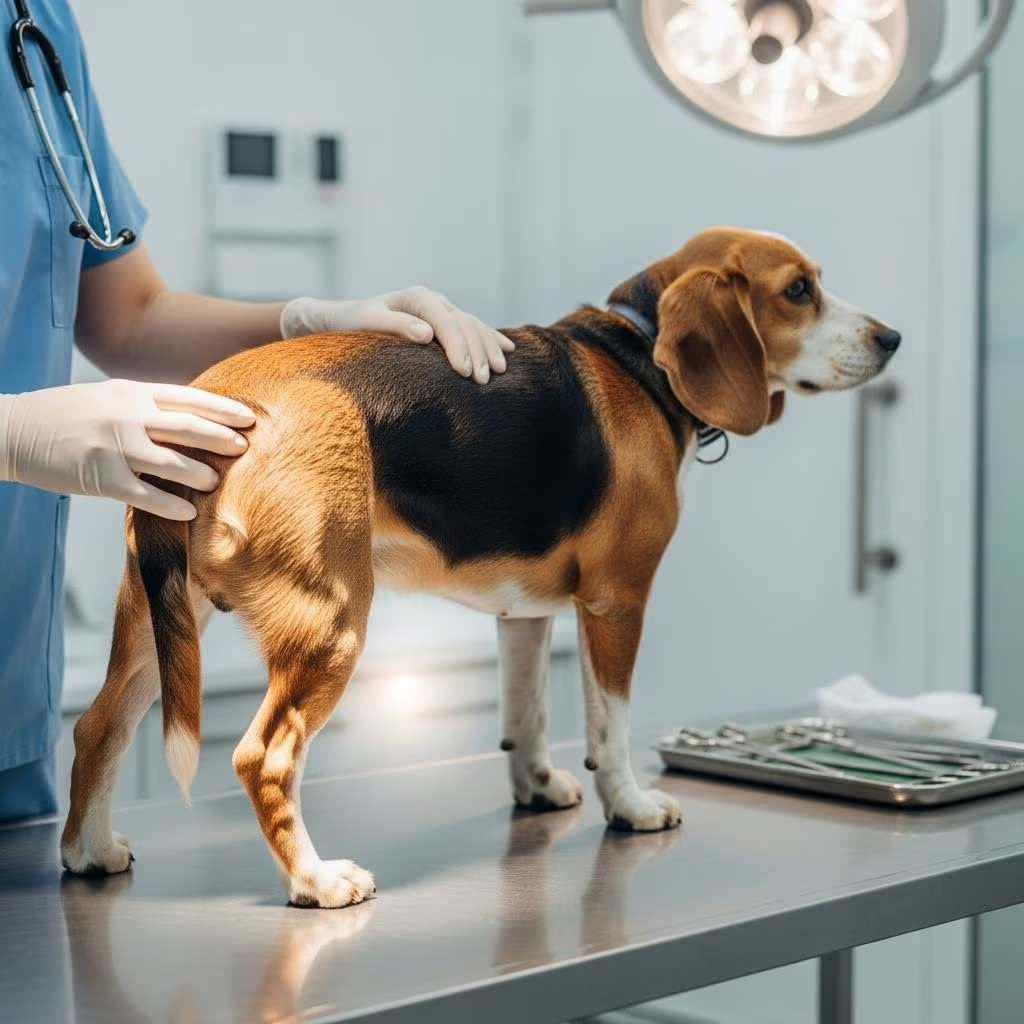
What is a Perineal Hernia?
A perineal hernia occurs when there is a weakening or traumatic tear in the muscles of the perineal area, resulting in the bladder, intestines, or fat pushing through the damaged muscle wall. This condition involves a failure of the levator ani and coccygeus muscles, which normally support the pelvic organs and maintain their proper position. When these muscles weaken or tear, abdominal and pelvic contents can herniate into the perineum, the area between the anus and external genitalia.
Perineal hernias are relatively uncommon conditions in dogs but can become serious if left untreated. The condition most often affects middle-aged to older intact male dogs, though it can occasionally occur in spayed females. While perineal hernias occur frequently in mixed-breed dogs, certain breeds show predisposition to developing this condition.
Breed Predispositions and Risk Factors
Although perineal hernias can develop in any dog, specific breeds have been identified as having higher susceptibility to this condition. Breeds with documented predispositions include Welsh Corgis, Boston Terriers, Boxers, Collies, Kelpies, Dachshunds, Miniature Poodles, Old English Sheepdogs, and Pekingese.
Several risk factors contribute to the development of perineal hernias. The primary risk factor is being an intact (unneutered) male dog, as hormonal factors play a significant role in muscle atrophy of the pelvic diaphragm. Dogs that experience chronic straining to pass urine or feces are at increased risk, as are those with prostate disease or other conditions causing persistent straining. The atrophy of pelvic diaphragm muscles becomes severe enough that they can no longer function effectively in supporting the pelvic organs.
Clinical Signs and Symptoms
Dogs with perineal hernias may exhibit a variety of clinical signs that range from mild to severe. Understanding these symptoms helps pet owners recognize when veterinary attention is necessary.
The primary clinical findings of perineal hernia include:
– Perineal swelling, which is usually not painful to the touch- Constipation or obstipation (inability to defecate)- Tenesmus (persistent straining to defecate with little or no result)- Dyschezia (pain or difficulty during defecation)- Stranguria or dysuria (painful urination or difficulty urinating)
The severity of symptoms depends on which organs have herniated through the weakened muscle. When only fat or small portions of intestine herniate, clinical signs may be minimal. However, if the bladder herniates, the condition can become an emergency due to urinary obstruction. In some cases, dogs may present with vague signs of discomfort or behavioral changes related to their inability to defecate comfortably.
Diagnosis of Perineal Hernia
Veterinarians diagnose perineal hernias through a combination of clinical examination and diagnostic imaging. A thorough diagnostic approach helps confirm the diagnosis and identify any underlying conditions contributing to the herniation.
Physical Examination
Diagnosis of perineal hernia is primarily based on history and physical examination. During the physical exam, your veterinarian will look for fluctuant and reducible perineal swelling, which is a key diagnostic finding. A rectal examination will reveal unilateral or bilateral weakness of the pelvic diaphragm with deviation of the rectal wall toward the side of herniation (unilateral) or dilation of the rectum (bilateral). A firm mass associated with bladder herniation may also be palpable during the rectal examination.
Radiographic and Ultrasound Imaging
Radiographs (X-rays) or ultrasound can determine what tissue has herniated through the perineal muscle and better screen for prostate disease and other abdominal or pelvic diseases. Ultrasound is particularly useful for identifying herniated organs and assessing the extent of the herniation. These imaging modalities help your veterinarian develop an appropriate treatment plan. Rarely, abdominal testicles may be located with ultrasound if your dog appears neutered but is not. Your veterinarian may recommend hormonal testing if there is a question regarding whether your dog is neutered.
Treatment Options for Perineal Hernia
Treatment approaches for perineal hernias range from conservative management to surgical intervention, depending on the severity of clinical signs and the organs involved.
Conservative Management
If the clinical signs associated with a perineal hernia are minimal, conservative treatment may be considered initially, though it is rarely successful in controlling the clinical signs long term. Conservative therapy typically includes:
– High fiber and moist diet to soften stool- Stool softeners to reduce straining- Manual removal of impacted feces when necessary
While conservative management may provide temporary relief, most dogs eventually require surgical intervention to resolve the condition permanently.
Surgical Treatment
Surgical correction is the primary and most effective treatment for perineal hernias. Surgery is the treatment of choice, particularly because hormonal changes in older intact dogs have been shown to be associated with the development of perineal hernias.
During surgical repair, the internal obturator muscle (located in the pelvis) is rotated upwards and sutured in place to fill the hernia defect. In some cases, surgical mesh is sutured to the muscles to strengthen the repair. Other muscles of the pelvis can also be used in a similar manner to fill the hernia defect. The specific surgical technique chosen depends on the extent and location of the herniation, as well as the surgeon’s preference and experience.
Due to the association between hormone imbalance and the occurrence of perineal hernias, intact dogs are also castrated at the time of surgery. Neutering is strongly recommended as it significantly reduces the likelihood of recurrence. Dogs that are not neutered at the time of hernia surgery are almost three times more likely to re-herniate.
Emergency Management
Perineal hernia is uncommonly an emergency, except when the bladder has herniated, resulting in urinary obstruction, or when a loop of intestine is strangulated, resulting in ischemia. In these emergency situations, if catheterization is not possible, urine should be removed by cystocentesis (needle aspiration from the bladder), and an attempt should be made to reduce the hernia. An indwelling urinary catheter may be necessary to ensure urethral patency and prevent recurrence of obstruction.
If constipation is severe, your dog may require manual removal of feces while under sedation. Additionally, your dog will require supportive care, including intravenous fluids if acutely ill from an obstructed bladder.
Post-Operative Care and Management
Following surgery, several measures help ensure successful healing and reduce the risk of complications:
– Antibiotics are used to help decrease the risk of infection- An Elizabethan collar is used to prevent licking the surgery site and introduction of infection- Stool softeners and special diets can be used to reduce further episodes of constipation- Any contributors to straining, such as prostate infection, should be treated appropriately
For dogs with bilateral hernias, a second surgery is usually required to repair the less affected side. Typically, there is a 4-6 week lag between surgeries to avoid placing too much stress on the pelvis.
Prognosis and Complications
With effective surgical intervention, the prognosis for perineal hernia is very good. However, there are important factors that influence the outcome.
Recurrence Risk
The primary concern with perineal hernia treatment is the risk of recurrence, which occurs in 10-46% of dogs depending on various factors. Controlling straining and neutering of affected dogs significantly reduces this risk. Dogs that do not receive neutering at the time of hernia repair have nearly three times the risk of re-herniation.
Potential Complications
Postoperative complications may include infection, rectocutaneous fistula, anal sac fistula, sciatic and pudendal nerve entrapment, and rectal prolapse. Uncommon complications of surgery include incision breakdown, fecal incontinence, and sciatic nerve compromise.
Due to the technical complexity of the surgery, referral to a board-certified surgery specialist is often recommended to minimize the risk of these complications and improve surgical outcomes.
Long-Term Outlook
If the patient does not receive surgical treatment, if appropriate surgical techniques fail, or if the cause of straining cannot be treated, the prognosis may be more guarded. However, with proper surgical management, neutering, and control of underlying causes of straining, most dogs recover well and return to normal function.
Frequently Asked Questions
Q: Can female dogs develop perineal hernias?
A: While perineal hernias occur most frequently in intact males, they can occasionally develop in spayed females. However, the condition is much less common in females, representing only about 4% of diagnosed cases.
Q: Is a perineal hernia always an emergency?
A: No, perineal hernias are uncommonly emergencies. However, they become urgent if the bladder herniates, causing urinary obstruction, or if intestinal loops become strangulated. These complications require immediate veterinary attention.
Q: What is the success rate of perineal hernia surgery?
A: With effective surgical intervention and appropriate post-operative care, including neutering, the prognosis is very good. However, recurrence rates range from 10-46% depending on factors such as whether the dog was neutered and how well underlying causes of straining are controlled.
Q: Why is neutering so important for perineal hernia treatment?
A: Hormonal factors, particularly male hormones, contribute significantly to the development of perineal hernias through muscle atrophy. Neutering eliminates these hormonal influences and reduces the recurrence risk by approximately 70%, making it a critical component of treatment.
Q: Can perineal hernias be prevented?
A: While you cannot completely prevent perineal hernias, neutering your male dog early in life may reduce the risk significantly. Additionally, managing conditions that cause chronic straining, such as prostate disease, can help prevent their development.
Q: How long is the recovery period after perineal hernia surgery?
A: Recovery typically takes several weeks. For dogs with bilateral hernias requiring two surgeries, there is generally a 4-6 week interval between procedures to allow proper healing and prevent excessive stress on the pelvic region.
References
- Perineal Hernia in Dogs – Digestive System — MSD Veterinary Manual. 2024. https://www.msdvetmanual.com/digestive-system/diseases-of-the-rectum-and-anus/perineal-hernia-in-dogs
- Perineal Hernia in Dogs – Digestive System — Merck Veterinary Manual. 2024. https://www.merckvetmanual.com/digestive-system/diseases-of-the-rectum-and-anus/perineal-hernia-in-dogs
- Perineal Hernia — Veterinary Surgical Centers. 2024. https://vscvets.com/wp-content/uploads/2024/11/Perineal-Hernia-416_0.pdf
- Perineal Hernias — Dallas Veterinary Surgical Center. 2024. https://www.dvsc.com/perineal-hernias
- Perineal Hernia — Anderson Moores Veterinary Specialists. 2018. https://www.andersonmoores.com/wp-content/uploads/2021/10/AMVS-Perineal-Hernia-2018.pdf
- Perineal Hernia — VCA Animal Hospitals. 2024. https://vcahospitals.com/know-your-pet/perineal-hernia
- Perineal Hernias and Related Comorbidities in Bitches — PubMed/NCBI. 2017. https://pubmed.ncbi.nlm.nih.gov/28317613/



