

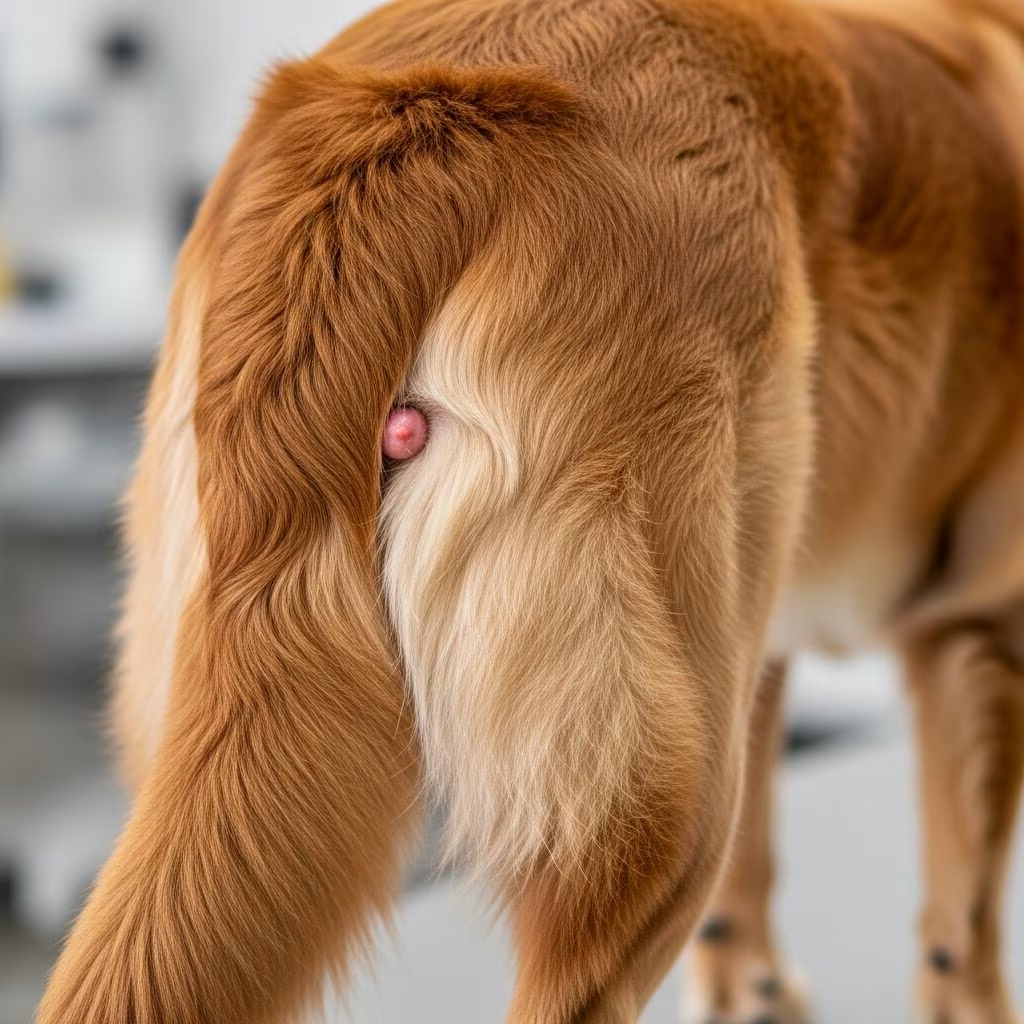
Perianal tumors represent a significant health concern for dogs, particularly intact males, encompassing both benign growths like adenomas and malignant forms such as adenocarcinomas. These tumors develop in the glands surrounding the anus, often influenced by hormones, and require prompt veterinary attention to optimize outcomes.
Understanding the Anatomy and Tumor Types
The perianal region in dogs contains specialized hepatoid and apocrine glands crucial for scent marking and other functions. Benign tumors, primarily adenomas, arise from hepatoid glands and are hormone-dependent, thriving on testosterone in unneutered males. Malignant counterparts, including perianal adenocarcinomas and anal sac adenocarcinomas (AGASACA), originate from apocrine glands and pose greater risks due to metastasis potential.
Adenomas typically present as firm, raised masses, while adenocarcinomas may infiltrate deeper tissues, complicating removal. Distinguishing these is vital, as treatment efficacy varies significantly between types.
Who Is at Risk? Breed and Hormonal Factors
Intact male dogs face the highest risk for perianal adenomas, with up to 80-90% of cases occurring in unneutered individuals due to androgen receptor expression in tumor cells. Breeds like Spaniels show predisposition to AGASACA, though any dog can be affected. Age plays a role, with older dogs more commonly diagnosed.
- Hormonal influence: Testosterone fuels adenoma growth; castration often leads to regression.
- Breed predispositions: English Cocker Spaniels, Labrador Retrievers for malignant forms.
- Sex disparity: Males predominate; females rarely develop these tumors.
Recognizing Early Warning Signs
Symptoms often start subtly, making routine checks essential. Common indicators include scooting on floors, excessive licking or chewing around the anus, and straining during defecation.
| Symptom | Benign Adenoma | Malignant Adenocarcinoma |
|---|---|---|
| Raised masses near anus | Firm, rounded, possibly ulcerated | Swelling, discharge, deeper infiltration |
| Scooting/licking | Common due to irritation | Frequent, with pain |
| Defecation issues | Mild straining | Constipation, bloody stool |
| Systemic signs | Rare | Lethargy, appetite loss, hypercalcemia |
Hypercalcemia, seen in 25-50% of AGASACA cases, causes increased thirst and urination. Early detection during grooming or vet exams improves prognosis.
Diagnostic Approaches for Accurate Identification
Veterinarians begin with physical exams, noting masses via digital rectal palpation. Fine-needle aspiration or biopsy confirms histology: adenomas show well-differentiated cells, while adenocarcinomas exhibit invasion.
Imaging like ultrasound, CT, or X-rays assesses metastasis to lymph nodes or lungs. Bloodwork detects paraneoplastic hypercalcemia, guiding stabilization. Staging follows TNM classification for tailored therapy.
Treatment Strategies for Benign Perianal Adenomas
For adenomas, castration is first-line, reducing testosterone and inducing regression in small, non-ulcerated tumors. Complete remission occurs in many cases post-neutering.
Surgical excision under general anesthesia removes masses while sparing anal function. Pharmacological options, like tamoxifen (1 mg/kg) and cyproterone acetate (5 mg/kg), block receptors, achieving 90% remission in adenomas without surgery’s risks. In one study of 24 adenomas, tumors vanished after 12 months, with no recurrence at 24 months.
- Castration benefits: Prevents recurrence; tumors shrink post-procedure.
- Drug therapy: Oral, non-invasive; ideal for older dogs.
- Follow-up: Monthly monitoring initially.
Managing Malignant Perianal Adenocarcinomas
Aggressive intervention defines adenocarcinoma care. Surgery aims for wide resection or anal sacculectomy, though fecal incontinence risks (up to 20%) exist. Lymph node removal is standard if involved.
Radiation provides local control: definitive protocols (daily fractions) yield long-term remission but cause burns and diarrhea. Palliative radiation stabilizes disease in 90% for ~6 months.
Chemotherapy with toceranib (Palladia) shrinks tumors in 25-62% of cases, stabilizing 75-88%; median progression-free survival ~11 months. Multimodal therapy (surgery + radiation + chemo) extends survival beyond 2.5 years.
Potential Complications and Post-Treatment Care
Surgery risks include infection, strictures, and incontinence. Radiation side effects heal in 4 weeks but may persist. Chemotherapy monitoring checks for GI upset or low blood counts.
Home care involves clean perianal hygiene, stool softeners, and pain management. Regular vet visits track recurrence via cytology.
Prognosis: What Influences Outcomes
Benign adenomas boast excellent prognosis post-castration/surgery (>95% cure). Malignant cases vary: localized AGASACA survival 1-2 years; metastatic <1 year. Multimodal approaches double survival times.
Factors: tumor size, lymph involvement, hypercalcemia (poor sign), clean margins.
Prevention Through Neutering and Vigilance
Neutering before age 2 slashes adenoma risk by eliminating hormonal drive. Routine anal exams during grooming detect issues early. Balanced diet supports immunity; avoid obesity-linked inflammation.
FAQs on Perianal Tumors in Dogs
Are perianal tumors painful for dogs?
Yes, especially if ulcerated or obstructing; dogs show discomfort via scooting or straining.
Can female dogs get these tumors?
Rarely; hormonal factors predominantly affect males.
Is chemotherapy always needed?
No, for benign cases; essential for metastatic malignancy.
How much does treatment cost?
Varies: surgery $1,500-$5,000; chemo/radiation adds $3,000+. Pet insurance helps.
What if the tumor recurs?
Re-evaluate with biopsy; additional surgery or palliation.
References
- Perianal Adenoma in Dogs: Causes, Symptoms, and Treatment — College Hill Veterinary Clinic. 2023. https://collegehillsvet.com/perianal-adenoma-in-dogs-causes-symptoms-and-treatment/
- Pharmacological Treatment of Perianal Gland Tumors in Male Dogs — PMC (NCBI). 2023-02-10. https://pmc.ncbi.nlm.nih.gov/articles/PMC9913509/
- Anal Sac Adenocarcinoma — Metropolitan Veterinary Associates. 2023. https://metro-vet.com/anal-sac-adenocarcinoma/
- Anal sac adenocarcinoma — Cornell University College of Veterinary Medicine. 2024. https://www.vet.cornell.edu/departments-centers-and-institutes/riney-canine-health-center/canine-health-information/anal-sac-adenocarcinoma
- Anal Gland Cancer in Dogs (Anal Sac Adenocarcinoma) — PetMD. 2024. https://www.petmd.com/dog/conditions/cancer/c_multi_adenocarcinoma_anal
- Hepatoid Gland Tumors — VCA Animal Hospitals. 2023. https://vcahospitals.com/know-your-pet/hepatoid-gland-tumors
- Canine Apocrine Gland Anal Sac Adenocarcinoma (AGASACA) — NC State Veterinary Hospital. 2024. https://hospital.cvm.ncsu.edu/services/small-animals/cancer-oncology/oncology/agasaca/



